
NFPA 33 Section 6.3: Electrical Area Classification for Spray Operations
Quick Answer
NFPA 33 Section 6.3 directs how to classify hazardous electrical locations around spray processes where flammable vapors or combustible residues may be present. The goal is to match electrical equipment and wiring methods to the specific hazard, location, release source, and ventilation conditions. Correct classification prevents ignition and supports inspection readiness.
Facilities reviewing adjacent spray-operation code issues often benefit from understanding which spray operations NFPA 33 actually covers, since scope mistakes near the front end can create downstream electrical classification problems.
What NFPA 33 electrical area classification spray operations really means
In spray finishing, ignition hazards often come from a mix of atomized liquids, solvent vapors, cleaning agents, and overspray that can accumulate on surfaces. NFPA 33 addresses these hazards by requiring a hazard based area classification approach for electrical systems and equipment in and around spray operations. This is not a generic “same as the whole room” exercise. NFPA 33 electrical area classification spray operations is driven by whether a flammable mixture could form in the air, how likely it is, and how long it could persist.
Section 6.3 focuses on identifying the electrical area boundaries and then selecting electrical equipment that is appropriate for the classified zones or divisions used in your facility’s electrical classification method. It also ties classification accuracy to ventilation performance, operating procedures, and facility maintenance.
Section 6.3 compliance starts with the spray process hazard evaluation
Before anyone assigns electrical area boundaries, a facility performs a practical hazard evaluation of the spray operation. Common elements include:
- Material properties: flash point, lower explosive limit considerations, vapor density, and expected solvent fraction in use.
- Spray method: air atomization, electrostatic spray, pressure atomization, and heated spray systems.
- Release points: spray booth openings, transfer points, dip tanks or reservoirs for spray media where applicable, and cleaning stations.
- Duration and frequency: whether spray runs are continuous, intermittent, or limited to maintenance activities.
- Ventilation and airflow: capture effectiveness, makeup air behavior, and how performance changes with filter loading.
- Work practices: solvent wiping frequency, booth loading practices, and maintenance shutdown behavior.
In many commercial and industrial settings, classification errors trace to incomplete process mapping or outdated drawings. Facilities often use historical SDS information that no longer matches current products or mix ratios. Kord Fire Protection typically helps clients close these gaps by aligning the classification assumptions with real operating conditions, current materials, and documented ventilation practices.
How NFPA 33 Section 6.3 drives equipment selection around spray zones
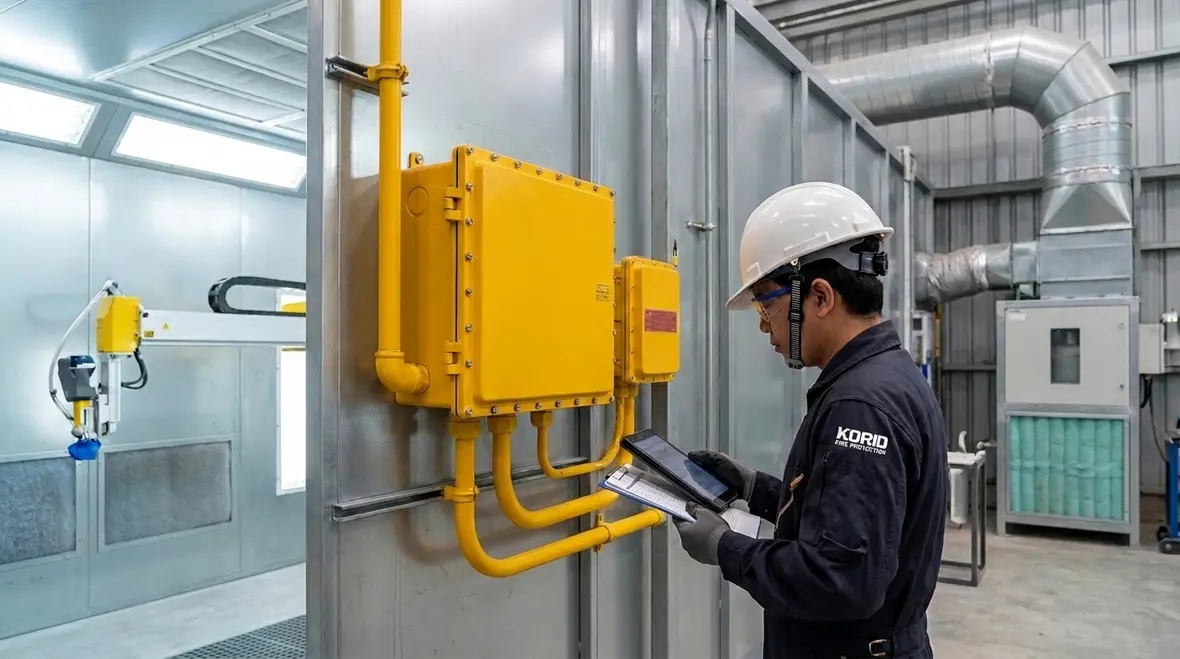
Once the electrical areas are defined, the facility must ensure electrical equipment and wiring methods within those boundaries match the required level of protection. The intent is simple: prevent ignition sources from becoming effective in the presence of flammable vapors or combustible residues.
Typical equipment categories that become high scrutiny during audits and inspections include:
- Motors and fans driving ventilation or booth components, especially where airflow may carry vapors to the boundary area.
- Lighting inside booths and near service access doors where solvent vapor accumulation can occur.
- Electrical enclosures and junction boxes, including how conductors enter and transition between areas.
- Switches, push buttons, solenoids, and controls within the classified space.
- Electrostatic systems components where applicable, because sparks can create ignition risk if classification and bonding practices are incorrect.
Common failure points in real facilities include missing or improperly documented equipment ratings, replaced components with incorrect temperature class, and conduit or cable runs that were modified during equipment upgrades without updating the classification. NFPA 33 Section 6.3 expects the classification to stay aligned with the current installation, not a “set it and forget it” baseline.
Boundaries, ventilation, and maintenance: the operational side of electrical area classification
Spray operations rarely behave the same way hour to hour. Ventilation performance changes as filters load, dampers drift, and doors remain open longer than planned. NFPA 33 electrical area classification spray operations therefore requires a control strategy that keeps hazardous conditions within the assumptions used to define the electrical boundaries.
Ventilation controls and verification
Facility teams commonly overlook how ventilation affects the probability of a flammable atmosphere forming. Effective compliance usually depends on:
- Documented airflow verification and periodic performance testing
- Filter change schedules based on actual loading conditions
- Operational interlocks that prevent spray operation when ventilation fails or falls below required performance
- Clear operating procedures that address startup, shutdown, and door open durations
Maintenance that prevents “classification drift”
Even if the initial classification was correct, maintenance changes can invalidate it. Real world examples include:
- Replacing a fan motor with a general purpose unit because it matched physically
- Running new wiring for controls without confirming whether the new route crosses classified boundaries
- Modifying booth interiors or adding equipment that changes vapor flow or accumulation patterns
- Failing to maintain seal integrity around penetrations and cable entries
Kord Fire Protection supports commercial clients with ongoing compliance coordination so electrical classifications remain defensible through upgrades, filter maintenance cycles, and inspection periods.
If your facility needs a broader, coordinated approach across codes and inspection readiness, see Kord Fire Protection for service options that help maintain safer, compliant spray operations.
Documentation and inspection readiness: what auditors expect to see
NFPA 33 Section 6.3 compliance becomes credible when documentation clearly ties decisions to evidence. Practical expectations often include:
- Process description showing spray types, chemicals used, and operating modes
- Electrical area classification drawings and narratives showing boundary assumptions
- Ventilation basis including test results, airflow verification method, and maintenance intervals
- Equipment lists matching classified areas to equipment ratings and wiring methods
- Change management records for product changes, booth upgrades, and control system modifications
In commercial, industrial, and retail environments, inspections frequently uncover gaps between the as built reality and the classification report. Common root causes include contractors swapping components, facilities remodeling booth layouts, and product substitutions that alter vapor behavior. Strong documentation and periodic revalidation reduce the risk of costly rework and compliance downtime.
Frequently Asked Questions
Call to action
For commercial spray operations, electrical area classification must stay accurate as equipment, materials, and ventilation conditions change. Engage Kord Fire Protection to support classification review, inspection readiness, and maintenance coordination so your facility can reduce ignition risk and maintain defensible compliance under NFPA 33.

Join Our Newsletter!
Get the latest fire safety tips delivered straight to your inbox From our Newsletter.



