
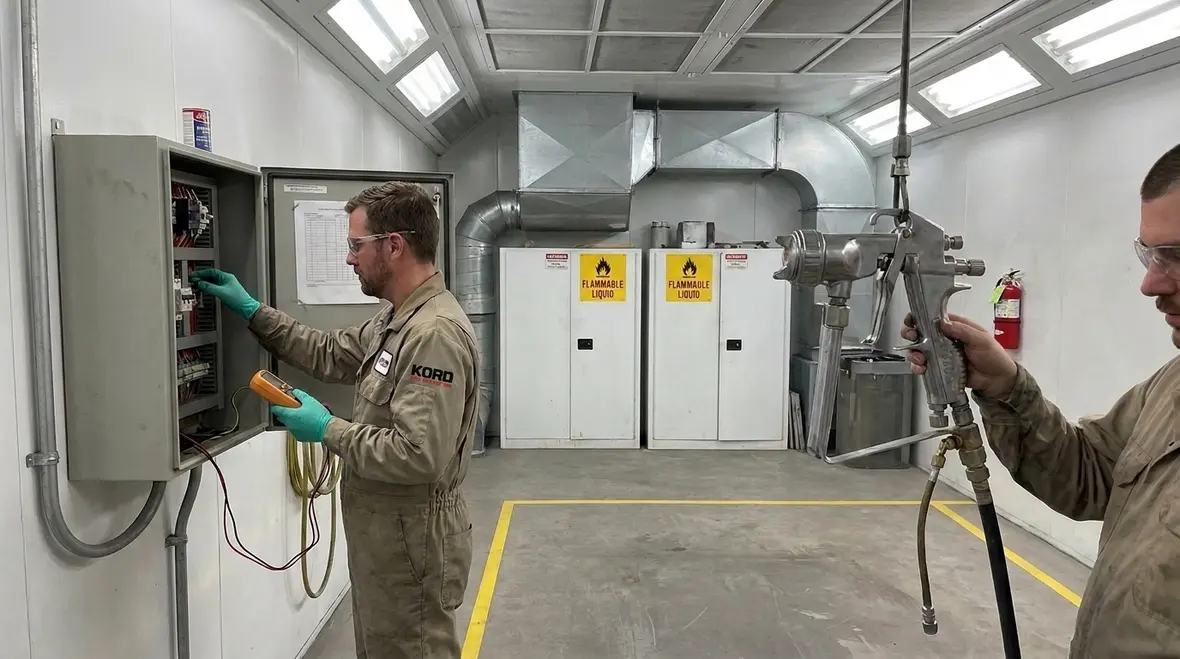
NFPA 33 Section 6.2: General Rules for Controlling Ignition Sources
Quick Answer: NFPA 33 Section 6.2 establishes how facilities control ignition sources for spray application and related processes. The rules focus on preventing ignition from electrical, mechanical, static, hot surfaces, sparks, and open flames through design, safe operating procedures, and ongoing inspection and maintenance.
Why NFPA 33 ignition source control general rules matter in real facilities
NFPA 33 ignition source control general rules are not a “paper compliance” exercise. They directly reduce the likelihood that coating, solvent, or air mixture vapors find an ignition source during normal operations, startups, shutdowns, cleaning, maintenance, and troubleshooting. Commercial and industrial facilities typically see risk creep from changes in work practices, worn components, improper housekeeping, and inadequate documentation of ignition source control measures.
In practice, auditors and insurers look for three things: a defined ignition source control approach that matches the process hazards, verified equipment condition not just installed equipment, and disciplined inspection and maintenance. Facilities that handle flammable coatings, adhesives, or fuels in spray or heated environments must treat ignition control as an operational system, not a one-time installation.
What Section 6.2 expects: control ignition sources by design and discipline
NFPA 33 Section 6.2 applies general rules that govern how ignition sources are controlled around spraying and related operations. While the exact scope depends on the specific process and how it interfaces with electrical, mechanical, and thermal hazards, the overarching expectation remains consistent: ignition sources must be eliminated or controlled to prevent ignition of flammable atmospheres.
Facility teams normally implement Section 6.2 through a combination of engineering controls, compliant equipment selection, safe work procedures, and documented inspection routines. Common control categories include:
- Electrical ignition control using approved wiring methods, properly rated equipment, and controlled grounding and bonding practices.
- Mechanical and friction ignition prevention through guarded components, tight maintenance intervals, and proper lubrication practices.
- Thermal management to prevent hot surfaces that exceed safe limits during normal use and fault conditions.
- Static electricity control via bonding, grounding, humidity management where applicable, and controlled transfer procedures.
- Flame and spark controls including restriction of open flames and management of cutting, grinding, and other work that can generate sparks.
Because processes evolve, controls must remain effective as equipment ages, systems get modified, and maintenance conditions change.
Facilities reviewing related spray operation requirements may also want to read NFPA 33 Section 1.2: fire and explosion prevention in spray operations for broader context on how ignition control supports the overall safety objective.
Where ignition sources actually show up: failure points to inspect
Most compliance findings do not involve exotic hazards. They involve predictable failure points in common commercial and industrial installations. The following areas often create ignition risk when they are overlooked or poorly maintained.
1) Electrical systems and equipment condition
Ignition sources can emerge from damaged enclosures, compromised cable insulation, missing seals, degraded gaskets, or nonconforming modifications. Facilities frequently experience this after maintenance activity, temporary wiring, or equipment replacement with “functionally similar” components that do not match the hazardous location requirements.
Inspection focus typically includes: verification of enclosure integrity, condition of seals and seals that prevent vapor ingress, and confirmation that equipment remains installed and labeled as intended.
2) Bonding and grounding breaks
Static electricity control depends on effective bonding and grounding. Even a small discontinuity, loose connection, or corrosion at a grounding point can undermine the entire system. This risk rises during filter changes, hose replacements, or after any work that disturbs grounding paths.
Inspection focus includes visual verification plus evidence of continuity testing where required by the facility’s documented program.
3) Hot surfaces from improper operation or restricted airflow
Heaters, motors, bearings, and exhaust fans can create hot surfaces when operating parameters drift, filters clog, or airflow becomes restricted. In spray environments, ventilation system degradation can also increase the probability that vapors accumulate and ignite if a thermal source is present.
Inspection focus includes operational checks, temperature indicators where applicable, motor and bearing condition, and verification that ventilation performance matches the designed intent.
4) Mechanical sparking and friction
Fans, impellers, belt drives, pumps, and moving parts can generate sparks or elevated temperatures if misaligned, worn, or damaged by debris. Coating residues and overspray buildup also contribute to abnormal wear and reduced system performance.
Inspection focus includes inspection of wear patterns, verification of guards, and housekeeping controls that prevent buildup in vulnerable areas.
5) Work practices: cutting, grinding, and cleaning activities
Ignition risks increase during non routine tasks. Hot work, solvent cleaning, and replacing components can introduce ignition sources if hot work permits and cleaning procedures do not align with the ignition source controls required by Section 6.2.
Inspection focus includes permit compliance, segregation of solvent handling from spark generating work, and confirmation that cleaning agents and methods do not create ignition opportunities.
How facilities implement NFPA 33 ignition control programs: step by step
Commercial facilities tend to succeed when they treat Section 6.2 controls as a repeatable program with clear ownership. A strong implementation typically includes the following operational steps.
Step 1: Define the ignition source control boundaries
Facilities establish boundaries that reflect where flammable vapors can exist and where ignition sources are prohibited or controlled. This often includes spray booths, mixing areas, solvent storage areas, ventilation ducts, and zones affected by transfer operations.
Step 2: Select compliant equipment and verified installation methods
Equipment selection must match the process hazards and intended operating conditions. The installation method matters as much as the equipment rating, because improper sealing, cable entries, or modifications can defeat the design intent.
Step 3: Implement procedures that address normal and upset conditions
NFPA 33 ignition source control general rules assume that abnormal operations can occur. Facilities should document how the system behaves during startups, shutdowns, malfunction response, and planned maintenance. Procedures must define how ignition sources are controlled during troubleshooting and how equipment is returned to a safe configuration.
Step 4: Establish inspection, testing, and maintenance triggers
A workable compliance program uses scheduled inspections plus event based triggers. Event triggers include hose replacement, filter changes, motor swaps, enclosure repairs, grounding alterations, ventilation work, and housekeeping changes that can affect residue buildup.
Step 5: Maintain records that demonstrate control effectiveness
Auditors typically require evidence that inspections occurred, findings were addressed, and corrective actions were completed. Records also help identify recurring conditions that indicate a systemic root cause.
If the facility needs a structured program for ongoing compliance, Kord Fire Protection supports commercial customers with inspection, testing, documentation support, and maintenance coordination. This reduces the chance that ignition source controls degrade quietly between audits.
To learn more about a broader fire and life safety compliance approach, visit fire alarm testing services for examples of how documentation and verification practices support ongoing readiness.
Maintenance and verification: the “show me it works” standard
Ignition source control often fails because equipment remains “installed” but no longer performs as designed. In spray operations, residues, vibration, and frequent access during maintenance can degrade conditions.
What maintenance teams should verify on a recurring basis
- Enclosure integrity including seals, gaskets, and cover fit to prevent vapor ingress.
- Electrical cable and component condition including insulation damage and loose terminations.
- Grounding and bonding continuity and physical condition of connection points.
- Ventilation performance including fan operation, obstructions, and filter condition where applicable.
- Moving part wear and alignment to prevent friction related ignition hazards.
- Housekeeping to limit residue buildup that can change operational behavior and increase heat generation.
- Hot work and cleaning controls including permits, supervision, and approved methods.
Common corrective action patterns
When ignition control issues appear, root cause is frequently one of the following: improper replacement parts, missed maintenance intervals, incomplete re commissioning after service work, and insufficient training for maintenance and contractors.
Kord Fire Protection helps commercial facilities close these gaps by aligning inspection scope with ignition control risk and by supporting documented follow through so corrective actions remain effective over time.
Frequently Asked Questions
Conclusion and call to action
NFPA 33 ignition source control general rules require more than installed equipment. Facilities must control ignition sources through disciplined procedures, verified installation, and ongoing inspection and maintenance that keep systems effective through normal operations and maintenance events. Kord Fire Protection can support your program with practical verification, documentation readiness, and maintenance coordination. Schedule a compliance review to identify ignition source risk gaps before they become audit findings or safety incidents.

Join Our Newsletter!
Get the latest fire safety tips delivered straight to your inbox From our Newsletter.



