
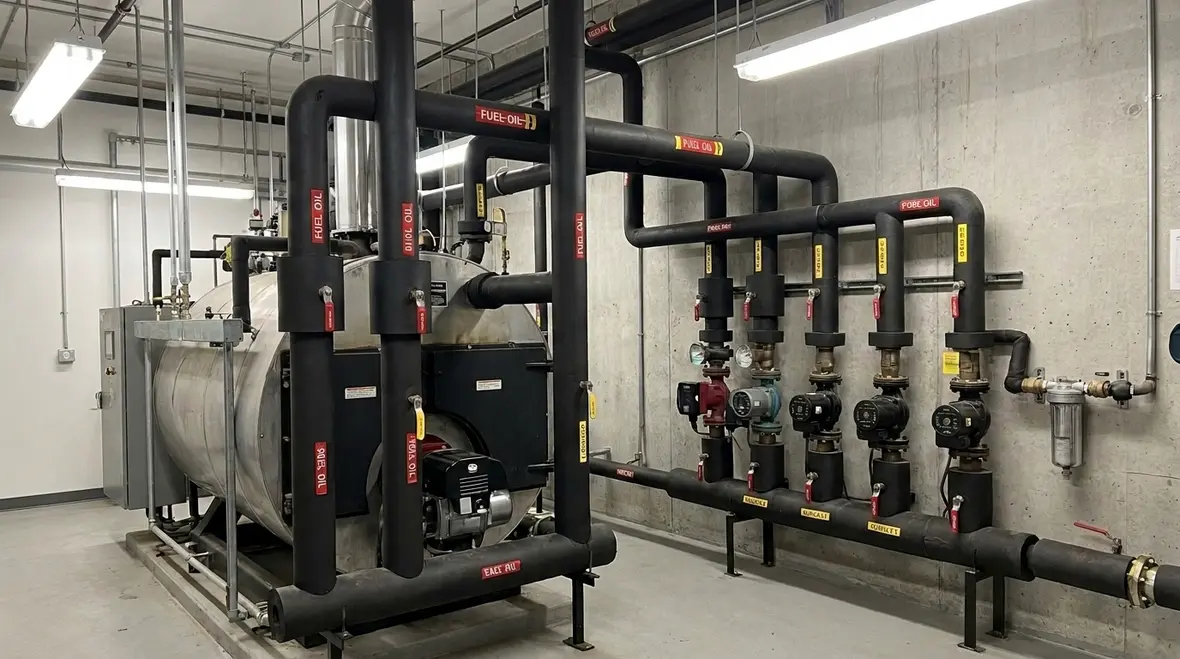
NFPA 31 Section 8.1: Scope of the Heating Fuel Piping Chapter
Quick Answer: NFPA 31 Section 8.1 defines which heating fuel piping systems fall under the “Fuel Piping” requirements in Chapter 8. It frames the extent of coverage for oil and related fuel distribution piping, helping facilities apply the correct design, installation, protection, inspection, and maintenance rules.
What does NFPA 31 chapter 8 fuel piping scope cover under Section 8.1?
NFPA 31 Section 8.1 sets the boundaries for the chapter’s fuel piping provisions. In practical terms, it clarifies when a piping system transporting heating oil or fuel oil is considered “heating fuel piping” that must meet the Chapter 8 installation and safety intent. This scope matters because commercial facilities often combine multiple heat sources, tanks, burners, and piping routes across buildings, plant rooms, service corridors, and rooftop equipment areas.
To support safe commissioning and ongoing compliance, facility teams need to understand what the scope includes, what is outside the chapter, and how that affects inspection planning, corrective action workflows, and documentation for AHJs and insurance stakeholders. For teams that also handle installation best practices for burner systems, this guide provides a practical context: NFPA 31 a practical guide to oil burning equipment installation. If you’re reviewing broader compliance support needs, fire protection services in Southern California can help frame inspection, repair, and documentation priorities naturally within a larger facility safety program.
Why Section 8.1 scope affects real-world fire safety outcomes
In commercial, industrial, and retail environments, fuel piping condition and routing often drive the highest risk exposure during abnormal operations. Even when burners and controls are compliant, piping defects can create leak pathways, ignition sources, and delayed detection. Section 8.1 influences how organizations treat piping systems during:
- Initial installation and upgrade projects, including boiler rooms and auxiliary equipment areas.
- Annual and seasonal inspection programs for fuel oil piping integrity.
- Hot work permits when piping is altered, isolated, or bypassed.
- Renovations that reconfigure equipment spacing or change tank to burner routes.
- Preventive maintenance schedules that include filter service, valves, and leak mitigation components.
Correct scoping prevents under-application of Chapter 8 requirements, which can leave piping segments vulnerable to corrosion, mechanical damage, and improper protection. It also prevents overreach that can lead to unnecessary demolition or rework, which can disrupt operations and extend facility downtime.
Common systems facilities confuse with “fuel piping”
Compliance problems typically start when maintenance teams or contractors treat piping as a generic “utility line” rather than a heating fuel piping system governed by NFPA 31. The following scenario patterns commonly trigger scoping questions during plan review and field inspection:
1) Tank outlet piping versus service and return piping
Some facilities have multiple piping runs related to supply, return, or recirculation. Contractors sometimes apply Chapter 8 protections only to the most visible supply line and overlook segments associated with control valves, return piping, or remote components. When Section 8.1 scope is not understood, risk increases because unprotected or inadequately supported sections can leak under vibration, thermal expansion, or valve actuation cycling.
2) Buried, concealed, or routed in non serviceable spaces
Fuel piping routed through walls, shafts, chases, or areas with limited access can mask seepage for extended periods. Even small leaks can accumulate, migrate to ignition sources, and produce difficult-to-trace odor or smoke events. Scoping determines which segments require the Chapter 8 approach to installation and protection.
3) Piping interfaces with tanks, pumps, filters, regulators, and strainers
Fuel piping safety often hinges on the condition and arrangement of components that sit at interfaces: suction lines to pumps, discharge transitions, and inlet piping to burners and filters. If Section 8.1 scope is misunderstood, teams may treat these interfaces as “equipment piping” rather than part of the fuel distribution system, delaying corrective action when leaks or abnormal pressure differentials occur.
How Chapter 8 scope influences installation, protection, and inspections
Once Section 8.1 establishes that a piping system falls within the heating fuel piping chapter, facility teams should expect Chapter 8 requirements to drive how fuel piping is installed and evaluated. That directly affects:
- Support and routing: Proper hangers, separation from ignition sources, and routing that reduces mechanical stress.
- Leak control approach: Arrangements that reduce the chance of fuel accumulation and enable detection.
- Protection from physical damage: Guarding where piping is exposed to impact, maintenance contact, or traffic.
- Component selection: Correct valves, fittings, and pressure ratings aligned with the intended system operation.
- Inspection and testing planning: Clear identification of which sections must be checked for deterioration, seepage, corrosion, and loose connections.
Commercial maintenance teams often discover scope gaps during recurring inspections, especially in multi tenant buildings, where piping routes cross between units or share utility corridors. When Kord Fire Protection supports compliance programs, the focus stays on confirming piping boundaries, documenting accessible sections, and aligning testing and maintenance actions with the governing NFPA requirements for fuel piping. This prevents recurring “find and fix late” cycles that increase operational disruption.
Operational failure points to watch when fuel piping scope is applied
Even well installed piping can fail when operating conditions change or maintenance is inconsistent. The following failure points frequently surface during routine service and AHJ walkthroughs, and they map directly to why scoping under NFPA 31 chapter 8 fuel piping scope must be correct:
Connection and gasket degradation
Fuel oil piping joints, flanges, and fittings can loosen or degrade under thermal cycling. Leaks often begin as localized dampness at a connection point and progress as vibration and expansion continue.
Corrosion and microbial influenced deterioration
Corrosion can develop on externally exposed piping, and contamination or water in fuel can accelerate internal degradation in some systems. Concealed runs make early detection difficult, which increases the importance of scoping for inspection access strategies.
Unsupported sections and mechanical strain
Improper support spacing can cause fatigue and stress concentration at bends, valves, or flexible couplings. Over time, these stress points can create micro leaks and abnormal odor events.
Valve and filter related leak pathways
Service valves, shutoffs, strainers, and filters can become leak sources if seals harden or if components are not maintained. These components often sit within the effective fuel piping system boundary established by Section 8.1, so maintenance programs should treat them as part of the piping integrity plan.
Documentation and maintenance practices that keep facilities inspection ready
Facilities that maintain credible compliance programs treat NFPA 31 fuel piping scope as a living asset. They use it to standardize what gets inspected, what gets photographed, and what gets corrected. Key practices include:
- System boundary mapping: Create a diagram that identifies tank, piping routes, pumps, filtration, valves, and burner interfaces tied to the Chapter 8 scope.
- Access planning: Ensure required inspection access points remain available after renovations and tenant changes.
- Seasonal maintenance alignment: Pair inspection checklists with burner service intervals, because abnormal burner operation can change piping stress and pressure conditions.
- Leak response procedures: Establish a clear escalation plan for dampness, odor reports, and visible seepage, including controlled isolation and verification steps.
- Corrective action documentation: Track what was found, what was corrected, and how the correction was verified.
Kord Fire Protection supports commercial teams by aligning inspections and maintenance activities with the actual safety intent of NFPA 31 Chapter 8 fuel piping requirements. This approach helps facilities reduce repeat findings, improve audit defensibility, and keep systems operating safely through changing seasonal loads.
Frequently Asked Questions
Next step: Get your fuel piping scope confirmed
If your facility is undergoing a boiler upgrade, tenant change, or recurring NFPA 31 inspection, confirm the heating fuel piping boundaries that fall under Section 8.1 and Chapter 8. Contact Kord Fire Protection to support scoping review, inspection planning, and documentation that stays aligned with commercial operational realities and ongoing maintenance needs. Early confirmation reduces rework, shortens downtime, and strengthens compliance outcomes.

Join Our Newsletter!
Get the latest fire safety tips delivered straight to your inbox From our Newsletter.



