
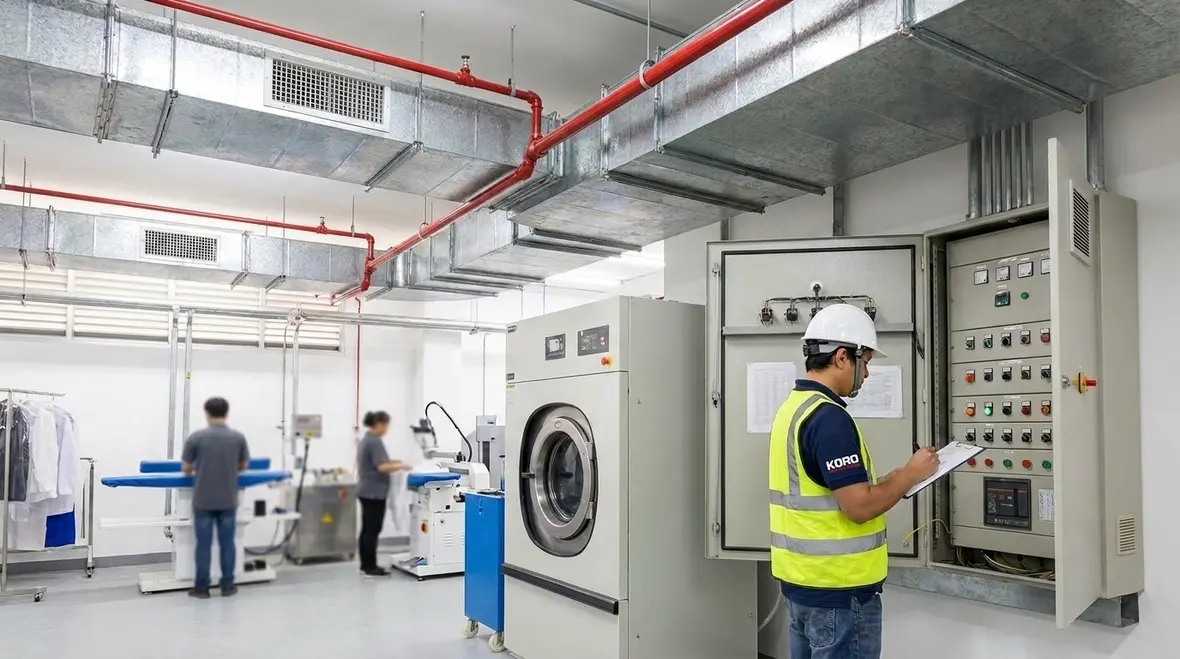
NFPA 32 Section 4.4 Building Services: Electrical and Mechanical Rules
Quick Answer: NFPA 32 Section 4.4 establishes requirements for how electrical and mechanical building services support drycleaning operations. It focuses on safe installation, segregation, system control, supervision, and maintenance so building services do not increase fire or explosion risk in NFPA 32 processes.
For owners, operators, and safety managers in NFPA 32 building services drycleaning facilities, Section 4.4 affects day to day operations more than many teams expect. The clause does not just address “general building safety.” It governs how power, ventilation, and other mechanical systems interface with drycleaning equipment and flammable or combustible hazards. When building services are installed incorrectly, modified without coordination, or left uninspected, the facility can develop hidden ignition and spread pathways.
This article explains how NFPA 32 Section 4.4 is typically enforced in commercial, industrial, and retail environments, what inspectors look for during walk throughs and record reviews, and where maintenance teams most often see failures. It also outlines a practical compliance approach that works with ongoing production rather than interrupting operations unnecessarily.
If your team is reviewing broader inspection readiness, it may help to compare this topic with Kord Fire Protection’s commercial fire safety audit step by step process and Kord Electric’s guidance on commercial building electrical inspections.
What NFPA 32 Section 4.4 Controls in Real Facilities
NFPA 32 Section 4.4 addresses building services that support electrical and mechanical systems in the context of drycleaning operations. In practical terms, it aims to prevent service systems from becoming ignition sources, from failing in a way that increases hazard, or from enabling fire and vapor propagation through building infrastructure.
During compliance evaluations, the emphasis typically lands on four areas:
- Electrical reliability and hazard awareness, including equipment power wiring, disconnecting means, and protection against conditions that can energize or malfunction.
- Mechanical ventilation and airflow control, including ducting integrity, fan operation, and supervision where required.
- System integration, meaning drycleaning equipment is not “operated independently” from building services that provide safety functions.
- Maintenance and change management, including how modifications, replacement parts, and housekeeping affect ongoing compliance.
Facilities that handle frequent tenant work, equipment swaps, or rapid production changes often drift out of alignment. A “paper compliant” layout can still fail in the field if devices are damaged, bypassed, miswired, or improperly maintained.
Electrical Building Services: Common Inspection Focus Areas
NFPA 32 Section 4.4 ties electrical building services to the fire safety performance of the drycleaning process. Inspectors generally treat electrical systems as both an ignition risk and a control system for safe shutdown or limitation of hazardous conditions.
1) Power distribution and protection of drycleaning equipment
Electrical power to drycleaning machines, auxiliaries, and associated safety controls must be installed and maintained to prevent unintended energization. Common field problems include:
- Improper overcurrent protection or mismatched device ratings after repairs.
- Loose terminations at disconnects, panels, or junction boxes due to vibration or repeated service access.
- Damage to conductors from handling, chemical exposure, or poor routing through service penetrations.
- Unauthorized interconnections made by contractors without confirming required control sequences.
2) Disconnecting means and emergency control coordination
Electrical disconnects must remain accessible and functional. In drycleaning facilities, inspectors also look for coordination between building services and equipment control logic. Failure modes include:
- Disconnects that are present but blocked, missing labels, or not aligned with equipment identification.
- Control circuits that energize ventilation fans, sensors, or actuators without any documented logic or test procedure.
- Repairs that restore operation but remove interlocks or disable safety devices.
Routine testing and documented verification are essential. Kord Fire Protection supports commercial compliance programs by aligning inspection readiness with practical maintenance schedules and by providing expert documentation support for required testing.
Mechanical Building Services: Ventilation, Ducting, and Airflow Control
Mechanical building services in drycleaning facilities are often the most operationally visible element, yet they are also one of the easiest systems to quietly degrade. NFPA 32 Section 4.4 expectations typically translate into strict emphasis on ventilation effectiveness and reliable mechanical operation.
1) Ventilation performance and system integrity
Mechanical systems manage the movement and control of airborne hazards. Inspectors generally evaluate whether fans, ductwork, and dampers continue to perform as designed. Frequent failure points include:
- Damper misalignment after maintenance access or duct rework.
- Duct leaks at joints or penetrations that allow vapor migration into protected building areas.
- Fan speed drift due to worn motors or incorrect replacement parts.
- Blocked intakes or exhaust paths from storage practices or housekeeping gaps.
2) Airflow supervision and functional checks
Where ventilation functions as a safety control, the system must be verified through functional checks that confirm proper startup, operation, and response to conditions that affect hazard control. A major compliance challenge appears during contractor work: building service systems may continue to run, but they do not respond to abnormal conditions as required.
To prevent this, facilities should enforce change management procedures that require sign off and test verification after any modification to ductwork, fans, wiring, controls, or filters that impact airflow.
Integration and Change Management: Where Compliance Breaks Down
The most common compliance gaps in NFPA 32 building services drycleaning facilities occur at the interfaces. Section 4.4 effectively expects building services to remain aligned with the drycleaning process safety design, not simply installed in the original build.
How modifications create hidden hazards
Common scenarios include:
- Equipment relocation or replacement without verifying that the mechanical and electrical services still match original hazardous classifications and control sequences.
- Tenant build outs where electrical work is completed to a general standard, but ventilation control and interlocks remain undocumented.
- Component substitution using non equivalent parts that change performance characteristics such as motor load, fan capacity, or sensing response.
Operational procedures that affect safety system performance
Even correct hardware can fail due to operational drift. Facilities need clear procedures that address:
- Startup and shutdown sequencing for ventilation and electrical controls.
- Filter and maintenance intervals that prevent airflow loss.
- Housekeeping practices that protect intakes, exhaust openings, and electrical equipment enclosures from contamination and damage.
- Temporary conditions during maintenance, including how systems are restored and verified before returning to production.
For continuous compliance, commercial operators benefit from a partner that understands how inspection requirements map to real maintenance execution. Kord Fire Protection helps facilities keep building services aligned through testing, documentation, and practical service planning.
To further support your broader fire safety program, review Kord Fire Protection resources on commercial fire safety protocols for modern infrastructure.
Inspection, Testing, and Maintenance Readiness
NFPA 32 Section 4.4 compliance does not end with installation. It depends on ongoing readiness, including inspection evidence, functional testing, and responsive maintenance when degradation is detected.
What records typically need to show
While exact documentation requirements depend on site configuration and local enforcement, commercial inspection trends often include the following:
- Proof of functional checks for ventilation operation and control responses.
- Electrical verification records for service equipment, disconnects, and control circuits.
- Maintenance logs showing replacement intervals for filters, belts, motors, and wear prone components.
- Change documentation for modifications, including contractor scope, updated drawings, and post work testing results.
Common field maintenance mistakes
Facilities often discover issues only when performance drops. Typical mistakes include:
- Replacing components without confirming compatibility or performance impact.
- Skipping post repair testing because production schedules look tight.
- Allowing temporary bypasses of safety related controls to persist after maintenance.
- Delaying enclosure repairs so moisture, dust, or chemical contaminants continue to degrade components.
When these gaps exist, inspection outcomes can shift quickly from “minor deficiency” to a more serious compliance interruption. A structured maintenance and inspection calendar reduces that risk.
Frequently Asked Questions
Next Step: Get Your Building Services Compliance Verified
Drycleaning operations depend on safe integration between process equipment and building services. Conduct a compliance focused review of electrical and mechanical systems under NFPA 32 Section 4.4, then validate performance through documented testing and maintenance alignment. If you want to reduce inspection surprises and strengthen ongoing readiness, contact Kord Fire Protection to schedule an assessment and build a practical testing and maintenance plan that supports continuous production.

Join Our Newsletter!
Get the latest fire safety tips delivered straight to your inbox From our Newsletter.



