NFPA 20 Chapter 12 Diesel Fire Pump Controller Alarms
Quick Answer: NFPA 20 Chapter 12 sets the standard for diesel fire pump controllers and the alarm signals that keep fire response reliable. It defines what the controller must monitor, how it must report trouble, and what alarms must sound or transmit. Kord Fire Protection helps sites stay compliant and ready, without guesswork.
For facilities that want broader system support beyond controller alarms, Kord Fire Protection also provides full fire protection services that fit naturally into ongoing inspection, testing, and readiness planning. That matters because a diesel controller does not live in a vacuum. It lives in a building full of equipment, deadlines, inspection pressures, and people who really do not want a surprise fault light at 4:57 on a Friday.
NFPA 20 Chapter 12: what diesel controller alarms must cover
Facilities do not just want a diesel pump to start. They want the diesel fire pump controller alarm requirements handled with discipline, so operators know what is happening before a problem becomes a story nobody wants to tell.
Within the first moments of an incident, the controller must help the system do its job, and it must warn people when the system will not. That means reliable monitoring, clear trouble alerts, and alarm signals that match what NFPA 20 expects for diesel engine fire pump setups. If a site is already reviewing broader pump requirements, Kord Fire Protection’s NFPA 20 fire pump systems overview adds useful context around how these controller obligations fit into the larger fire pump picture.
Now, yes, “it started” is a nice headline. But fire protection professionals live in the smaller print: time delays, supervision points, and the difference between a warning and a silent failure. Kord Fire Protection takes that seriously and becomes a vital partner on controller service, commissioning support, and ongoing readiness.
Understanding diesel fire pump controller supervision in the real world
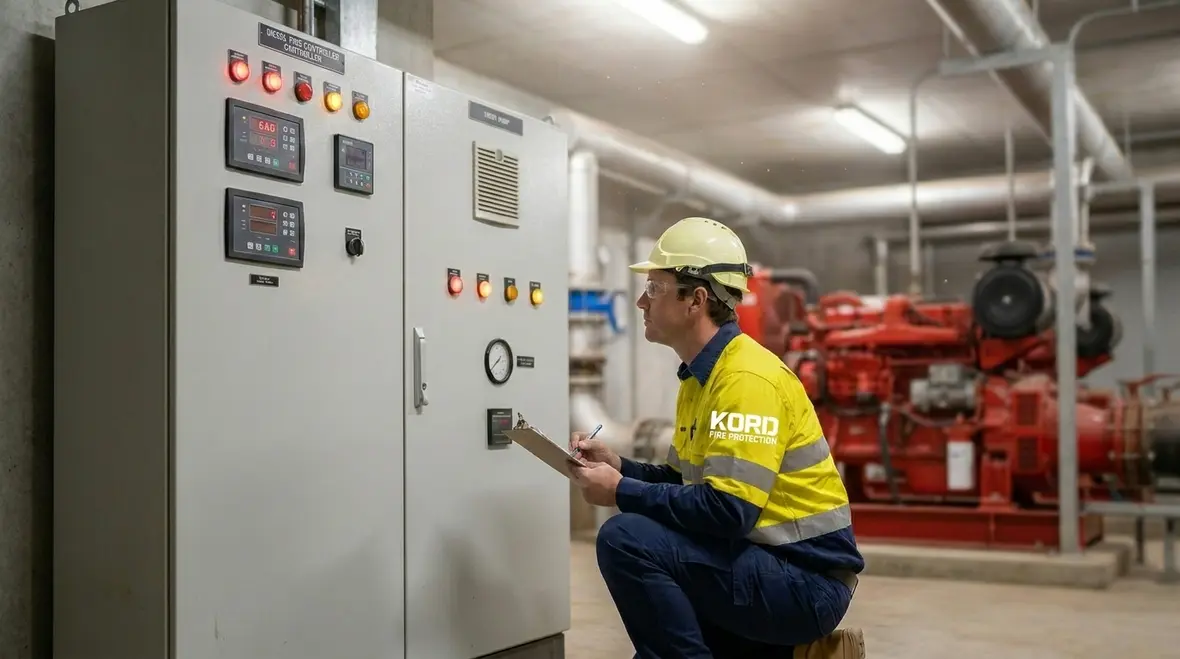
NFPA 20 Chapter 12 focuses on how the diesel fire pump controller supervises critical conditions. In practice, this supervision creates a map of health for the engine and the controller itself. Therefore, when something goes out of tolerance, the building team gets notified quickly and consistently.
Most sites in retail, industrial, and commercial facilities rely on dependable status reporting because they do not have time to troubleshoot during emergencies. In addition, many operations run around the clock, so alarms must work when people are tired and when shift handovers happen at the worst time possible, like right before a storm rolls in.
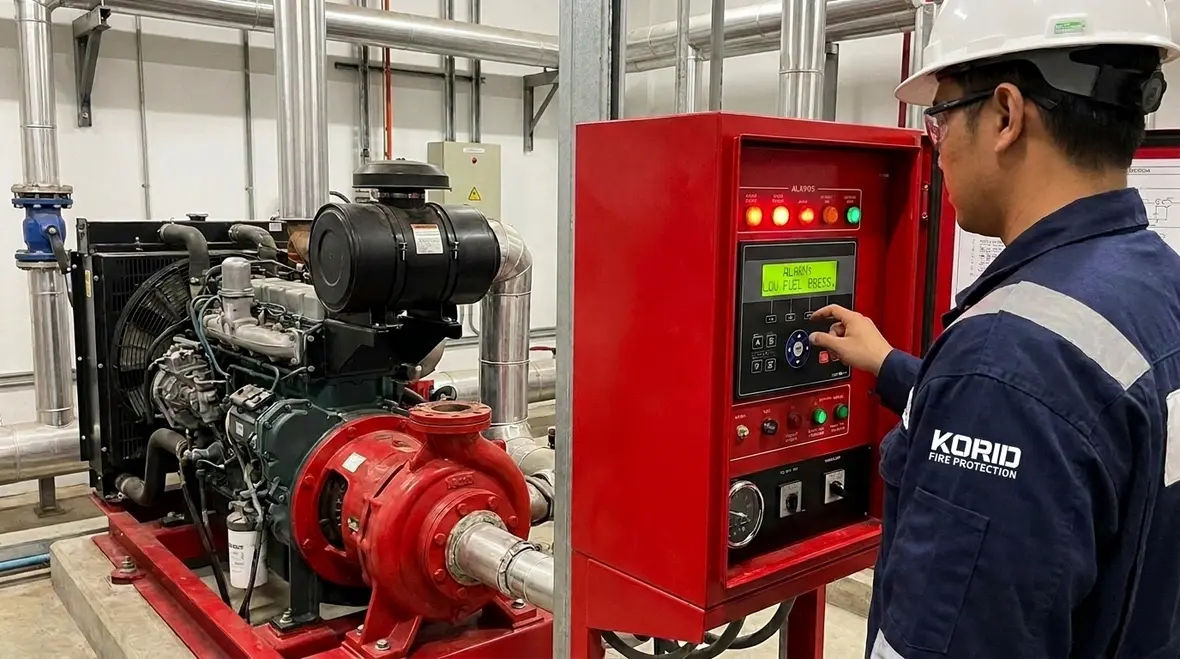
Controllers typically supervise inputs such as engine start readiness, battery and charging health, shutdown causes, and power supply status. Then, they translate those inputs into actionable indications. In other words, the controller does not just watch; it communicates.
Why supervision is the difference between awareness and wishful thinking
A diesel fire pump system can look perfectly calm right up until the moment it is needed. That is why supervision matters so much. It catches the less dramatic problems before they become the dramatic kind. A weak battery, a charging issue, or a shutdown condition might not grab anyone’s attention during a normal workday, but during a fire event those same issues can turn into expensive regret with terrible timing.
Good supervision also helps maintenance teams prioritize. Instead of chasing vague complaints or relying on somebody’s memory of a flashing light from last week, the team can work from specific monitored conditions. That makes service faster, cleaner, and a lot less dependent on heroic guessing.
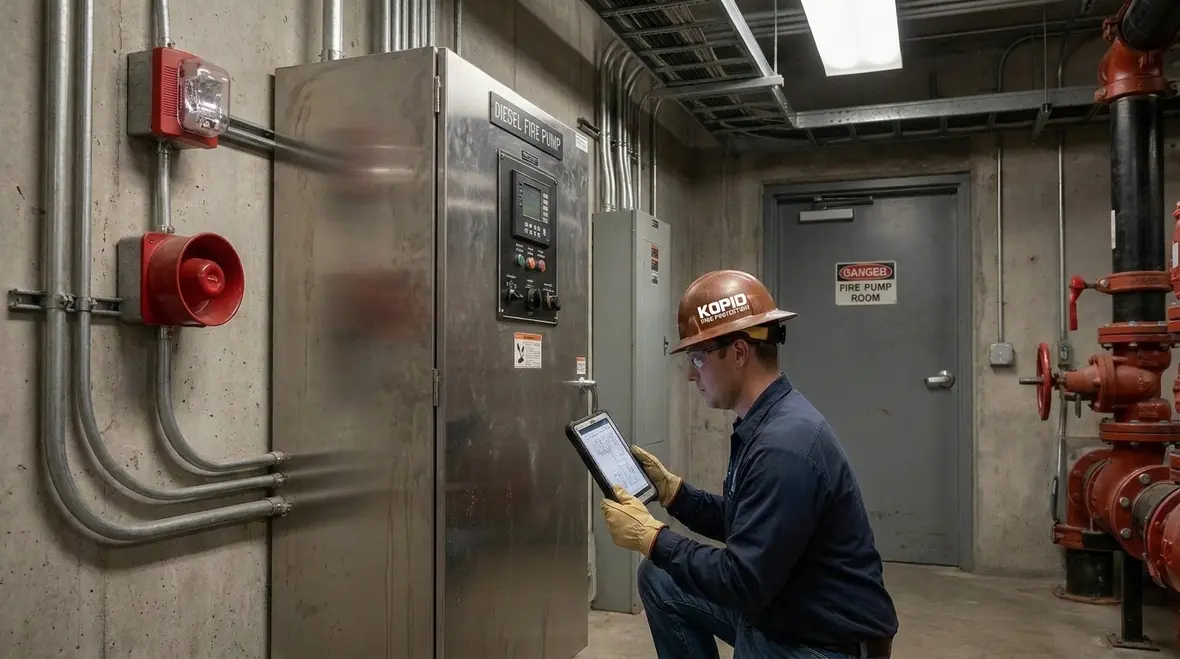
Alarm signals that help teams respond faster
Alarm signals exist for one reason: to reduce confusion. When a diesel fire pump system needs attention, the right alarm must reach the right people through the right method. Consequently, Chapter 12 pushes for alarm signalling that supports timely intervention.
Instead of vague “system issue” messages, the controller should provide clear trouble signals and supervision indications. Furthermore, alarm outputs should align with what the site needs for response workflows, including audible and visual alerts and any required signalling to remote locations.
Think of it like a good customer service line. If the controller says “hold music” when it should say “press 1 now,” then the fire team loses precious minutes. Nobody wants to be stuck on hold with a diesel engine while the hazard grows.
What better alarm clarity looks like during an actual response
When alarm signals are mapped clearly, teams can tell the difference between a startup issue, a maintenance problem, and a critical condition that affects fire pump availability. That distinction is everything. Clear alarm wording and reliable signalling reduce wasted motion, duplicate callouts, and those awkward moments where three people are investigating the same panel while the real issue sits elsewhere rolling its eyes.
It also supports escalation. Some issues need immediate technical attention. Others need documentation, follow-up testing, or a scheduled repair. A controller that reports conditions properly gives sites a practical path forward instead of a blinking mystery box with commitment issues.
Start failure, shutdown causes, and trouble reporting
It is not enough for a system to survive normal testing. A well-designed diesel installation anticipates what happens when the engine cannot start or must shut down. Then it reports those failures in a way that helps people correct the issue.
NFPA 20 Chapter 12 addresses controller behavior around start sequences and shutdown conditions. For example, the controller must detect conditions that prevent safe operation, and it must signal those conditions as alarms or trouble indications according to the standard’s requirements.
Additionally, diesel engines come with realities that differ from electric pump controllers. Fuel supply, battery condition, glow systems, engine temperatures, and protective shutdowns all play a role. Therefore, the alarm logic must match those realities instead of treating the controller like a simple on-off switch.
This is also where troubleshooting discipline pays off. A reported start failure is never just a nuisance light to clear and forget. It is a direct clue that the system may not perform as expected under demand. The same goes for shutdown causes. If a controller records an abnormal stop, the follow-up should answer what happened, why it happened, and whether the condition could repeat under fire service demand.
Facilities that take these signals seriously usually avoid bigger problems later. Facilities that do not often end up discovering issues at the least convenient moment possible, which is a polite way of saying during an emergency or right before an inspection.
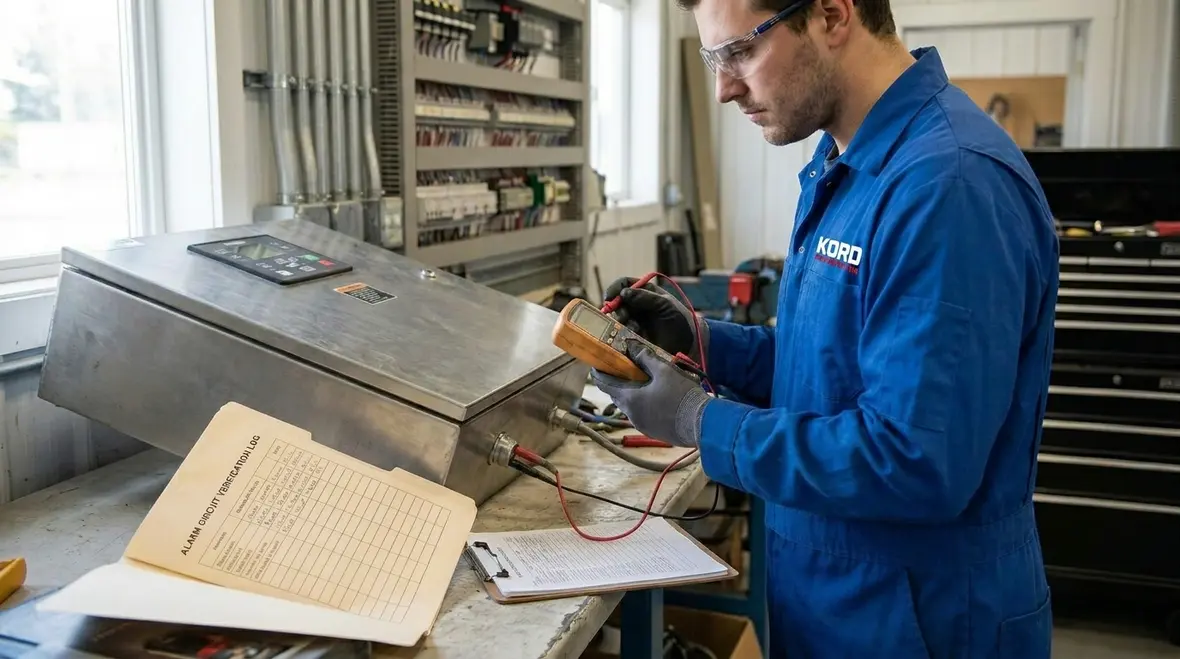
How installation, testing, and service affect compliance
A controller that is correct on paper can fail in the field if installation, wiring, and testing are sloppy. That is why service and test practices matter just as much as the controller model.
When contractors install diesel fire pump controllers, they must ensure the alarm points function properly, the wiring supports reliable supervision, and the outputs match the intended alarm strategy. After installation, testing verifies that the system responds correctly under simulated abnormal conditions.
Then, maintenance cycles keep those capabilities intact. Over time, batteries age, sensors drift, connections loosen, and interfaces change. As a result, periodic functional testing and inspection become essential, not optional.
Kord Fire Protection supports that lifecycle. It helps facilities keep controller alarm pathways accurate through service, documentation, and test readiness support. In short, Kord helps turn compliance from a one-time project into an ongoing habit.
Why routine service keeps alarm logic from quietly drifting off course
Alarm compliance is not only about whether a signal exists. It is about whether that signal still reflects reality months or years after installation. Service visits help confirm that battery sets still hold up, sensing inputs remain stable, circuit paths still supervise correctly, and interface changes have not introduced strange side effects. Buildings change over time. Equipment gets upgraded. Wiring gets touched. Labels fall off and apparently go on vacation forever.
That is why periodic functional checks matter. A clean report should reflect more than paperwork. It should reflect a controller that still behaves correctly when the abnormal condition actually appears.
Documenting alarm circuits and making audits easier
Compliance is not only about what the controller does; it is also about what the facility can prove. Therefore, facilities benefit from strong documentation of alarm circuits, alarm point mapping, test results, and inspection records.
When auditors or insurers request evidence, the team needs clear details: which circuits supervise which conditions, how trouble signals activate, and what results testing produced. Moreover, if a site modifies building services, fire alarm interfaces, or control wiring, updated records prevent “mystery changes” from creeping in.
For industrial, retail, and commercial operators, this documentation reduces downtime and avoids repeat visits. It also gives maintenance teams the confidence to act without guessing, which saves time, labour, and budget. Kord Fire Protection can assist by aligning controller service with the documentation needs that inspections and audits typically demand.
Good records also improve handovers between teams, contractors, and site leadership. When the next inspection arrives, nobody has to reconstruct the last six months from coffee-stained notes, half remembered phone calls, and one brave spreadsheet doing its best under pressure.
Why Kord Fire Protection becomes a vital partner
Many organisations treat diesel controller work as a periodic chore, like cleaning a duct you only remember exists when the air feels stale. However, controller alarm requirements are critical to safe operation and compliance, and small issues can lead to big consequences.
Kord Fire Protection supports diesel fire pump controller alarm pathways through service planning, practical testing support, and steady follow-through. Because the real goal is operational confidence, Kord focuses on keeping alarm signals clear, supervised inputs accurate, and system readiness consistent.
When Kord partners with a site, teams gain a service ally who understands NFPA 20 Chapter 12 expectations and the day-to-day pressures of facilities operations. That means fewer surprises, faster troubleshooting, and better outcomes across many facility types.

FAQ: diesel fire pump controller alarm requirements
Call Kord Fire Protection for diesel controller readiness
NFPA 20 Chapter 12 deserves more than a quick glance during inspection season. Kord Fire Protection helps industrial, retail, and commercial facilities keep diesel fire pump controllers supervised, alarms clear, and testing dependable. If you want fewer surprises and smoother audits, reach out to Kord today to discuss controller service, alarm circuit verification, and readiness planning tailored to your site.
The real win is not just passing an inspection. It is knowing the controller will communicate clearly when conditions change and the system needs attention. That confidence supports better maintenance decisions, cleaner documentation, faster troubleshooting, and less drama overall, which is exactly the kind of quiet success most facility teams would happily take.

Join Our Newsletter!
Get the latest fire safety tips delivered straight to your inbox From our Newsletter.