NFPA 20 Chapter 9 Electric Fire Pump Power Supply Requirements
Quick Answer (NFPA 20 Chapter 9)
NFPA 20 Chapter 9 sets electric drive requirements for fire pumps, including how the power source, controls, starting methods, and listed components must perform under fire conditions. To meet these rules across Australian facilities, teams often need careful coordination, testing, and documentation. Kord Fire Protection can help handle that detail-heavy work through its full fire protection services.
In the real world, NFPA 20 compliance starts with the basics, and that’s where the electric fire pump power supply requirements come in. First, the job demands a power source that can deliver the needed voltage and current when it matters most. Then, the system must keep running with proper control of starting, transfer, and protection devices. After that, the site must still prove it through inspection, testing, and clear records. In other words, the standards do not care how busy the facility is, and your fire pump will not accept excuses.
Electric drive rules under NFPA 20, Chapter 9
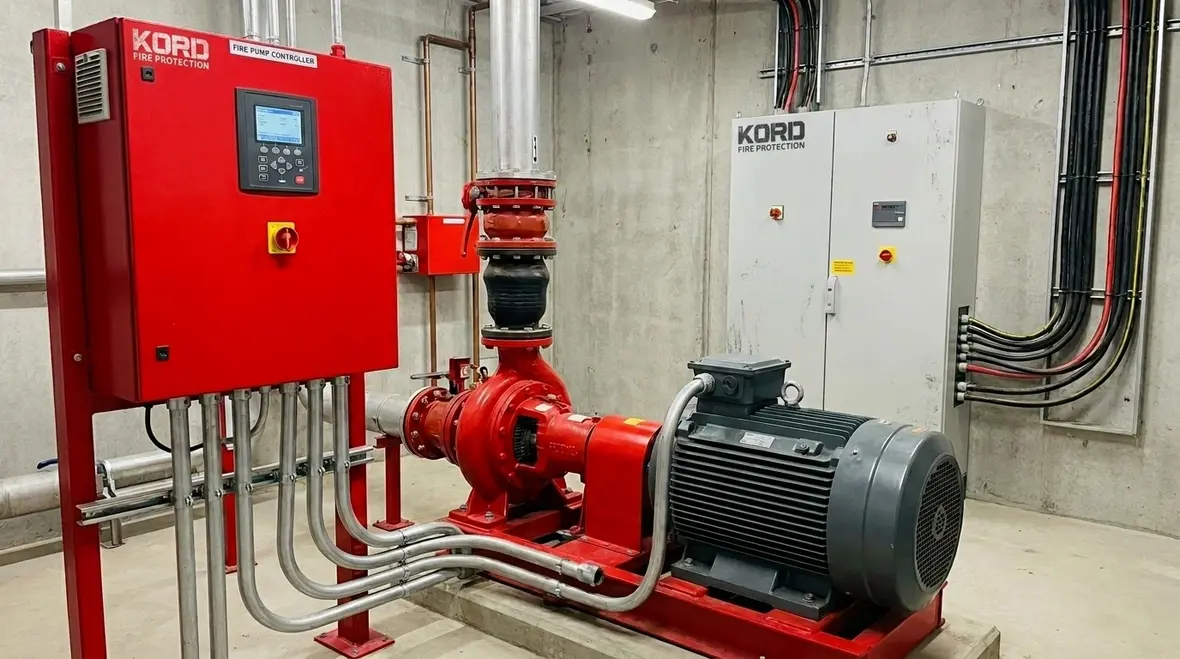
NFPA 20 Chapter 9 focuses on the electric driver side of fire pump systems. It governs how electric motors start, how they get fed power, and how they remain reliable during fire duty. Therefore, the chapter connects design to on site performance. It also reduces guesswork for operators who just want the pump to do its job, not star in a dramatic “will it start” suspense film.
In facilities across Australia, this matters because commercial and industrial sites often have complex electrical networks: multiple switchboards, backup generation, and different protection schemes. Consequently, the fire pump design must match the electrical reality on the ground. When it does, the system performs. When it does not, inspectors will ask questions that do not end with “it’ll be fine.”
For teams that want broader context around how this chapter fits into the full standard, Kord Fire Protection’s guide on how NFPA 20 regulates fire pump systems is a useful companion read. It helps connect Chapter 9 to the rest of the compliance picture without forcing anyone to romance a code book on the weekend.
Why the chapter matters in actual buildings
A fire pump is one of those pieces of infrastructure that gets ignored right up until everyone desperately wants it to work. Chapter 9 exists because electric fire pump failure usually does not happen in cinematic slow motion. It happens through voltage problems, poor coordination, bad settings, questionable wiring, or equipment choices that looked fine in a meeting and awful during commissioning. The chapter forces the design team to think through those ugly realities early.
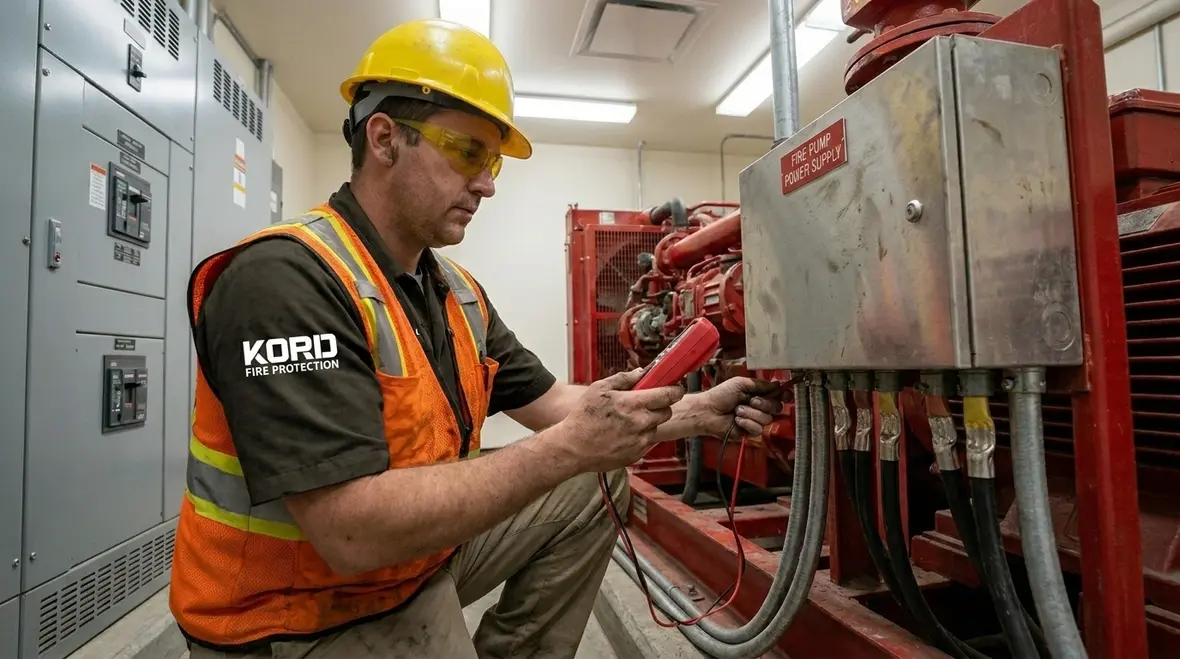
How the electric fire pump power supply requirements shape design
The electric fire pump power supply requirements form the foundation. Designers must ensure the pump receives a supply that stays available for fire service. This includes correct voltage, reliable feeders, and suitable separation from non fire loads. It also includes how the system handles transfer or alternative power sources, where applicable, so the pump can start and run as required.
Next, the power path must include protection devices that do not interfere with pump operation in a fire scenario. At the same time, the design must control fault conditions to protect equipment. So the solution needs balance: firm reliability, but also wise electrical protection. That is where many teams either get it right during planning or get stuck later during troubleshooting, when time is the one thing nobody has.
For Australian facilities, Kord Fire Protection often supports teams by reviewing the pump power architecture against the intent of Chapter 9. Then, it helps coordinate documentation and site checks so the electrical side does not become a last minute “surprise feature.”
Design questions worth asking early
Before equipment lands on site, smart teams ask very boring questions that save very expensive headaches later. Is the available fault current understood? Is the feeder route realistic? Does the controller location help or hurt serviceability? Will voltage drop during starting stay within a workable range under worst case conditions? None of these questions are glamorous, but neither is explaining to an inspector why the fire pump has performance anxiety.
Starting, controls, and drive behaviour during emergencies
Electric drives must meet strict expectations for starting. Chapter 9 expects the starting method to deliver the needed torque and current characteristics without preventing successful operation under worst case conditions. Therefore, the control scheme must coordinate with the electric supply and the motor so that the pump starts promptly and reaches full duty.
Meanwhile, controllers and protective relays must also behave predictably. For example, the system must manage undervoltage and overload situations in a way that aligns with fire duty requirements. In addition, the fire pump control panel must support automatic starting when the system demands it and manual starting when operators need it.
Transitioning from design to installation is where details matter. Cable routing, terminations, and control wiring quality can affect voltage drop and signal reliability. As a result, teams must implement the control philosophy with disciplined workmanship. Kord Fire Protection can become a vital partner here, because it helps align commissioning plans with the actual equipment, not just the paper design.
Why starting performance is never just a motor issue
People sometimes talk about starting like it lives entirely inside the motor controller. It does not. Starting performance is shaped by upstream supply conditions, conductor sizing, equipment coordination, and whether the installed settings match the real electrical environment. One weak link can turn a confident start into a stuttering mess, and Chapter 9 is very much not in the mood for stuttering messes.
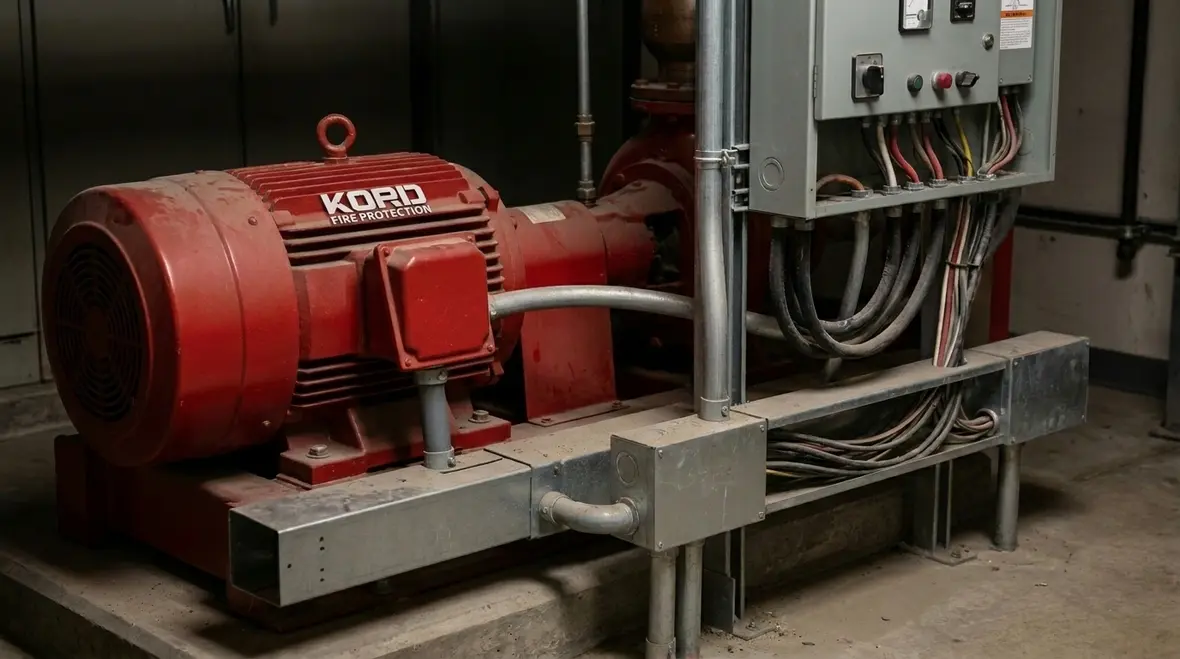
Separation, equipment listing, and code compliant wiring
NFPA 20 Chapter 9 depends on separation and correct component selection. Fire pump circuits typically require clear segregation from normal power circuits so a single fault does not compromise fire duty. Also, the motor, controller, and related electrical components must be evaluated for suitability for the fire pump application.
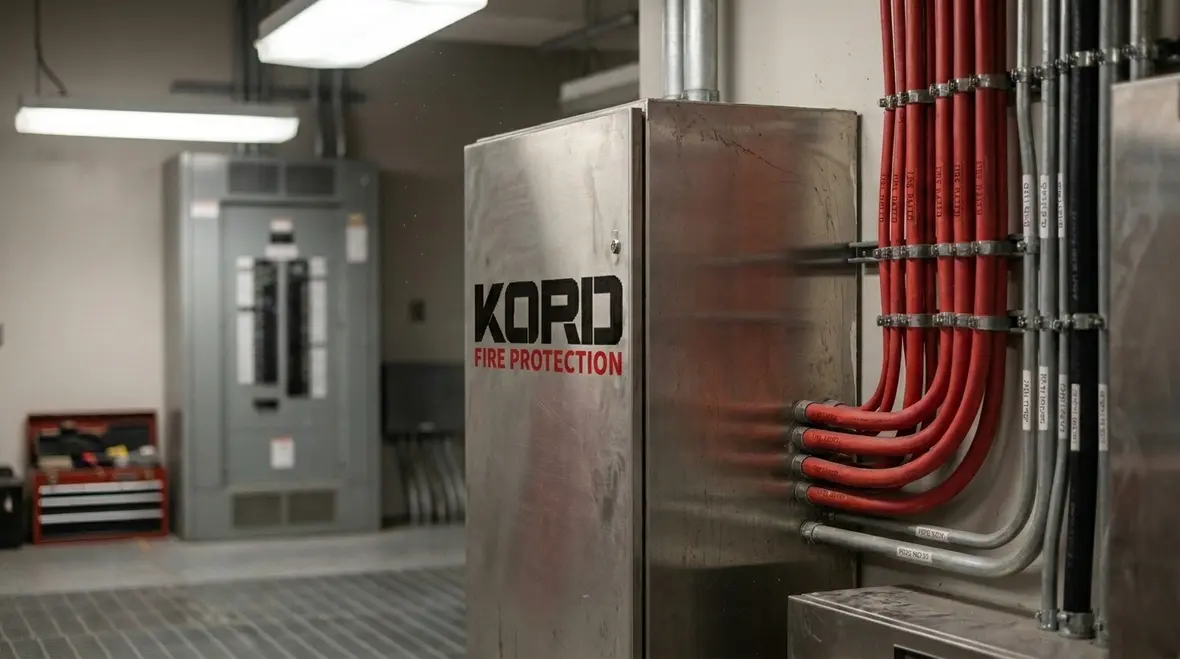
Just as importantly, wiring practices must support reliable operation. Cable sizing needs to meet performance needs, not just minimum ampacity. Terminations must hold torque and contact integrity. Furthermore, the system must use proper bonding and grounding strategies to reduce nuisance trips and improve fault detection behaviour.
In facilities across Australia, Kord Fire Protection helps bring order to these moving parts. It can coordinate the electrical scope with the fire pump scope so teams do not end up “almost compliant.” Because in fire life safety work, almost compliant is still non compliant, and the regulator does not clap for effort.
The hidden trouble in “close enough” installations
Close enough is a great standard for choosing office snacks and a terrible standard for fire pump power wiring. Slightly loose lugs, casual conductor routing, or poorly separated circuits may not fail immediately, which is exactly what makes them dangerous. They sit quietly, build risk, and wait for the one event where nobody can afford a surprise. Chapter 9 is trying to stop that movie before it gets a sequel.
Testing and proof of performance on Australian sites
Chapter 9 compliance is not complete until the system proves it. Therefore, the commissioning and testing approach must verify that the electric drive performs under conditions that reflect fire duty. That includes checks of phase balance, voltage at the pump terminals under load, correct operation of starting controls, and verification that protective devices operate as intended.
Additionally, installers should expect inspectors to look for evidence: records, settings, and clear signoffs. If a site relies on verbal assurances, it will likely lose time when documentation becomes the real bottleneck. Consequently, a disciplined commissioning process reduces delays and supports long term maintenance.
Kord Fire Protection can function as a vital partner by supporting the full workflow: review, coordination, commissioning assistance, and ongoing service planning. In practice, that means less scrambling when schedules tighten and fewer surprises when the test results arrive.
Common failure points and how teams prevent them
Electric drive systems fail in predictable ways. First, voltage drop issues can reduce motor performance during starting. Next, protective device settings can cause unwanted tripping or prevent the pump from reaching duty. Then, control wiring faults or misconfigured interlocks can block automatic start behaviour.
Another common issue involves mismatch between the design assumptions and the installed electrical field conditions. For example, if the actual feeder characteristics or terminations differ from what the design model used, the system may not perform as expected. As a result, teams must verify key measurements during commissioning instead of hoping for the best.
Finally, maintenance can erode compliance over time. If someone changes upstream breaker settings or modifies feeder routing without understanding the fire pump impact, the system can drift out of spec. Therefore, service planning matters, and that is exactly where Kord Fire Protection can support facilities with structured maintenance and attention to the electrical side of the fire pump system.
Prevention usually looks less dramatic than failure
Good prevention is rarely flashy. It looks like reviewed shop drawings, measured voltages, verified settings, labeled circuits, documented testing, and maintenance teams that do not freestyle changes on critical equipment. None of that will trend online, but it does keep the pump ready to work when the building has already had enough excitement.
Dual column view: compliance actions that keep electric drives healthy
Design and build actions
Confirm power source suitability and correct protection approach
Verify motor controller and starting method aligns with fire duty
Ensure separation and proper wiring practices
Plan cable sizing with voltage drop in mind
Keep documentation aligned with the installed configuration
Commissioning and service actions
Test starting behaviour and control panel responses
Check voltage and phase conditions at the pump terminals
Verify protective device operation and settings
Record results for inspection readiness
Maintain with controlled changes and clear accountability
FAQ
Request a compliance-ready electric drive review
Fire pump electric drives should behave like they’re confident, because during a real event, they do not get second chances. Kord Fire Protection can help your team align the installed system with NFPA 20 Chapter 9 expectations, support commissioning, and plan service so compliance stays intact.
If your project is underway or your fire pump maintenance cycle is due, contact Kord Fire Protection today for a practical, documentation backed review. It is a much better story when the pump starts immediately than when the post incident meeting begins with awkward silence and somebody saying, “Well, that’s not ideal.”

Join Our Newsletter!
Get the latest fire safety tips delivered straight to your inbox From our Newsletter.