PIDs and Electrical Classifications for Process Safety Compliance
Quick Answer: P&IDs and electrical classifications help teams prove equipment compliance, safety, and correct installation. When P&IDs reflect the true process design and electrical classification matches the real operating hazard, fewer issues slip into construction and commissioning. Kord Fire Protection can strengthen this backbone by aligning fire protection design, labeling, and documentation with the same compliance expectations.
In Australia, industrial, retail, and commercial facilities expect real proof of safety, not just good intentions. That is why P&ID requirements for process safety matter early. They guide how systems connect, how valves and instruments behave, and how controls and interlocks prevent the wrong outcome. Then, electrical classifications step in to ensure the wiring, lighting, power distribution, and devices match the hazard environment. When these foundations line up, projects move with fewer delays and calmer commissioning. And yes, smoother compliance usually means fewer surprises, which is rare enough to celebrate like a quiet Friday win.
However, this alignment does not happen by accident. It happens through careful detail, good coordination, and disciplined documentation. This is where fire safety technology integration with electrical systems becomes a practical companion to the P&ID and electrical classification job, helping teams treat fire protection as a system that must fit rather than a standalone add-on. For facilities needing broader support, Kord Fire Protection’s related fire suppression services approach shows how inspection, testing, and corrective work can line up with the same compliance backbone.
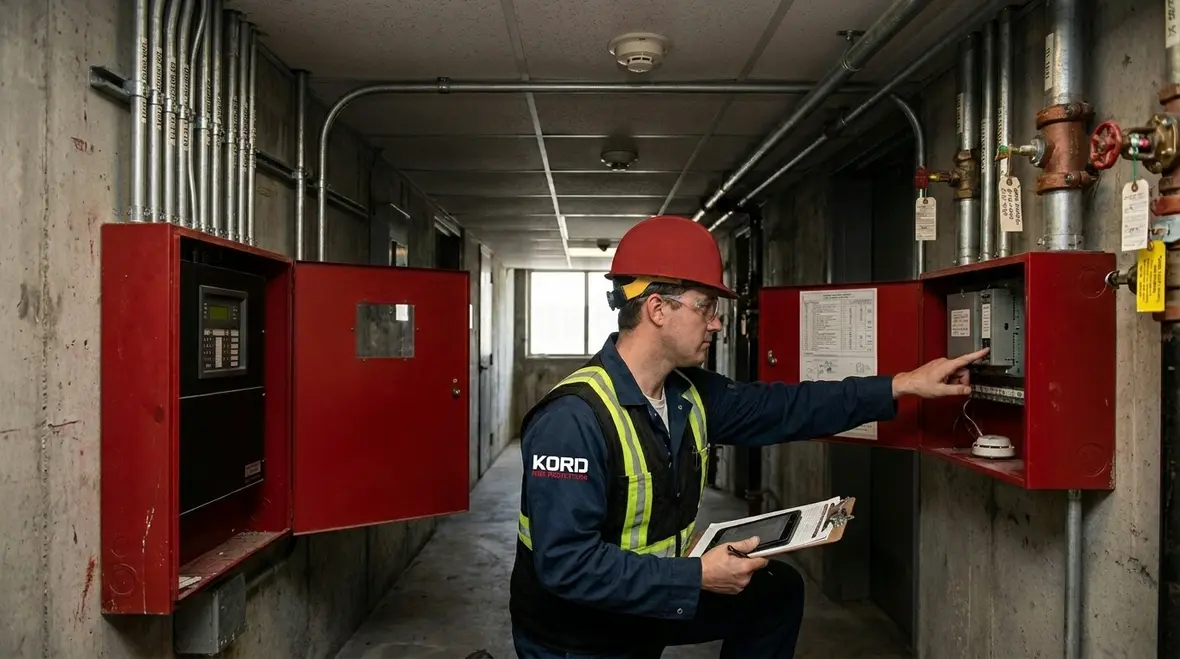
How P&ID requirements for process safety drive equipment compliance
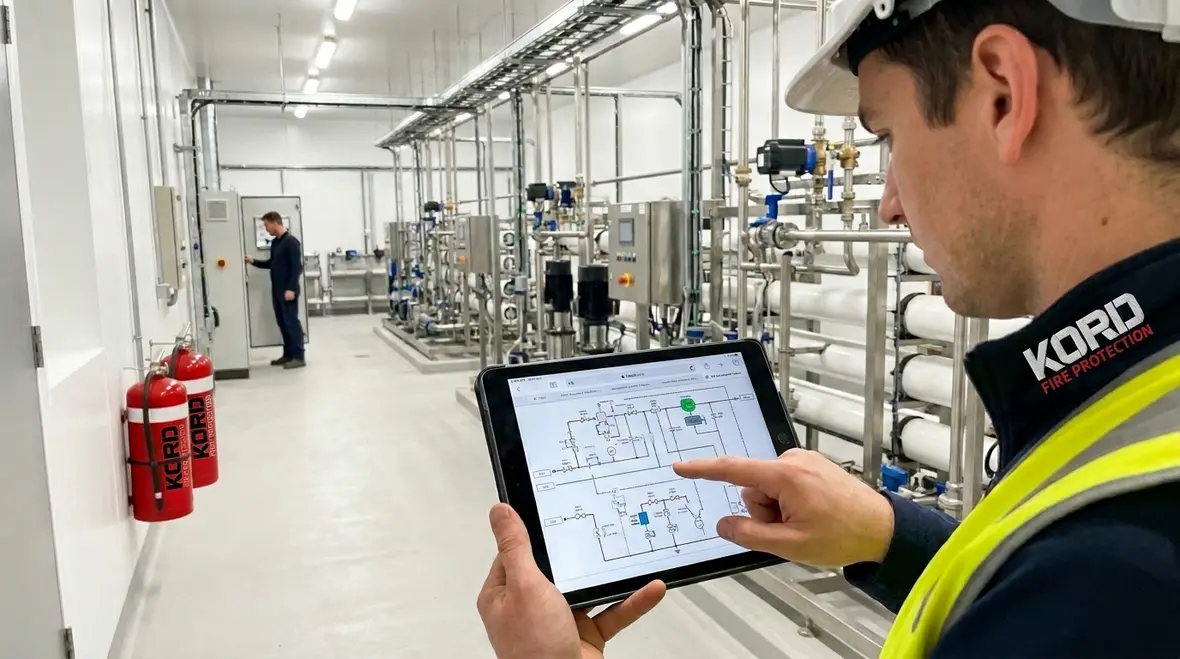
P&IDs, or Process and Instrumentation Diagrams, translate engineering intent into something others can build, test, and operate. First, they show the process lines and the control points. Next, they indicate tags, setpoints, and the expected sequence of operation. Then, they reveal where isolation, relief, and shutdown logic belong. With P&ID requirements for process safety in place, teams reduce gaps between design and reality.
In practical terms, good P&ID work supports compliance in five ways. It enables consistent equipment selection because instrument locations and operating conditions become clear. It supports safe maintenance because isolation and purge steps appear on the diagram. It improves operator understanding because signals and alarms map to the process story. It strengthens audit readiness because documentation shows why the plant behaves safely. And it helps construction teams avoid improvising, which is great for plumbers and bad for process safety.
What good P&IDs actually prove during review
A strong diagram does more than look tidy in a project folder. It proves the design team knew what the process was supposed to do, what it should do when conditions drift, and what must happen when something goes sideways. That proof matters during internal design reviews, commissioning signoff, and later audits. It also helps other disciplines stop guessing. If the process story is clear, mechanical, electrical, controls, and fire protection teams can all work from the same truth instead of assembling a mystery from half-complete notes and brave assumptions.
Electrical classifications: matching device choice to real hazards
Electrical classifications determine where and how electrical equipment can operate. They account for hazardous areas such as flammable vapours, dust zones, or other conditions that can ignite. When classification work is done well, it prevents an expensive problem: installing a device that should be fine until it is not. That is why electrical classification cannot be an afterthought.
To keep compliance tight, teams should connect electrical design assumptions to the same operational facts used in the process design. Therefore, if the process lines on the P&ID indicate where vapours are likely released or where cleaning introduces dust risks, electrical classification should reflect those conditions. Furthermore, cable systems, enclosures, earthing, and labeling must match the final hazard determination.
When these pieces align, the site avoids rework during commissioning. Instead of arguing about what was intended, teams can test what was designed. And instead of waiting for someone in the office to decide later, the project proceeds with fewer stop-start cycles.
Why classification errors get expensive fast
A classification mistake rarely stays polite and isolated. It can affect panel locations, conduit routes, device selection, labels, seals, and testing plans. Suddenly, one wrong assumption starts sending invoices in every direction. Worse, it can create doubt about whether the site has actually controlled ignition risk. That is why teams benefit from related electrical design thinking such as smart building electrical design and practical guidance around electrical wiring for fire systems, especially where life safety systems must coexist with process hazards.
Why linking diagrams and electrical scope prevents costly rework
Many projects do not fail because nobody cared. They fail because teams used different assumptions. One group sees a process boundary one way, and another treats the electrical boundary differently. As a result, devices get placed in the wrong area, or the documentation does not explain how the design controls ignition risk.
By linking the P&ID scope to the electrical scope, teams can prevent these gaps. They can verify which instruments signal shutdown or alarms, and then confirm that the devices and panels meet the required classification. They can also check that cable routes, junction boxes, and conduit entries reflect the hazardous area strategy.
Here is the simple truth: when process drawings and electrical classification decisions do not talk to each other, construction teams pay the tax. They fix it later with patchwork changes, and patchwork changes have a way of turning into delays. Transitioning from handoffs to integrated review helps the whole project move forward.
Where Kord Fire Protection fits as a vital partner
Fire protection should not arrive late like a guest who just found out the meeting started. Kord Fire Protection can become a vital partner with this service job by aligning fire protection design requirements with the same compliance logic behind P&IDs and electrical classification. That means fire systems should integrate with process realities, plant layouts, and control philosophies, not just follow a generic blueprint.
For example, fire alarm and detection strategies often rely on how equipment rooms operate and how hazards are distributed. Therefore, if P&ID requirements for process safety identify critical areas, valves, or utilities that create risk during abnormal operation, fire detection and notification plans can better target those locations. Additionally, where electrical classification affects wiring methods and device selection, the fire protection design must respect those same constraints.
Kord Fire Protection strengthens the documentation chain as well. Fire system as-builts, tag records, and commissioning documentation often become key evidence during compliance checks. When fire protection teams coordinate early with the P&ID and electrical work, the project avoids late label changes and mismatched tag sets. In short, Kord Fire Protection helps bring fire protection into the same system of truth, rather than forcing it to adapt after the fact.
Documentation that pulls its own weight
This is also where documentation stops being a chore and starts being armor. Clear records, tested interfaces, accurate tags, and disciplined as-builts give project teams something solid to stand on when inspectors, owners, or commissioning agents ask hard questions. Kord Fire Protection’s approach to California Title 19 fire code compliance and the supporting resource at California Title 19 PDF reinforce the same principle: if it is not coordinated, labeled, tested, and documented, it is much harder to prove it is compliant.
Coordination workflow for facilities across Australia
Different sites in Australia can share the same goal: build safely, document clearly, and commission with confidence. Yet the way they coordinate varies by industry. Industrial sites often deal with complex process streams and multiple hazard types. Retail and commercial facilities still face compliance pressure, especially around protection of tenancies, plant rooms, and critical services.
A practical workflow can unify the job:
- Start with a single source of process truth, then confirm that P&ID requirements for process safety reflect the latest operating intent and shutdown concepts.
- Perform electrical classification using the same hazard locations and release assumptions that appear in the process design story.
- Hold an early coordination review to confirm that equipment tags, panel boundaries, and device installation conditions match across disciplines.
- Invite fire protection stakeholders early so fire detection, alarm, and suppression decisions align with the same hazard logic and electrical constraints.
- Lock the documentation set before construction so as-built outcomes remain consistent with the design evidence.
This workflow reduces churn. Also, it keeps stakeholders calm, which saves meetings, and saves meetings is the closest thing to a holiday in some project calendars.
What compliance evidence should look like in project deliverables
Compliance does not live only in drawings. It lives in deliverables that show traceability from design intent to installed reality. Therefore, teams should ensure their outputs clearly state the basis for safety decisions. That includes how the process behaves during normal operation and upset conditions, and how electrical equipment supports the hazard strategy.
Deliverables commonly include:
- P&IDs with clear tags, line identification, instrument callouts, and shutdown or interlock references.
- Electrical classification documentation that identifies hazardous areas, device selection rules, and installation boundaries.
- Equipment lists that match tagging and classification requirements.
- Commissioning test plans that reflect safety function expectations and verification steps.
- Fire protection documentation and commissioning records that align with system integration and labeling.
When these deliverables connect, audits become less of a scavenger hunt. Then, teams spend time improving systems instead of reconstructing what they once meant to do.
Dual column checklist for reducing surprises during commissioning
| Check early | Reduce surprises |
| Tag consistency between process drawings and electrical schedules | Prevents mislabeled devices and re-termination work |
| Hazard area assumptions linked to process release points | Stops incorrect classification decisions |
| Fire detection zones aligned with critical equipment areas | Improves detection coverage and commissioning acceptance |
| Shutdown and alarm logic clearly shown and tested | Reduces late logic changes and failed tests |
FAQ about P&IDs, electrical classifications, and process safety
Conclusion: build the compliance backbone, then strengthen it with fire protection
Teams can keep equipment compliance steady when they treat P&IDs and electrical classifications as one connected backbone, supported by clear P&ID requirements for process safety and accurate electrical classification decisions. Then, they can reduce rework further by bringing Kord Fire Protection in early, so fire protection integrates with the same documentation truth.
If a project in Australia needs stronger coordination, clearer evidence, and smoother commissioning, Kord Fire Protection is ready to partner. Build the backbone first, make every discipline talk to it, and the whole project gets a better shot at calm handover instead of one last dramatic scramble.

Join Our Newsletter!
Get the latest fire safety tips delivered straight to your inbox From our Newsletter.