Process Safety System Requirements for Fire Protection
Quick Answer (40-60 words)
Safety systems rely on engineering standards that keep fire risks from becoming real harm. Interlocks stop unsafe actions, detection spots trouble early, and suppression limits damage once alarms hit. In Australia’s industrial and commercial sites, process safety system requirements guide design, testing, and ongoing compliance.
In Australia, facilities in industrial, retail, and commercial sectors expect safety to behave like it has a plan, because it usually does. That plan starts with process safety system requirements, which typically cover how systems are designed, commissioned, operated, and maintained so they reliably reduce risk. From interlocks that prevent unsafe sequences, to detection that identifies hazards fast, to suppression that acts without hesitation, the engineering standards behind these safety layers follow strict logic. And yes, when these layers work together, the whole system feels almost… calm. Like a lullaby for boilers and warehouses.
For sites that need a practical service partner woven into that lifecycle early, Kord’s full fire protection services fit naturally into the conversation. They support the inspection, testing, and system readiness work that keeps compliance from drifting into wishful thinking.
How safety standards shape interlock logic
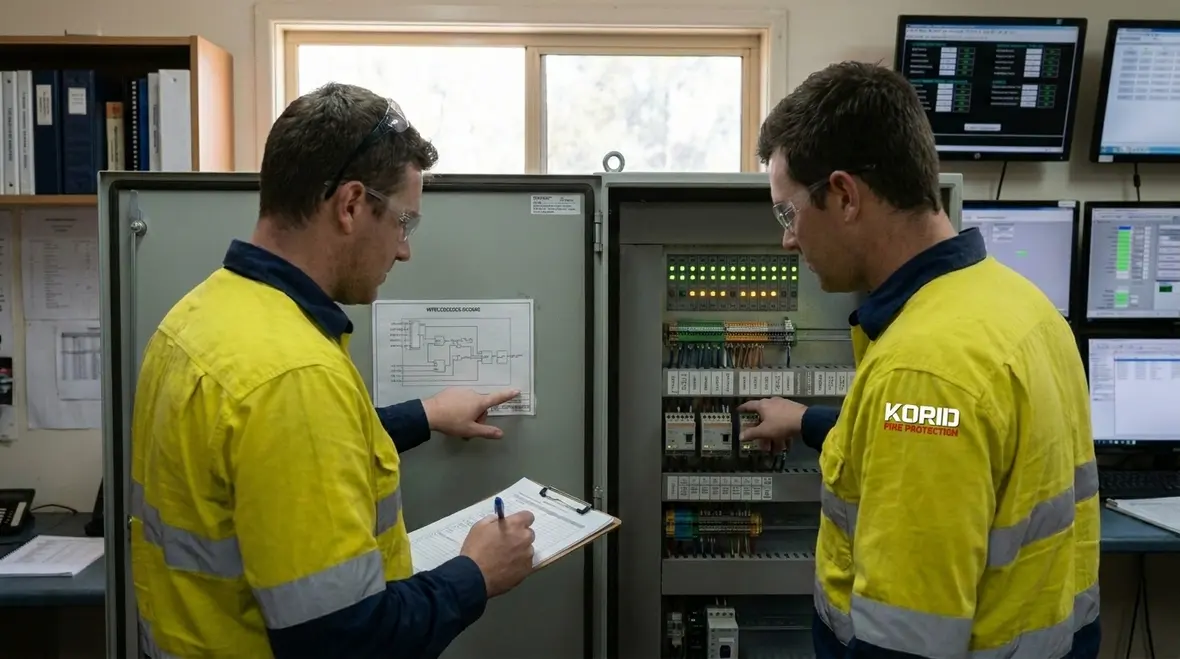
Engineering standards drive interlock design because interlocks must do their job under stress, not just during smooth commissioning. First, they define what “safe” means for the specific hazard scenario, then they require clear cause and effect. Next, they specify how interlock signals must be processed so a single failure does not quietly defeat the protection.
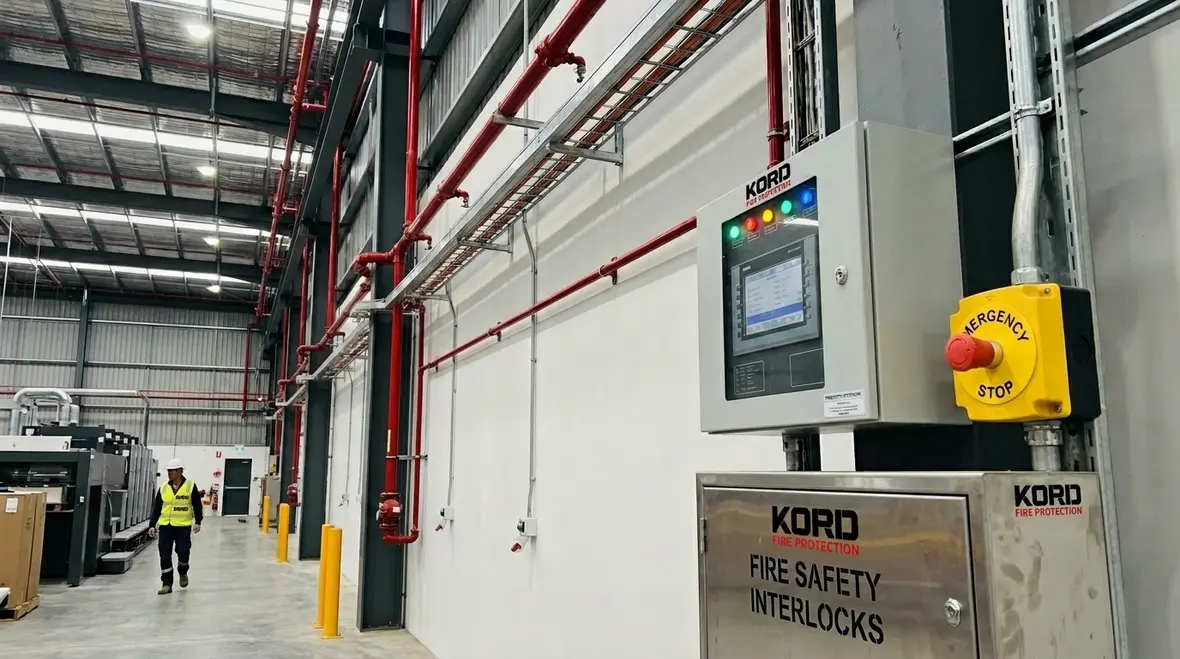
Interlocks often use fail safe principles. That means if power drops, sensors disagree, or a controller faults, the system moves toward a safer state rather than continuing operations. In practice, this can look like blocking certain equipment starts when fire protection modes are active, or forcing shutdown sequences when detection confirms a dangerous condition. Additionally, standards push for defined bypass controls, so maintenance teams do not improvise their way through a critical safety function. (Improvisation is great for comedy, less so for fire safety.)
Standards also influence how interlocks handle timing and permissives. For example, a system may require confirmation from detection within a defined window before it allows equipment to change state. That prevents nuisance alarms from causing shutdowns, while still allowing real events to trigger suppression and safe evacuation paths.
Why logic matters before anyone hears an alarm
A strong interlock strategy makes the rest of the fire protection system smarter, not busier. It keeps fans from feeding smoke where they should isolate it, stops machinery from continuing a hazardous sequence, and helps the wider response unfold in the right order. That is the quiet genius of process safety: when the logic is good, the chaos gets fewer chances to audition.
Detection engineering that catches problems early
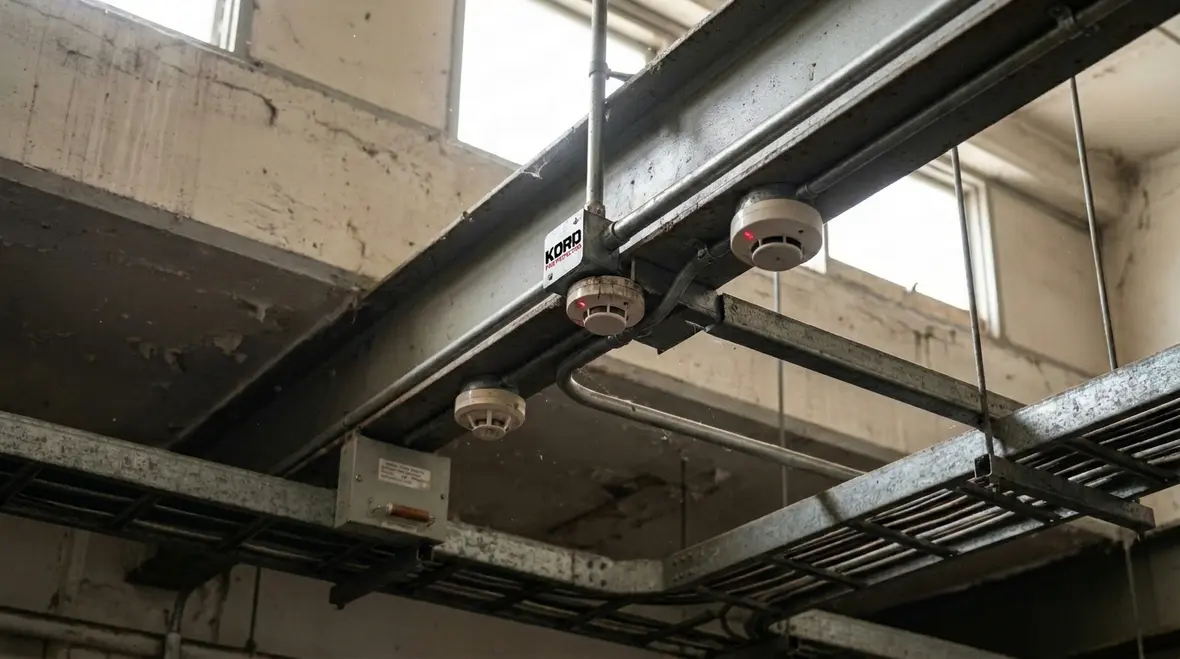
Detection systems form the first audible hint and the first real decision point. Therefore, engineering standards require that detectors meet performance expectations for sensitivity, response time, and coverage. They also guide placement, so coverage matches the hazard profile instead of relying on guesswork.
Detection design commonly includes multiple technologies depending on risk. Smoke detection may cover spaces with early smoldering, heat detection fits areas where temperature rise is a better indicator, and flame detection can handle fast-developing fires where you need speed. Importantly, standards also expect the system to distinguish between expected conditions and real threats, within tolerances that protect both people and operations.
Moreover, the standards demand consistent wiring and signaling practices so that faults do not appear as valid alarms. That includes supervision of circuits, correct end-of-line components, and documented test methods. Then, after installation, compliance depends on commissioning records, calibration notes, and acceptance tests that prove the system works as designed.
In a busy facility, detection has to do more than “beep.” It must send clear signals to control systems, trigger annunciation, and provide inputs for suppression release logic. When detection and interlocks follow the same standards, the result is fewer surprises and fewer “why did it do that” moments.
Coverage is engineering, not optimism
Early detection only works when devices suit the environment they monitor. Warehouses, plant rooms, retail back-of-house areas, and process spaces all behave differently under heat, dust, airflow, and occupancy changes. Good engineering accounts for those realities up front so the system is not left trying to guess its way through a real incident.
Suppression design: engineering standards for reliable discharge
Suppression systems reduce harm by controlling the fire event after it is detected or otherwise initiated. Engineering standards shape suppression design around the same core idea: when the system must act, it must deliver the right effect, at the right time, in the right way.
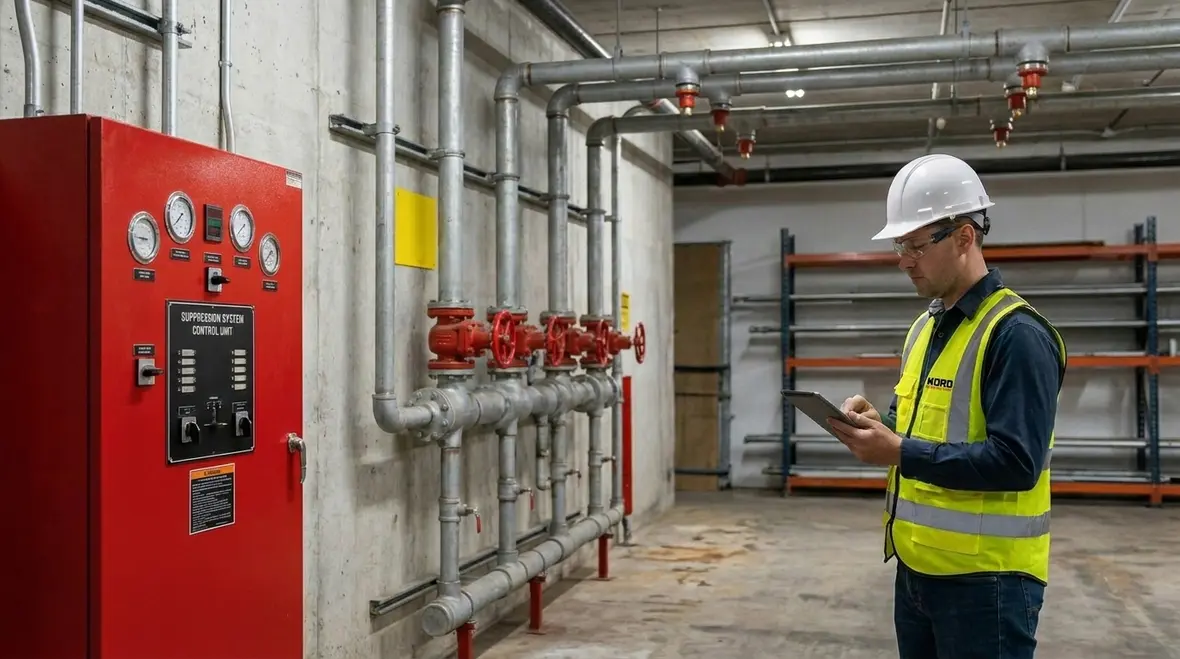
First, suppression requires design criteria based on the hazards present. That means flow calculations, discharge characteristics, and coverage assumptions have to match the real space. Then the system needs reliable power, valves that operate correctly, and hardware that can handle the environment where it is installed. Corrosion resistance, ambient temperature range, and access for inspection all matter.
Standards also influence integration with detection and control panels. For example, the release sequence often uses logic that confirms an alarm condition before allowing discharge, or that requires additional verification to reduce false releases. At the same time, the system must not delay action so long that suppression arrives after flashover or rapid escalation. It is a balance, and standards help keep that balance sane.
Additionally, suppression needs clear maintenance requirements. Pressure checks, inspection of actuating components, and verification of obstruction control are not “nice to have.” They are part of keeping suppression dependable across years of operations, shifts, and seasonal changes.
Maintenance is part of the design, whether anyone likes that fact or not
A suppression system that looked brilliant on day one can become unreliable if access is poor, components age badly, or testing gets delayed. That is why sound engineering considers maintenance paths from the beginning. If technicians cannot inspect, verify, and service the equipment with discipline, the protection slowly turns from robust into decorative, which is not the career path anyone wants for a safety system.
Safety integrity and risk reduction across process safety system requirements
Once interlocks, detection, and suppression meet their technical requirements, the bigger picture kicks in. Safety integrity focuses on whether the system will perform its protective function when it matters. Engineering standards push teams to define the hazard scenario, select safety functions, and determine required performance levels based on risk.
That is where process safety system requirements connect with day-to-day engineering. Teams translate requirements into documented design intent, then verify it during commissioning. Afterward, they keep the system under management through inspection schedules, test intervals, and change control.
In many facilities, risk is not only about the fire itself. It is also about what happens next: how equipment restarts, how dampers position, how fans behave, and how personnel routes remain safe. Standards therefore guide inter-system communication, so outputs from detection lead to correct control actions and do not create new hazards.
Also, teams must manage human factors. Clear labeling, accessible test points, and predictable alarm behavior help operators respond correctly under pressure. In other words, safety systems should be built like reliable partners, not like complicated puzzles left for the next shift.
Change control keeps good systems from drifting into bad habits
Facilities evolve. Storage layouts change, new tenants move in, equipment gets upgraded, and someone eventually proposes an operational shortcut that sounds efficient right up until it is not. Process safety requirements matter here because they force teams to re-check assumptions whenever the site changes. That discipline keeps old logic from colliding with new realities.
Commissioning, testing, and compliance in Australia
Even a well-engineered design can fail if commissioning and testing do not prove performance. Therefore, standards require structured test plans that reflect actual installation conditions. Commissioning verifies wiring integrity, device addressing, signal paths, and correct sequence of operations.
Testing usually covers more than “does it alarm.” Teams verify interlock responses, confirm that suppression release logic activates correctly, and check that supervision functions detect faults. They also test evacuation and alerting arrangements where applicable, and they validate that the system supports safe shutdown or safe operational transitions.
Importantly, compliance does not end at handover. Standards expect ongoing inspection, scheduled maintenance, and record keeping. In facilities across Australia, that record trail helps operators prove due diligence during audits and helps contractors respond quickly if something changes.
That is where the right partner becomes a practical advantage, because continuity matters. The system must stay dependable through upgrades, tenant changes, new equipment, and workflow changes. If you treat safety like a one-time event, it will eventually treat you like an afterthought. (Nobody wants that ending.)
For teams that need a code reference in the mix, Kord also provides the California Title 19 PDF, a useful supporting document when comparing maintenance discipline, testing expectations, and documentation habits across broader fire protection programs.
Why Kord Fire Protection becomes a vital partner
Kord Fire Protection supports the hard parts that teams often underestimate: coordination, documentation, testing discipline, and lifecycle support that keeps the safety intent intact. Because interlocks, detection, and suppression must function as one system, Kord works as a vital partner by aligning installation and service activities with the engineering logic and the process safety system requirements mindset.
In practical terms, Kord helps facilities reduce downtime and surprises by planning service around operational realities, not just a calendar date. They also support structured inspections and evidence-based testing so that each safety function remains verified after changes and wear. Then, when sites face upgrades or seasonal risk shifts, Kord can help teams assess what needs revalidation so safety stays consistent.
For industrial, retail, and commercial sites across Australia, that partnership matters because safety systems live in real environments. Dust, vibrations, busy plant rooms, and rapid tenant turnover can challenge performance. With the right service partner, the system stays reliable, and the team stays confident.
FAQ
Final word: build reliability, then keep it
Safety systems should act like a dependable team: interlocks prevent unsafe steps, detection calls the shot early, and suppression limits damage fast. To get that result, facilities must follow engineering standards and support process safety system requirements through commissioning and ongoing service.
If Kord Fire Protection helps align your safety lifecycle, you reduce downtime and boost confidence. Reach out today for a practical assessment and a clear service plan that fits your site.

Join Our Newsletter!
Get the latest fire safety tips delivered straight to your inbox From our Newsletter.