
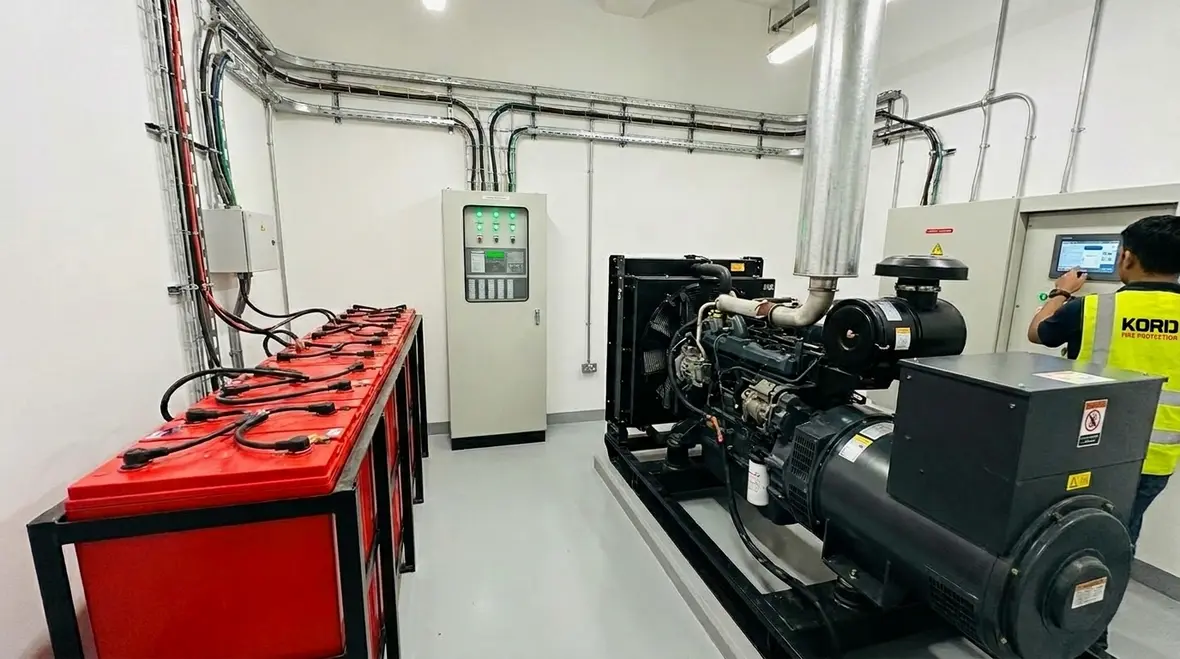
Fire Suppression Backup Power for Australian Sites
Quick Answer: Reliable secondary power keeps fire suppression systems online when the main supply fails. It starts with careful sizing, fast transfer, and battery or generator options matched to local risk. Then it adds testing, monitoring, and clear maintenance. With Kord Fire Protection as a partner, facilities can plan, install, and verify backup power with fewer surprises.
For facilities planning broader system support, Kord Fire Protection’s fire suppression systems service fits naturally into the conversation because backup power only helps when the suppression setup it supports is designed, installed, and maintained as one complete life safety package.
Why secondary power decides whether suppression works
When a fire starts, seconds count. Yet even the best fire suppression design can fail if control panels, detection circuits, and alarm interfaces lose power. That is exactly why Fire Suppression Backup Power becomes a core part of any dependable system plan, especially for industrial, retail, and commercial sites across Australia. It is not about being dramatic; it is about being ready.
In real operations, power drops can come from switchgear work, lightning, load changes, storms, or simply aging infrastructure. Therefore, secondary sources must be designed to carry the right loads for the right duration, and they must do it automatically. Otherwise, the facility gets the worst kind of show: the fire system goes quiet right when it should speak up. And nobody wants to explain that to an insurer or a regulator.

Plan loads first, not equipment first
Smart backup power design begins with a load map, not a shopping list. Technicians and engineers must identify what the fire system needs during failure, then estimate consumption under real operating conditions. This includes control panels, supervision modules, alarm circuits, communications, smoke or heat interfaces where applicable, and any required actuation paths.
Next, they determine run time requirements. A small retail site might need a shorter holding period, while some industrial facilities require longer endurance because evacuation support systems or remote signalling depend on steady power. Moreover, the design must consider peak draw during start or transfer events. A system that handles steady state can still stumble during the first moments after the main supply drops, which is when transfer logic matters most.
Finally, they confirm whether the suppression components themselves require power, or whether they rely on stored energy. Either way, the control and monitoring layers still need stable energy to keep the whole chain intact. For teams reviewing similar reliability issues on the alarm side, Kord Fire Protection’s Fire Alarm System Reliability and Battery Health article is a strong companion read because it connects backup power discipline with overall system dependability.
Sizing for the real world, not the perfect world
This step matters because facilities rarely fail under ideal conditions. They fail on the hot day, the stormy night, or the maintenance window that somehow turned into a plot twist. Proper sizing gives the system breathing room so a brief outage does not become a long report full of awkward questions.

Battery, generator, and hybrid strategies for Australian sites
Facilities across Australia face different practical constraints: space limits in retail, noise rules in urban areas, and harsh duty cycles in industrial plants. Therefore, teams often select from battery based systems, generator sets, or hybrid setups that combine both.
Batteries excel where fast transfer and quiet operation matter. They also reduce the time the system spends waiting for a slower start source. However, they require correct sizing for duty cycle, temperature effects, and aging over years, not months.
Generators can cover longer runtime, especially where sites need extended resilience. Still, they introduce transfer timing and start verification steps, so engineers must ensure the fire system remains safe during that window. In practice, that often pushes teams toward a hybrid layout where batteries support the immediate transfer gap while the generator ramps up.
Hybrid designs commonly deliver the best balance. They allow quick continuity through battery power, then they transition to generator supply once stable. In other words, the batteries handle the sprint, and the generator handles the marathon. If the marathon ends early, at least the sprint bought time. Like a good defensive line in football, it holds the structure together when the play gets chaotic.
Choosing what actually fits the site
The smartest option is not always the biggest or the loudest. It is the one that matches the building’s risk, layout, maintenance capacity, and outage profile. A quiet retail tenancy and a heavy industrial plant do not wear the same boots, so their backup strategies should not pretend they do.
Transfer time, supervision, and why “automatic” must be provable
Secondary power only earns trust when it performs every time. That means engineers design for transfer behavior, not just capacity. The system should switch without disrupting monitoring or alarm output. Therefore, they use control logic that verifies voltage, frequency, and output stability before it assumes the load.
Next, they ensure supervision. Many failures hide in plain sight: a weak battery cell, a charger fault, a transfer switch that hesitates, or an output breaker that refuses to close fully. As a result, the fire system and power components should provide status signals that technicians can read during routine checks.
Equally important, they document the test method. A plan is not a plan if nobody can execute it. Facility teams need a repeatable process that checks charger performance, battery capacity trends, generator start reliability, and transfer accuracy. Then they record results in a way that helps compliance and reduces the guessing game later.

Design for maintainability and real world access
Facilities do not run on ideal schedules. Therefore, backup power systems must be maintainable without shutting down core operations longer than necessary. Engineers should locate batteries and charging equipment where trained staff can service them safely, and where airflow and environmental controls prevent premature degradation.
In industrial settings, vibration, dust, and temperature swings can strain components. Retail sites often struggle with limited plant room access and tight power corridors. Commercial facilities may have shared utility spaces and strict service windows. All of that affects installation details, cable routing, and protective measures.
Moreover, teams should consider how electricians and fire technicians will work together. If power cabinets and fire control cabinets sit too close, heat and noise can complicate servicing. If they sit too far, voltage drop can creep into the design. Either way, the solution must respect the site layout and the maintenance workflow.
At this stage, Kord Fire Protection often becomes a vital partner because it helps coordinate the fire side and the power side into one reliable system narrative. They support the planning and verification that makes Fire Suppression Backup Power meaningful, not just installed.
Access matters more than drawings admit
A tidy set of plans can still create a miserable maintenance setup if nobody thinks about who has to test, inspect, and replace components later. Good layouts respect the technician with the tools in hand, not just the drawing that looked neat on approval day.
Testing and monitoring that reduce risk instead of creating paperwork
Testing is where many projects either earn confidence or lose it. Therefore, strong programs focus on evidence. Teams should test transfer under controlled conditions, verify output under simulated loads where allowed, and check system logs for any abnormal events. They also track battery health indicators over time so replacements happen based on condition, not on hope.
For generator systems, crews should confirm fuel quality, load bank behavior, exercise schedules, and control stability. In many real incidents, the failure does not happen during the emergency. It happens during the “almost ready” phase: a generator that starts but does not reach stable output at the right time, or a transfer switch that delays under certain conditions.
Monitoring tools can help by sending fault status alerts to facility teams, so issues surface early. When monitoring supports maintenance decisions, it reduces downtime and supports compliance. And yes, it means fewer late night calls that begin with, “Hi, are you sitting down?”
What Kord Fire Protection adds as a reliable service partner
Even the best design needs skilled implementation and clear verification. This is where Kord Fire Protection can become a vital partner for facilities managing fire suppression system requirements alongside secondary power design and service. They help teams coordinate the fire detection and suppression control expectations with the electrical realities of backup supply.
In practice, they help ensure the installation aligns with intended operation, that testing covers the right failure paths, and that ongoing service keeps the system trustworthy. As a result, facilities benefit from smoother commissioning, better documentation, and fewer gaps between “what was promised” and “what actually works.”
Additionally, they support decision making across industrial, retail, and commercial environments, where constraints vary widely. That means the backup power strategy stays fit for purpose, not copied from some generic template that belongs in a filing cabinet, not on a live site.
FAQ
Make backup power part of the fire plan, not an afterthought
Facilities that treat Fire Suppression Backup Power as a core design element reduce downtime, improve safety, and protect compliance outcomes. A solid load plan, reliable transfer behavior, and disciplined testing keep the system ready when power fails. For industrial, retail, and commercial sites across Australia, Kord Fire Protection can help align fire suppression requirements with dependable secondary power solutions.
Reach out to plan your next verification and service pathway. The goal is simple: no guesswork, no shaky handoff between systems, and no unpleasant surprise when the main supply decides to clock off at the worst possible time. Backup power works best when it is treated as part of the fire plan from day one, not as the thing everyone remembers after the lights flicker.

Join Our Newsletter!
Get the latest fire safety tips delivered straight to your inbox From our Newsletter.



