Emergency Power for Fire Pumps During Outages in Australia
Quick Answer: During outages, fire pumps need steady, code compliant power so they start instantly and run long enough to protect life and property. Many facilities rely on emergency power for fire pumps, plus testing, load coordination, and trained response. Kord Fire Protection can help plan and maintain the full system, not just the generator.
For facilities reviewing backup readiness, it also helps to understand the broader electrical picture through Kord Fire Protection’s fire pump electrical requirements and design guidance, especially when outage planning needs to fit naturally with real world commissioning, controls, and power behaviour.
Why reliable fire pump power decides the outcome in outages
When the grid drops, people usually notice the lights first. However, fire protection teams notice something more serious: whether the fire pump can start on demand. That is why emergency power for fire pumps matters, and why it has to work every time, under real conditions, not ideal ones.
In Australia’s industrial, retail, and commercial sites, outages can come from storms, grid issues, transport impacts, or equipment failures. If the fire pump depends on a control cabinet that loses power, or if the transfer takes too long, the system can become a very expensive decoration. And nobody wants “decorative fire protection.” Even villains in pop culture usually have backup plans. Facilities should too.
To ensure reliability, teams need to manage three things together: power source performance, transfer and starting behaviour, and ongoing verification. That is where coordinated fire engineering and electrical planning become non negotiable. Near the same conversation, many sites also benefit from clearer visibility into alarms and system signalling through fire alarm monitoring systems, because backup power works best when the wider protection network stays visible and responsive.
How emergency power supports fire pump startup when the grid fails
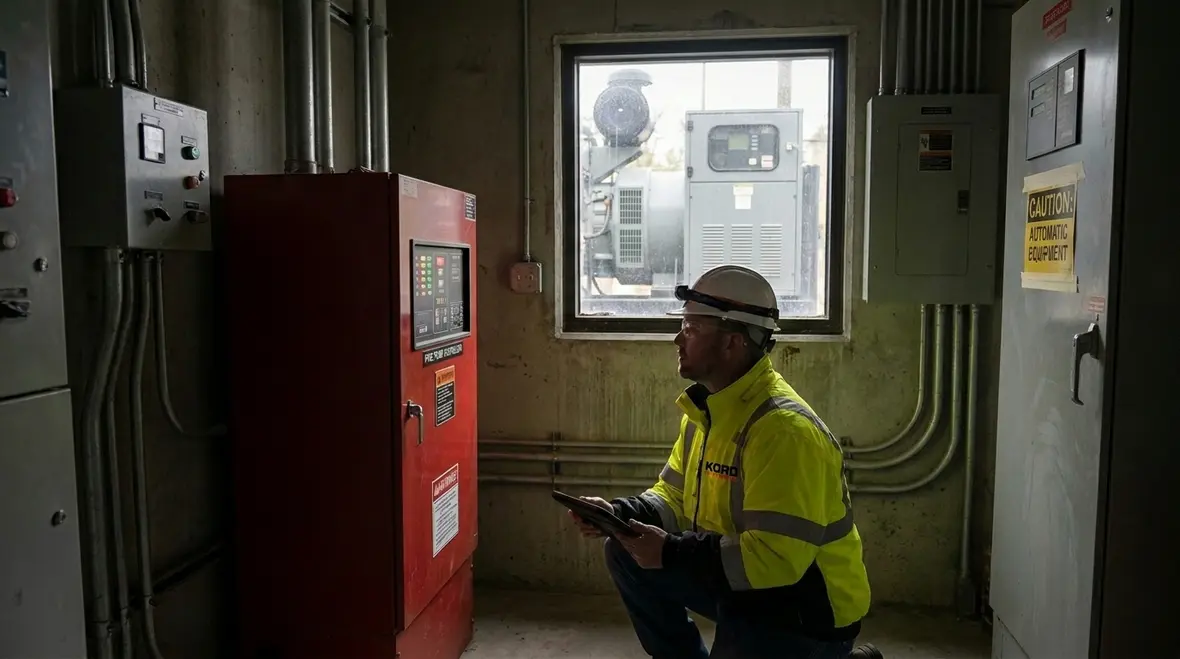
Fire pumps must start fast and run reliably. During an outage, the power path has to keep voltage and frequency within acceptable limits, and it has to reach the pump controller without hesitation. Typically, emergency power for fire pumps is delivered through standby generators, dedicated battery systems for controls, or other code compliant arrangements that support safe and timely pump operation.
Here is how power reliability usually breaks down in real life. First, the standby generator might start, but the system may not deliver stable voltage quickly enough. Second, the pump controller may reset during transfer, so the pump never reaches proper starting sequence. Third, the electrical load might be higher than expected during commissioning, causing voltage dips. Then, the site’s “we tested it once” confidence turns into “we tested it… and now we are calling someone.”
To prevent that, facilities should confirm that the fire pump controller, starter, and any auxiliary equipment receive the right power quality at the right time. Also, they should verify that the transfer method and protective devices coordinate with the pump’s starting current. A pump that draws high starting load can behave like a jet engine lighting up. If the rest of the electrical system is not ready, the result is delays.
Where startup reliability usually goes wrong
- Unstable generator output: The generator starts, but voltage or frequency takes too long to settle.
- Controller interruptions: Transfer events reset controls or interrupt permissives.
- Unexpected load competition: Other safety or building loads compete with the pump during a critical few seconds.
- Weak commissioning assumptions: Teams validate paperwork but not actual behaviour under outage conditions.
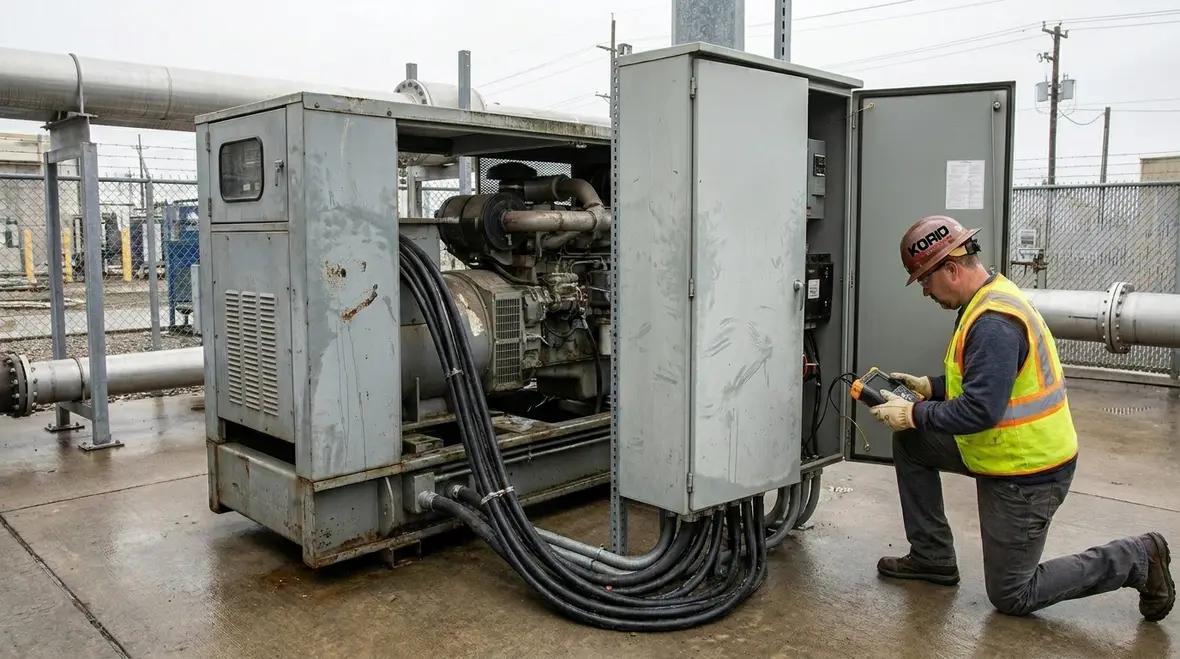
Design checks that protect pump performance under real starting loads
Reliable power is not just about having backup equipment. It is about ensuring the entire chain supports starting and continued running. That means reviewing electrical design details that many teams skip until problems show up.
Key checks often include:
- Transfer time and logic: The system should transfer control power and pump power without causing resets or missed start commands.
- Generator sizing and voltage regulation: The generator must handle the pump start and any connected safety loads without unacceptable voltage drops.
- Starting current and protective device coordination: Breakers and relays must protect conductors without tripping during legitimate pump starting.
- Load prioritisation: Critical loads should come first so the pump starts with minimal competition.
- Auxiliary power requirements: Controls, alarm interfaces, valve actuation, jockey pump monitoring, and communications must keep working.
Additionally, teams should confirm that any suppression systems, block valves, and control wiring stay in the correct state during transfer. A common failure pattern in facilities is “the generator started, but the system was not configured for this scenario.” Therefore, commissioning must include outage simulations and acceptance testing that prove correct behaviour.
And yes, someone will ask, “Do we really need to test during an outage?” The answer is: tests during an outage reveal the truth. Scheduled tests during normal operations can’t catch the moment transfer logic meets actual electrical conditions.
Checks that deserve extra attention before signoff
Teams should pay special attention to controller behaviour, feeder protection, communication pathways, and anything else that quietly depends on stable power. If one small device drops out at the wrong moment, the “backup” part of the backup plan can disappear pretty quickly.
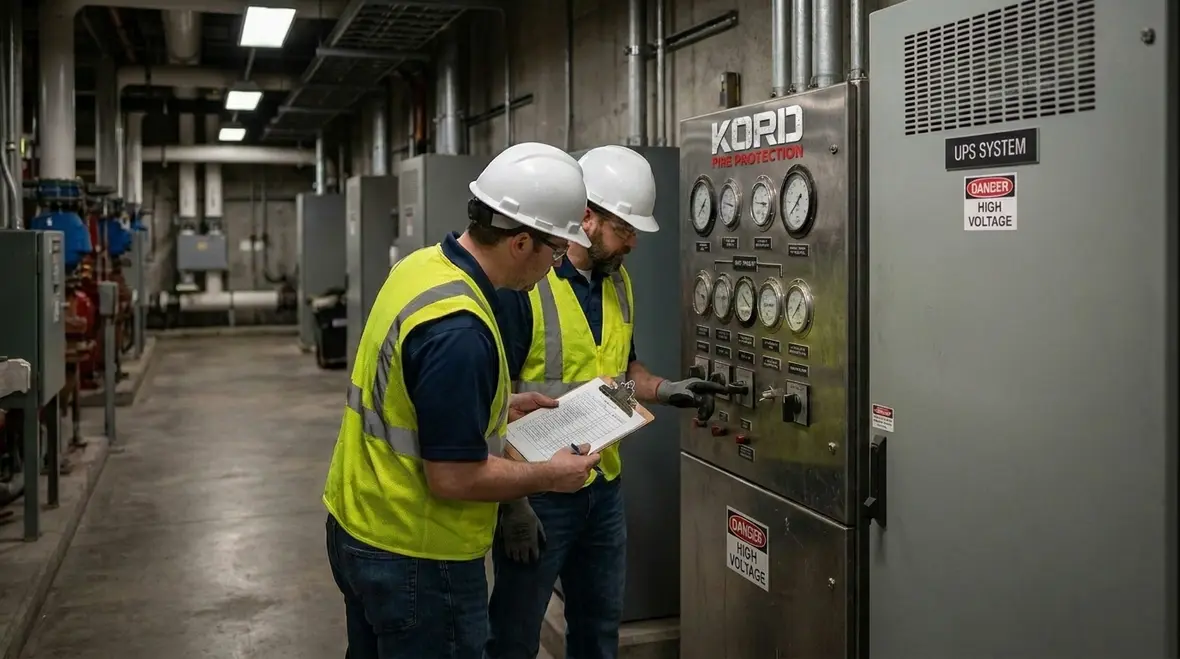
Maintenance and testing routines that keep reliability from fading
Emergency systems do not degrade overnight, they drift. A battery charger that runs slightly warm, a voltage regulator that slowly changes output, a transfer switch contact that collects grime. Over time, the system stops meeting its own promises.
To keep emergency power for fire pumps effective, facilities should build maintenance and testing around actual performance, not paper compliance. Strong programs usually include:
- Planned generator testing: Load bank tests that reflect real connected loads, not just no load runs.
- Transfer switch inspection: Functional checks, contact condition review, and verification of timing and settings.
- Fire pump controller checks: Confirm correct input states, fault clearing, and starting sequence logic.
- Battery and UPS verification: Validate capacity and runtime under temperature variations.
- Performance tests of alarm and control circuits: Ensure signals and interlocks work during transfer.
Also, facilities should document findings and track trends. When a technician sees an increase in starting delay or a change in voltage regulation response, they should act before the next outage. Trend tracking turns “surprises” into “planned maintenance.”
Why Kord Fire Protection acts as a vital partner for outage readiness
Many organisations hire different specialists for electrical work, testing, and fire systems. That can work, but it often creates handoffs where critical context gets lost. Kord Fire Protection can become a vital partner by coordinating the fire side of the job with power readiness, helping sites avoid the classic mismatch between “it meets the electrical spec” and “the fire pump doesn’t behave as expected under outage conditions.”
In practice, Kord Fire Protection supports reliability by helping teams align fire system requirements with the generator and transfer strategy, and by verifying that the full fire protection operation performs correctly together. That includes reviewing pump controls, power dependencies, interface points, and commissioning outcomes so the system starts and runs the way it should.
In other words, they help ensure the fire protection system remains operational when the power does not behave politely. Industrial sites in Australia run around the clock. Retail assets handle crowds. Facilities manage life safety and continuity. Having a partner who understands both fire protection intent and outage realities reduces the risk of late surprises.
It is the same idea as having a flight plan and not just owning a plane. The plane is useful, but the plan gets people home.
Step by step: what facilities should do before the next outage hits
Teams can reduce risk quickly when they follow a clear order of work. To make this practical, here is a straightforward sequence facilities can adopt across different asset types.
- Map the power path: Identify how control power and pump power travel during a grid loss.
- Confirm transfer behaviour: Verify timing, sequencing, and whether any controls reset or lose permissives.
- Validate generator capability: Check sizing, regulation, starting support, and stability under expected load.
- Coordinate protection devices: Ensure breakers, relays, and protective settings do not trip during legitimate start current.
- Run acceptance and scenario tests: Test transfer and pump start under conditions that reflect outage realities.
- Set up an ongoing program: Schedule testing, inspections, and trend reviews so the system stays reliable year round.
Finally, facilities should assign clear ownership. One group must lead the verification process, record results, and drive corrective action when a parameter drifts. Because when no one owns the outcome, the system becomes a guessing game. And guessing is fun at trivia night, not for life safety.
Featured FAQ about power reliability for fire pumps
Call Kord Fire Protection to keep outage power dependable
Fire pump reliability depends on more than backup equipment. It depends on coordinated design, proven transfer performance, and maintenance that catches drift before failure. Kord Fire Protection can support your site with aligned fire protection readiness and integrated verification so your system starts when the grid does not cooperate.
Contact Kord Fire Protection today to review your outage strategy and strengthen your fire pump power confidence. A well planned system does not just sit there looking impressive. It responds properly when conditions turn messy, which is exactly when dependable fire protection earns its keep.

Join Our Newsletter!
Get the latest fire safety tips delivered straight to your inbox From our Newsletter.