Suppression System Alarm Signal Explained and Tested
When the fire protection team activates a suppression system, it does not just quietly “handle the situation.” It speaks in signals. In many buildings, the suppression system alarm signal fires off first, then routes to panels, annunciators, and monitoring points so people can act fast. In other words, it turns a hidden risk into a clear message. And yes, it often arrives with the kind of urgency that makes even the most confident person check their shoes. The good news is that trained teams can read these signals correctly, verify the right devices, and reduce the chance of needless disruption. Kord Fire Protection understands that this moment matters, and it can become a vital partner on any suppression related service job.
Fire alarm signals from suppression activation: what actually changes
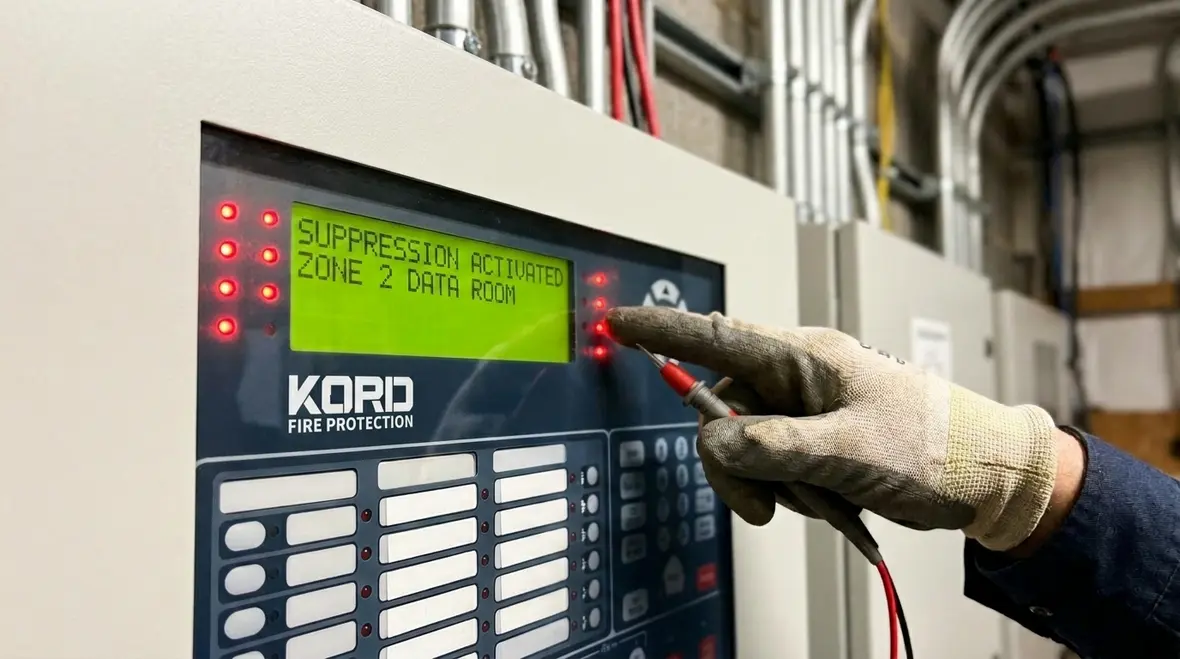
During suppression release, systems send a chain of notifications that usually includes both local alarms and remote reporting. First, the detection side confirms the event. Then the control equipment triggers the alarm outputs tied to the suppression system control logic. As a result, the fire alarm system may display a suppression related message at the panel, illuminate specific zones, and trigger audible notification appliances.
Different facilities handle this in different ways, yet the goal stays the same: keep the message accurate, timely, and easy to interpret. For example, the building may show a signal like “Agent Discharge” or “Suppression Released” while also activating evacuation signals. Meanwhile, the suppression control panel can also report faults such as cylinder pressure issues, door interlock status, or tamper conditions. Therefore, technicians must treat the signals as more than noise. They form a data trail that explains what happened and what should happen next.
That is one reason facilities often compare suppression behavior with the broader logic of modern fire alarm panels. Kord Fire Protection’s Advanced Fire Alarm Control Panel Technology Overview helps explain how panel messaging, supervision, and output coordination work together in the real world.
Where the suppression system alarm signal shows up on site
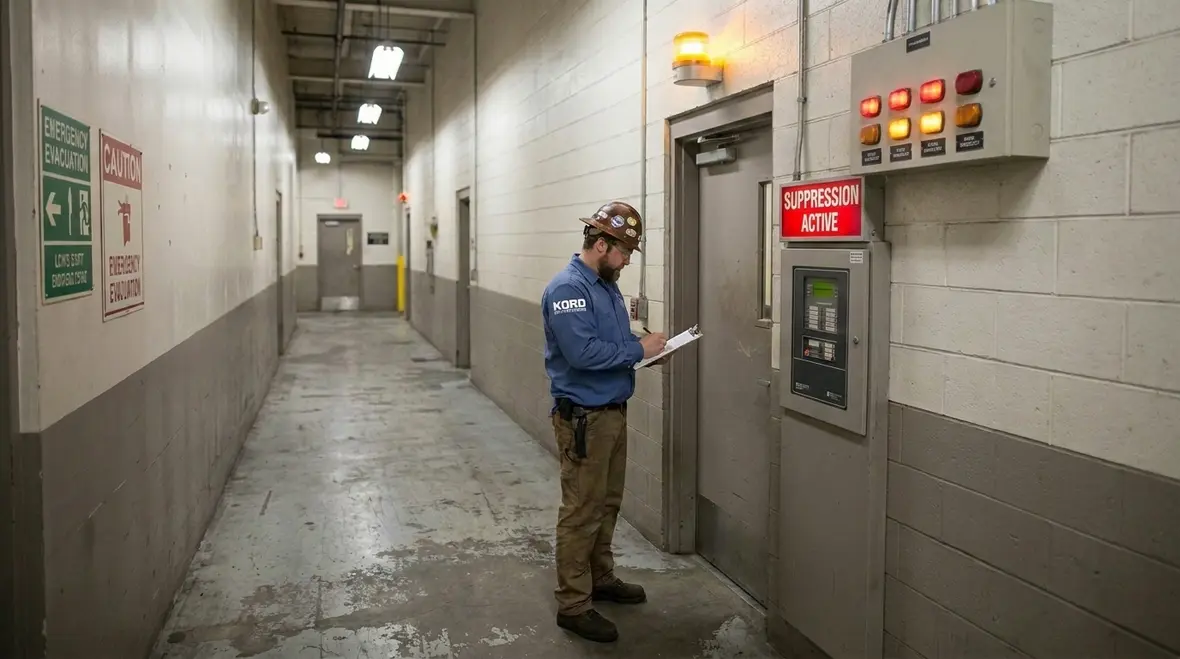
Once activation occurs, the suppression system alarm signal typically appears in several places at once. Each location serves a purpose, and each one can help the response team work smarter.
On the fire alarm panel
- Event type indicators for agent discharge or suppression activation
- Alarm and supervisory status changes
- Signal history for sequence checking
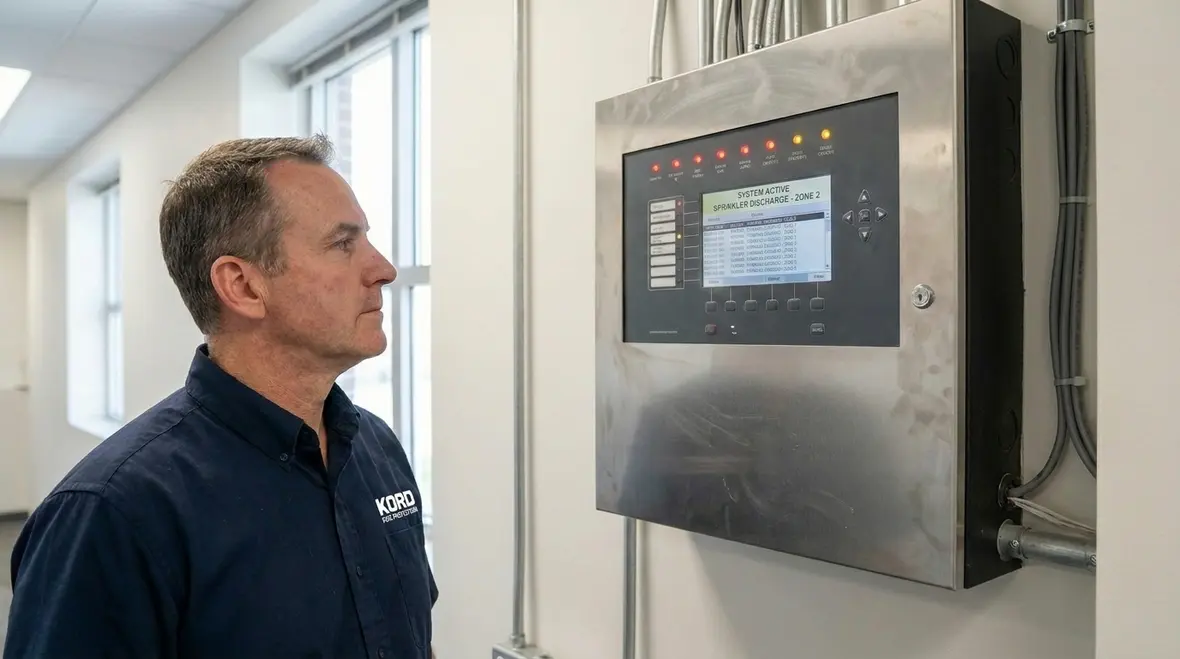
At annunciators and control interfaces
- Distinct visual mapping for the correct suppression zone
- Audible alerts for evacuation decisions
- Status labels for abort, manual release, or reset readiness
Then monitoring routes may transmit the event to a supervising station. Additionally, some systems connect to building management software for alarms, logging, and trend data. Consequently, the same release event can create multiple records. That is good, as long as the team checks them against the expected sequence.
How suppression activation affects notification and zones
It helps to understand that suppression systems and fire alarm systems often share communication paths, but they do not always operate the same way. When the suppression system control logic fires, it may do two things. First, it initiates the release mechanism. Second, it sends control signals that trigger alarm outputs or control functions linked to life safety and building operations.
Therefore, the building may use zone mapping that matches the hazard area. For example, a kitchen hood suppression release can trigger a specific zone label and corresponding sounders. In a data center, the system may also send signals that coordinate with door releases, fan shutoffs, or damper closures. However, if the programming is wrong, the building can end up with confusing alerts, like an alarm that points to the wrong room or an output that triggers at the wrong time.
For this reason, teams should verify that each suppression event leads to the correct notification pattern. They also should confirm that any silencing or reset logic does not cut off critical safety steps too early. In short, accurate zoning prevents chaos from winning the day. And chaos, as anyone who has watched a sitcom knows, always shows up when people stop paying attention.
Why accurate mapping matters more than people think
A signal is only useful if people understand what it means and where it belongs. If a panel says one thing, the annunciator says another, and the monitoring path logs a third description, responders lose precious time sorting out the story. That delay can affect occupant movement, shutdown steps, and technician follow-up. Good mapping turns the event into a clean timeline instead of a scavenger hunt with flashing lights.
Sequence of operation: reading the timeline like a pro
Skilled technicians treat an activation as a timeline, not a single moment. Typically, suppression activation involves steps such as pre release delay, alarm notification, release confirmation, and post release supervisory states. Next, the control equipment may hold certain outputs active while it waits for reset conditions or technician verification.
During service work, Kord Fire Protection can help teams confirm that the actual sequence matches the engineered sequence. That includes checking event logs, reviewing signal definitions, and verifying that the correct outputs change state when they should. Then technicians can validate that the system handles common conditions such as aborted discharge, manual override, or sensor trouble.
When technicians find a mismatch, it can point to miswiring, programming drift, or aging components. Consequently, the “symptoms” on the panel become clues. For instance, if a suppression zone trips but the notification pattern does not match, the team should check relay mapping, output wiring, and event labeling. If the system reports release but does not log discharge confirmation, they should check detection and agent release feedback circuits. This kind of work reduces repeat callbacks and supports reliable performance in real events.
Common issues that create false confidence or real risk
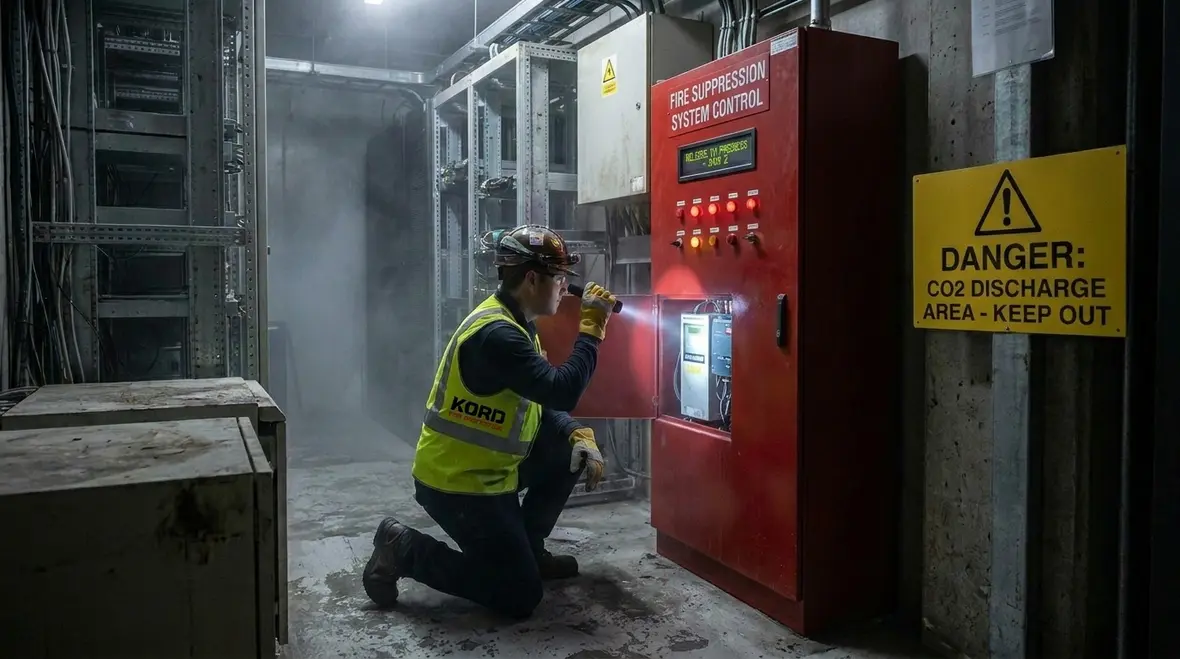
Suppression related alarm signals can look straightforward on a screen, yet problems hide in plain sight. One frequent issue involves poor labeling or unclear event names. People can read a panel fast, then make a wrong assumption, especially when multiple hazards exist. Another issue involves delayed reporting to monitoring. In that case, the building might notify occupants quickly, but the monitoring center receives a lagged or incomplete message. Meanwhile, if maintenance changes occur without updating documentation, the system can function but become harder to troubleshoot under pressure.
Additionally, shared control logic sometimes creates unexpected behavior. For example, an alarm output may activate during suppression pre release when it should only activate at discharge confirmation. Or a supervisory output may remain active after reset because of a sensor trouble not cleared by standard procedures. Therefore, service teams should not just confirm that the system “works.” They should confirm that it works the right way under real conditions.
Kord Fire Protection brings the calm focus needed for this type of verification. It can act as a vital partner by supporting testing, inspection, and correction across the suppression and fire alarm interaction. In short, it helps facilities avoid the classic problem of “it passed last time, so it must be fine now.” That approach works about as well as trusting a smoke detector to power itself with vibes.
Small details that often cause big confusion
- Labels that describe the wrong hazard area
- Output timing that no longer matches the approved sequence
- Supervisory points left active after changes in the field
- Monitoring descriptions that differ from local panel text
- Documentation that still reflects an older layout or tenant use
Service and compliance support: keeping systems ready
Facilities rely on suppression and alarm systems not only to activate but also to operate consistently over time. That means scheduled inspection, periodic testing, and documentation control. It also means verifying that panel messages align with occupant safety requirements and that notification patterns meet facility needs.
As buildings change, the system configuration can drift. Tenants move, hazards change, and wiring gets modified. Then the suppression system alarm signal might still send a message, but it might not guide people correctly if zones, labels, or routing changed. Consequently, service teams should revisit programming settings after modifications and ensure the sequence of operation remains intact.
Kord Fire Protection can support these jobs through coordinated service visits, verification of alarm signaling, and practical reporting that helps stakeholders understand what happened and what needs attention next. Rather than treating suppression systems like a one time checkbox, it treats them like life safety infrastructure that deserves steady care.
If your building team is reviewing integrated signaling, monitoring, or panel behavior, Kord Fire Protection’s Fire Alarm Services page is a useful companion resource. For facilities with kitchen hazards or hood systems, the article on Commercial Kitchen Fire Suppression Electrical Interlocks also provides helpful context on how suppression controls interact with alarms and building functions.
FAQ about suppression activation signals
Final call: protect people and reputation with Kord Fire Protection
When suppression activation happens, the message must be clear, consistent, and correct. To achieve that, facilities should verify the fire alarm signals, confirm the sequence of operation, and keep documentation aligned with real field conditions. Kord Fire Protection can support your suppression related service job with careful testing, practical troubleshooting, and dependable follow through.
If the system has ever surprised your team, now is the time to tighten the details. Explore Kord Fire Protection’s Full Fire Protection Services or review the dedicated Fire Alarm Service page to schedule support that gets your signaling, zoning, and readiness back on solid ground.

Join Our Newsletter!
Get the latest fire safety tips delivered straight to your inbox From our Newsletter.