Fire Extinguisher Placement Safety Near Electrical Panels
Fire extinguisher placement safety starts with a simple idea: the device must be easy to grab, but it must not block access to life saving equipment, especially electrical panels. That balance matters in the real world, where an angry broom closet fire can turn into an “everyone panic, no one reads labels” situation in seconds. Yet people often mount extinguishers too close to switchboards, breakers, and control cabinets. As kord fire protection technicians explain, the goal is not to park a hero right next to the villain. It is to reduce risk, improve response speed, and avoid creating new hazards while trying to stop the old ones.
That practical mindset lines up with Kord Fire Protection’s broader guidance on extinguisher layout, where visibility, accessibility, and real response behavior matter more than wishful thinking. Facilities that want a wider placement strategy can also compare this topic with Fire Extinguisher Placement for Office Guide and Proper Placement of Extinguishers Saves Seconds, both of which reinforce the same truth: if access gets weird, response gets slower.
When an extinguisher placement goes wrong near panels
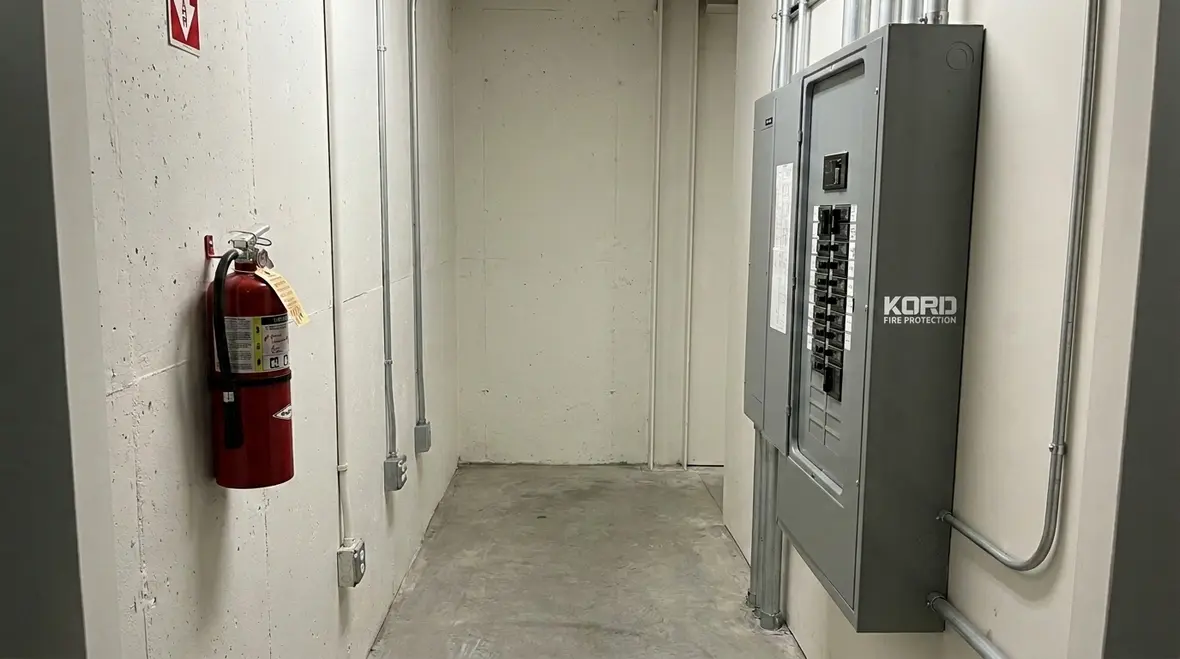
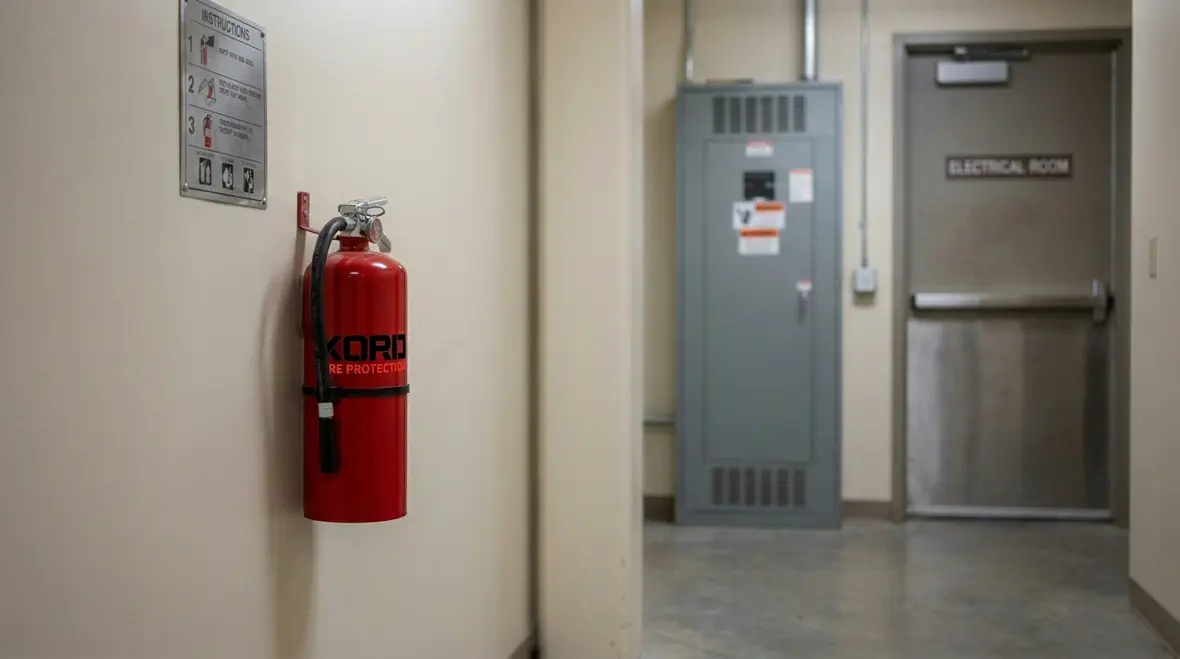
Electrical gear does not behave like a campfire. It can energize surfaces, flash, and arc, and those effects can make nearby items more dangerous than helpful. If an extinguisher sits too close to an electrical panel, it may become heat soaked during a fault. Then the nozzle, hose, or trigger can degrade, which means the extinguisher may fail when it matters most. In addition, if someone grabs the unit under stress, they might press against the cabinet or bump a door, which can slow access to the correct shutdown or create a delayed response.
And yes, even the best intentions can become a plot twist. Fire crews love speed, but they also need clear space. If the extinguisher location blocks a corridor, interrupts an emergency shutoff path, or sits where it forces awkward reaching, the “ready” device turns into “eventually” in the heat of the moment.
Why this risk is easy to miss
A lot of bad placements happen because the wall looks convenient. There is empty space, the bracket fits, and the extinguisher stays visible. On paper, everyone feels clever. In reality, that same wall may sit inside the most stressful approach path in the room. The user has to angle their body, twist around a cabinet door, and get closer to energized equipment than they should. That is how a quick grab turns into an awkward dance nobody wanted to choreograph.
Panels and control gear: heat, arcs, and why distance matters
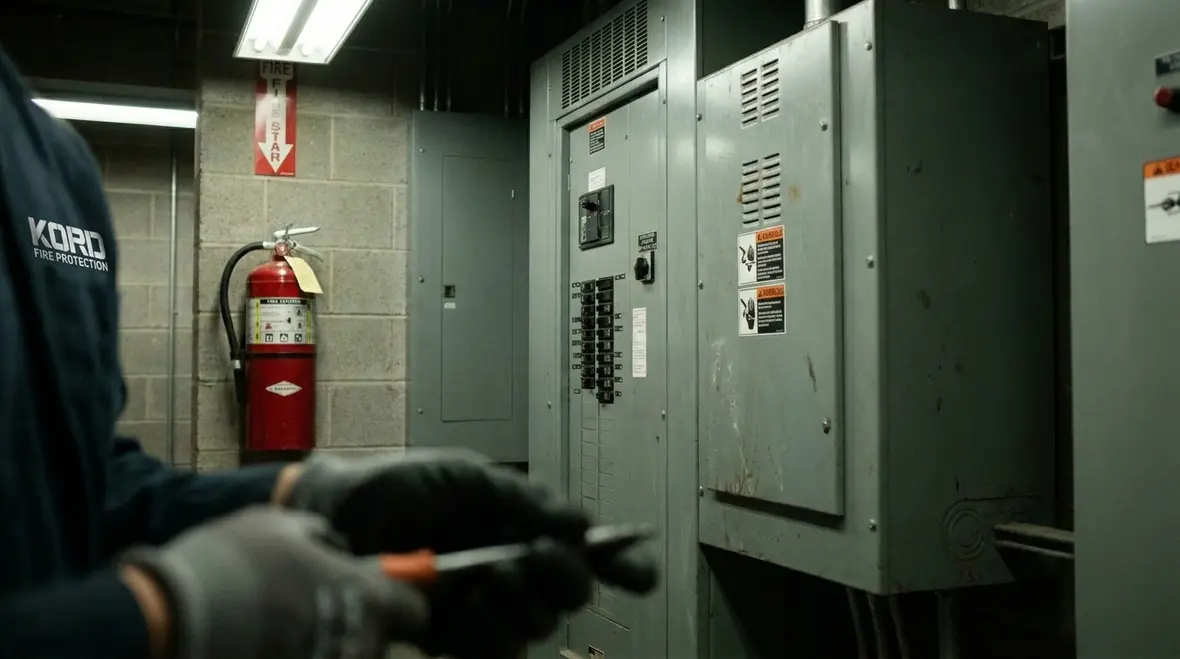
When an electrical panel experiences a short, the heat and light output can be intense. Arcing can produce radiant heat that warms materials nearby. Therefore, fire extinguisher placement safety requires planners to consider more than visibility. They need to consider how the panel could affect the extinguisher body, mounting bracket, hose routing, and even the surrounding wall finish.
In many cases, a surface near a panel will experience more thermal stress during an event than the extinguisher manufacturer expects during normal use. That is where kord fire protection technicians tend to focus: they look at the whole response chain. They ask, “If this panel faults, where will the user stand? What will they touch? What will stay intact long enough to use?”
That logic pairs naturally with extinguisher selection too. Kord Fire Protection’s Electrical Fire Extinguisher for Class C Fires highlights why the right extinguisher type matters around energized equipment, but placement still decides whether the right extinguisher is reachable in time. A perfect unit in a terrible spot is still a terrible plan.
Distance is about usability, not decoration
People sometimes hear “keep distance” and imagine some mysterious giant buffer zone painted by safety wizards. In practice, the question is much more human. Can a person reach the extinguisher, step back, keep the exit path in mind, and avoid leaning into the danger zone? If not, the distance is wrong. The room is telling you that the mounting spot looked neat but failed the stress test.
Where to avoid mounting extinguishers so access stays clear
For practical placement decisions, people should keep extinguishers away from zones that make access to panels harder or more risky. They should avoid locations that crowd the front clearance area of switchgear, breaker panels, and motor control centers. They should also avoid positions where a door swing could cover the extinguisher during an emergency. Furthermore, they should not install the extinguisher where it blocks signage or a dedicated emergency route.
Here are common spots to avoid
- Directly adjacent to the panel face, where a user may need to step into the heat zone to reach the extinguisher
- Behind doors, covers, or cabinets that stay closed until a person forces access
- In corners that trap the hose and prevent a clean path to the exit
- Over critical shutoff labels, disconnect markings, or clear path indicators
- On uneven wall sections that place the unit at an unstable height or angle
To keep things simple, if a person would bump the panel while reaching, the location needs a rethink. That is not nitpicking. It is risk reduction.
Do not let door swings write your emergency plan
One of the sneakiest layout problems is the innocent looking door. A cabinet door, room door, or panel door can make a perfectly visible extinguisher disappear the second it opens. That matters because emergencies are full of motion. Someone opens the panel. Someone backs up. Someone else reaches for the extinguisher. If one swinging barrier turns the wall station into a hide and seek champion, the location is not helping.
How extinguishers should be positioned for safe use around electricity
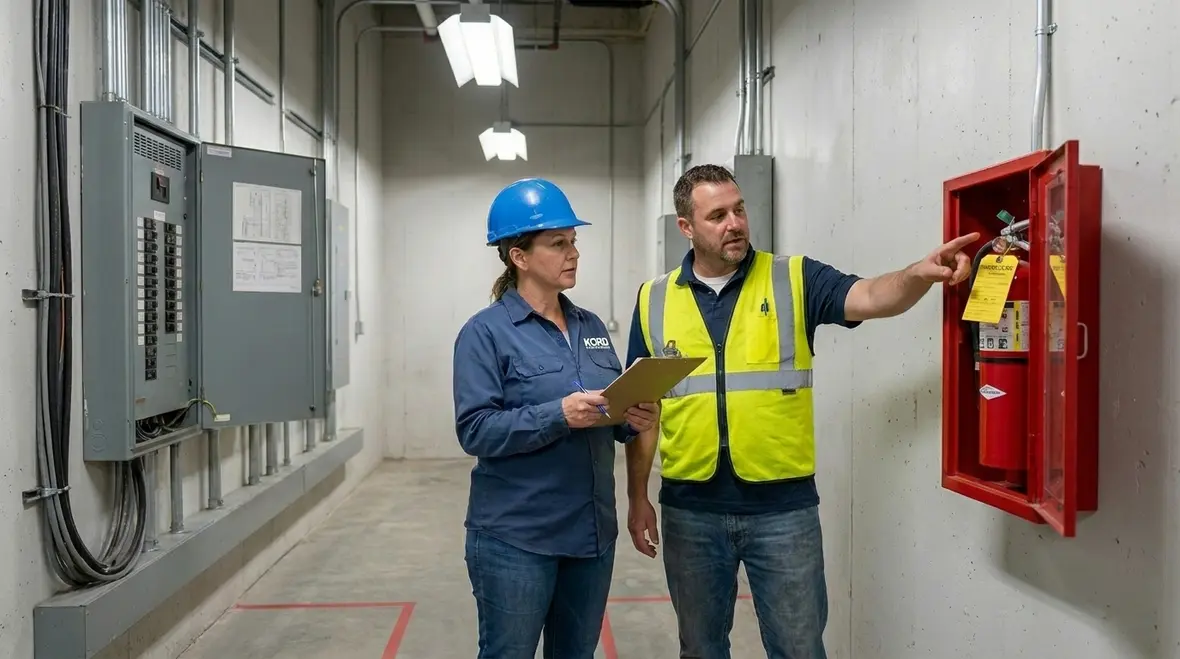
Even with the right mounting spot, an extinguisher must support a safe stance and a clear line of approach. Therefore, technicians often encourage placement where a person can grab the unit without leaning over energized equipment or stepping through tight gaps. They also advise keeping the pathway to the extinguisher wide and free of stored items. That way, a user does not need to move boxes while smoke rises, which is when people love to do the most dangerous things.
As kord fire protection technicians explain, the best plans match the building layout. They account for circulation routes, workstations, and typical operator habits. For example, a panel area that sees routine equipment maintenance might need a placement strategy that changes during shifts. If the space is usually blocked with tools, the extinguisher location must not rely on someone moving clutter under pressure.
In practice, safe positioning often means
- Clear access from a normal standing position, not a forced reach
- Reliable visibility even when lighting drops or smoke begins to collect
- Intact mounting that resists vibration and accidental knocks
- Protected routing so the hose does not snag on edges or protrusions
Think like the person using it, not the person installing it
Installers and managers usually look at walls when planning. Responders look at movement. That difference is everything. A good layout is not the one that made mounting easiest on a Tuesday afternoon. It is the one that still makes sense when the room is noisy, visibility drops, adrenaline spikes, and every human in the building suddenly forgets where they put literally everything.
Business owners and facility managers: what to check during walkthroughs
Electrical hazards do not announce themselves with a neon sign. So facility teams should do structured walkthrough checks. First, they should confirm the extinguisher is not installed in a way that forces the user to pass near the panel. Next, they should confirm that doors, covers, and barriers do not block the device during the first seconds of an alarm. Then they should verify that the extinguisher label and operating instructions remain readable after routine wear and cleaning.
Additionally, they should look at maintenance reality. For instance, a unit mounted on a wall behind a frequently used work cart may get bumped, adjusted, or left at an angle. Meanwhile, a device installed too close to a panel might suffer more heat exposure from normal thermal cycling. Over time, these issues reduce performance.
It also helps to invite kord fire protection technicians for a panel area review. They bring the habit of thinking like a responder. That means they focus on the moment of action, not just the paperwork. If your team is already reviewing extinguisher stations, it also makes sense to connect that effort with Kord Fire Protection’s Fire Extinguisher Service & Certification services so placement, inspection, and long term reliability stay aligned.
FAQ: Fire extinguisher placement and electrical panels
Bring your layout up to responder-level readiness
Electrical fires move fast, and the wrong extinguisher spot can slow a team right when seconds matter. Therefore, facility leaders should review panel room layouts, confirm clear access, and remove any mounting decisions that force awkward reaching. Then schedule an inspection with kord fire protection technicians so the plan matches real conditions, not just theory. If the current placement feels “close enough,” it probably is not. Act now, update the layout, and keep everyone focused on stopping the fire, not solving a reach problem.
For facilities looking to tighten the full protection picture, Kord Fire Protection also offers related system support through Horizontal Split Case Pump Systems and broader Fire Pump Service solutions. That makes it easier to connect extinguisher readiness with the larger fire protection infrastructure instead of treating every safety decision like a separate island.

Join Our Newsletter!
Get the latest fire safety tips delivered straight to your inbox From our Newsletter.