Selecting Industrial Fire Pumps for High Rises
When a high rise needs reliable fire water delivery, selecting industrial fire pumps cannot be treated like a last minute shopping trip. The right pump setup protects people, supports code compliance, and helps the fire service do its job without drama. And yes, fire protection systems are serious business, but that does not mean the decision process has to feel like a black hole. Kord Fire Protection technicians explain that the best projects start with a clear view of site hazards, building layout, and system performance goals. From jockey pump control to pump room design, the details matter, and the cost of missing a detail shows up later, during an alarm, not during a design review.
In tall buildings, that planning discipline matters even more because every added floor changes how water behaves across the system. Pressure must remain dependable where it counts most, coordination between equipment must stay tight, and installation conditions cannot sabotage a good design. Kord Fire Protection technicians regularly stress that pump selection works best when it is tied directly to how the building will actually operate, test, and respond during an emergency. That is the practical side of good engineering. It is not flashy, but it is far better than discovering your expensive equipment was chosen with the confidence of a horoscope.
1) Understand the building demands before choosing pumps
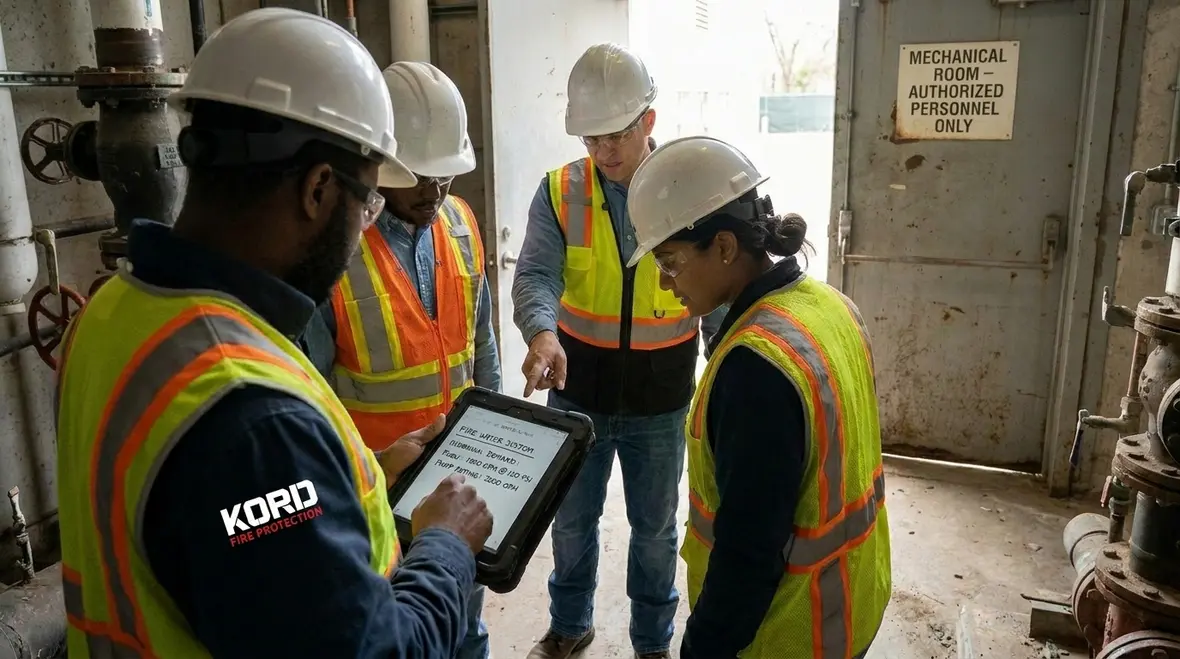
High rise structures change the rules. Water pressure and flow must support standpipes, sprinklers, hoses, and sometimes more than one fire scenario. Therefore, Kord Fire Protection technicians typically begin by mapping demand at the most critical points, not by picking equipment first. For example, upper floors often drive higher discharge pressure, while wet risers and sprinkler zones can create different flow requirements depending on the design density. In addition, the pump must handle transient conditions like power cycling, valve movement, and pressure drops as water moves through long pipe runs.
When teams do this right, selecting industrial fire pumps becomes a performance match instead of a guess. And performance matching is where good engineering earns its keep, unlike that one coworker who insists “it should work” based on vibes. The starting point is always the building itself: its height, occupancy, riser arrangement, standpipe demands, sprinkler density, and any special hazards that might increase water needs. Without that foundation, pump sizing becomes a game of expensive optimism.
Why demand mapping has to come first
A high rise is not just a taller version of a smaller building. It introduces elevation losses, zoning complexities, and more demanding distribution paths. Teams need to identify the most remote and hydraulically demanding points in the system before deciding how much pump is enough. That includes looking at standpipe outlets, sprinkler remote areas, and how pressure behaves when several devices operate at once. If those realities are ignored early, the project may end up with a pump that looks fine in submittals and underwhelms where the water actually has to go.
2) Calculate required flow and pressure with real worst cases
To avoid painful surprises, the design team should compute required flow and pressure using the actual system configuration. This includes elevation differences, pipe material, fittings, sprinklers or valves involved, and any hydraulic changes from zone layout. Then they should evaluate the most demanding operating points, such as the highest required pressure at the topmost outlet, and the flow rate needed for the required number of simultaneous devices.
Next, they should consider how the system behaves during fire control. A pump cannot just meet a single number; it must maintain the needed pressure curve under varying demand. Kord Fire Protection technicians often point out that engineers should review the full operating range, especially if the building uses pressure reducing valves, floor control valves, or staging schemes. Otherwise, a pump could look fine on paper while the discharge pressure falls off when the system is actually flowing.
This is where real worst case thinking pays off. Teams should model the ugly scenarios, not the comfortable ones. That means checking the effect of long pipe runs, friction loss through fittings, and operation at the highest and most remote outlets. It also means asking how pressure behaves as valves shift, zones activate, or partial demand becomes full demand. A fire pump should not be chosen because it wins a beauty contest on a cut sheet. It should be chosen because it still performs when the building asks the hardest questions.
3) Evaluate pump type and how it will behave under duty and standby
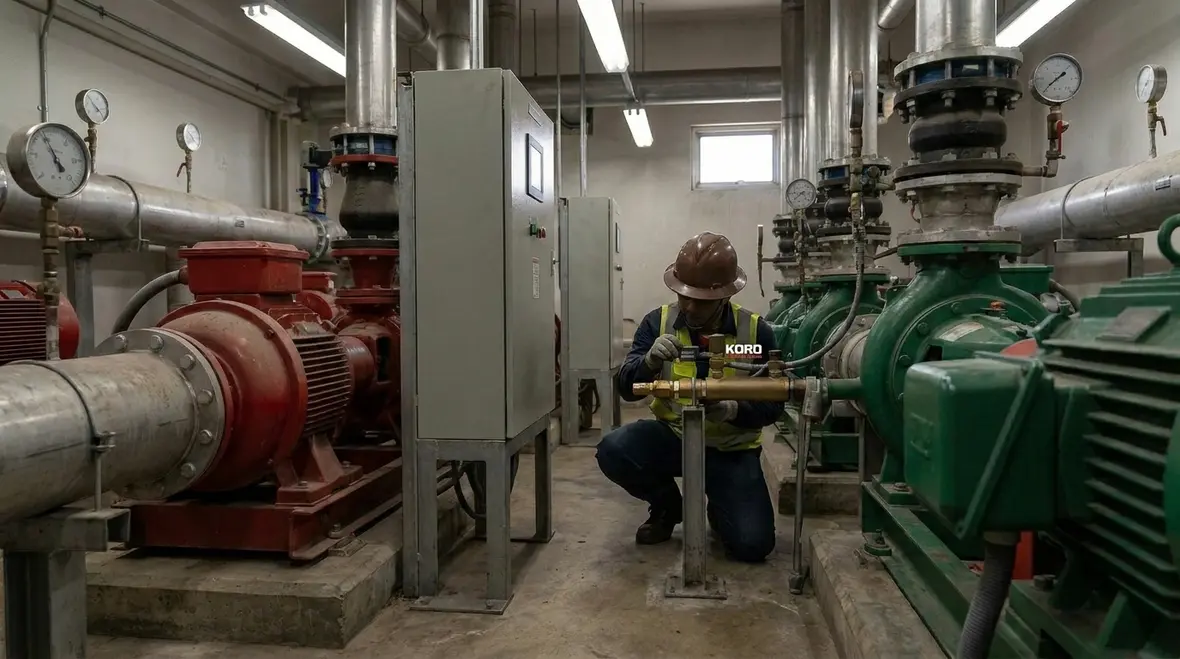
In high rises, pump duty and standby strategy affects both reliability and long term maintenance. A common approach uses a primary pump for automatic operation and one or more standby units to cover failure or higher demand. As a result, the selected industrial fire pump must align with how the building will test, rotate, and respond. Kord Fire Protection technicians also emphasize that the pump curve, efficiency, and control mode matter as much as the rated horsepower.
Teams should compare options such as vertical or horizontal configurations, and confirm that the motor starting method and controller design work with the power supply available at the site. Furthermore, they should verify that the pump can handle frequent starts for code required tests without unnecessary wear. If a system will run rarely, that does not mean the pump can be ignored. Fire systems must stay dependable even after months of inactivity, like a superhero who only shows up once a year but still needs a functioning costume.
Choosing for operation, not just ratings
A pump’s published rating does not tell the whole story. The design team has to think through how the unit starts, how it shares duties with standby equipment, how often it will be churn tested, and what kind of wear those cycles create over time. Kord Fire Protection’s fire pump service team offers maintenance, testing, inspection documentation, and 24/7 on call support for these systems, which makes long term serviceability part of the selection conversation, not an afterthought. Fire pump service support becomes especially relevant when a high rise relies on a carefully coordinated duty and standby strategy.
4) Ensure the control system supports code, detection, and pressure stability
Pump selection does not stop at the physical unit. The control system determines how the pumps start, stop, and modulate pressure under different conditions. Therefore, the design should confirm that the pump controllers can interface with the fire alarm system, pressure sensors, flow switches, and any supervisory signals required for monitoring. In addition, the control logic should prevent nuisance starts and ensure correct staging between duty and standby units.
Kord Fire Protection technicians often stress the need for stable pressure during the transition between operating modes. If the system uses variable frequency drives or advanced controls, it must maintain pressure setpoints without hunting or oscillating. Meanwhile, if the system uses constant speed pumps, the design should still account for pressure variations across the range of flow. Either way, the control setup should support reliable operation during the first seconds of a fire, because those seconds matter when water needs to arrive on time.
This is also where fire alarm coordination earns a seat at the table. Kord Fire Protection provides fire alarm services and installation support for commercial systems, including monitoring, addressable systems, and related compliance work. That makes it easier to align pump supervision, alarm interfaces, and supervisory signaling with the broader life safety design. For projects that need integrated alarm planning, Avalon fire alarm systems for commercial buildings is a relevant resource to review during coordination.
5) Design pump room, suction conditions, and maintain safe access
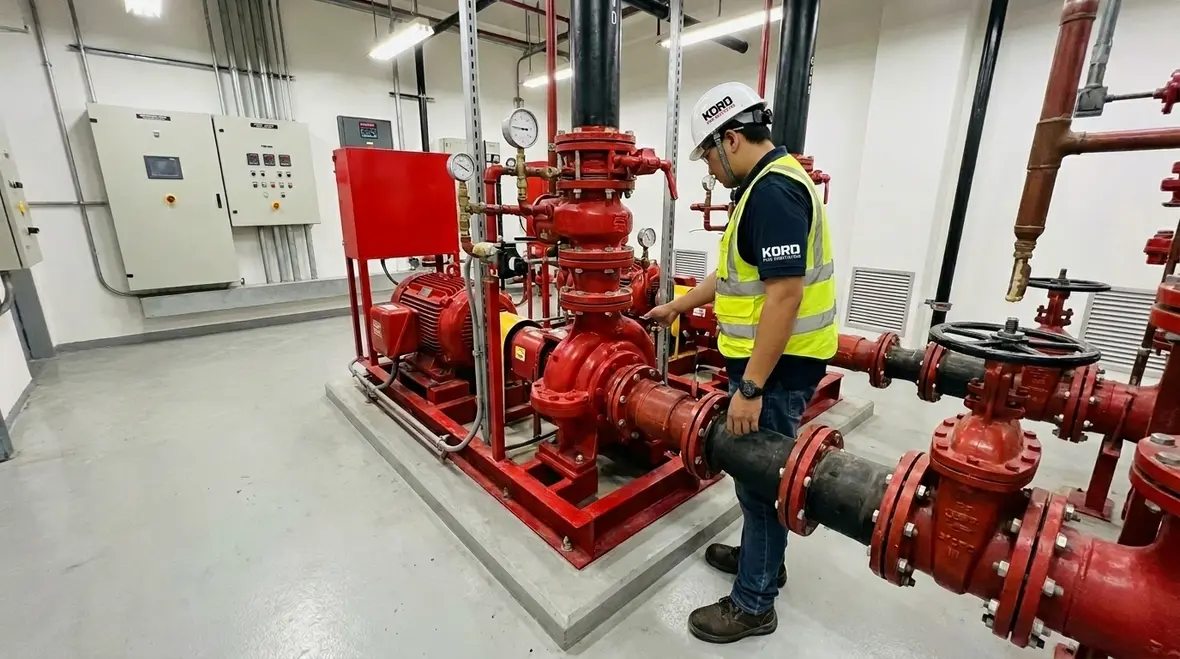
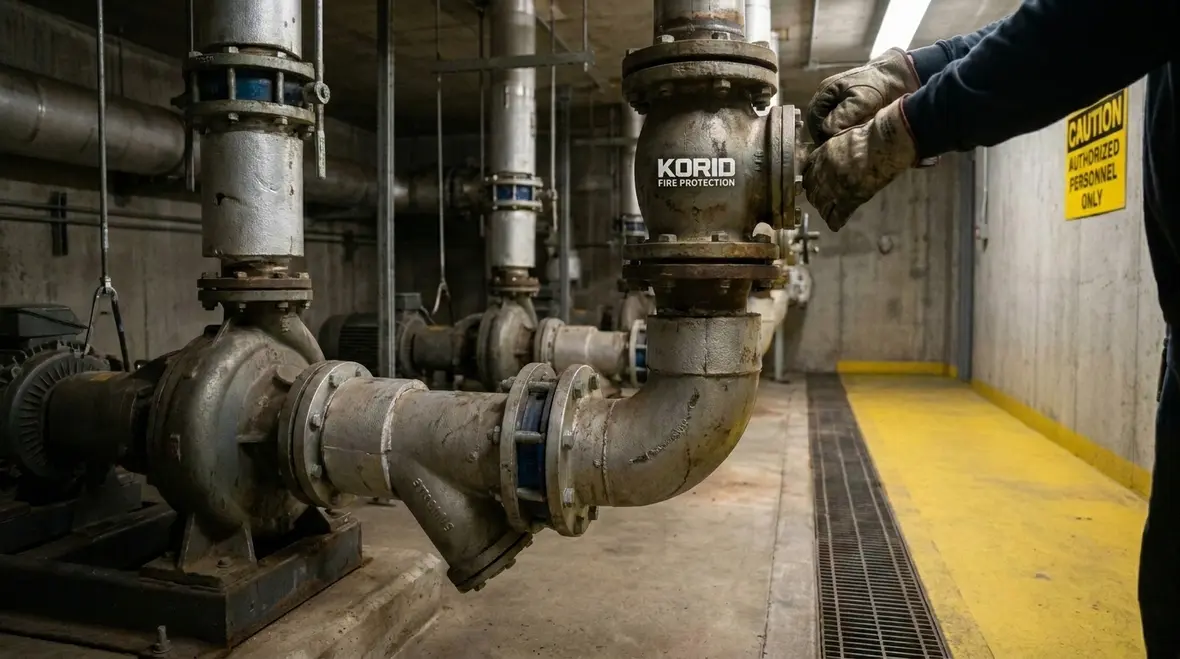
A pump can be “the right model” and still fail to perform if installation details break the hydraulics or the service plan. For that reason, the pump room must support stable suction conditions, proper drainage, correct alignment, and safe access for inspection and repairs. Kord Fire Protection technicians commonly look at suction piping layout, strainer design, air entrainment risks, and whether the suction side can supply net positive suction head requirements.
They also pay attention to how the room will support routine testing and maintenance. Clear access around controllers, cable routing that respects separation requirements, and proper ventilation all reduce downtime. On top of that, the team should ensure the system can be maintained without shutting down the whole fire water supply longer than allowed. After all, a pump system that requires a team to “summon a wizard” during maintenance is not a plan, it is a hobby.
| Evaluation area | What to confirm in the design |
|---|---|
| Hydraulic demand | Top floor pressure, simultaneous flows, and real operating ranges |
| Pump selection | Pump curve match and duty standby strategy |
| Controls | Alarm interface, staging logic, and stable pressure behavior |
| Installation | Suction conditions, access, drainage, and safe service |
Coordination details that save trouble later
The pump room is where elegant design meets reality. Suction piping geometry, room drainage, ventilation, and service clearance all influence whether the pump can do its job consistently. Maintenance access matters because no system stays perfect forever. If technicians cannot safely reach controllers, valves, test headers, or electrical equipment, then routine service turns into a headache and emergency service turns into a crisis. Good layouts reduce drama. Bad layouts create stories nobody wants to tell after an inspection.
6) Verify reliability through testing, redundancy, and lifecycle planning
Fire pumps live in the real world, where sensors drift, valves stick, and people change schedules. Therefore, selecting industrial fire pumps should include a lifecycle mindset. Kord Fire Protection technicians often advise teams to plan inspection and acceptance tests early, then build the schedule into operations. That includes verifying alignment and vibration limits, confirming electrical load behavior, and testing controller logic against expected sequence of operation.
Redundancy matters, but it should be practical. A standby pump must be truly ready, meaning it receives power, stays within maintenance intervals, and performs when commanded. In addition, the team should confirm that fuel or power backup provisions meet the project needs where required, especially for systems dependent on reliable power delivery. Finally, they should select materials and components that fit the water quality and environmental conditions at the site. Corrosion issues can creep in slowly, like a pop song you cannot escape on the radio, and then one day the system underperforms right when you need it most.
Planning for the long term also means building testing into the ownership strategy. Kord Fire Protection’s fire pump testing resources explain weekly, monthly, and annual testing considerations and why regular verification matters to real readiness, not just paperwork. Teams reviewing new installations or upgrades may also benefit from comparing their approach with fire pump testing requirements and the broader high rise compliance perspective in fire code requirements for high rise buildings.
FAQ
Conclusion and call to action
Choosing fire pump equipment for a high rise is not about picking the biggest name on a spec sheet. It requires accurate demand calculations, pump and control system match, safe pump room installation, and a lifecycle plan that supports testing and maintenance. Kord Fire Protection technicians can help teams confirm performance and reduce the risk of costly surprises. The smartest projects treat pump selection as part of a complete fire protection strategy, not a box to check after everything else is already crowded into the schedule.
If your project is in design or planning, contact Kord Fire Protection to review the system needs and start selecting industrial fire pumps with confidence. For a broader solution near the end of planning, explore full fire protection services or connect directly through fire pump service for testing, maintenance, and support that keeps high rise systems ready when it matters most.

Join Our Newsletter!
Get the latest fire safety tips delivered straight to your inbox From our Newsletter.