How Smart Fire Protection Systems Reduce Risk
The Impact of IoT: How Smart Fire Protection Systems Reduce Facility Risk
Within the first few moments of a fire emergency, seconds matter more than opinions. That is precisely where Smart fire protection systems step into the spotlight. These connected solutions use sensors, data, and real time alerts to detect danger early and respond faster than traditional setups ever could. Instead of waiting for smoke to billow like a dramatic movie scene, facilities now rely on intelligent detection that acts before panic enters the room.
Across commercial buildings, warehouses, healthcare centers, and manufacturing plants, the Internet of Things has reshaped how safety works. Moreover, when Kord Fire Protection technicians explain these systems to facility managers, they do not just talk about wires and valves. They describe an ecosystem that thinks, communicates, and quietly guards a property around the clock. It is not science fiction. It is simply smarter fire safety doing its job.
The Evolution of Smart Fire Protection Systems in Modern Facilities
Fire protection once depended on isolated alarms and manual inspections. While those systems served their time, they operated like flip phones in a smartphone world. They worked, but they did not talk to anything else.
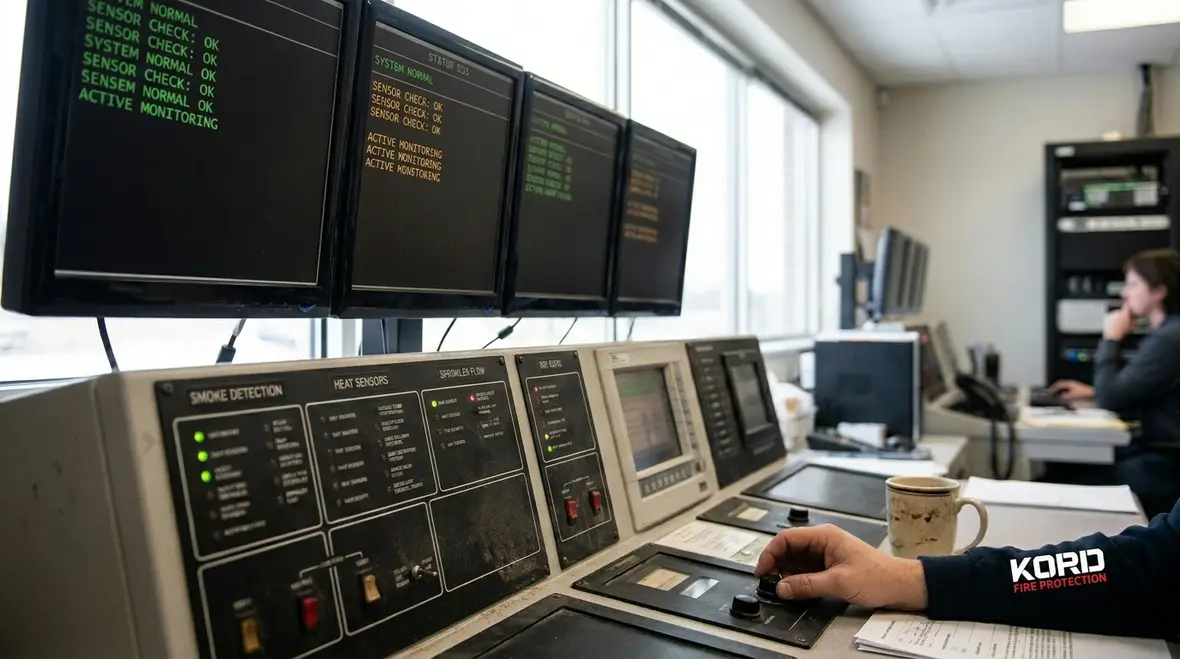
Today, connected fire safety technology links detectors, sprinklers, control panels, and monitoring platforms into a single network. As a result, facility managers gain clear visibility into system health and risk conditions. Sensors measure smoke, heat, air quality, and even equipment performance. If something drifts outside safe limits, the system sends an alert instantly.
Furthermore, these intelligent networks log data continuously. That data reveals patterns. For example, if a mechanical room shows rising heat trends over several weeks, maintenance teams can step in before a hazard forms. Instead of reacting to emergencies, facilities prevent them.
Kord Fire Protection technicians often compare it to having a smoke detector with a memory and a voice. It remembers what it sees, and it tells the right people when something feels off. That is a quiet kind of power.
For facility leaders who want deeper visibility into traditional fire alarm reporting, resources like Kord Fire Protection’s guide to reviewing a fire alarm inspection report can complement the intelligence of smart systems by sharpening how results get interpreted and used.
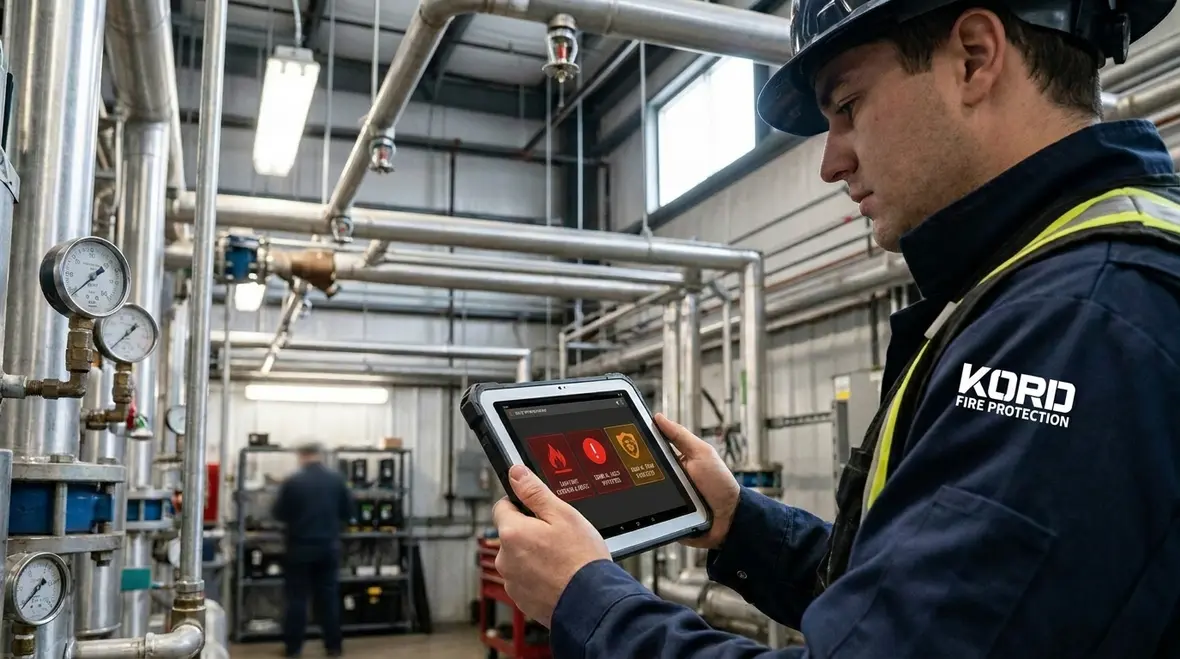
How IoT Connectivity Reduces Risk Before Flames Appear
Risk reduction does not begin when sprinklers activate. It begins long before that. IoT enabled fire systems monitor conditions that humans would never notice during a normal workday.
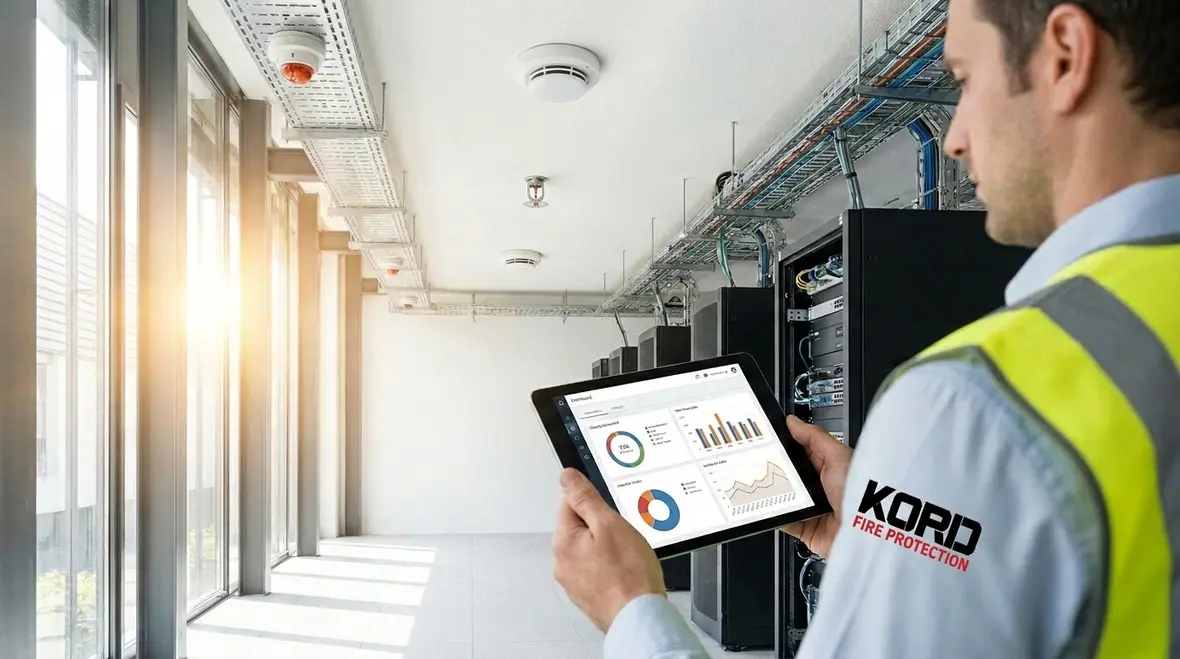
For instance, connected sensors detect subtle electrical faults, abnormal equipment heat, or blocked sprinkler valves. Consequently, maintenance teams receive alerts on dashboards or mobile devices in real time. Instead of discovering a failure during an annual inspection, they correct it immediately.
Additionally, remote monitoring allows multiple facilities to feed data into a central command center. Large organizations no longer need to rely on scattered reports. They can review system status across regions with a single login.
Kord Fire Protection technicians frequently explain that prevention saves more than property. It protects business continuity. When a facility avoids downtime, it avoids lost revenue, damaged reputation, and regulatory scrutiny. In simple terms, it keeps the lights on and the doors open.
And yes, it also prevents that awkward board meeting where someone asks why the alarm failed. No one enjoys that sequel.
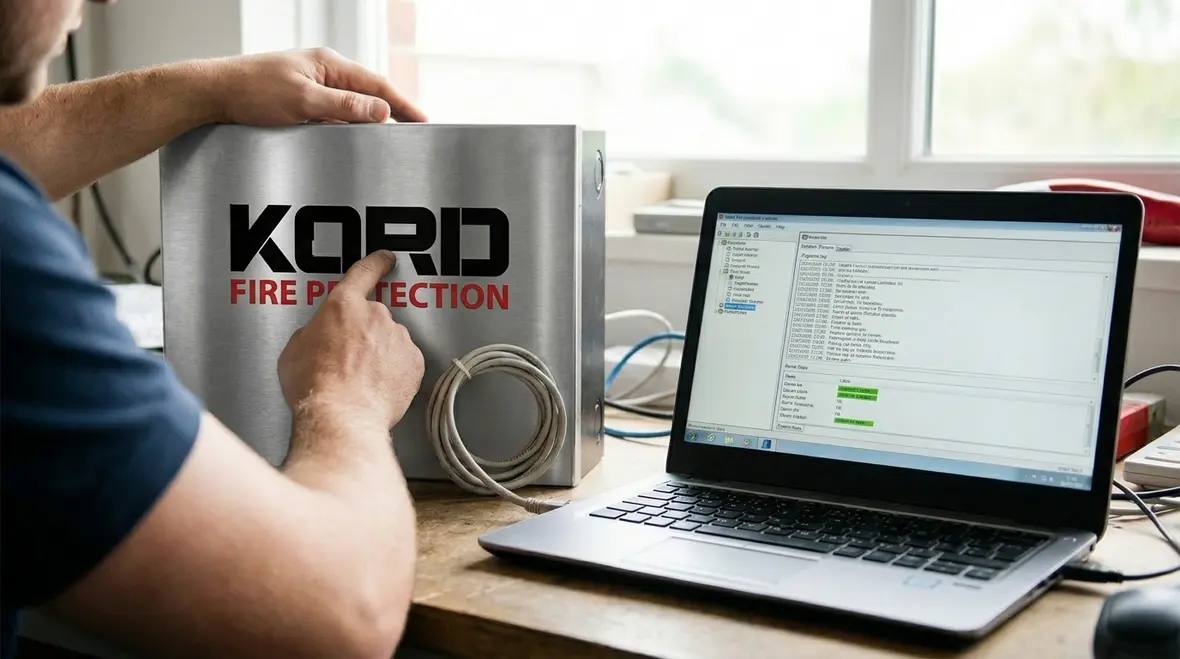
What Makes Smart Fire Protection Systems Different from Traditional Setups?
Communication, Automation, and Insight
The difference lies in communication, automation, and insight.
Traditional systems trigger alarms when thresholds are crossed. They do not analyze trends or predict issues. In contrast, Smart fire protection systems integrate with building management platforms, security networks, and cloud based analytics tools.
Key Capabilities of Connected Systems
They provide:
- Real time monitoring across devices
- Automated testing and status reporting
- Remote diagnostics
- Instant alerts to designated personnel
- Data logs for compliance documentation
Because of this integration, facility managers gain clarity. They know which device triggered an alert, where it is located, and what conditions caused it. That level of detail shortens response time and reduces confusion during critical moments.
Moreover, automated inspection features simplify compliance. Instead of flipping through binders of handwritten inspection notes, managers access digital records within seconds. Inspectors appreciate that efficiency. After all, even regulators enjoy a smooth process.
When smart systems are paired with structured checklists, such as a commercial fire alarm inspection checklist, facilities gain both automated oversight and a clear framework for meeting formal requirements.
Operational Efficiency and Cost Control Through Connected Fire Safety
Safety remains the primary goal. However, cost control follows closely behind. Intelligent fire safety networks reduce unnecessary service calls and emergency repairs.
When systems self report their status, technicians arrive prepared. They know which component needs attention before stepping onto the property. Consequently, service visits become targeted and efficient.
Traditional vs. Connected Fire Systems
Traditional Fire Systems
Manual inspections at fixed intervals
Limited fault visibility
Reactive maintenance
Paper based compliance records
Connected Fire Safety Networks
Continuous real time monitoring
Detailed device level diagnostics
Predictive maintenance alerts
Digital automated reporting
Because predictive maintenance addresses small issues early, facilities avoid major system failures. Over time, that translates into lower repair costs and longer equipment life. It also means fewer disruptions to daily operations.
Kord Fire Protection technicians often note that smart upgrades pay for themselves in avoided emergencies alone. When a single prevented fire can save millions, the math becomes simple.
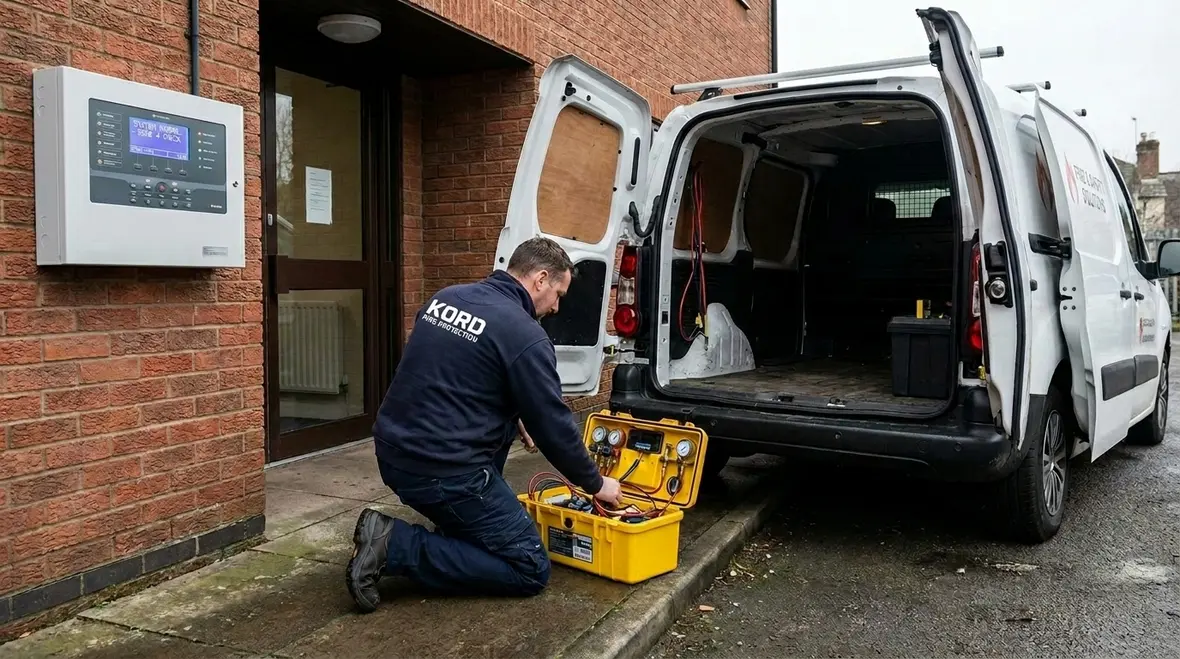
Data Driven Decision Making for Safer Facilities
Turning System Data into Action
Data is more than numbers on a screen. It tells a story about how a building behaves. Intelligent fire detection systems collect and analyze performance metrics that guide long term planning.
For example, if repeated alerts occur in a storage area, managers can review ventilation, storage practices, or equipment placement. Instead of guessing, they act on evidence.
Additionally, historical data supports capital improvement decisions. If aging components show frequent warnings, leadership can justify replacement before failure occurs. That proactive approach protects both safety and budgets.
Because the information flows continuously, leadership teams gain confidence in their risk management strategy. They are not hoping systems work. They know they do.
And while data might not sound glamorous, it quietly prevents dramatic headlines. No one wants their facility trending for the wrong reason.
Integration with Emergency Response and Business Continuity Plans
Coordinated Response When Seconds Matter
Fire safety does not operate in isolation. It connects directly to emergency response planning and overall resilience.
When connected detection systems trigger an alert, notifications reach designated staff instantly. At the same time, some platforms can alert local monitoring centers or integrate with mass notification tools. Therefore, communication spreads quickly and clearly.
Furthermore, integration with access control systems can unlock exit routes automatically. Ventilation systems can shut down to slow smoke spread. These coordinated responses reduce chaos during evacuation.
Supporting People, Not Replacing Them
Kord Fire Protection technicians emphasize that technology supports people, not replaces them. Trained staff still lead evacuations and manage response efforts. However, they do so with better information and faster alerts.
In business continuity planning, that speed matters. Every minute saved reduces potential loss. It also reassures employees and customers that leadership prioritizes safety.
Partnering with Skilled Technicians for Maximum Impact
Why Expert Guidance Still Matters
Even the most advanced system requires expert installation and guidance. That is where experienced professionals step in.
Kord Fire Protection technicians take time to explain system capabilities in plain language. They walk facility managers through dashboards, alert settings, and maintenance schedules. Because of this hands on approach, teams understand how to use the technology effectively.
Moreover, proper configuration ensures that alerts are meaningful rather than overwhelming. No one wants constant notifications for minor fluctuations. Skilled technicians fine tune thresholds to balance sensitivity and practicality.
They also provide ongoing inspections and testing. While connected platforms automate many tasks, human oversight remains essential. Together, technology and expertise create layered protection.
In truth, smart upgrades without proper support are like buying a high end espresso machine and never learning how to brew. It looks impressive, but it does not deliver the full benefit.
FAQ: Smart Fire Protection Systems
Conclusion: Strengthen Protection with Intelligent Fire Safety
Facilities that invest in connected protection do more than install equipment. They build a smarter defense against risk. With guidance from Kord Fire Protection technicians and the power of modern monitoring, organizations gain clarity, speed, and confidence. Now is the time to move beyond outdated alarms and embrace a safer future.
Strengthen your facility with intelligent fire safety that works tirelessly, protects consistently, and keeps risk where it belongs, under control. To align your smart upgrades with code requirements and ongoing inspections, pair your strategy with tools like Kord Fire’s fire alarm inspection and testing guidance and their commercial fire alarm inspection checklist.
Take the Next Step with Kord Fire Protection
If you are ready to connect smart fire protection with dependable service, Kord Fire Protection offers full support—from inspection and testing through monitoring and repairs. Explore their dedicated Fire Alarm Services or review their broader full fire protection services to design a solution that fits your facility, your schedule, and your risk profile.
Know Your Weapon Before You Fight the Flame
Kord Fire Protection is your go-to when it comes to all things fire protection. For over 20 years, we’ve been serving Southern California with the quality service and equipment to keep your home or business safe at all times. Our competitive prices reflect our unwavering commitment to protecting what matters most in the event of a fire emergency. Give us a call, send an email, or use that form!

Join Our Newsletter!
Get the latest fire safety tips delivered straight to your inbox From our Newsletter.