How Smoke Detectors Communicate With Alarm Panels
How Heat and Smoke Detectors Communicate With Alarm Systems
In the first few seconds of a fire, clarity matters. Property owners often ask how smoke detectors communicate with panel systems and what truly happens behind the scenes when an alarm sounds. It is not magic. It is not guesswork. It is a carefully designed conversation between devices that never sleep. Throughout commercial buildings and homes alike, these detectors monitor the air, measure heat, and send precise signals to a central control panel. Kord Fire Protection technicians often explain that understanding this communication helps owners trust the system protecting their people and property. And once someone sees how it works, it feels less like a mystery and more like a well rehearsed orchestra, minus the tuxedos.
Let us step into that orchestra and listen closely.
The Foundation of Modern Fire Alarm Communication
Every fire alarm system begins with detection. However, detection alone is not enough. The detector must pass along information clearly and quickly. Therefore, engineers design each device to act as both a sensor and a messenger.
In traditional systems, smoke and heat detectors connect to the fire alarm control panel through wired circuits. When smoke particles enter the sensing chamber, the detector changes its electrical state. As a result, that change travels along the circuit to the panel. The panel interprets the signal and decides what to do next. It may trigger horns, strobes, or a signal to a monitoring station.
In more advanced addressable systems, the communication becomes even more precise. Instead of sending a general alarm signal from a whole zone, each detector carries a digital address. Consequently, the panel knows exactly which device activated. It is similar to caller ID. Rather than hearing that someone called, the panel sees who called and where they are located.
Kord Fire Protection technicians often compare this setup to a group text message. In a conventional system, someone texts the entire group saying something is wrong in the building. In an addressable system, one person texts their exact seat number. Both methods work. However, one gives clearer direction to first responders.
For building owners who want to go deeper into system types and design, Kord Fire’s comprehensive fire protection services page explains how fire alarms work alongside sprinklers, extinguishers, and suppression systems to create a complete life safety strategy.
Understanding How Smoke Detectors Communicate With Panel Technology
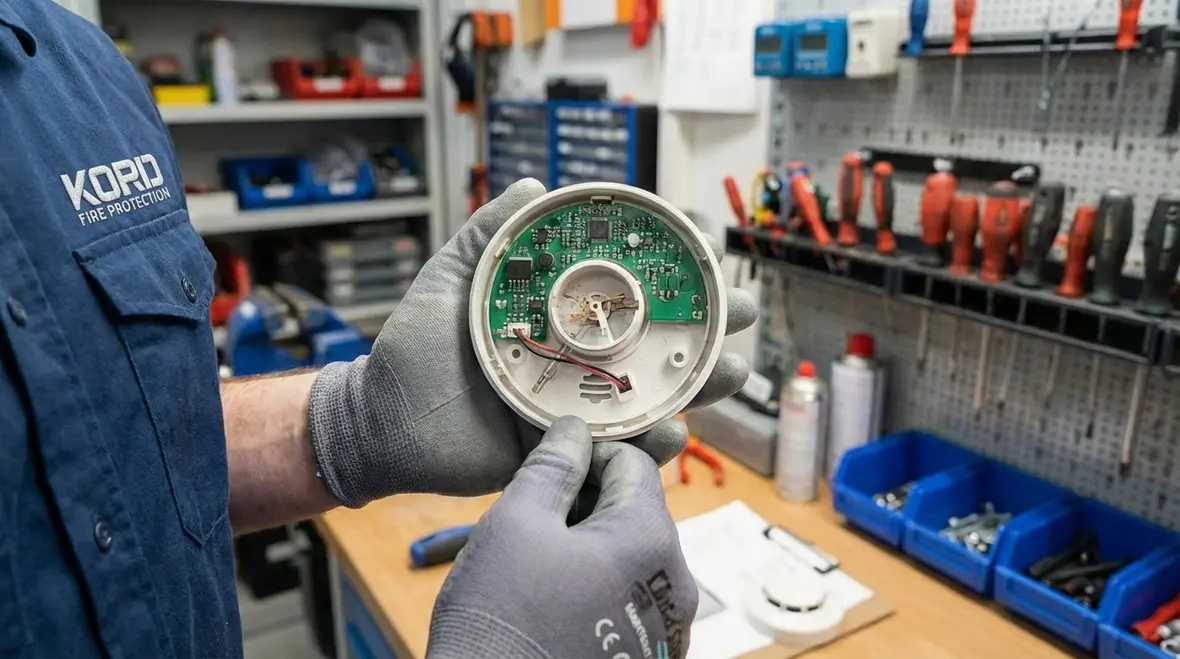
When property managers search for how smoke detectors communicate with panel systems, they usually want a simple answer. The truth is straightforward yet powerful. The detector senses smoke or heat. It converts that condition into an electrical or digital signal. Then it sends that signal through wiring or wireless pathways to the control panel. The panel processes the information and activates programmed responses.
Yet beneath that simple explanation lies careful engineering.
First, the sensing chamber identifies abnormal conditions. In ionization detectors, smoke disrupts a small electrical current. In photoelectric detectors, smoke scatters a beam of light onto a sensor. Meanwhile, heat detectors monitor temperature rise or a fixed temperature threshold. Once triggered, internal circuitry shifts state.
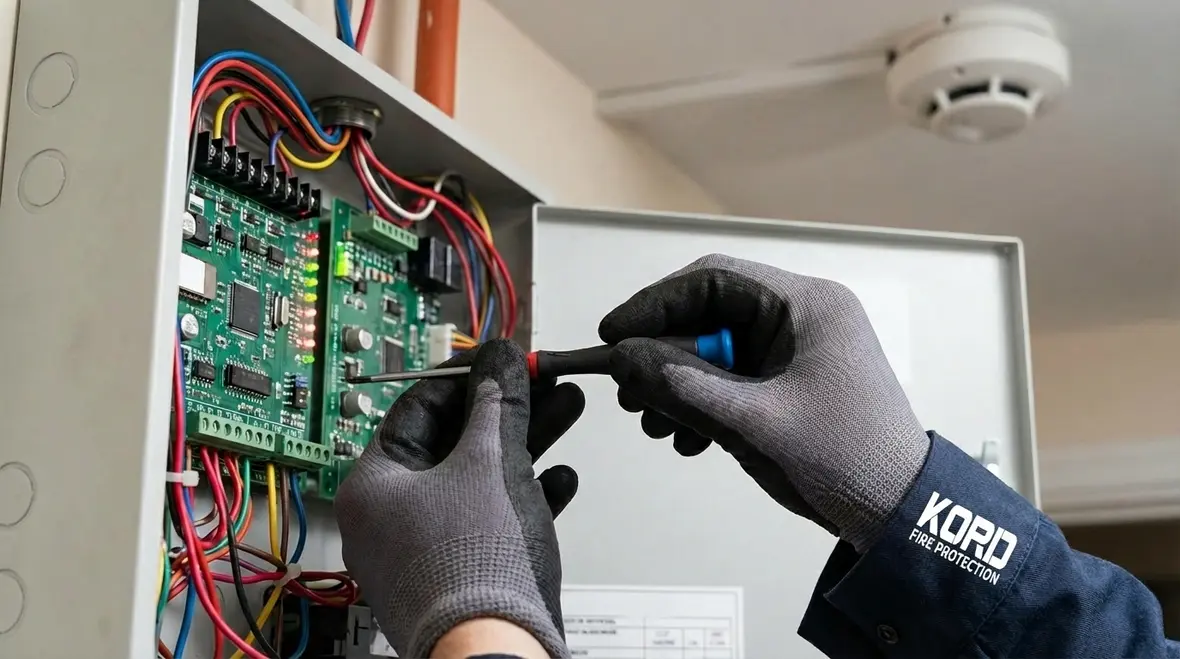
Next, the detector sends that state change to the panel. In a conventional system, this often means altering voltage or resistance on a circuit. In an addressable system, the detector sends digital data packets. Therefore, the control panel reads not just alarm status but also device health, sensitivity levels, and maintenance alerts.
Finally, the panel responds based on its programming. It may activate evacuation signals immediately. Alternatively, it may initiate a verification delay to reduce false alarms. Either way, the communication is constant. Even when silent, detectors and panels exchange supervisory signals to confirm everything remains in working order.
That quiet back and forth conversation is what keeps buildings safe at three in the morning when everyone else sleeps.
Wired Versus Wireless Communication Paths
Although wired systems remain common, wireless technology has grown in popularity. Each method has strengths. Therefore, choosing the right one depends on the building and risk level.
Below is a clear comparison of the two approaches.
| Wired Systems | Wireless Systems |
| Use physical cables to connect detectors to the panel | Use radio frequency signals to transmit data |
| Highly stable and resistant to interference | Flexible for historic buildings or retrofits |
| Require more labor during installation | Faster installation with less structural impact |
| Power supplied through wiring loop | Battery powered with panel supervision |
In wired systems, signals travel through supervised loops. If a wire breaks, the panel detects the fault. Consequently, building managers receive notice before an emergency occurs. In wireless systems, encrypted radio signals transmit alarm data. The panel supervises signal strength and battery life to ensure reliability.
Kord Fire Protection technicians often remind clients that wireless does not mean unreliable. In fact, modern wireless fire alarm systems include strong encryption and frequent check ins. It is less like a walkie talkie and more like a secure digital handshake happening every few seconds.
Addressable Systems and Intelligent Data Exchange
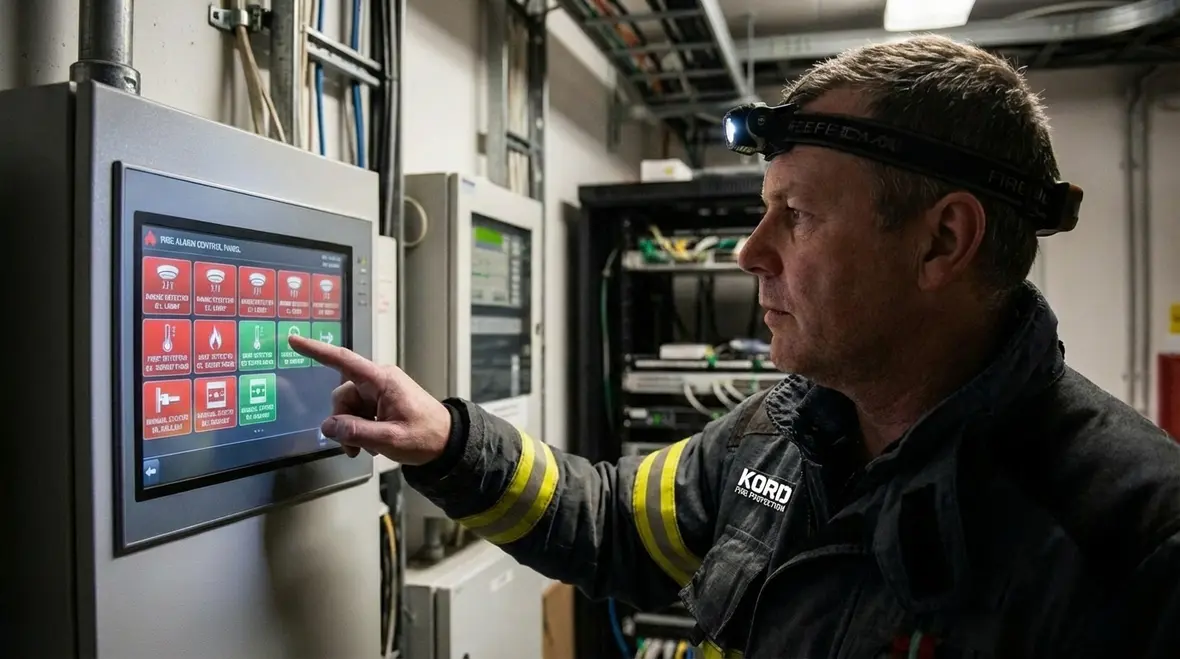
Addressable technology changed how smoke detectors communicate with panel systems in large facilities. Instead of grouping detectors into zones, each device reports individually. As a result, the panel can pinpoint the exact room or hallway in alarm.
However, the benefits go deeper.
Each addressable detector contains a microprocessor. That small chip analyzes sensor data before sending it to the panel. Therefore, it can filter out minor disturbances that would otherwise cause nuisance alarms. For example, brief cooking smoke in a break room may not trigger a full evacuation if it clears quickly.
Furthermore, addressable panels continuously poll detectors. In simple terms, the panel asks each device, are you there and are you okay? The detector answers with its status. This rapid polling happens in seconds. Consequently, faults such as contamination or wiring issues appear on the display before they become serious problems.
Kord Fire Protection technicians often show facility managers how the panel screen lists each device by label. Instead of a vague alert, the screen might read Smoke Detector Conference Room North Wall. That level of detail reduces response time and confusion. And in an emergency, clarity is worth its weight in gold.
How Do Fire Alarm Panels Interpret Detector Signals?
Once the signal reaches the control panel, the real decision making begins. So how does the panel interpret what it receives?
First, the panel’s processor compares incoming data to programmed thresholds. If the signal matches alarm criteria, it initiates the alarm sequence. However, if the signal indicates a trouble condition, such as low sensitivity or wiring fault, the panel displays a supervisory message instead.
Second, the panel activates outputs based on configuration. These outputs may include:
- Audible alarms such as horns or speakers
- Visual strobes for occupant notification
- Elevator recall to prevent use during fire
- Door releases to contain smoke
- Signals to a remote monitoring center
Because the system is programmable, it can follow a phased response plan. For instance, a hospital may alert staff first before sounding a general evacuation. Therefore, the communication between detector and panel becomes part of a larger safety strategy.
In many ways, the panel acts like a conductor. It does not create the music. Instead, it interprets the notes and directs each instrument at the right time.
Supervision, Testing, and Ongoing Communication
Fire alarm communication does not begin and end with an alarm. In fact, most of the time it operates in supervision mode. That means detectors and panels exchange signals to confirm system health.
For wired systems, end of line resistors help the panel detect open or short circuits. If a wire breaks, the electrical characteristics change. As a result, the panel displays a trouble condition. For wireless systems, periodic signal checks ensure each detector remains connected.
Regular testing strengthens this process. Technicians introduce controlled smoke or heat to verify that detectors activate properly. Then they confirm the panel receives and displays the correct information. Kord Fire Protection technicians often explain that testing is not about checking a box. Instead, it validates how smoke detectors communicate with panel equipment under real conditions.
Additionally, modern panels log events with time stamps. Facility managers can review alarm history, trouble signals, and maintenance alerts. Therefore, they gain insight into patterns that may indicate environmental issues or device aging.
It is a bit like reading a building’s diary. Except this diary cares deeply about safety and never forgets a date.
Integration With Monitoring Centers and Smart Systems
Today’s fire alarm panels rarely operate in isolation. Instead, they connect to remote monitoring centers through phone lines, cellular networks, or internet pathways. When a detector activates, the panel sends a coded signal to the monitoring station. Operators then notify emergency responders.
This external communication mirrors the internal process. The detector speaks to the panel. The panel speaks to the monitoring center. Each step relies on accurate data transfer.
Moreover, many systems now integrate with building automation platforms. When the panel receives an alarm signal, it may shut down air handling units to limit smoke spread. It may also unlock specific doors for evacuation. Therefore, understanding how smoke detectors communicate with panel systems becomes essential for coordinated building response.
Kord Fire Protection technicians frequently guide clients through these integrations. They explain how proper configuration ensures that one signal triggers a chain of protective actions. Without that planning, devices may function correctly yet fail to work together. And safety depends on teamwork.
Common Challenges and How Professionals Solve Them
Even well designed systems face challenges. Dust buildup can affect sensitivity. Electrical interference can disrupt signals. Batteries in wireless detectors can weaken over time. However, proactive maintenance reduces these risks.
Technicians begin with inspection. They review panel logs for recurring troubles. Next, they clean and calibrate detectors according to manufacturer guidelines. In addressable systems, they may adjust sensitivity settings to match environmental conditions.
When communication faults appear, they trace wiring circuits or evaluate radio signal paths. Because they understand how smoke detectors communicate with panel equipment, they can isolate the source of failure quickly. Instead of replacing devices blindly, they analyze data and follow a methodical process.
There is no dramatic movie soundtrack during these service calls. No slow motion walk toward a blinking panel. Yet the quiet diligence of skilled technicians prevents emergencies from becoming tragedies. And that, in its own way, deserves applause.
Frequently Asked Questions
Conclusion
Understanding how smoke detectors communicate with panel systems brings confidence to every property owner. Clear signals, smart programming, and regular testing create a safety network that stands ready at all hours. Kord Fire Protection technicians help clients see beyond blinking lights and wires, revealing a system built on precision and trust.
For guidance, upgrades, or expert inspection, reach out today and ensure that every detector in the building speaks clearly when it matters most. If you are planning changes to your fire alarm system, Kord Fire’s dedicated Fire Alarm Services page is a great place to start, and their contact team can help you schedule testing, monitoring, or new installations.
Know Your Weapon Before You Fight the Flame
Kord Fire Protection is your go-to when it comes to all things fire protection. For over 20 years, we’ve been serving Southern California with the quality service and equipment to keep your home or business safe at all times. Our competitive prices reflect our unwavering commitment to protecting what matters most in the event of a fire emergency. Give us a call, send an email, or use that form!

Join Our Newsletter!
Get the latest fire safety tips delivered straight to your inbox From our Newsletter.