
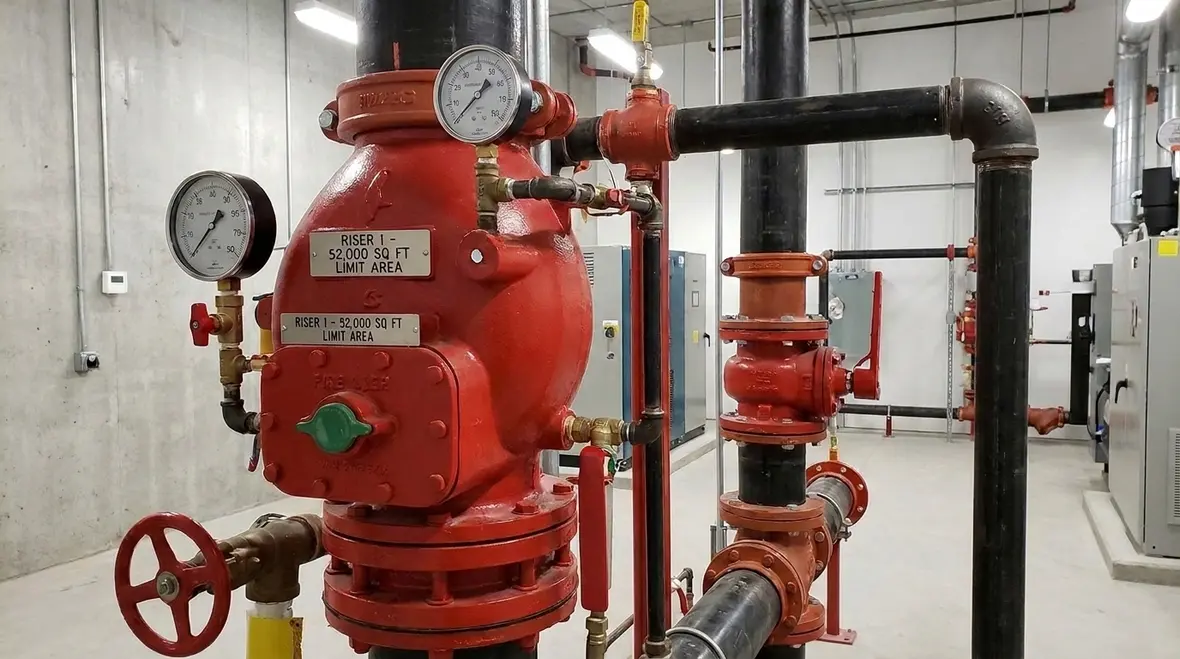
52,000 ft² Rule: NFPA 13R Section 6.1 System Protection Area Limits for One Riser
Quick Answer: NFPA 13R Section 6.1 sets an upper boundary on the system protection area served by a single riser. For many common layouts, the NFPA 13R 6.1 system protection area 52000 sq ft riser limit acts as a practical design control to reduce hydraulic demand and simplify inspection and maintenance.
For a broader foundation on sprinkler system layout and installation logic, see NFPA 13 Overview: Automatic Fire Sprinkler System Installation. It fits naturally here because the riser area limit makes a lot more sense once you understand how systems are organized in the first place.
Why NFPA 13R 6.1 Uses a “Per Riser” Protection Area Limit
NFPA 13R Section 6.1 limits the system protection area that one riser is allowed to serve. This is not an administrative detail. It is a hydraulic and operational safeguard that helps ensure the sprinkler system performs as intended in occupied buildings with simplified protection compared to full NFPA 13 designs.
In real projects, the per riser boundary becomes a key driver for:
- Hydraulic design scope and expected pressure loss across the piping network
- Riser sizing and demand calculation assumptions
- Branch and zone layout so the system can be inspected, tested, and maintained without excessive complexity
- Risk control by preventing an oversized riser from being required to carry too much area under adverse flow conditions
Commercial facilities such as retail stores, light industrial occupancies, and mixed use commercial buildings often expand floor areas or remodel tenant spaces. When those changes occur, the 6.1 protection area limit must remain in compliance or the system needs rework, typically by adding risers, resegmenting piping, or revising design criteria.
What the 52,000 sq ft Riser Limit Means in Practice
The NFPA 13R 6.1 system protection area 52000 sq ft riser limit functions as a threshold for how much protection area one riser can serve. When the calculated system protection area associated with a riser exceeds the limit, designers and authorities having jurisdiction typically require additional risers or a redesign to re-balance the system.
How protection area gets counted
Design teams commonly determine the protection area served by a riser by analyzing the distribution of sprinklers, branch lines, and coverage mapped back to the riser. The “served by one riser” concept matters. In practice, protection area is not just “the building footprint.” It is the area assigned to the hydraulic portions that depend on the same riser supply.
Why the limit impacts more than hydraulics
Even when a contractor believes the water supply will support the flow demand, the protection area limit can still trigger compliance changes. This is because inspection and impairment management become harder when a single riser is required to serve too large a portion of the facility. Facilities teams frequently need the ability to isolate sections during testing and repairs without taking the entire floor or multiple tenants out of service longer than necessary.
Compliance Challenges in Commercial, Industrial, and Retail Installations
In the field, the biggest problems usually appear after initial installation, during tenant improvements, renovations, and system modifications. Common issues that cause NFPA 13R 6.1 protection area nonconformance include the following.
1) Tenant buildouts add sprinklers but do not re-run the “per riser” area balance
Many facilities add ceilings, create new storage rooms, or reconfigure merchandising and office spaces. Sprinkler quantity and layout often change, but documentation and hydraulic assumptions remain based on the original design. If added sprinklers cause the riser served protection area to exceed the NFPA 13R 6.1 system protection area 52000 sq ft riser limit, compliance can fail at the first code review for permits, at inspection time, or after a major inspection cycle identifies a mismatch.
2) Partial valve isolation does not match how the system was intended to be maintained
Valve arrangements, check valves, drain routing, and test connections are often installed to support maintenance workflows. If the riser serves an oversized area, maintenance teams may struggle to isolate and test effectively without impacting a larger portion of the property. That increases risk and drives longer shutdown windows.
3) As-built piping differs from design drawings
It is common for as-built conditions to deviate due to coordination with structural steel, ductwork, or architectural ceilings. These changes can subtly alter which branch lines connect back to a riser. For compliance, the key is that the riser assigned responsibility for coverage must match the design intent behind Section 6.1.
Operational Procedures and Maintenance Points That Matter to Section 6.1
NFPA 13R systems require routine inspection, testing, and maintenance. When a project pushes close to the NFPA 13R 6.1 system protection area 52000 sq ft riser limit, maintenance reliability becomes even more important because any flow restriction or supply problem affects a larger area.
Routine inspection focuses on supply and waterflow readiness
- Riser supply verification: Inspect pressure at key locations and confirm supply conditions match documentation.
- Valve condition: Check for proper operation of control valves, supervisory switch conditions where provided, and confirmation that valves are fully open.
- Drain and test connections: Confirm drains discharge properly and test connections are not blocked, capped, or obstructed.
Test and flow conditions reveal common failure points
When sprinklers are tested at system interfaces, inspectors and contractors often find operational concerns such as debris in strainers, partially closed valves after renovations, or unintended piping restrictions due to cap changes. These issues can be more consequential when one riser serves a large area.
Documentation and impairment management
Commercial facilities typically maintain an impairment log for sprinkler systems. If one riser serves the bulk of a facility, impairment procedures may require enhanced coordination with operations teams and tenant management. Kord Fire Protection supports ongoing compliance by keeping testing and maintenance aligned with facility workflows and by tracking system changes over time.
For additional context on fire pump reliability considerations that often appear alongside riser and demand discussions, see Fire Pump Room Inspection Issues and Fixes. It is a useful companion read when the conversation shifts from design limits to what actually goes wrong during inspections in the field.
Design and Build Strategy: Staying Within the Riser Limit Without Overbuilding
Facilities owners and design teams want compliance that does not create unnecessary cost. The most effective approach for meeting NFPA 13R Section 6.1 system protection area rules balances hydraulic design, layout planning, and maintainable infrastructure.
Practical steps during design and plan review
- Map protection area to each riser early rather than late in the design schedule.
- Confirm branch line routing so that plan revisions and field coordination do not shift responsibility to a different riser.
- Budget for change control since commercial tenant improvement cycles are ongoing.
- Choose riser locations for service access so inspections, valve manipulation, and flow testing remain efficient.
When the limit is exceeded, what typically happens
Most jurisdictions and design professionals address an exceeded NFPA 13R 6.1 system protection area 52000 sq ft riser limit by adding a second riser, reconfiguring the system so the coverage divides more evenly, or revising the hydraulic arrangement to ensure that no riser is assigned a protection area beyond the threshold.
Frequently Asked Questions
Call to Action
If your NFPA 13R system serves large floor areas, plan ahead to avoid Section 6.1 issues during renovations, inspections, or insurance reviews. Kord Fire Protection supports commercial facilities with compliance-focused documentation, inspection readiness, and maintenance workflows that help keep systems reliable and maintainable. Contact Kord Fire Protection to evaluate your riser layout and confirm that the NFPA 13R 6.1 system protection area 52000 sq ft riser limit remains satisfied as your building changes.

Join Our Newsletter!
Get the latest fire safety tips delivered straight to your inbox From our Newsletter.



