
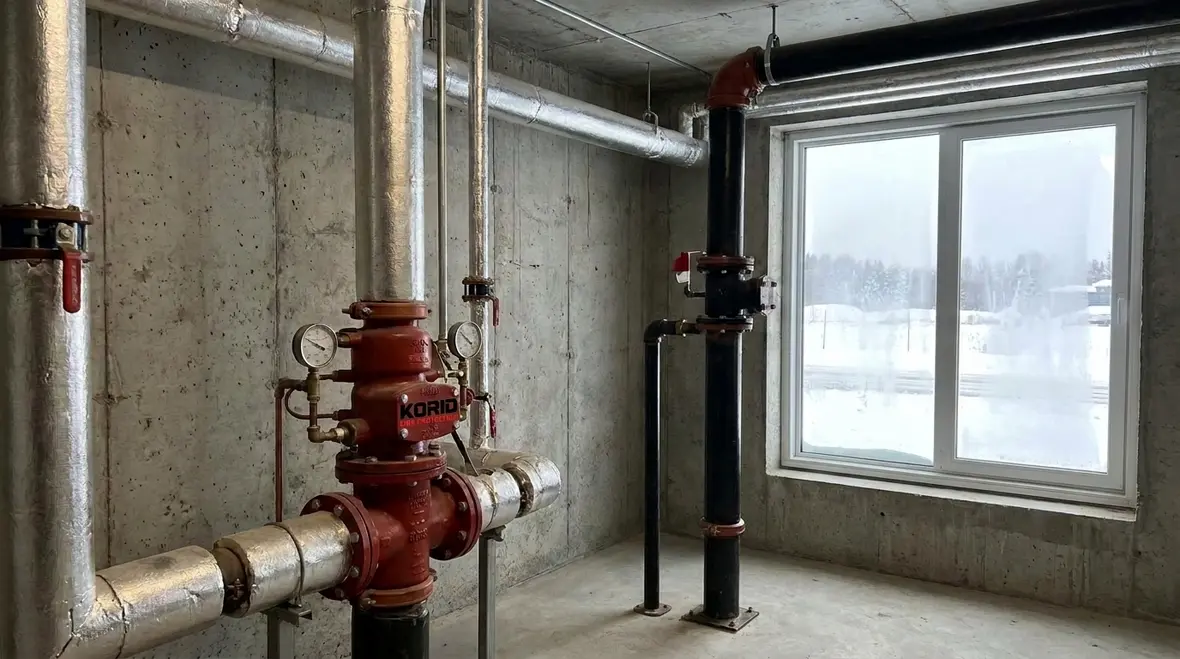
Wet Pipe vs. Antifreeze vs. Dry: Choosing a System Type Under NFPA 13R Section 5.4
Quick Answer
NFPA 13R Section 5.4 guides when and how facilities choose between wet, dry, and antifreeze protection. The best option depends on minimum ambient temperatures, water supply reliability, freeze risk, and maintenance capability. Correct selection improves reliability and reduces noncompliance during inspections.
What NFPA 13R 5.4 is really asking you to solve
NFPA 13R system types wet dry preaction antifreeze freezing are not interchangeable. Section 5.4 focuses on controlling the life safety and property risk created by freezing conditions. In commercial, industrial, and retail occupancies, the “system type” choice directly impacts:
- How quickly water reaches sprinklers during a fire
- How the system behaves during supervisory and draining operations
- How often valves, gauges, and alarms must be tested
- Whether you can meet inspection, impairment, and recordkeeping expectations
Facilities frequently select a design that looks acceptable on paper but fails in practice due to ambient temperature swings, poor heat tracing practices around detectors and valves, or inadequate maintenance staffing. A strong compliance program ties the chosen arrangement to documented checks and seasonal readiness.
For facilities reviewing service and maintenance strategy, Kord Fire Protection’s fire sprinkler services and repair page is a useful companion before diving into installation details. For a related baseline on installation expectations, coordination, and system fundamentals, review: NFPA 13 overview and automatic sprinkler system installation.
Step 1: Identify the actual freeze hazard, not the “design minimum”
Freeze risk is often underestimated. NFPA 13R 5.4 system types wet dry preaction antifreeze freezing decisions should start with the real operating environment, including:
- Minimum ambient temperatures in corridors, stair enclosures, attics, and unconditioned storage
- Local drafts near doors, loading bays, and rooftop equipment rooms
- How quickly spaces cool during night setback and weekends
- Seasonal climate patterns and the duration of subfreezing conditions
- Thermal stratification effects in high ceiling areas
Practical compliance challenge: sprinkler systems often span spaces with different insulation levels and HVAC zoning. Even when the building has a central design minimum, some remote pipe runs can see lower temperatures. A reliable selection process includes thermal review and piping layout awareness so the freeze mitigation strategy matches the worst case location.
Wet pipe: best performance when freezing cannot occur
In a wet pipe arrangement, water fills the piping and reaches sprinklers quickly when a sprinkler opens. This is typically the fastest and simplest path to discharge, which helps reduce damage in many commercial scenarios.
When wet pipe is the right answer
- Protected spaces remain above freezing under all operating modes
- Heat losses and ventilation losses are controlled
- Water supply, drainage, and monitoring practices are stable
Common failure points during audits and inspections
- Buildings with intermittent HVAC operation or failed thermostats still installed as “wet” without confirming space temperatures
- Valve rooms left unheated or poorly insulated
- No documented seasonal checks to confirm freeze protection assumptions remain valid
- Inadequate oversight after renovations that add doors, loading dock enclosures, or window changes
Wet pipe selection also impacts maintenance behavior. There is typically less operational complexity than dry or preaction approaches, but the compliance expectation shifts toward verifying that the building operating conditions actually protect the system from freezing.
Antifreeze: when you want wet pipe response without freezing
Antifreeze systems use a fluid with freezing point depression to protect piping in spaces that may experience subfreezing temperatures. They often provide response behavior closer to wet pipe compared to dry or preaction concepts.
Operational considerations for antifreeze
- Antifreeze concentration must meet design intent and remain stable over time
- Air entrainment and fluid stratification can affect performance if not managed properly
- Temperature excursions beyond the system design can still cause freezing and loss of protection
Maintenance and compliance realities
- Fluid testing and concentration verification must be scheduled and documented
- Leaks require corrective actions because dilution or loss of antifreeze changes freezing protection capability
- Replacement during component changes must match system fluid specifications
For commercial facilities, antifreeze can be effective where full heating is not reliable, but the service model must support seasonal and lifecycle checks. Without that, antifreeze becomes a compliance risk rather than a solution.
Dry pipe: when freezing is possible but you need separation from water
Dry pipe systems keep pressurized air or nitrogen in the piping, with water held back until a valve operates during a sprinkler discharge event. This design prevents water from occupying the pipe network during freezing conditions.
When dry pipe is the right answer
- Spaces can drop below freezing and heating reliability cannot be assured
- Pipe runs include unconditioned areas such as loading docks, exterior corridors, or warehouse zones
- The facility can maintain the air pressure system and supervisory features
Common failure points to watch for
- Loss of pressure due to small leaks at fittings, drains, or maintenance access points
- Delayed water delivery if air or valve conditions are outside expected ranges
- Control valve inspection gaps that allow corrosion, sticking, or seal degradation
- Incorrect setpoints after repairs, leading to nuisance supervisory activations or missed readiness
Dry pipe requires a disciplined maintenance approach because operational readiness depends on both the air system and the water control valve. During commercial insurance and AHJ reviews, documentation quality often matters as much as the equipment itself.
Preaction systems: controlled water delivery when uncertainty is high
While NFPA 13R Section 5.4 addresses system types associated with freezing protection, preaction concepts often appear in design discussions for facilities that want controlled water delivery and reduced risk of water discharge during nonfire events. These setups typically require reliable detection, valve supervision, and consistent readiness checks.
Why preaction influences the freeze protection decision
- Preaction aims to prevent accidental discharge by separating water from sprinklers until criteria are met
- Freezing protection still must be engineered and maintained for the piping and valve space conditions
- It adds operational steps that must be understood by facility and service personnel
Where the biggest compliance gaps happen
- Supervisory functions not tested at required frequencies
- Valve accessories not included in routine inspections after service work
- Detector circuits not verified for proper alarm behavior and linkage
- Unauthorized modifications to detection zones or control panels
When customers require higher assurance or reduced water damage, Kord Fire Protection supports ongoing compliance by aligning the system type with a practical service plan. This includes documenting control valve behavior, supervisory alarm checks, and seasonal readiness verification across occupied and unoccupied spaces.
How to decide in the field: a practical comparison
Choosing between wet pipe, antifreeze, dry pipe, and related preaction concepts should follow a decision framework based on freeze exposure, response time expectations, and the facility’s ability to sustain maintenance.
| System approach | Freeze risk strategy | Operational complexity | Maintenance emphasis |
|---|---|---|---|
| Wet pipe | Relies on staying above freezing | Lowest | Verify ambient protection and post renovation conditions |
| Antifreeze | Uses freezing point depression in piping | Moderate | Concentration verification, leak response, fluid matching during repairs |
| Dry pipe | Separates water from piping with compressed air or nitrogen | Higher | Air pressure stability, valve condition, supervisory feature readiness |
| Preaction influenced design | Controls water delivery based on detection and valve logic | Highest | Detection supervision, valve performance, alarm verification, system documentation |
Regardless of choice, the most common compliance derailment is incomplete maintenance and inadequate evidence. NFPA 13R system types wet dry preaction antifreeze freezing selections must be paired with scheduled inspection routines that reflect how the building actually operates, not how it was intended to operate.
Service partner reality check: what good readiness looks like
Commercial facilities often operate across multiple owners, managers, and renovation cycles. The safest approach is to treat freeze protection as an ongoing asset management responsibility. Kord Fire Protection helps clients avoid “set it and forget it” failures by maintaining a readiness cycle that matches seasonal risk.
Typical readiness work streams include:
- Review of ambient temperature monitoring practices and seasonality expectations
- Verification of supervisory circuits, alarms, and water flow readiness indicators where applicable
- Inspection of valve assemblies and drainage components for condition and correct operation
- Verification of system configuration changes after contractor work
- Clear impairment and return to service procedures with documented outcomes
For additional reference material on fire pump and water supply context, see: NFPA 20 fire pump acceptance testing guide. Even when the issue is freezing, water delivery performance and supervisory reliability remain tightly linked.
Frequently Asked Questions
Conclusion and CTA
Selecting the right NFPA 13R 5.4 system types wet dry preaction antifreeze freezing approach prevents freezing failure modes, reduces damage risk, and strengthens inspection outcomes. Kord Fire Protection can help evaluate freeze exposure, verify system readiness, and support recurring compliance through documented testing and seasonal checks. Contact Kord Fire Protection to review your current design assumptions, maintenance records, and building operating conditions before the next cold season.

Join Our Newsletter!
Get the latest fire safety tips delivered straight to your inbox From our Newsletter.



