
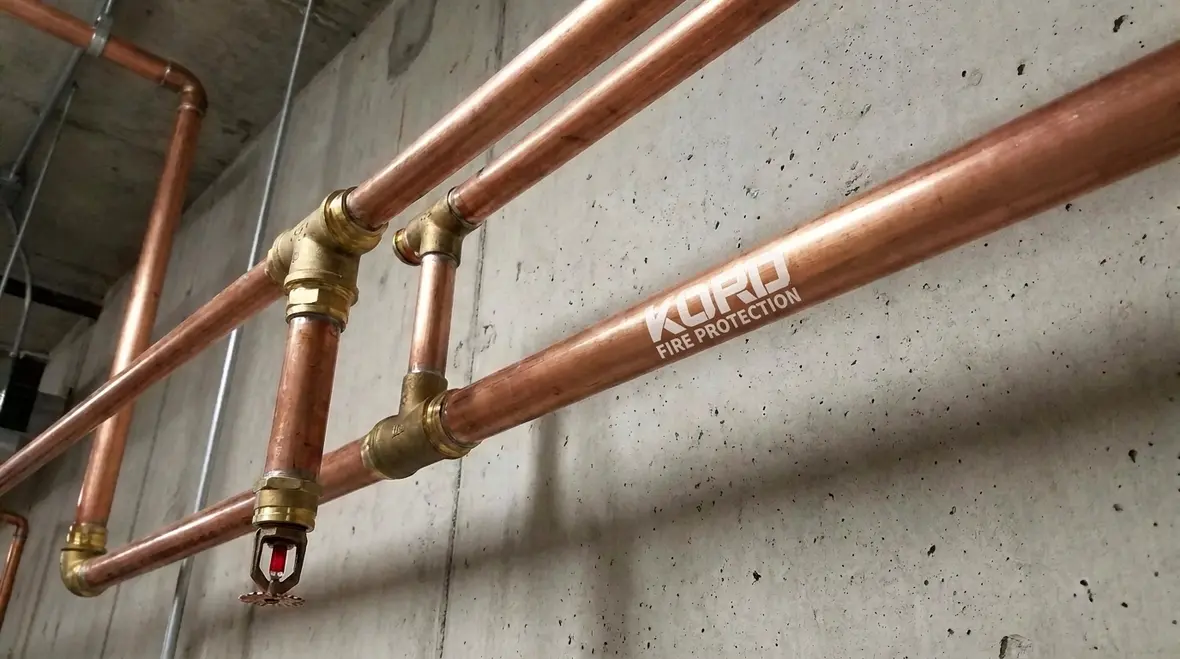
What Pipe Schedule Does NFPA 15 Section 5.3 Require? (Schedule 10 vs. 30 vs. 40)
Quick Answer
NFPA 15 Section 5.3 specifies the use of listed or otherwise acceptable piping materials and establishes sizing and installation requirements for fire protection systems. For copper tubing, common practice aligns with schedule selection that meets strength and pressure needs, but the standard does not create a single one size fits all “Schedule 10, 30, or 40” mandate.
If you are working through broader water spray system questions, it helps to read NFPA 15 enhancing fire safety with water spray fixed systems alongside this topic so the piping discussion stays connected to how the full system is supposed to perform.
NFPA 15 5.3 pipe and tube schedule 10 30 40 copper 175 psi: what the section is really controlling
In real commercial installations, confusion often starts when teams search for a simple phrase like “use Schedule 10” or “use Schedule 40” inside NFPA 15 Section 5.3. The section focuses on the required pipe and tube requirements that support safe system performance, including material acceptability, pressure integrity, and installation behavior that protects the system during hydraulic demand and over the life of the facility.
Accordingly, the correct approach is not to pick a schedule based on tradition, but to select the pipe or tubing that is permitted by NFPA 15 and compatible with the design basis for the system, including the working pressures, temperature effects, and mechanical limitations.
So which schedule is required: Schedule 10, 30, or 40?
NFPA 15 Section 5.3 does not function like a single mandatory lookup table that forces every installation into one schedule category. Instead, it requires piping and tube systems that are suitable for use in the sprinkler and water spray environment, and it relies on the broader NFPA 15 provisions that tie system design, working pressure, and installation methods together.
Practically, pipe schedule selection typically gets governed by:
- Working pressure and design criteria for the water spray or sprinkler system components.
- Listing and acceptance of the piping and joining methods used on the specific system.
- Mechanical strength requirements for the hazard and installation conditions.
- Local code adoption and inspection expectations that interpret the acceptability requirements in enforceable terms.
Because copper tubing schedule relates directly to wall thickness and pressure capability, teams often use copper tubing size and schedule combinations that satisfy strength requirements for the highest expected pressures on the system. This is where “175 psi” frequently appears in facility design and inspection discussions, but the governing point remains the required suitability for the system’s design and permitted installation conditions.
Common compliance pattern: why Schedule 10 sometimes gets rejected
Schedule 10 copper has thinner walls than Schedule 30 and Schedule 40. Where inspectors or designers evaluate the installation against expected pressures, mechanical stresses, and the required durability of the system over time, Schedule 10 can be treated as “borderline” for many configurations. The result is that some facilities end up standardizing on a thicker schedule to reduce rework and maintain consistent inspection outcomes.
Why Schedule 30 and Schedule 40 often pass plan review more easily
Schedule 30 and Schedule 40 provide thicker copper walls. In commercial and industrial environments, this tends to reduce concerns about mechanical damage, pressure margin, and long term system integrity. That is why schedule 30 and schedule 40 are frequently selected for runs where maintenance access is limited or where the system faces additional mechanical risk.
How NFPA 15 Section 5.3 connects to water spray fixed systems and real inspection points
Fire protection work is not only about selecting “the right schedule.” NFPA 15 piping requirements also protect against installation issues that lead to leakage, obstruction, or impaired flow. This matters especially for water spray systems where spray performance depends on pipe routing, integrity, and the ability to deliver designed flow to the correct area.
For guidance that ties piping selection and overall system reliability together for fixed water spray systems, refer to: NFPA 15 enhancing fire safety with water spray fixed systems.
Operational and maintenance risks when the schedule is wrong
When an installation chooses a pipe schedule that does not meet the system suitability expectations, several failure modes can appear long after commissioning.
- Pressure integrity concerns: Thin wall pipe or poor joining quality can contribute to leakage at fittings, especially after thermal cycling.
- Water hammer and surge sensitivity: Rapid valve operation or poor air control can increase effective stress on the piping.
- Corrosion and abrasion exposure: In retail and commercial spaces, repeated maintenance traffic can damage vulnerable runs unless protection and routing meet the standard’s intent.
- Inspection and testing delays: Noncompliant piping selection often surfaces during hydrostatic testing, end of line checks, or rough inspection reviews, which can interrupt occupancy schedules.
Commercial facilities typically need a repeatable, inspection ready approach. Kord Fire Protection supports compliance by coordinating documentation, maintenance planning, and ongoing system testing so the installed piping configuration remains defensible over time.
Working pressure, copper tubing, and “175 psi” design discussions
Teams often mention “copper 175 psi” when they try to map schedule choices to a pressure threshold. The engineering reality is that the accepted tubing size and schedule must align with the system’s required pressure rating and the permitted materials and joining methods under NFPA 15.
Rather than treating 175 psi as a universal switch between Schedule 10 and Schedule 30 or 40, facilities should verify:
- The system’s maximum operating and test pressures used in design and acceptance criteria.
- The pressure rating basis for the selected copper tubing and fittings.
- The installation method, including solder or other permitted joining procedures, and the quality control process for those joints.
- The required acceptance test pressures and the schedule compatibility with the test conditions.
This verification approach reduces disputes with AHJs and protects the facility from avoidable retrofit work.
How to keep plan review and inspections moving
In commercial and industrial settings, the best practice is to standardize a piping selection basis that is easy to defend:
- Confirm the design basis used to establish system pressures and component requirements.
- Use NFPA 15 compatible materials and joining methods, supported by submittal documentation.
- Document the schedule rationale in design notes and construction submittals, including how it meets pressure and mechanical suitability expectations.
- Align maintenance access with the routing and protection plan so inspection and testing can occur without damaging the piping.
For broader pump and water supply considerations that impact system pressure and performance, see Fire Sprinkler Pumps and Water Pressure in Buildings. Proper water supply performance complements correct piping selection and helps ensure the system performs as intended during demand.
Frequently Asked Questions
Conclusion and call to action
NFPA 15 Section 5.3 does not reduce to a universal “Schedule 10 vs 30 vs 40” rule. Compliance depends on acceptable piping materials, joining methods, and suitability to the system’s pressure and installation conditions, including commercial maintenance reality. Kord Fire Protection can help your team validate the piping schedule decision, assemble inspection ready documentation, and keep water spray and sprinkler systems test compliant across the facility life cycle. Schedule a review before installation to avoid rework.

Join Our Newsletter!
Get the latest fire safety tips delivered straight to your inbox From our Newsletter.



