
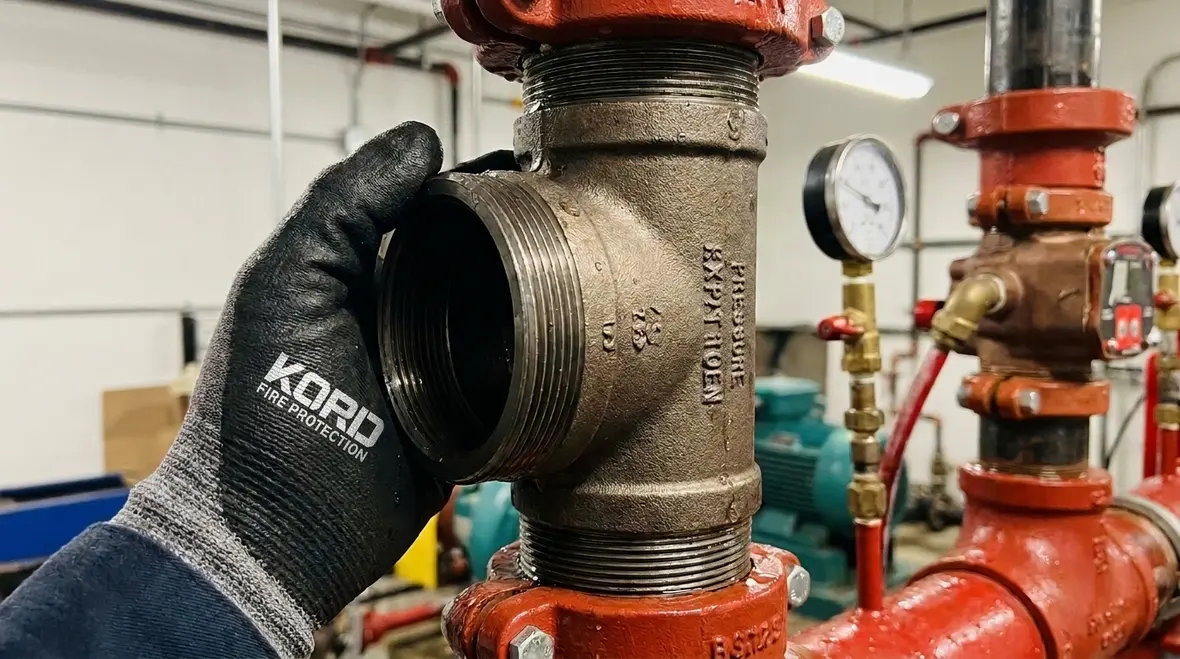
NFPA 15 Section 5.4 Fittings: Pressure Ratings and Material Requirements
Quick Answer: NFPA 15 Section 5.4 requires fittings used in water-based fire extinguishing systems to match the system design pressure and be constructed from suitable materials. For ferrous extra heavy pattern configurations, pressure ratings such as 175 psi and 300 psi must align with the approved system demand and installation details.
NFPA 15 Section 5.4 governs the fittings that connect, transition, and route water within fixed water spray and related systems. For commercial, industrial, and retail facilities, compliance depends on more than selecting the correct thread or connection type. Installers and facility teams must verify that the fitting material, pressure rating, and pattern design are consistent with the system’s design basis and the hazards the system protects.
For facilities building a stronger maintenance and compliance program around special hazard equipment, it helps to connect fitting selection with broader fire suppression system services so pressure ratings, repairs, and inspection practices stay aligned from install through long-term service.
What NFPA 15 5.4 Fittings Are Trying to Prevent
Section 5.4 addresses a practical failure chain: incorrect fittings reduce pressure integrity, introduce leaks at threaded joints, or accelerate corrosion where water chemistry and condensation conditions exist. In fixed water spray systems, the consequences often show up long after installation as weeping joints, pressure drop anomalies, and uneven spray distribution.
For facilities that undergo renovations, pipe rerouting, or phased inspections, the most common compliance gaps involve mismatched ratings and substitution practices. A common scenario involves using a readily available fitting that “fits” physically but does not match the listed pressure rating and material requirements expected by the design. This is why the target selection must start at NFPA 15 5.4 and then align with the system’s hydraulic calculations and acceptance criteria.
How Pressure Ratings Are Evaluated Under NFPA 15 5.4
Pressure rating is not a branding feature. It is an engineering limit tied to pressure class and the mechanical strength of the fitting body. Under NFPA 15 5.4, fittings must be suitable for the operating conditions created by the system design.
Why 175 psi versus 300 psi matters
When project documents specify ferrous extra heavy pattern fittings, the pressure rating must correspond to the system demand. Many installations reference ferrous extra heavy pattern fittings with ratings expressed in psi, such as NFPA 15 5.4 fittings ferrous extra heavy pattern 175 psi 300 psi, to support the required margin against mechanical overstress.
In practice, inspectors and technicians look for three things:
- Design basis alignment: The fitting pressure rating must support the system’s expected pressures, including conditions during test, pump operation, and any allowable transient conditions.
- Documented substitution control: Any alternate fitting used during construction or repair must be approved and traceable to the design and listing requirements.
- Correct installation method: Even a correctly rated fitting can fail if the joint is assembled improperly, such as excessive thread sealant, insufficient thread engagement, or incompatible gasket selection.
Where ratings get compromised
Pressure integrity issues typically come from not the fitting alone but the connection. A mismatch between a fitting pressure rating and a joint assembly practice can create leak paths that show up during acceptance testing and later during maintenance flushing.
Ferrous Extra Heavy Pattern Fittings: Material and Pattern Considerations
For many commercial water-based systems, ferrous fittings are selected for strength and dimensional stability. The “extra heavy pattern” designation typically indicates thicker wall construction compared with lighter patterns, which supports higher pressure capability.
NFPA 15 5.4 expects material suitability for the system environment. Facility operators must also consider how installation context affects long-term performance:
- Corrosion exposure: Condensation, high humidity, and sprinkler room wetting can accelerate corrosion on ferrous components.
- Thread and coating compatibility: Field-applied coatings and sealants must not interfere with thread form integrity or joint sealing.
- Hydraulic performance impacts: Incorrect or substituted fittings can alter flow area and contribute to pressure drop differences during testing.
Because commercial projects often involve phased construction or tenant improvements, the practical challenge is maintaining a consistent fitting specification. Kord Fire Protection supports compliance outcomes by verifying documentation during installation support, advising on swap rules for repairs, and ensuring that field conditions match the approved submittals.
Common Compliance Challenges During Install and Repair
Most enforcement and acceptance problems trace back to field practices rather than theoretical design.
1) Substitutions that bypass the rating requirement
Short-term jobsite substitutions can become long-term compliance defects. If a maintenance team replaces a fitting with an equivalent size but different pressure class, the system may still “operate” but fail acceptance testing requirements or reduce safety margins.
2) Thread sealing practices that undermine joint integrity
Threaded joints in water spray systems often rely on controlled thread engagement and correct sealant application. Excess sealant can extrude into the flow path and contribute to debris movement and localized restrictions.
3) Material deterioration and reassembly issues
When fittings are disassembled for maintenance, corrosion and galling can affect thread form. Reassembly with damaged thread surfaces increases leakage risk, especially under repeated hydrostatic and flow testing.
For broader fixed system practices, facility teams can reference guidance and training concepts from fire protection industry resources such as firepumps.org, which supports operational understanding around system pressure behavior and testing context.
Inspection, Testing, and Maintenance: What to Verify on Site
NFPA 15 compliance is not a one-time check. Section 5.4 fittings must remain suitable and correctly assembled through commissioning, annual readiness checks, and periodic maintenance activities.
During inspections
- Visual verification: Confirm fitting identification and material type where accessible. Look for evidence of corrosion, coating failure, or joint leakage.
- Joint condition: Check threaded joints for seepage, staining, or residue consistent with water leakage.
- Support and alignment: Excess movement and misalignment can impose stress on fittings and reduce sealing performance.
During functional testing and maintenance
- Leak detection: Inspect joints after any pressure exposure or flow test. Small leaks may not be immediately obvious during operation.
- Pressure and flow stability: Monitor for unexpected pressure drop that can indicate partial restrictions caused by improper components or debris.
- Documentation matching: Ensure as-built drawings, submittals, and maintenance records align with installed fittings and their stated ratings.
To support ongoing water spray system compliance practices, Kord Fire Protection also outlines fixed system considerations and maintenance focus areas here: NFPA 15 enhancing fire safety with water spray fixed systems.
Practical Selection Guidance for Commercial Facility Teams
Commercial facilities typically need a repeatable process that reduces the risk of late-stage noncompliance. The most effective approach follows this workflow:
- Start with the design documents: Use the approved hydraulic calculation basis and installation notes as the authority for pressure and fitting selection.
- Confirm the exact fitting specification: Validate the pattern and material requirement, including the intended ferrous extra heavy pattern configuration and the specified pressure rating.
- Control substitutions: Use a documented approval path for any alternate fitting used due to supply constraints or field damage.
- Validate installation details: Require correct thread preparation, sealant rules, torque or engagement guidance where applicable, and joint protection against stress and corrosion.
- Verify after installation: Use pretest checks and posttest inspection to confirm that joints remain intact under the same pressure conditions required for acceptance.
Kord Fire Protection positions these steps as standard practice for commercial partners who manage assets across multiple trades, shifts, and renovation cycles. When facilities treat fittings and joints as compliance-critical components, inspection outcomes become predictable and maintenance becomes safer.
Frequently Asked Questions
Call to Action
Keep NFPA 15 compliance defensible by verifying that each fitting matches the required pressure rating and material expectations from Section 5.4, including ferrous extra heavy pattern configurations tied to the design basis. Engage Kord Fire Protection for pretest checks, posttest joint inspections, and maintenance documentation review so your system remains reliable during acceptance and throughout service life. Contact Kord Fire Protection to schedule an inspection and compliance support plan.

Join Our Newsletter!
Get the latest fire safety tips delivered straight to your inbox From our Newsletter.



