
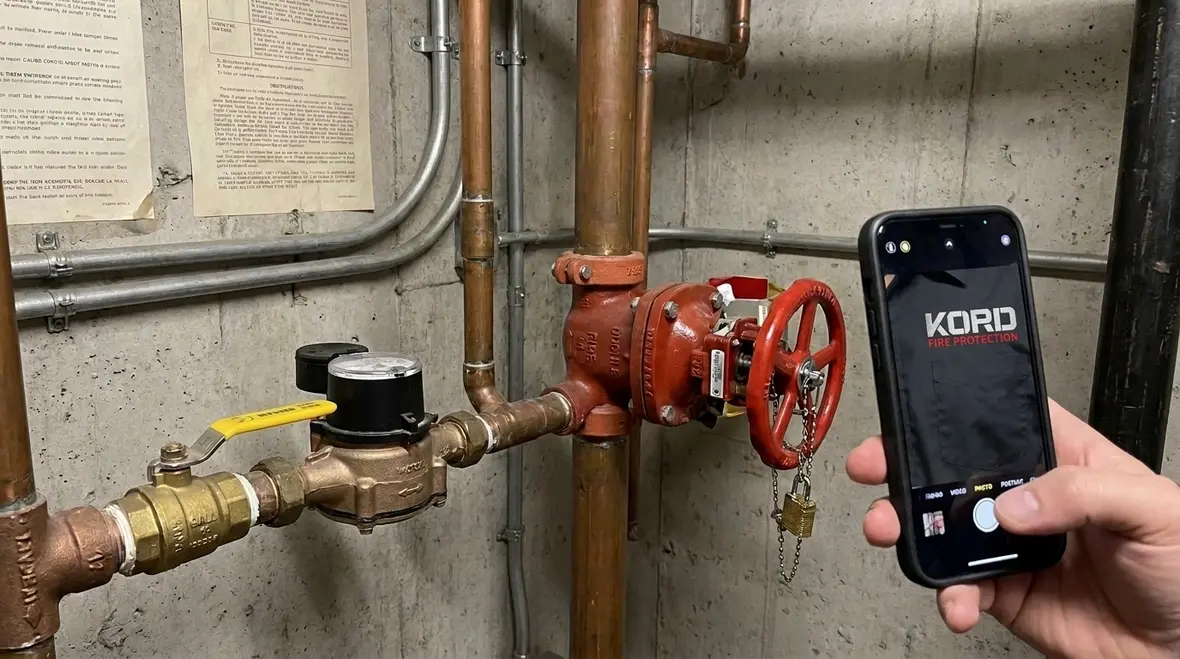
Supervised or Not? NFPA 13R Section 6.8 Control Valve Rules for Shared Domestic and Sprinkler Mains
Quick Answer: NFPA 13R Section 6.8 focuses on control valve arrangements for systems sharing domestic supply. In most facilities, the safest compliance path is to treat required sprinkler control valves as supervised where omission would create unacceptable risk or maintenance uncertainty. The exact requirement depends on whether the valve is considered a dedicated system control point versus a general plumbing shutoff.
If you’re reviewing shared supply layouts, it also helps to understand how broader fire sprinkler services and system support fit into design, maintenance, testing, and repair decisions before small valve issues turn into big inspection problems.
What NFPA 13R Section 6.8 is really trying to prevent
NFPA 13R 6.8 valve supervision domestic sprinkler main requirements exist to stop a common, high consequence failure: a control valve left closed, partially closed, or inadvertently shut during plumbing work, tenant modifications, or emergency response. In shared domestic and sprinkler mains, that failure risk increases because the same piping network supports more than one use and typically crosses multiple operational boundaries.
For facilities such as multifamily buildings, mixed use retail plus residential occupancies, and commercial properties with shared water services, the compliance question is not academic. It drives how maintenance staff operate valves, how contractors place locks and tags, and how quickly an alarm or inspection finding translates into restoration of sprinkler readiness.
Where the confusion starts: shared domestic supply versus system control
The practical challenge is distinguishing between a general domestic plumbing shutoff and a sprinkler system control valve. In many installations, the domestic water supply and the sprinkler supply arrive at a point of connection that then branches. The sprinkler portion requires a control valve that can isolate flow to the sprinkler system for testing or repair without leaving the building without the ability to meet sprinkler readiness expectations.
When domestic piping and sprinkler piping share upstream components, the facility must ensure that the sprinkler system does not depend on an unsupervised valve that can be closed without notification. In the real world, unsupervised closures occur during landscaping water changes, meter replacements, backflow preventer service, and tenant-level plumbing interventions.
NFPA 13R 6.8 valves control valve supervision domestic sprinkler main: the compliance logic
The target concept in NFPA 13R 6.8 valves control valve supervision domestic sprinkler main scenarios is that the fire protection system must remain in a known ready state. Supervision typically means that the facility receives an immediate indication when a required control valve changes state, commonly a closed or tampered condition.
Even when a valve serves a shared infrastructure role, the portion of the piping that controls sprinkler water delivery must be managed so that the supervisory method matches the risk. From an inspection standpoint, the AHJ focuses on whether the valve configuration allows a single action or a maintenance activity to impair sprinkler protection without prompt detection.
How supervision is achieved in practice
Supervision methods typically include monitored switches or supervisory signaling devices that annunciate an alarm when the valve moves to the off position or indicates abnormal position. The most important operational detail is that the supervision must be aligned with how the valve fails and how it can be reset.
- Valve position feedback: The supervisory device must correspond to the actual valve position, not a loosely related condition.
- Reset and verification workflow: After restoration, maintenance must verify the correct valve position and that the supervisory signal returns to normal.
- Field wiring and power reliability: Supervision circuits need reliability compatible with commercial building electrical practices, including addressing and testing sequences where applicable.
Operational procedures that make supervision meaningful
Supervision does not replace disciplined valve management. Commercial and industrial facilities typically implement written operating procedures that coordinate fire protection readiness with domestic water service work.
Common failure points during shared-main maintenance
- Uncontrolled valve access: Maintenance teams open and close valves without verifying the monitored status. This becomes a chronic issue when valves sit in utility rooms without clear labeling.
- Work-order gaps: Contractors may shut an upstream valve for domestic repairs and never notify the fire protection team that sprinkler supervisory conditions changed.
- Improper restoration: A valve may be reopened but not fully returned to the correct operational position, leaving reduced sprinkler performance and creating a future alarm event.
- Monitoring bypasses: Technicians sometimes disable a supervisory circuit during testing and forget to re-enable it, which defeats the purpose of NFPA 13R 6.8.
Recommended facility practices for compliance readiness
- Labeling and valve maps: Every control valve on the sprinkler side must have clear identification, including purpose, monitored status, and isolation limits.
- Locking and tagging controls: Use locks and tags for valve position control during scheduled work, coordinated with the fire protection supervisor.
- Inspection and functional testing: Implement periodic verification that supervisory alarms activate and reset correctly. Document results for audits and AHJ review.
- Coordination during domestic plumbing events: Before backflow preventer, meter, or domestic piping service, confirm the sprinkler control valve supervision status and define restoration verification steps.
How shared domestic systems affect inspection expectations
During inspections and audits, AHJs and insurance representatives typically examine whether the sprinkler system can be rendered inoperative by normal domestic plumbing operations without notification. Shared domestic sprinkler main arrangements create a heightened expectation for traceability and proof of readiness.
To support compliance, facilities should ensure that installation documentation clearly indicates valve identification, supervision method, and test procedures. If documentation is missing or inconsistent, inspections often shift from “paper compliance” to “operational proof,” increasing the chance of rework.
For a broader baseline on sprinkler installation concepts and what inspectors look for, refer to Kord Fire Protection’s overview: NFPA 13 overview for automatic fire sprinkler system installation. While this article addresses NFPA 13, the installation quality and inspection mindset carry into sprinkler system control discussions, including valve labeling, access, and readiness verification.
If shared supply work also involves backflow devices or service-side isolation concerns, Kord Fire Protection’s backflow system services page is a useful companion reference for planning maintenance without creating hidden impairment risk.
When to involve Kord Fire Protection before an AHJ finds it
Commercial compliance timelines often fail because supervisory valve requirements get addressed during commissioning instead of during design and pre-submittal review. Kord Fire Protection supports property teams, engineers, and contractors with practical interpretation support, documentation review, and field verification so the facility avoids last-minute valve supervision modifications.
As a continuing service partner, Kord Fire Protection also helps reduce operational risk by supporting periodic inspection testing, supervising alarm circuit functionality checks, and aligning valve access practices with your maintenance workflow. This reduces the odds that shared mains create avoidable downtime or alarm nuisance issues.
Frequently Asked Questions
Conclusion and Call to Action
Shared domestic and sprinkler mains make valve supervision a business critical compliance issue, not a paperwork exercise. Kord Fire Protection can help confirm which valves function as sprinkler control points under NFPA 13R 6.8, validate the supervision method in the field, and establish reliable inspection and maintenance routines. Contact Kord Fire Protection through kordfire.com or use your local Kord channel to schedule a readiness review before the next inspection.

Join Our Newsletter!
Get the latest fire safety tips delivered straight to your inbox From our Newsletter.



