
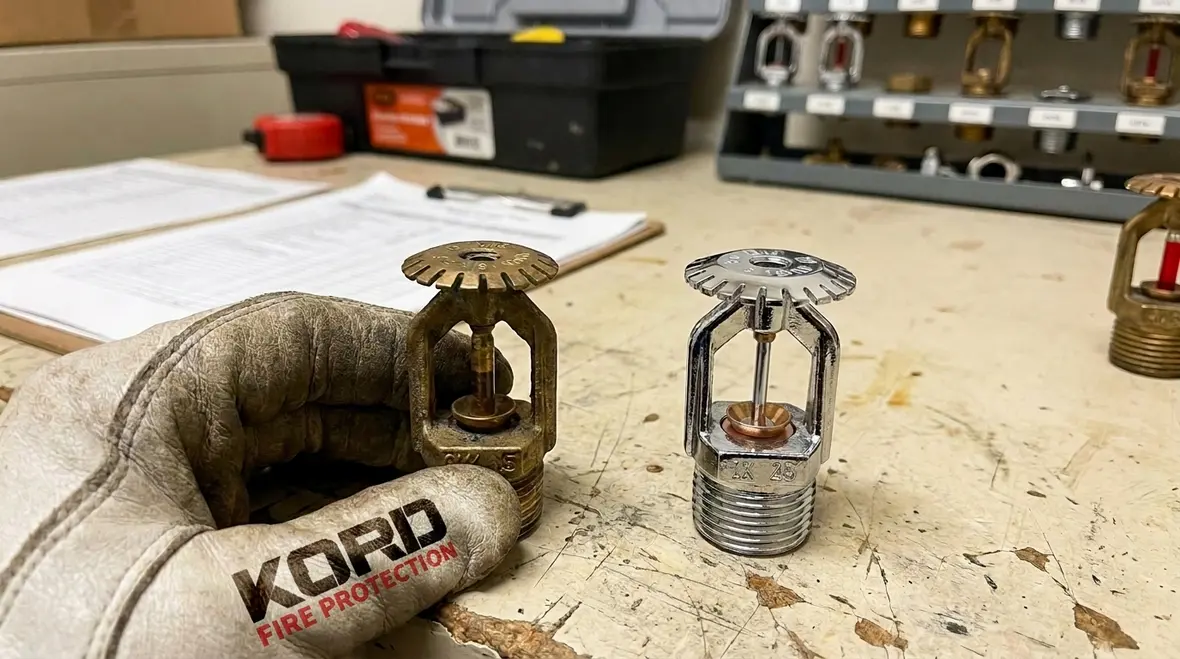
NFPA 13R Section 5.1: Sprinkler Listing, Reinstallation & Replacement Rules (Including Pre-2003 K-Factor Swaps)
Quick Answer
NFPA 13R Section 5.1 requires sprinkler replacements to comply with the sprinkler’s listing and listing conditions. In practice, this means like for like sprinkler components, matching K factor, thermal rating, and reinstallation requirements. Pre 2003 K factor swaps are restricted and must remain within the listing and approval intent.
Why NFPA 13R 5.1 listing rules matter in real buildings
Commercial, industrial, and retail facilities often treat sprinklers as “serviceable hardware,” but NFPA 13R 5.1 prevents casual substitution. The listing ties together the sprinkler’s design, factory internal components, orifice and flow characteristics, temperature response, and allowable installation conditions. When those ties break, the system can perform differently than the hydraulic design basis, which increases the risk of underperformance and can create compliance exposure during inspections, insurance reviews, and permitting.
This is where NFPA 13R 5.1 sprinkler listing replacement pre 2003 K factor rules become operationally important. Many facilities built before widespread adoption of more modern K factor labeling practices encounter “upgrade” requests during maintenance, tenant improvements, or head replacement programs. The rule set does not forbid maintenance, but it restricts substitutions that effectively alter the system design intent.
For facilities planning service work, it also helps to coordinate replacement decisions with a broader fire sprinkler service program so documentation, inspections, and parts sourcing stay aligned from the start.
For a broader foundation on system installation expectations and how listing and design coordination influence acceptance testing, refer to Kord Fire Protection’s technical overview here: NFPA 13 overview: automatic fire sprinkler system installation.
What NFPA 13R 5.1 typically requires for sprinkler listing compliance
Although interpretations vary by project scope and authority having jurisdiction, Section 5.1 in NFPA 13R centers on three compliance themes: preserving listing conditions, preventing unauthorized reinstallation, and ensuring replacements remain hydraulically and thermally equivalent under the system design.
1) Replacements must match listing and approved conditions
Sprinkler listing is tied to temperature rating, orientation, spray pattern, connection type, and the conditions under which the manufacturer validated performance. A compliant replacement generally keeps these features aligned with the original installed sprinkler and the system’s design assumptions.
- Temperature rating: Replace with the same rating or an allowed equivalent per the system requirements and listing.
- Finish and corrosion category: Use compatible coatings and protection for the environment, especially in retail or industrial areas with cleaning chemicals or airborne contaminants.
- Spray pattern and orifice characteristics: Maintain compatibility with the hazard classification and the protection scheme.
- Orientation and location constraints: Preserve proper positioning, especially in concealed spaces and nonstandard ceiling configurations.
2) “Listing” is not just a brand or model number
Field teams often assume “same K factor equals same sprinkler.” NFPA 13R 5.1 focuses on the sprinkler’s listing as assembled and installed, not only a single parameter. K factor is a hydraulic descriptor, but thermal element response, internal geometry, and flow behavior under actual conditions are tied to the listed device and its installation constraints.
3) System performance is the compliance outcome
The sprinkler replacement must keep the system within the design and listing expectations. This includes ensuring that replacement does not create a mismatch between the actual installed sprinklers and the hydraulic calculation assumptions used to obtain approval.
Reinstallation rules: when a removed sprinkler can be reused
Reinstallation can be acceptable in controlled scenarios, but NFPA 13R 5.1 places limits because sprinklers are life safety devices that undergo heat, vibration, and handling stresses. The compliance goal is to avoid reinstalling a sprinkler that is damaged, contaminated, or otherwise no longer matches the conditions of its listing.
- Visually inspect the sprinkler: Confirm there is no mechanical damage, corrosion, coating compromise, or deformation of the frame or deflector.
- Verify the sprinkler’s identity: Confirm it matches the original listing information for that position, including temperature rating and orientation.
- Control contamination: Avoid reinstalling sprinklers with paint overspray, dust buildup beyond acceptable levels, or chemical residue.
- Respect system limitations: If a portion of the grid is being altered, a “reuse” decision may not preserve the original hydraulic balance.
In practice, commercial facilities often find that the safest compliance path is replacing with a listed equivalent from the correct manufacturer and series rather than attempting reuse after any significant removal event.
Replacement rules and the pre 2003 K factor swap challenge
Facility staff frequently encounter a recurring scenario: older sprinkler tags reference pre 2003 K factor conventions, and current supply inventory uses updated catalog references. Requests follow to “swap to what is available now,” sometimes only verifying K factor while overlooking thermal and listing conditions. NFPA 13R 5.1 listing compliance does not treat K factor changes as a casual interchange.
What “pre 2003 K factor swaps” usually mean
Pre 2003 sprinkler labeling and documentation may reflect K factor measurement and product identification practices that differ from later cataloging conventions. During replacements, teams may find mismatched documentation across installed sprinkler identification tags, rack photos, hydraulic calculation versions, and current distributor part numbers.
Why a K factor swap can fail compliance even if K factor matches
Even when K factor appears the same, a substitution may violate listing and approved condition requirements due to one or more of the following:
- Different sprinkler construction series: Internal components and allowable installation conditions can differ between series even when K factor is listed similarly.
- Thermal response alignment issues: Temperature ratings and response characteristics must stay within the system and listing intent.
- Orientation and clearance constraints: Replacement must preserve the ability of the sprinkler to distribute water as expected within the ceiling configuration.
- Wrong escutcheon and trim conditions: Concealed spaces often require a compatible escutcheon and listed trim arrangement.
Practical compliance approach for NFPA 13R 5.1 sprinkler listing replacement pre 2003 K factor rules
To handle these upgrades safely, commercial fire protection teams typically follow a controlled verification workflow:
- Document the existing installed condition: Capture sprinkler type markings, temperature rating, K factor marking, orientation, and any trim or escutcheon presence.
- Validate against the design and job submittals: Compare to the current as built drawings and the hydraulic calculation basis.
- Confirm listing compatibility with the replacement: Match the listed sprinkler characteristics, not just the K factor value.
- Assess the scope of substitution: Determine whether the replacement is local or affects a pattern that changes system performance assumptions.
- Obtain AHJ acceptance when documentation is unclear: If pre 2003 documentation is incomplete, coordinate before swapping. A compliant decision often requires written confirmation.
For maintenance planning and system verification concepts, facility teams also benefit from established industry guidance. See background resources at firepumps.org for how system components and performance verification practices influence overall fire protection reliability.
Common failure points during sprinkler replacement programs
Even experienced technicians can trip compliance requirements during tenant improvements, leak repairs, or spot replacements. The most frequent technical issues include:
- Incorrect part sourced from “nearest equivalent” logic: Distributors may provide substitutions that appear equivalent on a single parameter but differ in listing series or trim compatibility.
- Improper handling during removal: Thread damage, damaged fusible elements, or bent frames can make a sprinkler unfit for reuse.
- Escutcheon mismatch in concealed spaces: Concealed sprinkler trim and ceiling interface details affect distribution and listing compliance.
- Incomplete system recordkeeping: Outdated sprinkler schedules and missing revision history lead to mismatched replacement choices.
- Hydraulic mismatch after pattern changes: Replacing a subset of heads with different flow characteristics can create coverage or flow rate deviations.
Kord Fire Protection supports commercial owners and facilities with field verification, documentation review, and replacement planning that aligns with listing and inspection expectations. This approach reduces the likelihood of rework and accelerates closeout during AHJ walkthroughs.
How to operationalize compliance for inspections and maintenance
Commercial facilities typically need a repeatable process that ties maintenance activities to NFPA 13R listing requirements. The following operational controls help:
- Maintain a sprinkler asset registry: Store sprinkler schedules, temperature ratings, K factor markings, and installation locations.
- Standardize replacement sourcing: Use approved manufacturers and catalog identifiers aligned to the existing listing basis.
- Use procedure based replacement: Require on site verification of markings and orientation before installing any replacement.
- Track pre 2003 documentation gaps: Flag areas where catalog mapping is uncertain so the plan can include AHJ coordination.
- Include commissioning style checks: After replacement, confirm correct trim, correct escutcheon fit, and correct alignment in the ceiling interface.
When facilities need structured support for ongoing compliance and testing, Kord Fire Protection acts as a vital commercial service partner for maintenance, documentation, and safe replacement execution.
Frequently Asked Questions
Next step
Before ordering replacement heads for older systems, request a listing based verification review of your sprinkler schedule and the planned swap approach. Kord Fire Protection can help confirm NFPA 13R 5.1 compliance for replacement scope, document alignment, and AHJ readiness. Contact Kord Fire Protection to schedule a technical replacement assessment and avoid costly rework during inspection and closeout.

Join Our Newsletter!
Get the latest fire safety tips delivered straight to your inbox From our Newsletter.



