
NFPA 13R Section 4.5: System Arrangement Rules for Townhouse Sprinkler Installations
Quick Answer: NFPA 13R Section 4.5 governs how townhouse sprinkler systems get arranged so the system operates reliably during a fire event. It addresses how control valves, risers, and sectional arrangements must be positioned to support safe, timely inspection, testing, and maintenance.
Why NFPA 13R 4.5 townhouse arrangement rules matter on real projects
Townhouse occupancies create unique fire protection design and operations challenges. Multiple dwelling units typically share common structural features, horizontal boundaries, and service corridors, while sprinkler coverage must still perform predictably. NFPA 13R Section 4.5 focuses on system arrangement rules that directly affect water delivery, isolation capabilities, and the ability to verify system condition quickly during inspections.
For commercial facilities, industrial mixed use buildings, and retail buildings with townhouse style configurations, noncompliance often shows up during routine oversight: valves inaccessible to testers, control devices not labeled, sections that cannot be isolated for maintenance, or arrangements that do not align with the intended inspection and flow test procedures. These problems can drive out of service time, delay corrective actions, and increase risk during a loss event.
If you are reviewing broader service needs at the same time, Kord Fire Protection’s fire sprinkler system service page is a helpful companion for understanding how inspections, repairs, and ongoing maintenance fit into long term compliance planning.
NFPA 13R 4.5 scope: what “system arrangement” typically controls
In townhouse sprinkler installations, “system arrangement” is not only a drafting exercise. Section 4.5 rules influence how the sprinkler system is divided into functional areas, how control and monitoring devices support operational needs, and how installers ensure the system remains maintainable.
The arrangement controls commonly impact three operational outcomes:
- Timely isolation: the ability to shut down only the affected portion of the system without unnecessarily disabling the entire installation.
- Reliable water delivery: minimizing arrangement conflicts that can reduce available pressure or delay effective discharge.
- Inspection and testing practicality: ensuring that field personnel can access the equipment required for verification, flow testing, and maintenance.
When these outcomes fail, the system can still look “installed” while becoming difficult to service. That is where field compliance pressure builds, especially for facility teams coordinating recurring inspections across multiple occupancies.
How the control valve arrangement supports compliance and maintenance
Key control valve considerations referenced by NFPA 13R 4.5 practices
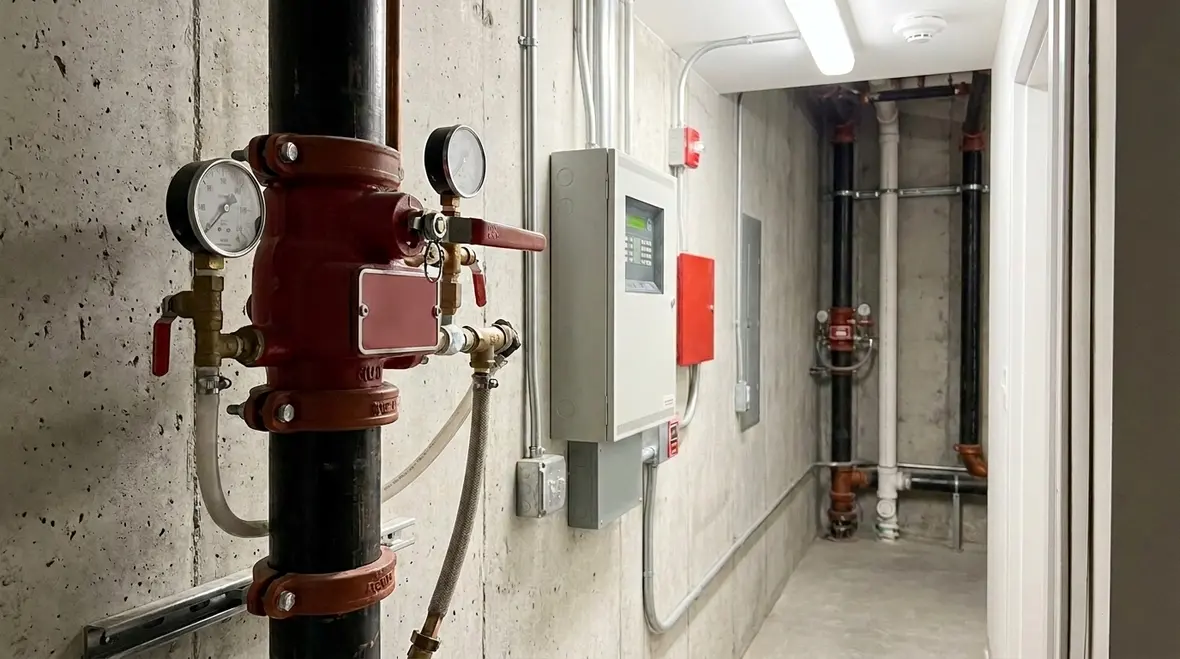
The primary equipment that anchors system operability is the NFPA 13R 4.5 townhouse sprinkler system arrangement control valve. Proper arrangement of that control valve supports safe operation and enables inspection workflows that match the intent of the standard.
Common control valve arrangement expectations include the need for:
- Clear access for valve operation and inspection without obstruction from storage, tenant improvements, or construction remnants.
- Correct sectional intent so the correct portion of the system can be isolated during maintenance or repair.
- Durable labeling that matches the sectional configuration so field crews identify the correct equipment during functional testing and troubleshooting.
- Controlled placement relative to piping runs and riser locations to avoid unintended dead ends, trapped conditions, or inaccessible trim components.
Operational procedure impacts during inspections
During annual and periodic inspections, technicians rely on the system arrangement to complete verification steps efficiently. If control valves do not align with the intended arrangement, testing becomes slow and may require extended partial shutdowns. Slow testing increases the chance of human error, such as leaving a valve in an incorrect position, failing to restore a supervised configuration, or delaying notification and corrective actions.
For a practical compliance baseline, facility teams often cross reference system details with installation intent. A broader understanding of installation fundamentals also supports better coordination across contractors. For a useful technical reference, see NFPA 13 overview for automatic fire sprinkler system installation, which helps clarify how common installation elements influence inspection readiness.
Property teams that want a tighter operations lens may also find Kord Fire Protection’s article on automatic sprinkler control valves maintenance useful when documenting valve condition, labeling, and service access expectations.
Common townhouse arrangement problems that trigger noncompliance findings
Section 4.5 problems tend to show up in patterns. These are not exotic defects; they are typical field outcomes caused by coordination gaps between design, plumbing layout, electrical supervision, and construction modifications.
1) Control valve locations blocked by tenant changes
In townhouse style environments, units evolve. A valve that is accessible at substantial completion can become blocked by shelving, storage cages, finished soffits, or relocated access panels. This creates noncompliant functional access and extends the time required for inspections. The system may pass visually yet fail operational verification due to inability to perform required steps safely.
2) Sectional boundaries that do not match the arrangement intent
When sectionalization does not align with how the system is meant to be operated, maintenance teams sometimes close the wrong device, leaving other portions unintentionally active or inactive. This increases repair time and complicates impairment management in commercial and retail operations.
3) Missing or mismatched identification and labeling
Labeling that does not reflect the actual arrangement causes errors during testing. During flow tests and operational checks, crews confirm that valves are open, trim components are correct, and the correct sectional water delivery is enabled. Without clear labeling, verification becomes guesswork.
4) Inadequate trim and supervision integration
Townhouse sprinkler systems often include supervisory and control components. If the system arrangement forces trim accessibility issues, technicians may be unable to inspect or service the control valve trim without removing adjacent components. Over time, this can lead to reduced reliability and increased “latent failure” risk.
Commercial compliance programs reduce these findings by requiring arrangement checks during commissioning and by ensuring the facility has an updated as built map for valve operations and sectional boundaries. Kord Fire Protection supports this lifecycle approach with documentation review, operational verification, and ongoing maintenance planning.
Field verification checklist: what inspectors and service teams should confirm
To avoid arrangement related defects, service providers typically apply a structured verification checklist during commissioning and during recurring inspections. The checklist below aligns with how NFPA 13R townhouse control arrangements get validated in practice.
Control valve and arrangement verification
- Confirm access pathways to the NFPA 13R 4.5 townhouse sprinkler system arrangement control valve match the installation plan and remain unobstructed.
- Verify the valve identification matches the actual system section it controls, including riser numbering and any sectional mapping.
- Inspect valve trim accessibility for required inspection and maintenance actions.
- Confirm any supervisory, monitoring, and notification components associated with the control valve operate as intended.
- Verify that sectional isolation procedures do not require shutting down unrelated areas.
Operational performance and maintenance readiness
- Confirm that system pressure and flow test access supports required verification steps.
- Check for arrangement features that create difficult draining, trapped sections, or inconsistent hose valve or test connections.
- Ensure as built documentation reflects field conditions and the final valve arrangement.
- Review impairment procedures with the facility so valve isolation matches the plan used during maintenance windows.
For additional background on practical sprinkler system operations and maintenance coordination, professionals often reference resources hosted by industry organizations such as How Fire Pumps Support Sprinkler Systems.
How Kord Fire Protection supports ongoing NFPA 13R compliance
NFPA 13R Section 4.5 arrangement compliance does not end at installation. Townhouse systems require continued operational readiness through inspections, testing, and maintenance that reflect the as built arrangement. Kord Fire Protection positions commercial and multi tenant facilities for long term compliance by addressing the common failure points that arise after handover: accessibility changes, labeling drift, supervisory device issues, and sectional isolation problems.
For commercial, industrial, and retail owners, this service model reduces downtime, supports smoother inspection cycles, and improves incident readiness by keeping the control valve arrangement and supporting trim fully functional.
Frequently Asked Questions
Ready to confirm your arrangement compliance?
Facilities that operate townhouse style sprinkler systems benefit from a documented, valve focused inspection and maintenance plan. Kord Fire Protection can review your as built arrangement, verify control valve access and sectional intent, and support recurring compliance through testing and corrective maintenance. Contact Kord Fire Protection to schedule an NFPA 13R arrangement readiness assessment and get a clear path to reduce inspection findings and downtime.

Join Our Newsletter!
Get the latest fire safety tips delivered straight to your inbox From our Newsletter.



