Sprinkler System Freeze Protection Electrical Heat Trace
When winter shows up, fire protection systems still need to work, even when the air turns mean. That is where sprinkler system freeze protection electrical comes into play, especially for buildings that rely on water based sprinkler piping. Heat Trace Systems for Fire Sprinkler Freeze Protection help keep sprinkler piping above freezing, so valves stay ready and alarms stay honest. Kord Fire Protection technicians explain the process in plain terms, because nobody wants surprises during the coldest week of the year, not even the building manager who “never worries about anything.”
The basic idea sounds simple enough: keep water filled fire sprinkler piping from freezing before a cold snap turns a reliable safety system into an expensive ice sculpture. In practice, though, the details matter. Pipe layout, exposure, insulation, controls, electrical safety, and the quality of installation all work together. Miss one part and the whole setup starts acting less like a protection strategy and more like a gamble with a forecast attached.
Heat trace systems for sprinkler freezing: how they work
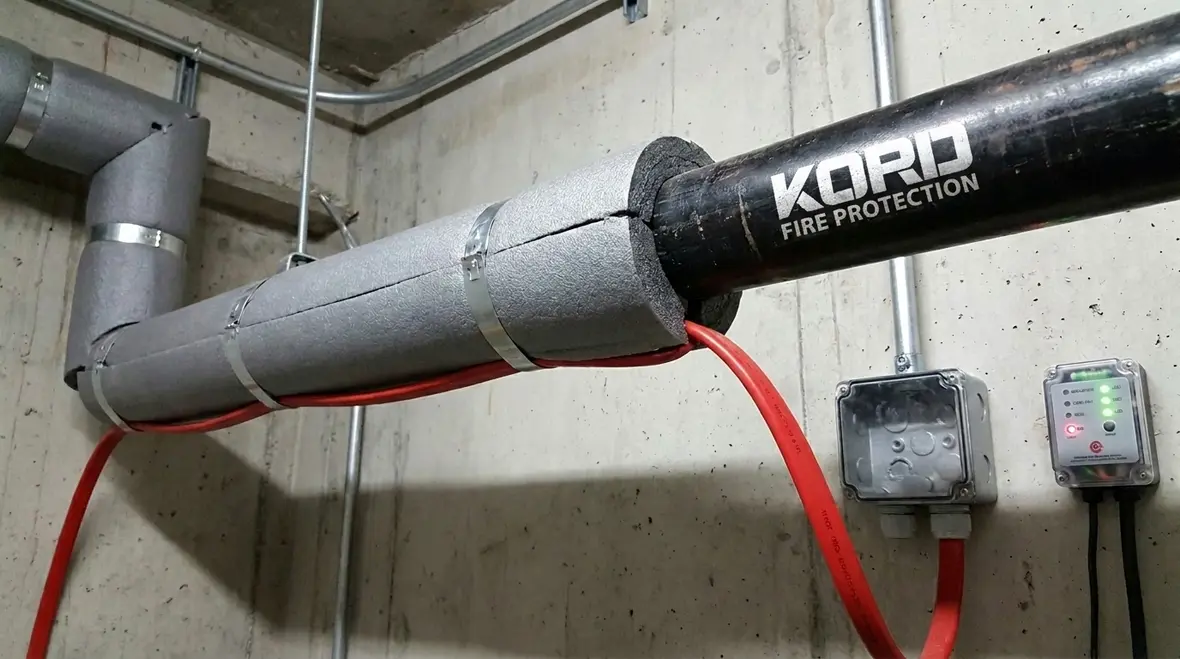
A heat trace system uses an electrical heating element attached to sprinkler piping, designed to control pipe temperature. Instead of trying to guess the weather, the system senses conditions and supplies heat in a steady, controlled way. As a result, the piping stays warm enough for water to flow when it matters.
Kord Fire Protection technicians typically focus on a simple idea: keep heat where it is needed and avoid wasting it where it is not. Therefore, installers pair the heating component with insulation and proper wiring routes. The goal is not to “cook” the pipe, but to maintain a safe temperature margin even during wind, snow, and long nights.
Also, modern controls often include thermostats, sensors, and protective devices. So, the system can turn on when conditions shift and shut down when heat is no longer required. In other words, it behaves like a responsible adult, not like a night owl who forgets to turn off the lights.
Why controlled heat matters more than brute force
Heat trace is not there to blast pipes with endless warmth. It is there to maintain conditions within a safe operating range. That distinction matters because fire sprinkler systems need dependable protection, not improvised heating. A thoughtful setup balances the heating cable, controls, and insulation so the system stays effective without running wild on energy use or creating service headaches later.
Where freeze protection matters most in sprinkler systems
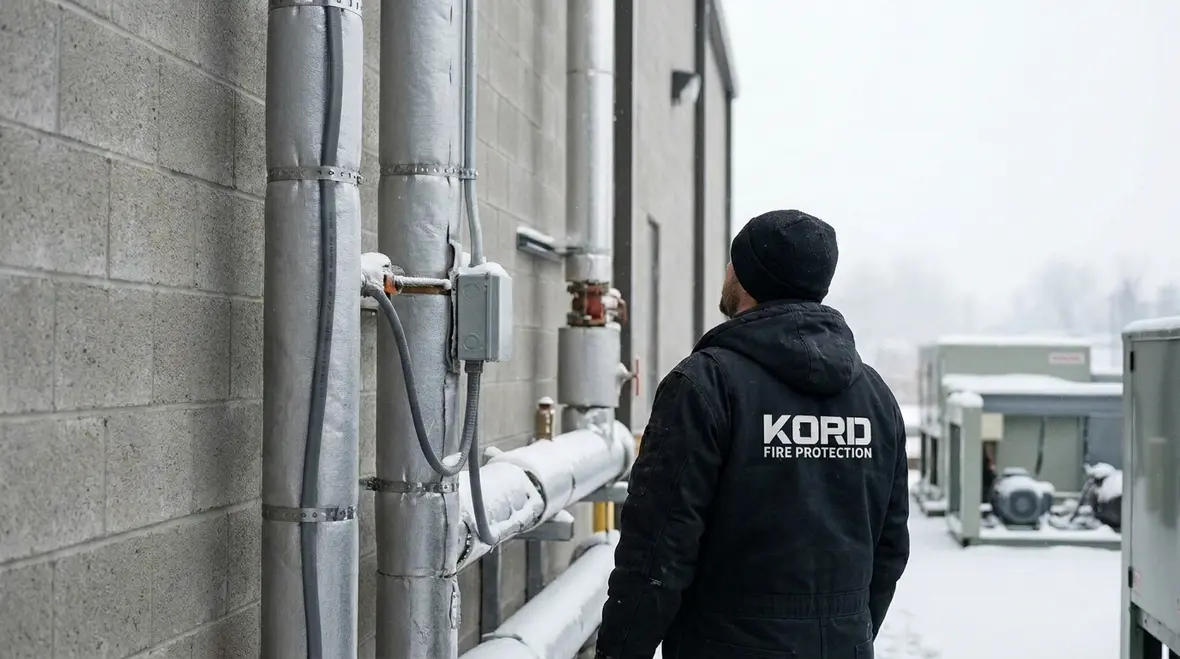
Freeze risk usually concentrates in areas that stay cold long enough for metal temperature to drop below freezing. As a result, piping runs exposed to outdoor air are the usual suspects. However, cold can also build up inside unheated spaces, like attics, crawl spaces, garages, and mechanical rooms with poor air flow.
Kord Fire Protection technicians often walk the site and map these vulnerable sections. They consider pipe size, insulation type, ambient airflow, and how quickly temperatures drop. Then they plan the heat trace coverage so it matches the real physics of the job, not a guess made over coffee.
In many facilities, it is also not just one location. Therefore, a complete plan looks at every critical segment, including piping near exterior walls, valves, drains, and low points where water could linger. If a system misses one small run, the whole freeze strategy loses confidence. And confidence is the thing that keeps owners sleeping soundly.
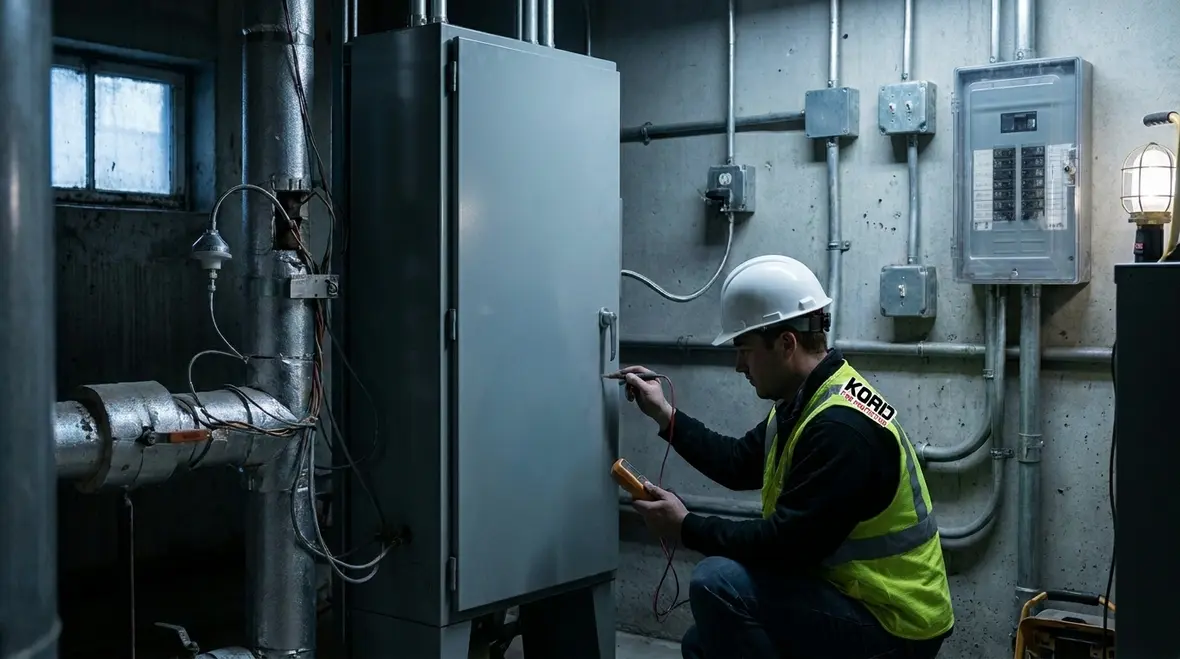
Common trouble spots technicians look for first
- Pipe runs near exterior walls and open loading areas
- Valves, drains, and low points where water can linger
- Attics, garages, crawl spaces, and semi conditioned rooms
- Sections with damaged insulation or past freeze issues
- Locations where wind exposure speeds up heat loss
This early mapping step keeps the project grounded in reality. Freeze protection works best when it is based on where heat actually escapes, not on where someone hopes the problem will stay contained.
Choosing the right heat trace setup for sprinkler freeze protection
Heat trace systems come in different styles, and selecting the right one matters. Kord Fire Protection technicians explain the difference in practical terms: one approach may work well for certain pipe materials and conditions, while another may fit better for varying temperatures and lengths.
They also look at the control strategy and the electrical layout. For example, a system that uses sensors and controllers can respond to actual conditions, which helps reduce unnecessary energy use. Additionally, proper terminations, junctions, and protective enclosures keep the electrical side safe from moisture and damage.
Next, they consider insulation. Insulation acts like a jacket, slowing down heat loss so the trace has less work to do. Therefore, the best results often come from matching the heat source to insulation and the required temperature range.
Think of it like a campfire. Heat trace supplies the flame, but insulation acts like a windbreak. Without the right setup, you end up burning fuel and still freezing your hands.
Selection factors that actually affect performance
On real projects, performance depends on details like pipe length, material, expected low temperatures, available power, and whether the protected area sees steady cold or wild temperature swings. That is why technicians match the setup to the site instead of forcing a one size fits all answer. Freeze protection is practical work, not horoscope reading.
Electrical design, controls, and safety checks
Because these systems rely on electricity, the design must meet strict safety requirements. Kord Fire Protection technicians typically review electrical components such as circuit protection, grounding, and wiring methods. They also confirm that the system uses appropriate control devices for the environment.
Common elements include overcurrent protection, ground fault considerations where required, and temperature sensing so the heat trace does not run blindly. Moreover, the design should handle wet conditions and temperature swings, since outdoor and semi indoor areas can shift quickly.
Inspections play a major role as well. Before a system goes live, technicians check terminations, continuity, and resistance where applicable. After startup, they verify performance by ensuring the system reaches the intended temperature control points.
In short, sprinkler system freeze protection electrical planning is not just “install and hope.” It is deliberate design, clean wiring, correct protection, and documented checks. The fire sprinkler system will do its job, and the heat trace electrical portion will do its job too.
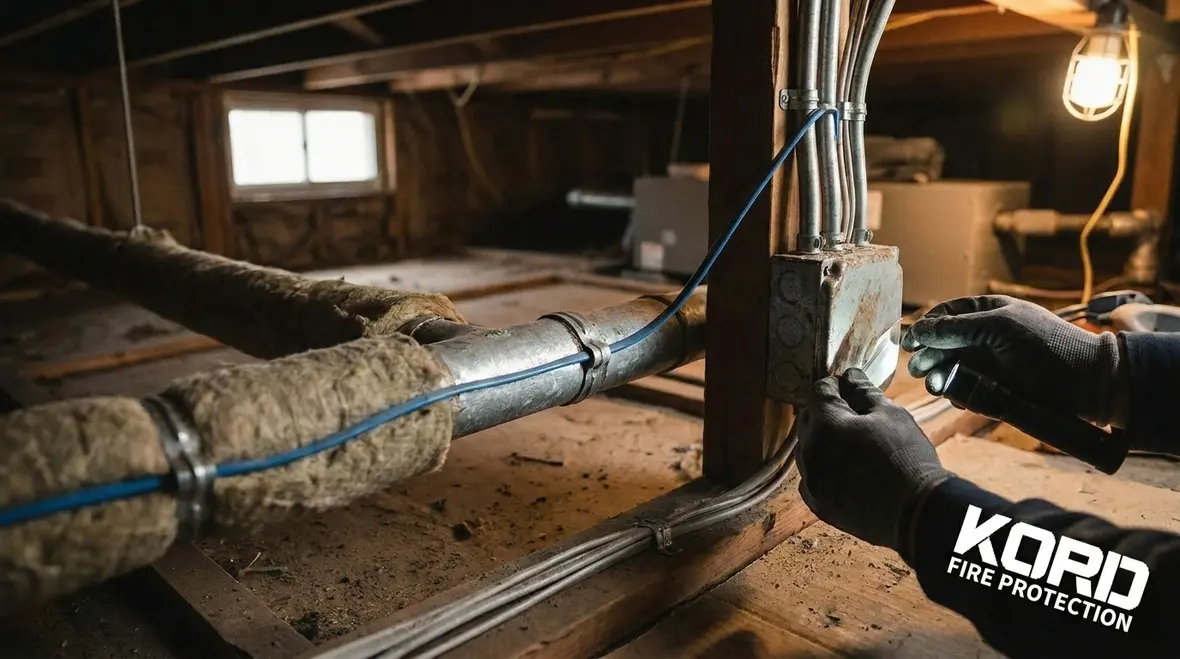
Why documentation and startup checks matter
A system that has been documented, tested, and commissioned is far easier to trust and maintain. Clear labels, circuit identification, startup records, and verified control points save time later when winter returns or when maintenance staff need answers quickly. Nobody wants emergency troubleshooting to begin with, “Well, let us see where this wire disappears.”
Installation best practices technicians follow on real sites
Installation quality can decide whether the system runs reliably for years or becomes a maintenance headache. Kord Fire Protection technicians focus on how the trace is applied, spaced, and secured along the piping run. This matters because uneven contact can create cold spots, which is the exact opposite of what anyone wants.
They also pay close attention to pipe surface preparation. If the surface is dirty, oily, or poorly bonded, heat transfer can suffer. Then, they install insulation correctly, sealing gaps and avoiding voids that allow heat to escape.
Next comes cable routing and termination. Technicians route wiring in a way that protects it from mechanical damage and keeps it serviceable. They also label components so future checks do not turn into a scavenger hunt.
Finally, commissioning confirms the system functions as intended. Therefore, owners receive not just an installed system, but a verified system with records that support long term operation.
Testing, monitoring, and what owners should expect
Once installed, heat trace systems need simple, consistent monitoring. Kord Fire Protection technicians explain that routine checks can prevent issues before they grow into calls at inconvenient times. They often recommend periodic inspections of control panels, sensors, and protective devices.
During winter, the system should cycle according to conditions. If it runs too long or fails to start, technicians can troubleshoot using sensor readings, electrical checks, and visual inspection of trace coverage and insulation integrity.
Additionally, owners should understand how alarms and notifications work, if the building uses them. When properly integrated, the system can alert staff if a heating circuit has a fault or if temperature control is not meeting targets.
In other words, the heat trace system should act like a quiet guard. It does its job in the background, and if something changes, it speaks up. No drama, just reliable protection.
Dual column reference: heat trace components and their roles
| Component | What it does |
Heating element on the pipe | Supplies controlled heat to keep piping above freezing |
Insulation and jacket system | Reduces heat loss so the system stays efficient |
Temperature sensing and controls | Turns heat on and off based on real conditions |
Circuit protection and grounding | Protects electrical paths and supports safe operation |
Junctions, terminations, enclosures | Ensures safe connections in wet and cold environments |
How this fits into broader fire protection planning
Freeze protection should not be treated like an isolated winter accessory. It works best as part of a broader fire protection strategy that includes inspection, testing, system reliability, and the condition of supporting equipment. If your building also depends on pump performance, it helps to review related guidance like fire pump testing requirements so all the moving parts of the water based system stay ready together.
And if your property needs support beyond heat trace planning, Kord Fire Protection also offers full fire protection services for facilities that want one team handling sprinkler, alarm, extinguisher, and readiness needs under one roof. That makes coordination easier, which is a polite way of saying fewer people pointing at each other when the temperature drops.
FAQ: heat trace and sprinkler freeze protection
Conclusion: plan now, protect all winter
Winter does not negotiate, and frozen sprinkler piping is not a problem to gamble on. A properly designed heat trace system for fire sprinkler freeze protection helps keep water ready when it is needed most. Kord Fire Protection technicians can review your piping routes, electrical layout, controls, and insulation plan to match the site’s real risk.
If you want a system that stays reliable through every cold snap, contact Kord Fire Protection before temperatures drop. For buildings that also need dependable detection support, commercial and residential fire alarm installation is another smart step toward full facility readiness. Then let the heat trace do its quiet job.

Join Our Newsletter!
Get the latest fire safety tips delivered straight to your inbox From our Newsletter.