Kitchen Door Fire Regulations and NFPA Guide
What Are the Kitchen Door Fire Regulations? Does My Business Need This?
When people hear the phrase kitchen door fire regulations, they often picture a heavy metal door with a dramatic slow motion close, like something out of a blockbuster movie. However, in real life, these regulations are less about cinematic flair and more about protecting lives, property, and livelihoods. Within the first few moments of a kitchen fire, heat and smoke move fast. Therefore, the right fire rated door can mean the difference between a contained incident and a catastrophic loss.
Across restaurants, hotels, schools, hospitals, and commercial facilities, compliance is not optional. Codes such as NFPA 80 outline how fire doors must be installed, inspected, and maintained. Meanwhile, Kord Fire Protection technicians regularly explain to business owners that these rules are not red tape. They are guardrails. And yes, sometimes they even crack a joke while doing it, because learning about fire safety does not have to feel like reading a tax manual.

Understanding Kitchen Door Fire Regulations in Commercial Buildings
At its core, fire safety in commercial kitchens revolves around compartmentalization. In simple terms, that means containing a fire to one area long enough for occupants to evacuate and for firefighters to respond. Fire rated doors play a central role in that strategy.
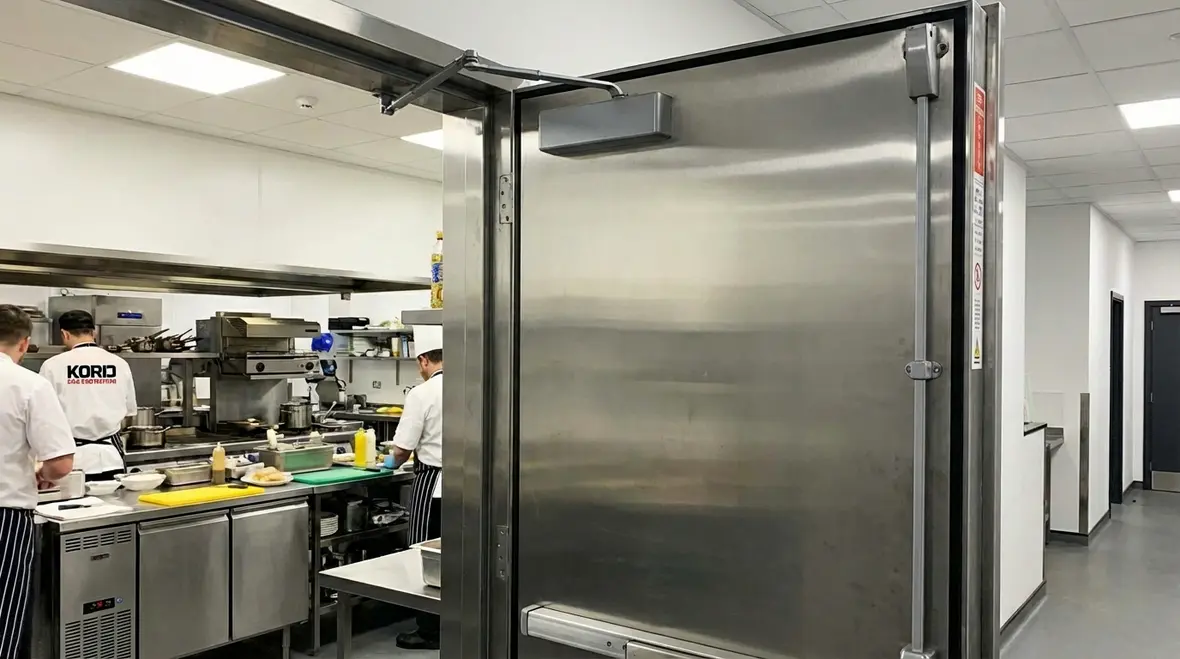
Kitchen door fire regulations require doors between commercial kitchens and adjacent spaces to meet specific fire resistance ratings. Typically, this rating is measured in minutes, such as 20, 45, 60, or 90 minutes. The rating indicates how long the door assembly can withstand fire exposure under standardized testing conditions.
However, the door alone is not enough. The entire assembly must comply. That includes:
- The door leaf
- The frame
- Hinges
- Self closing devices
- Latching hardware
- Smoke seals where required
According to NFPA 80, which governs the installation and maintenance of fire doors and other opening protectives, every component must be listed and labeled. Moreover, the assembly must remain in working order at all times. A wedge holding the door open may feel convenient during a lunch rush, yet it defeats the entire purpose. As Kord Fire Protection technicians often say, a fire door propped open is about as useful as a screen door on a submarine.
If you want to dig deeper into how NFPA 80 treats labeling, clearances, and hardware, Kord Fire Protection also breaks it down in their guide on Mastering NFPA 80: Key Guidelines for Fire Door Safety Compliance.
Does My Business Need a Fire Rated Kitchen Door?
Short answer: if there is a commercial kitchen involved, the answer is almost always yes.
Longer answer: it depends on occupancy type, building layout, and local code adoption. Restaurants, assisted living facilities, office buildings with cafeterias, and educational institutions typically require rated separations between kitchens and other occupiable areas. Additionally, insurance carriers frequently mandate compliance with recognized standards such as NFPA 80.
Kord Fire Protection technicians explain that even small commercial kitchens can generate intense heat loads. Cooking oils, grease laden vapors, and open flames create an environment where fires can escalate quickly. Therefore, codes require a fire barrier or partition. The door in that barrier must meet the same rating as the wall.
Business owners sometimes ask if a residential style door will suffice. Unfortunately, it will not. Residential doors are not tested for commercial fire endurance. Furthermore, they lack the hardware required to self close and positively latch during a fire event. In other words, that charming farmhouse door might look great on social media, but it will not pass inspection.
Connecting Kitchen Doors to Overall Fire Door Strategy
Kitchen doors are one piece of a larger fire door strategy that spans corridors, stairwells, roll up doors, and escape routes. Treating them in isolation is like wearing a seatbelt but ignoring the brakes. To keep the whole building aligned with NFPA 80 and life safety codes, many facilities pair kitchen door compliance with broader fire door and egress testing programs.
For example, Kord’s Regulation 4 Fire Escape Assemblies Test service looks at how doors, staircases, and other escape components actually perform as a system, not just on paper.
NFPA 80 Explained in Plain English
NFPA 80 sets the standard for how fire doors are installed, inspected, tested, and maintained. While the document itself reads like it was written by a committee of engineers who really enjoy footnotes, the core ideas are straightforward.
First, the door assembly must be installed according to its listing. That means no field modifications that void the label. Cutting vision panels, swapping hardware without approval, or painting over labels can all create compliance issues.
Second, annual inspections are required for most commercial occupancies. These inspections verify that:
- The door closes and latches properly
- No holes or breaks exist in the surface
- Clearances around the door are within allowable limits
- Hardware is secure and functional
- Gasketing and seals are intact where required
Finally, documentation matters. Inspectors expect written records of inspections and repairs. Kord Fire Protection technicians often remind facility managers that memory is not a compliance strategy. A well organized logbook, on the other hand, speaks volumes.
How NFPA 80 Ties Into Broader Door Programs
Because NFPA 80 covers many opening protectives, a single reference standard can support everything from swinging kitchen doors to roll up doors and horizontal sliding assemblies. Kord’s team expands on these connections in resources like their article on fire safety for roll up doors in commercial buildings and their overview of common fire door issues and maintenance best practices.

How to Know If Your Kitchen Door Meets Code
A business owner might look at a solid metal door and assume it is compliant. However, appearances can be deceiving. Therefore, a closer look is necessary.
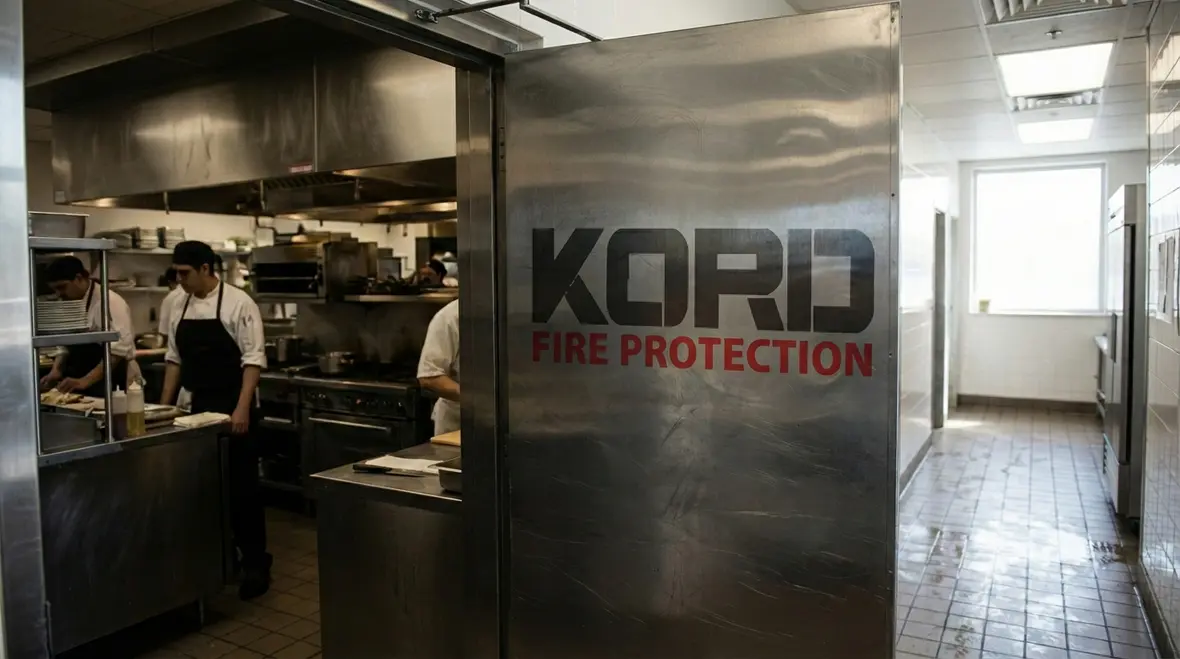
Start by locating the fire label. It is usually found on the hinge edge or top of the door. The label should indicate the fire rating and the testing laboratory. If the label is missing or painted over, that can trigger a violation.
Next, observe how the door operates. Does it close fully on its own from any open position? Does it latch without manual force? If it sticks or bounces open, adjustments are needed. Additionally, measure the gap between the door and frame. Excessive clearance can allow smoke and heat to pass through.
Kord Fire Protection technicians frequently conduct on site evaluations. During these visits, they explain findings in clear language. They do not bury clients in jargon. Instead, they walk through each requirement, often using relatable examples. For instance, they might compare a properly closing fire door to a seatbelt. You hope you never need it, yet when you do, you want it working perfectly.
When to Bring in a Fire Door Specialist
Any time labels are missing, hardware has been swapped, or a remodel has changed wall ratings around the kitchen, it is time to get a professional involved. Kord’s dedicated fire door services team focuses on inspection, repairs, and testing that are aligned with NFPA 80 so you do not have to guess whether a door still “counts” as rated.
Common Compliance Issues in Commercial Kitchens
Even well run businesses can overlook small details. Unfortunately, those small details can lead to big citations.
One common issue involves door wedges or magnetic holders that are not connected to the fire alarm system. While it may be tempting to keep the door open for airflow or convenience, it must automatically release upon alarm activation.
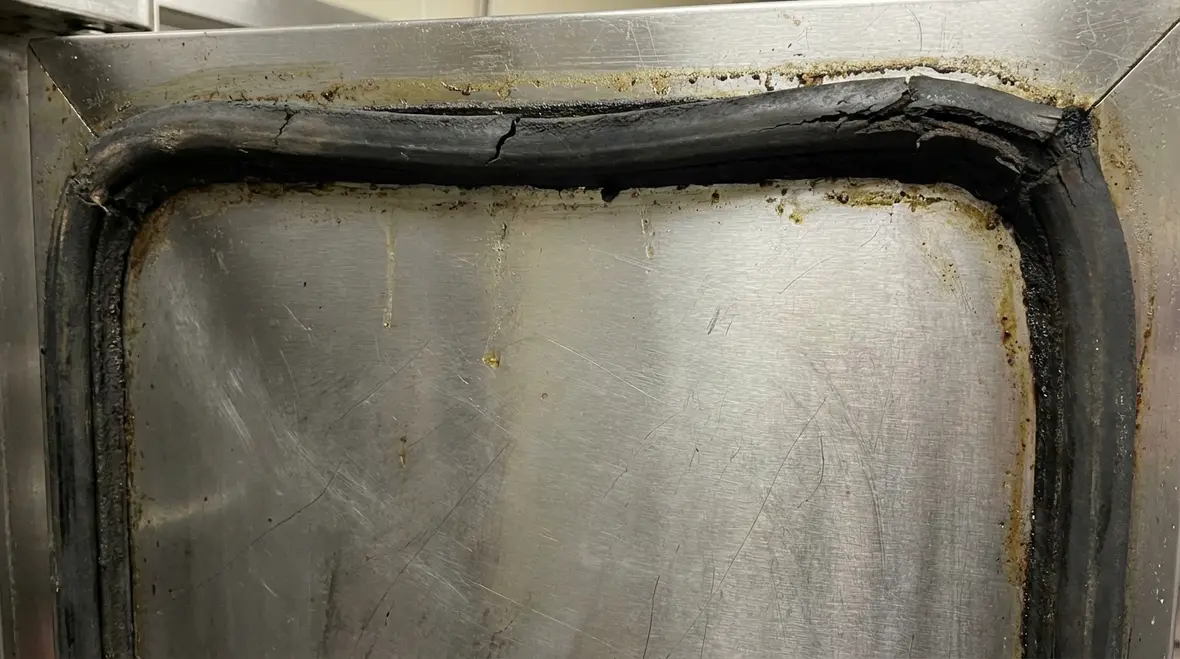
Another frequent problem is damaged gasketing. Over time, heat, grease, and cleaning chemicals can degrade seals. As a result, smoke control performance diminishes. Additionally, missing screws in hinges or closers can compromise structural integrity during a fire.
Improper field modifications also rank high on the list. Drilling holes for new hardware without manufacturer approval can void the fire rating. Furthermore, replacing a listed closer with a non listed model can place the entire assembly out of compliance.
Kord Fire Protection technicians often say that most violations are not dramatic. They are subtle. A missing label here, a loose hinge there. However, codes do not grade on a curve. Either the assembly meets NFPA 80 requirements, or it does not.
Comparing Requirements Under NFPA 80 and Practical Application
To better understand how code translates into daily operations, consider the following side by side overview.
Column A: What NFPA 80 Requires
- Labeled fire door assemblies
- Installation per manufacturer instructions
- Annual documented inspections
- Functional self closing and latching
- Maintained clearances within specified limits
Column B: What This Means for Your Business
- Purchase doors from reputable suppliers with proper certification
- Avoid unauthorized modifications during renovations
- Schedule yearly inspections with qualified technicians
- Train staff not to prop doors open
- Address wear and tear promptly rather than delaying repairs
This comparison highlights a simple truth. Compliance is not a one time event. It is an ongoing process. Therefore, businesses that treat fire door maintenance as routine rather than reactive tend to avoid costly surprises during inspections.
The Role of Professional Technicians in Staying Compliant
While some maintenance tasks appear straightforward, fire door compliance requires specialized knowledge. That is where trained professionals step in.
Kord Fire Protection technicians bring both technical expertise and practical insight. They understand local code adoption, inspection protocols, and manufacturer requirements. Moreover, they approach each facility with a calm, methodical process. There is no dramatic pointing at doors while shouting about violations. Instead, there is steady guidance and clear recommendations.
During inspections, they evaluate each component of the fire door assembly. If issues arise, they provide repair options that maintain the listing. Additionally, they help facility managers establish inspection schedules that align with NFPA 80.
Because regulations evolve, staying informed is essential. Technicians monitor code updates and industry guidance. Consequently, clients receive current advice rather than outdated assumptions. In a world where trends change faster than streaming platform subscriptions, having a steady expert in your corner is invaluable.
Why Kitchen Door Fire Regulations Matter Beyond Compliance
It is easy to view regulations as hurdles. However, their purpose extends far beyond passing inspections.
First and foremost, properly functioning fire doors protect occupants. In a busy restaurant or institutional kitchen, evacuation can be chaotic. A rated door slows fire spread, providing precious minutes for safe exit.
Secondly, property protection matters. Fire damage can shut down operations for months. Lost revenue, reputational harm, and employee displacement follow quickly. Therefore, investing in compliant door assemblies often costs far less than recovering from a major fire.
Insurance considerations also come into play. Carriers may reduce claims or deny coverage if required safety features were not maintained. Thus, adherence to kitchen door fire regulations supports both safety and financial stability.
Finally, there is peace of mind. Business owners already juggle staffing, supply chains, and customer expectations. Knowing that fire door assemblies meet NFPA 80 standards removes one significant worry from the list. And let us be honest, the to do list is long enough.
FAQ: Kitchen Door Fire Regulations and NFPA 80
Conclusion: Take the Next Step Toward Compliance
Kitchen door fire regulations are not abstract rules. They are practical safeguards rooted in experience and hard lessons learned. By aligning with NFPA 80 and working with knowledgeable professionals like Kord Fire Protection technicians, businesses protect people, property, and reputation.
Therefore, now is the time to review existing door assemblies, schedule inspections, and address deficiencies. A simple evaluation today can prevent serious consequences tomorrow. Reach out and ensure every door stands ready to do its job.
Schedule Your Fire Door Service with Kord
If you manage a restaurant, cafeteria, or any building with a commercial kitchen, partnering with a dedicated fire door team is one of the most straightforward ways to stay compliant. Kord\u2019s fire door services cover inspection, testing, repairs, and maintenance for doors across your facility.
Combine that support with their broader, full-service fire protection expertise highlighted on the Kord Fire Protection main service page, and you get a single partner who understands how kitchen doors, sprinklers, alarms, and escape routes all work together. Do not wait for smoke to start asking questions—schedule a service visit and let your doors prove they are ready.
Know Your Weapon Before You Fight the Flame
Kord Fire Protection is your go-to when it comes to all things fire protection. For over 20 years, we’ve been serving Southern California with the quality service and equipment to keep your home or business safe at all times. Our competitive prices reflect our unwavering commitment to protecting what matters most in the event of a fire emergency. Give us a call, send an email, or use that form!

Join Our Newsletter!
Get the latest fire safety tips delivered straight to your inbox From our Newsletter.