Oceanside Fire Code Compliance Guide for Property Owners
Oceanside Fire Code Compliance Guide
When it comes to oceanside fire code compliance, there is no room for guesswork. Buildings near the coast face unique risks, from salt air corrosion to high occupancy tourist seasons. Therefore, property owners must follow local fire regulations with care and consistency. Oceanside fire code compliance is not simply about passing an inspection. It is about protecting lives, investments, and peace of mind.
Kord Fire Protection technicians often explain it this way: fire codes are like seatbelts. Most days, no one thinks about them. However, when something goes wrong, everyone is grateful they were there. With steady guidance and practical insight, they help business owners and property managers understand exactly what is required and why it matters.
Let us walk through what every property owner should know, without the legal fog and with just enough clarity to keep things interesting.

Understanding Oceanside Fire Code Compliance Requirements
Oceanside properties operate under California fire codes as well as local municipal amendments. As a result, building owners must meet both state and city standards. This includes proper installation and maintenance of fire alarms, sprinkler systems, fire extinguishers, emergency lighting, and clearly marked exits.
Additionally, coastal conditions introduce challenges that inland properties rarely face. Salt air can corrode sprinkler heads and alarm components faster than expected. Therefore, inspection schedules and maintenance plans must account for environmental wear.
Kord Fire Protection technicians frequently explain that compliance is not a one time event. It is an ongoing process. Fire departments conduct routine inspections, and violations can lead to fines or temporary closure. No one wants their restaurant shut down during peak tourist season because of a blocked exit door. That is the kind of plot twist best left to reality television.
- Schedule regular system inspections
- Maintain clear access to fire equipment
- Keep documentation organized and accessible
- Address deficiencies immediately
Each step may seem simple. However, together they form the backbone of a safe and compliant building.
For a broader look at how national life safety standards shape local codes, property owners can also review resources like Kord Fire’s guide on keeping people safe from fires, which breaks down how NFPA 101 influences modern building safety expectations.

What Fire Systems Are Required for Commercial Buildings in Oceanside?
Business owners often ask what systems they truly need. The short answer is that it depends on occupancy type, building size, and usage. Nevertheless, most commercial properties must include several core systems.
Fire Alarm Systems
These systems detect smoke or heat and alert occupants. Moreover, they notify emergency responders. In high occupancy spaces such as hotels and apartment complexes, monitored alarm systems are typically required.
Automatic Fire Sprinklers
Sprinklers control or suppress fires before they spread. In coastal regions, regular inspection is critical because corrosion can reduce performance. Consequently, technicians often recommend more frequent checks near the shoreline.
Fire Extinguishers
Portable extinguishers must match the specific hazards present. For example, commercial kitchens require Class K extinguishers for grease fires. Placing the wrong extinguisher in the wrong area is like bringing a garden hose to a dragon fight. It looks brave, but it will not end well.
Emergency Lighting and Exit Signs
Power failures can occur during storms. Therefore, illuminated exit signs and battery backed emergency lighting are essential for safe evacuation.
Kord Fire Protection technicians take time to explain how each system works together. Instead of overwhelming clients with code language, they translate requirements into practical steps. That approach makes even complex fire safety standards feel manageable.
Inspection Schedules and Maintenance Responsibilities
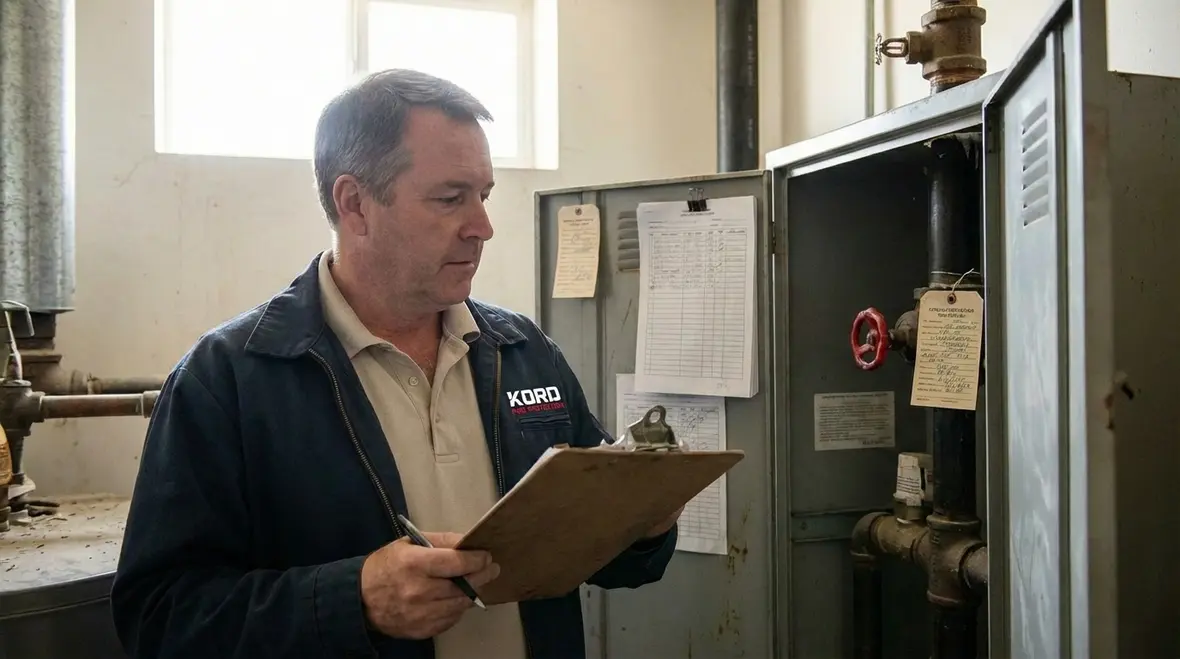
Meeting Oceanside building fire safety standards requires more than installation. It demands consistent testing and documentation. Furthermore, inspectors expect records that prove compliance over time.
The frequency of inspections varies by system:
- Fire alarms typically require annual testing
- Sprinkler systems often require quarterly and annual inspections
- Fire extinguishers need monthly visual checks and annual servicing
- Emergency lighting must be tested monthly and annually
Although that may sound like a lot, a structured plan simplifies the process. Many property managers partner with licensed providers who track schedules and send reminders. As Kord Fire Protection technicians often note, organized records can make an inspection feel routine rather than nerve wracking.
Additionally, proactive maintenance reduces long term costs. Replacing a corroded sprinkler head during a scheduled visit is far less expensive than repairing water damage after a system failure. In other words, prevention is cheaper than panic.
Common Fire Code Violations in Coastal Properties
Even well intentioned property owners can overlook details. However, certain violations appear more frequently in oceanside environments.
Blocked Exits
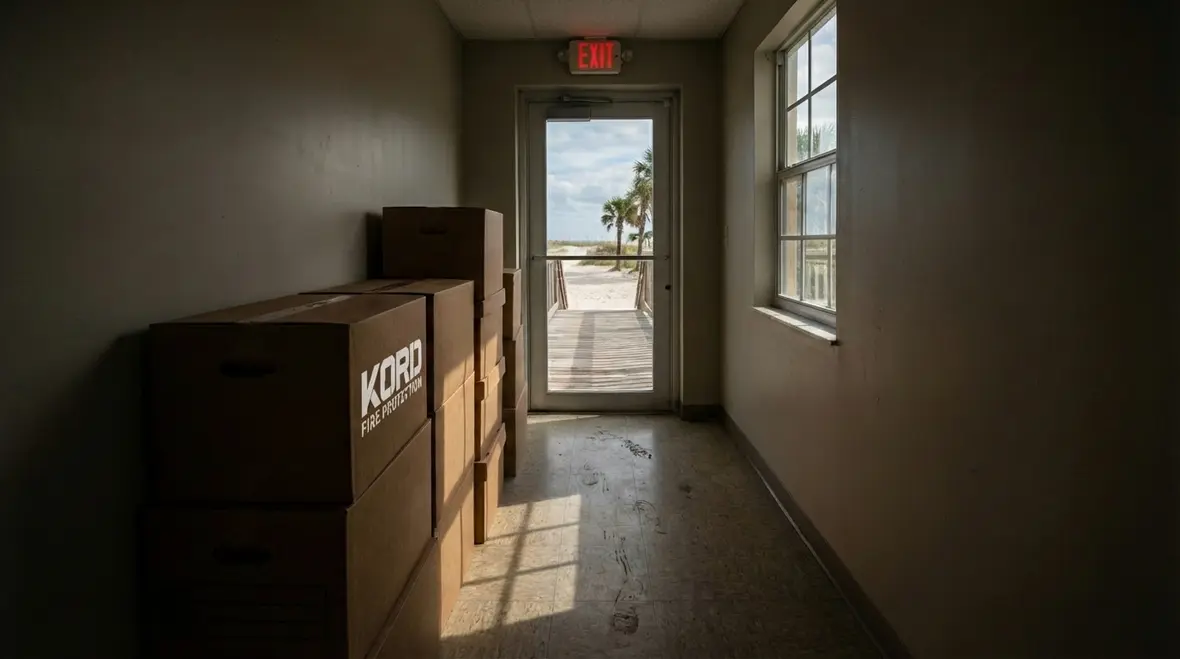
Storage boxes, furniture, or decor sometimes obstruct exit pathways. During inspections, this is an immediate red flag. Clear exits save seconds, and seconds save lives.
Improperly Maintained Equipment
Salt exposure can weaken metal components. Without regular checks, systems may fail when needed most.
Outdated Documentation
Inspectors require proof of testing and maintenance. Missing paperwork can result in citations, even if the equipment works perfectly.
Unpermitted Modifications
Renovations that alter occupancy or layout may trigger new fire safety requirements. Therefore, owners should consult fire professionals before making structural changes.
Kord Fire Protection technicians often compare compliance to maintaining a classic car. It may shine on the outside. Yet without proper upkeep under the hood, trouble is only a matter of time. Coastal properties demand even more vigilance.
Side by Side: Key Areas of Compliance Focus
Below is a practical comparison that property owners can use as a quick reference.
| System or Area | Primary Compliance Focus |
| Fire Alarm Systems | Regular testing, monitoring connection, updated control panels |
| Sprinkler Systems | Corrosion checks, water flow testing, unobstructed heads |
| Fire Extinguishers | Correct type for hazard, visible placement, annual servicing |
| Exit Routes | Clear pathways, illuminated signage, functional emergency lighting |
| Documentation | Inspection reports, maintenance logs, correction records |
This simple structure helps owners see how each element supports overall Oceanside fire code compliance. When one piece fails, the entire safety chain weakens.
How to Prepare for a Fire Department Inspection
Preparation removes uncertainty. First, property managers should review past inspection reports and confirm that all cited issues have been corrected. Next, they should verify that required systems have current inspection tags and documentation.
During the inspection, clear communication matters. Kord Fire Protection technicians often coach clients to walk alongside inspectors, answer questions honestly, and take notes. That approach builds trust and shows commitment to safety.
Moreover, routine internal audits can identify concerns before officials arrive. Think of it as a rehearsal before opening night. When the curtain rises, everyone knows their role.
Importantly, compliance with Oceanside fire code compliance standards protects more than just property. It protects employees, guests, and community members. That responsibility carries weight, yet it also brings pride.
Owners who want a deeper dive into how code compliance plays out across different facility types can also explore Kord Fire’s recent guide to fire safety codes in Glendale facilities, which mirrors many of the same principles Oceanside properties must follow.
FAQ: Oceanside Fire Code Compliance
Conclusion: Protect What Matters Most
Oceanside fire code compliance is not just a regulatory checkbox. It is a commitment to safety, stability, and responsibility. With guidance from experienced professionals like Kord Fire Protection technicians, property owners can navigate requirements with confidence and clarity.
Now is the time to review systems, update records, and strengthen protection. Schedule an inspection, ask questions, and take action today. Because when safety leads the way, everyone rests a little easier.
If you manage an Oceanside facility and want structured support instead of guesswork, consider partnering with a dedicated fire protection provider. Kord Fire Protection offers comprehensive compliance services similar to those highlighted on their city focused fire safety pages, helping you align design, maintenance, and documentation with California and local code expectations from day one.
Know Your Weapon Before You Fight the Flame
Kord Fire Protection is your go-to when it comes to all things fire protection. For over 20 years, we’ve been serving Southern California with the quality service and equipment to keep your home or business safe at all times. Our competitive prices reflect our unwavering commitment to protecting what matters most in the event of a fire emergency. Give us a call, send an email, or use that form!

Join Our Newsletter!
Get the latest fire safety tips delivered straight to your inbox From our Newsletter.