
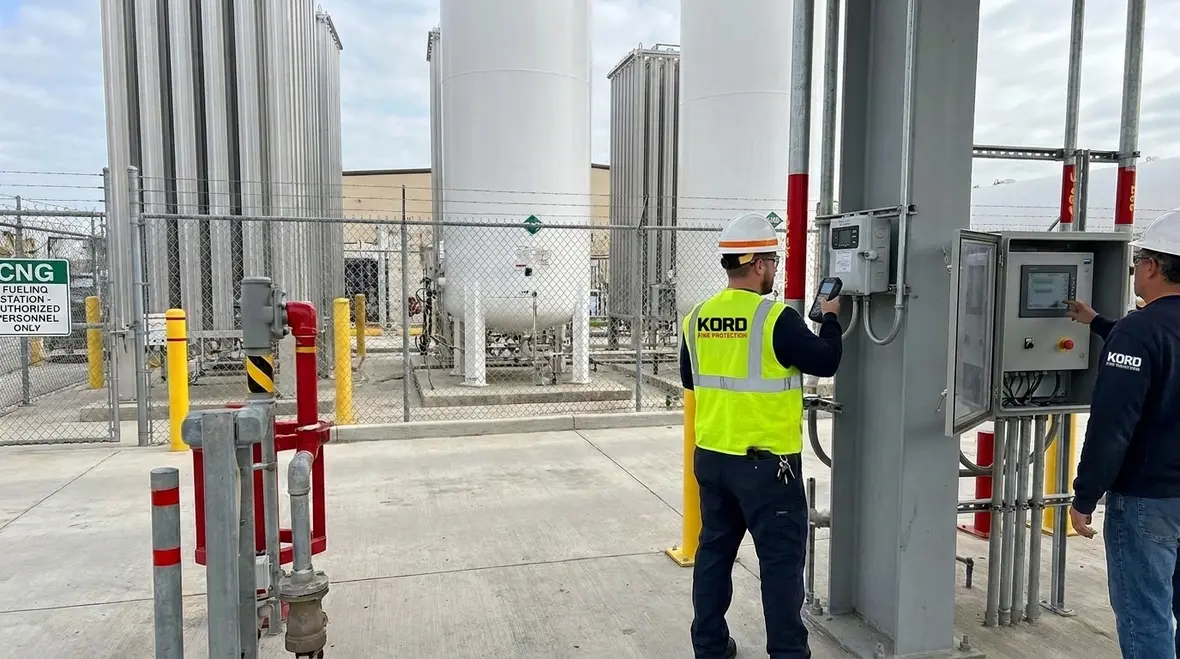
NFPA 52 Section 4.7: Special Hazard Requirements for CNG Facilities
Quick Answer
NFPA 52 Section 4.7 sets special hazard controls for CNG fueling and related operations, focusing on preventing ignition, managing hazardous atmospheres, and maintaining protective systems. Compliance depends on correct design intent, disciplined inspection testing, and rapid corrective action for degraded detection, ventilation, and shutdown functions.
Why NFPA 52 CNG special hazard requirements matter in real facilities
Commercial and industrial CNG facilities operate in environments where small equipment failures can create disproportionate risk. NFPA 52 CNG special hazard requirements in Section 4.7 address that reality by tightening expectations around hazardous area management, equipment behavior under abnormal conditions, and the reliability of safety critical controls. Facility owners typically encounter compliance pressure in three areas: how systems are classified and installed, how they are tested in service, and how maintenance is documented when conditions change.
For many operators, the practical question becomes: “Can the facility demonstrate, during routine inspections and audits, that the special hazard controls continue to perform as intended?” That proof usually comes from functional testing records, corrective action logs, and verifiable maintenance procedures. Kord Fire Protection supports these efforts through inspection, testing, and maintenance services aligned to commercial facility needs and safety critical performance.
Near the top of that process, it helps to understand how documentation and verification should look in the field. A related guide on building a code-compliant gas train fits naturally here because it reinforces inspection readiness, operational checks, and maintenance evidence for fuel system components.
What Section 4.7 covers: the operational intent behind special hazards
NFPA 52 Section 4.7 focuses on special hazard conditions associated with natural gas systems and CNG fueling operations. The section’s intent centers on preventing ignition sources from interacting with flammable atmospheres and ensuring that protective systems take appropriate action when hazardous conditions occur.
In practice, this intent translates into performance expectations for:
- Hazardous atmosphere control through ventilation and gas detection concepts that match the facility’s layout and operating modes.
- Ignition source control through equipment selection, location, and control logic that aligns with hazardous area requirements.
- Automatic protective actions such as shutdown or other limiting actions when detection thresholds, operational states, or abnormal conditions indicate elevated risk.
- Reliability and maintainability so safety functions remain effective through normal service conditions and ongoing maintenance cycles.
Facility teams frequently misalign design documentation with installed reality. Common gaps include detection coverage that does not reflect actual airflow changes, shutdown logic that was modified during troubleshooting, or maintenance practices that fail to account for calibration drift. A controlled maintenance program and verification testing process reduces these risks.
Key compliance control points: detection, shutdown, and ignition control
1) Gas detection and alarming that matches the hazard profile
Special hazard controls depend on timely detection and correct response. CNG facilities typically rely on gas detectors positioned to address where leakage and stratification can occur. Compliance efforts often stall when detectors are repositioned, blocked, or affected by changing HVAC patterns, dust, or vibration without documented evaluation.
Typical failure points include:
- Detector calibration drift causing delayed threshold response.
- Inadequate response verification, where alarm and control functions are never fully exercised.
- Obstructions that reduce airflow to a sensor, leading to underreporting.
To strengthen compliance evidence, operators should maintain a testing and calibration schedule, document detector placement relative to equipment and discharge points, and retain test results tied to alarm and control behavior. Kord Fire Protection can assist by coordinating functional tests and reviewing documentation quality so audits reflect actual field performance.
2) Automatic shutdown and protective actions that actually execute
Section 4.7 emphasizes that protective actions must occur when hazardous conditions are detected or when abnormal states arise. Shutdown functions should be verified as safety critical controls. A frequent commercial issue is partial functionality after maintenance, where components are replaced without confirming end to end behavior.
Operators should validate that the control system performs the intended sequence, including:
- Alarm annunciation and correct signal routing.
- Interlock logic that stops fueling or prevents additional hazard escalation.
- Fail safe behavior for critical valves, relays, and controllers.
Because control logic can be affected by software updates, wiring changes, or relay replacement, best practice includes periodic end to end functional verification, not just sensor readings. This is where maintenance records and test scripts matter during inspection cycles.
3) Equipment and ignition source management in hazardous locations
Special hazards also include how ignition sources are controlled around potential leak paths. Commercial facilities often add or modify equipment over time, such as lighting upgrades, electrical panels, HVAC adjustments, or new signage. If new devices are not evaluated for compatibility with hazardous atmospheres, the facility can drift out of compliance.
Common high risk gaps include:
- Using non rated equipment in areas where hazardous classification conditions apply.
- Improper sealing and cable routing around penetrations.
- Loose connections, damaged conduit, or deteriorated fittings that can compromise integrity.
To keep NFPA 52 CNG special hazard requirements aligned with real operations, facilities should implement a change management process that triggers a safety impact review for any work affecting ventilation, detection placement, electrical systems, piping, and control enclosures. For facilities coordinating electrical scope in classified spaces, Kord Electric’s article on NEC hazardous location bonding is a useful related read.
Inspection and maintenance: how facilities fail the audit without noticing
Compliance does not end with installation. NFPA 52 Section 4.7 special hazard systems must remain reliable under the site’s actual operating conditions. Inspections often expose the same recurring issues across commercial, industrial, and retail environments.
Documentation gaps that undermine otherwise correct field performance
A facility may have functioning detectors and protective actions, but still fail to demonstrate compliance if documentation cannot show that tests occurred at required intervals or that results were evaluated. Auditors frequently look for:
- Calibration certificates and traceable test gas information.
- Functional test records for alarm and control actions.
- Corrective action documentation with evidence of verification after repairs.
- Maintenance logs tied to device identification and location.
Common field conditions that degrade performance over time
Special hazard controls can degrade due to factors that look minor but materially affect response times and system behavior, such as:
- Water ingress affecting detector electronics or junction boxes.
- Corrosion on fittings and valves that alters flow and response behavior.
- Damage from routine site activity, including vehicle impacts and equipment staging.
- Dust buildup on detector elements, restricting gas access.
Commercial operators should treat maintenance as a continuous verification loop. Kord Fire Protection helps streamline this process by aligning inspection testing and maintenance practices with the reality of fast paced facility schedules and the expectations of fire and life safety compliance programs.
Review a related inspection, testing, and documentation guide
Learn more about Kord Fire Protection services
Design and operational readiness: steps facility teams can take before audits
Audits often uncover “last mile” inconsistencies between design intent and current operation. A proactive readiness approach reduces downtime, avoids repeat work, and improves defensibility of compliance evidence.
Facility teams can standardize readiness using the following practical steps:
- Map safety critical devices to hazard zones and fuel operational modes, including detector locations, control panels, and shutdown components.
- Verify end to end functionality by executing scripted tests that confirm alarm, annunciation, and shutdown response, not just detector readings.
- Confirm device rating and placement whenever upgrades occur in or near hazardous areas.
- Perform periodic visual and integrity checks for cable routing, fittings, conduit seals, and valve area conditions.
- Review change management so modifications trigger safety evaluation and updates to documentation.
When readiness is maintained continuously, compliance becomes routine rather than reactive. This aligns operational safety with the evidence expectations typically associated with NFPA 52 CNG special hazard requirements.
How Kord Fire Protection supports ongoing NFPA 52 compliance
Commercial CNG facilities require a disciplined, recurring process to maintain special hazard systems in a safe and audit ready condition. Kord Fire Protection functions as a reliable partner for inspection, testing, and maintenance support designed for commercial uptime requirements.
Service teams typically coordinate verification that safety critical devices perform as required, ensure documentation is organized for review, and help prevent common failure modes such as missed functional testing, incomplete corrective action closeout, and overlooked degradation.
Contact Kord Fire Protection for inspection and maintenance support
Frequently Asked Questions
Conclusion and call to action
NFPA 52 Section 4.7 special hazard requirements protect CNG facilities by requiring dependable detection, correct protective actions, and ongoing verification through testing and maintenance. Facility teams that focus on end to end performance and audit ready documentation reduce downtime and risk. Kord Fire Protection can help establish and maintain a practical compliance program for commercial uptime and inspection readiness. Schedule an assessment to confirm your special hazard controls are functioning as intended.

Join Our Newsletter!
Get the latest fire safety tips delivered straight to your inbox From our Newsletter.


