NFPA 52 Section 1.3 Retroactivity: Existing CNG and LNG Fueling Facilities Under the 2026 Edition
Quick Answer
NFPA 52 Section 1.3 addresses how the 2026 edition applies to existing CNG and LNG vehicle fueling facilities. It generally focuses retroactive implementation when changes, hazards, or code conflicts are introduced, while preserving acceptable existing designs when they remain safe.
For facilities tightening documentation and inspection readiness, it helps to coordinate this review with broader commercial building fire safety planning so code compliance, testing discipline, and corrective action tracking stay aligned.
Why “retroactivity” matters for existing CNG and LNG sites
Commercial operators often assume that a new NFPA edition forces immediate full compliance across the entire fueling system. In practice, NFPA 52 retroactivity existing vehicle fueling facilities is more nuanced. The enforcement authority typically expects operators to maintain life safety and safe operations using methods that address hazards that are newly identified, materially changed, or no longer compliant with updated safeguards. The result is a compliance plan that balances operational continuity with targeted upgrades where risk control requires it.
For retail and fleet fueling locations, this affects permitting timelines, budgeting, downtime windows for inspections and maintenance, and the documentation package needed to demonstrate ongoing compliance readiness.
What NFPA 52 Section 1.3 typically requires in the real world
Section 1.3 in NFPA 52 establishes the framework for how the adopted edition applies to existing facilities versus new installations. While the exact language governs specific scenarios, the practical compliance pattern usually follows this logic:
- Existing systems with approved, maintained performance often remain acceptable if they continue to control the hazards identified by the code and the facility documentation is current.
- Alterations and expansions commonly trigger the most direct retroactive requirements. When equipment is replaced or new components are added, the new work must meet the 2026 edition requirements.
- Changes that increase risk can require hazard reassessment and targeted upgrades even if the facility did not undergo a “construction” change in the traditional sense.
- Nonconforming conditions that affect safety functions, emergency response, or incident prevention typically require corrective action within the enforcement body’s expectations.
Because each AHJ interprets the “acceptable existing” pathway through the lens of local enforcement, facilities should treat Section 1.3 as a governance tool that drives documentation quality, testing discipline, and defect closure speed.
Where retroactivity pressure usually shows up: common triggering conditions
Operators see retroactivity concerns most often in five high impact areas. These areas also align with the work scopes that commercial fire protection and code compliance vendors commonly support.
1) Compressor, vapor handling, and pressure regulating equipment changes
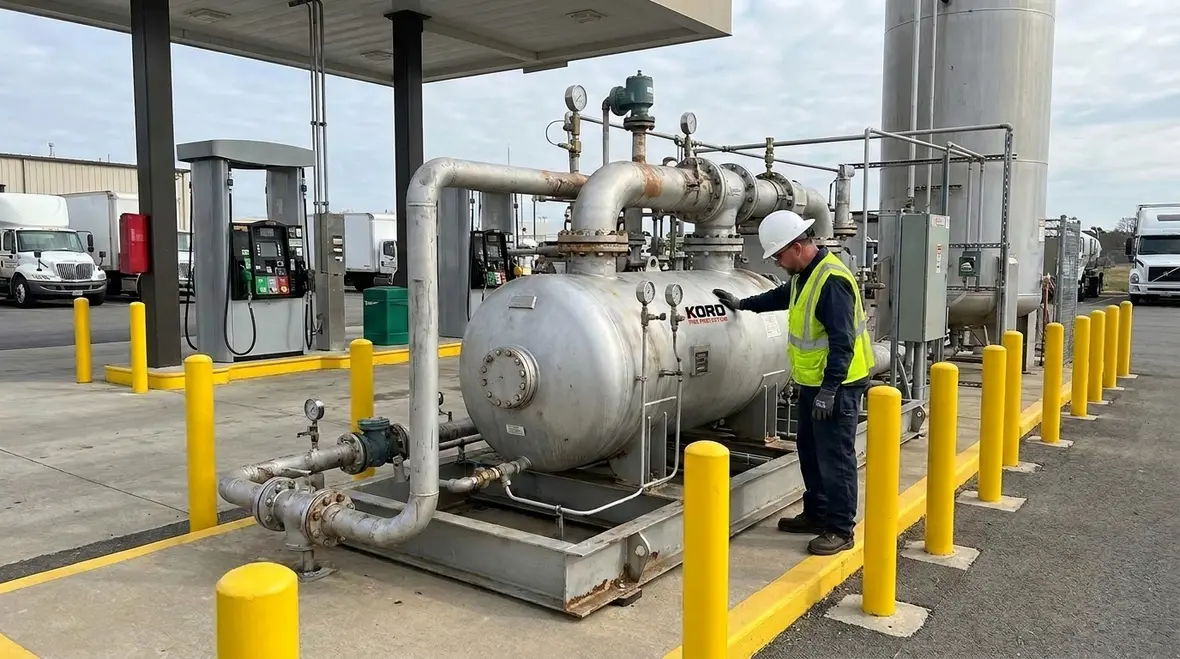
When existing compressor packages or pressure regulation trains are modified, the replacement components and interfaces may need to comply with updated 2026 requirements. Common failure points include incorrect valve sequencing, degraded control logic, or improper pressure relieving arrangements that do not perform as originally intended.
2) Gas detection, emergency shutdown, and annunciation upgrades
Gas detection and shutdown systems frequently require attention when components are replaced, circuits are extended, or sensor technology changes. Operational hazards typically include sensor drift, response time mismatch, or annunciation that does not provide the expected warning pathway. This is where testing records and device calibration history become pivotal to retroactivity decisions.
3) Vehicle interface modifications and fueling hose or coupler maintenance
Fueling connections and hose systems rely on mechanical integrity and leak prevention. Retroactivity questions can arise when older couplers are replaced with newer designs, when hose assemblies are renewed, or when fueling procedures change. Defect patterns include seal degradation, O ring wear, and inconsistent coupler engagement quality.
4) Fire protection and exposure protection alignment
Existing fire protection arrangements may need to be revalidated if the facility layout or hazard profile changes. Even when a system remains installed, retroactivity questions often appear after a significant modification, a new fuel storage configuration, or an updated risk assessment. Exposure protection includes protection of critical equipment and maintaining access and safe separation behavior.
5) Electrical classification, wiring integrity, and system segregation
Retroactivity discussions often intensify when electrical systems are altered, when cable routes change, or when replacement work is performed with inconsistent documentation. Common issues include cable gland integrity, conduit sealing quality, corrosion at terminations, and degraded bonding and grounding continuity. These conditions can undermine the safe function of detection and shutdown circuits.
How to document compliance for existing systems under the 2026 edition
When regulators and insurance partners evaluate NFPA 52 retroactivity existing vehicle fueling facilities, they typically do not rely on brand new paperwork alone. They look for traceability that shows the facility operates as intended. A strong compliance documentation set usually includes:
- As built records and equipment lists, including manufacturer, model, and installation dates for critical components.
- Testing and inspection history for detection devices, emergency shutdown functions, pressure relieving components, and control logic verification.
- Maintenance records demonstrating scheduled replacement intervals, calibration, and corrective actions taken for defects.
- Operational procedures for abnormal conditions, leak response, fueling shutdown criteria, and staff emergency actions.
- Modification history identifying changes over time and showing how those changes were evaluated for code compliance.
Where documentation gaps exist, the facility should expect more scrutiny during permitting renewals, inspection cycles, or after any incident involving gas release, abnormal pressure events, or failed shutdown actions. Maintaining an “audit ready” package reduces the probability that a retroactivity interpretation becomes a broad upgrade demand.
Inspection and maintenance priorities that reduce retroactivity risk
Operators can reduce retroactivity exposure by strengthening the safety functions that AHJs and fire officials commonly verify. The following priorities typically deliver the highest operational value:
Function testing discipline for safety critical systems
Facilities should verify that detection and shutdown functions perform as designed, including alarm escalation paths, timing, and control interlocks. Common failure points include incomplete recovery from test mode, incorrect sensor channel mapping, and stale software configurations.
Leak prevention through mechanical integrity checks
Regular inspection of couplers, valves, and connections helps prevent slow leaks and catastrophic release scenarios. Maintenance should include torque verification where applicable, seal replacement on defined intervals, and removal of debris or corrosion that can compromise sealing surfaces.
Inspection of relief, venting, and discharge pathways
Relief and venting systems must protect occupants and the surrounding environment. If modifications have changed the discharge area, the site should revalidate that discharge locations and distances remain acceptable and that vent obstruction controls function reliably.
Operator training refresh tied to system changes
Equipment compliance depends on operational consistency. When components change or procedures are updated, training should cover hazard recognition, shutdown initiation, and safe return to service criteria.
To support ongoing compliance work across inspection, testing, and documentation, Kord Fire Protection provides commercial-focused fire protection and code compliance services designed to keep facilities audit ready. For more information, visit Kord Fire Protection services.
Frequently Asked Questions
Call to action
Review your current CNG and LNG fueling system against the 2026 edition impact areas, then build an audit-ready evidence file for Section 1.3 retroactivity decisions. Partner with Kord Fire Protection to validate testing, maintenance, and documentation before inspections turn into upgrade mandates. Start now by conducting a gap assessment focused on detection and shutdown performance, leak prevention controls, and the change history that regulators will scrutinize.

Join Our Newsletter!
Get the latest fire safety tips delivered straight to your inbox From our Newsletter.