
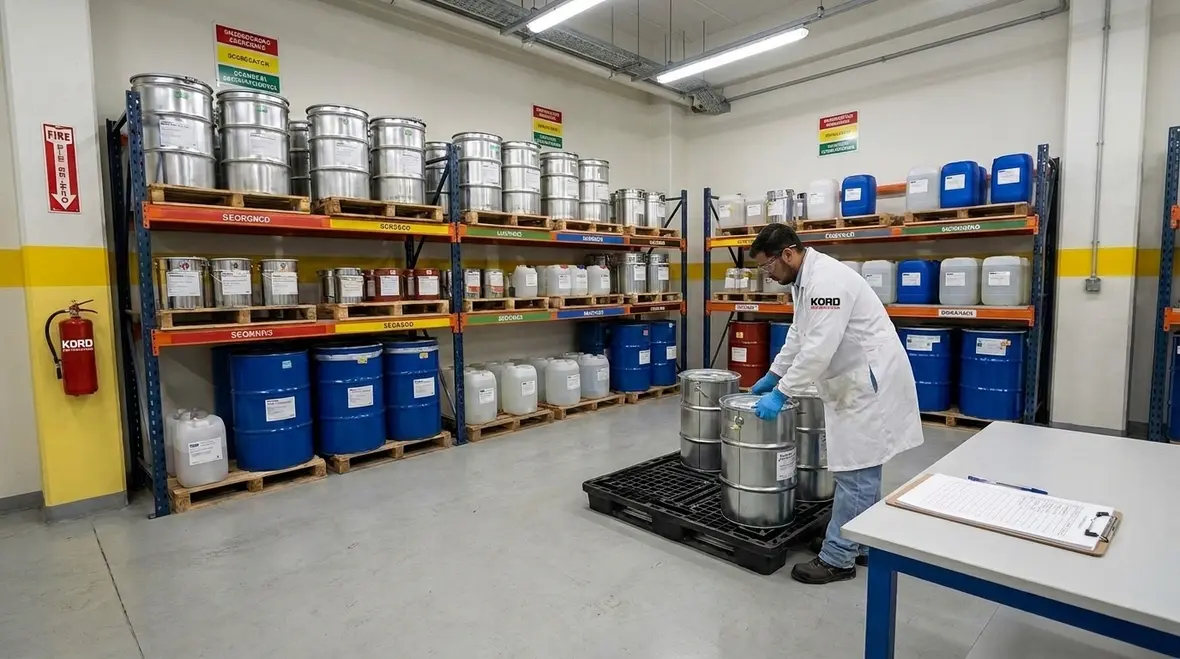
NFPA 45 Section 8.1 General: Overview of Chemical Storage and Handling
Quick Answer
NFPA 45 Section 8.1 establishes baseline requirements for safe chemical storage and handling in industrial occupancies. It focuses on hazard awareness, container control, segregation, and programmatic practices. Facilities use these fundamentals to reduce ignition, release, and exposure risks before detailed requirements apply.
For a related look at safe handling rules that fit naturally with broader chemical control programs, see NFPA 32 solvent and chemical handling safe handling rules. ([kordfire.com](https://kordfire.com/nfpa-32-section-5-3-solvent-and-chemical-handling-safe-handling-rules/?utm_source=openai))
Why NFPA 45 chemical storage handling general matters in real facilities
Most commercial, industrial, and retail operations do not experience a major incident because every hazard is perfectly eliminated. Instead, they prevent escalation by controlling how chemicals are stored, transferred, and protected. In that context, NFPA 45 chemical storage handling general requirements help facilities build a consistent safety baseline. They also provide the logic behind later, more specific sections that address storage arrangements, detection, suppression, and operational controls.
From an inspection standpoint, Section 8.1 acts like the “system foundation.” Inspectors commonly look for evidence that the facility has standardized processes for receiving, labeling, container management, and operational discipline. When those basics fail, the more advanced safeguards often cannot compensate for uncontrolled conditions such as incompatible storage, damaged containers, or unauthorized transfer methods.
What Section 8.1 covers: the general safety framework
NFPA 45 Section 8.1 provides general direction for chemical storage and handling programs. While the specific operational details vary by chemical type and process, facilities are expected to manage risk through core practices such as:
- Hazard identification and awareness tied to the chemicals present and their likely release scenarios
- Container control including proper condition, integrity, and compatibility
- Handling discipline that prevents uncontrolled spills, leaks, and ignition sources during transfer and use
- Programmatic consistency through written procedures, training, and documented inspections
Practically, this means the facility does not treat chemical safety as a one time task performed when equipment is installed. Instead, it builds a repeatable approach that holds during routine operations, maintenance events, and abnormal conditions such as container changes, unexpected deliveries, and process upsets.
How to implement compliant chemical storage handling controls
Operational compliance typically succeeds or fails at the hands on level. Facilities usually need robust processes for storage locations, transfer areas, and how chemicals are staged for use. The most common control measures include the following.
1) Receiving and container integrity checks
Facilities should verify that chemical containers arrive in acceptable condition and remain compliant after receipt. A strong program includes documented checks for labels, container damage, valve condition, and compatibility with storage conditions. When containers are decanted or re packaged, the facility should manage the same labeling and integrity requirements, not rely on memory or informal signage.
2) Segregation, compatibility, and storage layout discipline
Incompatible chemicals stored together create cascading failure risk. A compliant layout process generally includes chemical inventory management, compatibility verification, and controlled storage locations. Even when later sections specify detailed arrangement requirements, Section 8.1 provides the expectation that the facility controls what goes where and prevents uncontrolled mixing.
3) Handling and transfer practices that reduce release likelihood
Handling controls should address spill prevention and leak detection, selection of transfer equipment, and procedures that minimize exposure to ignition or reactive conditions. Facilities often improve compliance by standardizing transfer checklists, maintaining spill response readiness at the point of use, and restricting who can perform chemical transfers.
4) Written procedures, training, and shift to shift consistency
Training is only effective when it matches the facility’s actual methods. For example, if a facility uses dedicated transfer hoses, approved pumps, or specific containment practices, staff training should reflect those tools and the correct sequence for setup, transfer, and shutdown. Documented training and competency checks support continuous compliance during staffing changes and contractor work.
For organizations strengthening their overall fire and life safety approach, Kord Fire Protection supports commercial programs that align with NFPA based expectations through ongoing testing, inspection readiness, and maintenance verification. Learn more at Kord Fire Protection.
Common failure points during inspections (and how to prevent them)
Even well intentioned programs frequently miss details that drive noncompliance findings. Common NFPA 45 related issues that trace back to general handling practices include:
- Missing or inconsistent labeling after decanting, repackaging, or interim storage
- Inadequate chemical inventory control leading to storage of chemicals that are no longer in active use without compatibility review
- Damaged containers left in service longer than allowed, especially where valves or fittings degrade
- Improper staging of chemicals near ignition sources or in walkways due to production pressures
- Uncontrolled transfer methods using non approved equipment or bypassing containment procedures
These failure points often appear during routine operational drift. The facility may have a strong initial implementation, but procedures lapse under time constraints, during shift transitions, or when maintenance crews substitute materials. A sustainable program includes periodic verification activities that confirm the controls work under real operating conditions.
What maintenance and verification should look like
Section 8.1 sets an expectation that general storage and handling controls remain effective over time. Maintenance and verification should therefore include more than visual checks. Facilities often benefit from a recurring schedule that confirms:
- Storage area condition including cleanliness, segregation markings, and containment readiness
- Container and transfer equipment readiness including hose integrity, fittings condition, and cap or valve functionality
- Training currency and procedure updates that reflect process changes
- Response readiness for spills and releases at points of use, consistent with the chemical hazards present
Maintenance also intersects with inspections. When facilities coordinate verification schedules with fire protection system testing and documentation workflows, they reduce last minute gaps that trigger deficiency notices. Kord Fire Protection helps commercial sites maintain credible records and operational readiness through service aligned with ongoing compliance expectations. For additional insights, see Kord Fire Protection services.
Frequently Asked Questions
Next step: verify your chemical handling program
Facilities should validate that NFPA 45 chemical storage handling general practices are fully implemented at the point of receipt, storage, and transfer. Kord Fire Protection can support your ongoing compliance through inspection readiness and maintenance verification so your program stays effective between audits. Contact Kord Fire Protection to assess current controls, identify gaps, and build a practical schedule for continuous improvement.
For broader context on protecting liquid hazards with layered controls, you can also review Layered Fire Protection System for Flammable Liquids. ([kordfire.com](https://kordfire.com/layered-fire-protection-system-for-flammable-liquids/?utm_source=openai))

Join Our Newsletter!
Get the latest fire safety tips delivered straight to your inbox From our Newsletter.



