
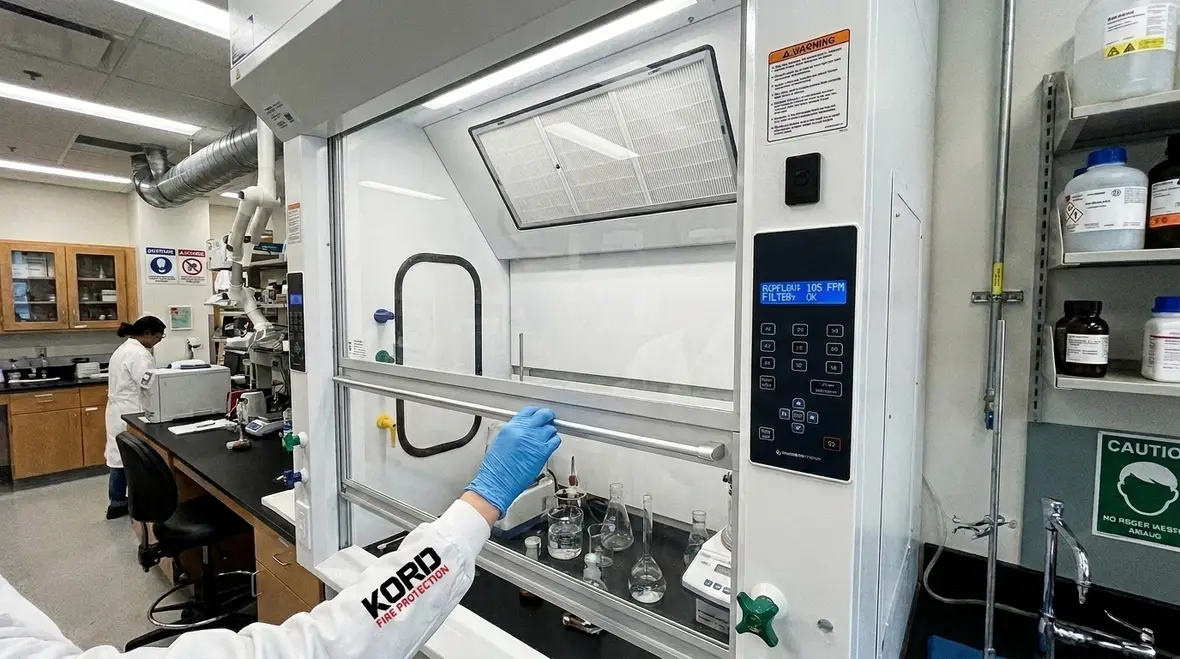
NFPA 45 Section 7.15: Ductless Fume Hood Requirements
Quick Answer
NFPA 45 Section 7.15 sets functional and performance expectations for ductless fume hoods used with hazardous operations. Compliance focuses on capture performance, filter and airflow reliability, documented installation and use, and maintenance readiness to reduce the risk of harmful vapors accumulating in occupied spaces.
Why NFPA 45 Section 7.15 Matters in Real Facilities
Commercial, industrial, laboratory, and retail workplaces use ductless fume hoods for tasks that generate vapors and fumes. NFPA 45 Section 7.15 addresses the unique hazard profile of ductless systems because there is no dedicated duct route to exhaust contaminated air outdoors. Instead, the hood relies on internal capture and filtration performance, plus ongoing operational integrity, to manage exposure risk.
For facility managers and safety teams, this creates a compliance challenge that is often underestimated during purchase and commissioning. The hood is not just equipment. It becomes a controlled system with documented setup, user practices, inspection expectations, and maintenance triggers tied to performance and safety criteria. This is where NFPA 45 ductless fume hood requirements become operational, not theoretical.
Facilities that want a broader compliance and maintenance framework can also review fire protection services in Southern California from Kord Fire Protection, which naturally fits alongside audit readiness and documented life safety support.
What Section 7.15 Requires: Core Compliance Themes
NFPA 45 Section 7.15 is structured around ensuring ductless fume hoods function as intended and remain dependable over time.
Core compliance themes
Proper selection and intended use for the specific materials and vapor types expected in the process.
Capture and performance consistent with safe containment in the work area.
Filter and system integrity that supports continued removal of contaminants.
Installation and placement controls to protect performance and avoid disruption from air currents.
Maintenance, inspection, and documentation so the hood does not drift out of safe performance due to use, loading, or component degradation.
In practice, auditors and fire protection professionals look for evidence that these elements are managed through written procedures, trained users, and a maintenance and verification program rather than only relying on the hood being “installed.”
Installation and Placement: Where Compliance Often Breaks Down
Ductless systems are highly sensitive to airflow conditions. Even if a hood meets manufacturer claims, real rooms can change performance.
Typical compliance failure points
Wrong location near doorways, HVAC supply vents, or high traffic zones that create turbulence.
Uncontrolled drafts from adjacent equipment, fans, or open windows that pull contaminants away from the hood opening.
Missing commissioning documentation that confirms the hood was set up to manufacturer and code expectations for the specific room conditions.
Improper power or control integration causing intermittent operation, alarm disabling, or bypass behavior.
During commissioning, teams should verify that the hood is installed to allow proper face velocity and stable capture, and that room airflow patterns do not undermine containment. Facility personnel should also confirm that the hood is connected to the correct utilities, alarms, and control settings required for safe operation.
Operation and User Controls: Turning Requirements into Daily Practice
NFPA 45 ductless fume hood requirements assume the equipment is used correctly. That means operational controls matter as much as hardware.
Common expectations
Defined operating procedures for start up, normal operation, and shutdown.
User training on what the hood can and cannot handle, including limitations for contaminant types and concentrations.
Work practice controls such as minimizing unnecessary sash motion, maintaining appropriate positioning of materials, and avoiding activities that disturb capture.
Alarm response procedures so any airflow or operational fault triggers immediate corrective action.
Facilities that operate ductless hoods in mixed-use retail or training environments often discover that user habits become the variable that drives risk. A strong compliance program addresses this through training records, visible operating instructions at point of use, and a clear “stop work” protocol if performance warnings occur.
Filtration, Loading, and Maintenance: The Inspection Proof Your Auditor Will Expect
The most frequent compliance gap is maintenance readiness. Ductless systems depend on filter performance that can degrade due to contaminant loading, saturation, or component wear.
A compliance-based approach typically includes
Planned inspection intervals aligned with usage intensity, contaminant types, and manufacturer guidance.
Documented filter change records showing the basis for replacement, not just “changed when noticed.”
Verification of alarms and airflow monitoring to ensure detection functions remain active.
Cleaning and condition checks for fans, ductless plenum components, and any air path obstructions that could reduce capture.
Commercial facilities should treat maintenance documentation as part of the life safety file for process exhaust systems. When teams cannot demonstrate inspection coverage and filter management, ductless hoods can become a vulnerability during compliance audits and incident investigations.
Kord Fire Protection supports facilities with practical inspection and maintenance coordination so ductless fume hood performance does not drift beyond safe operation. That includes maintaining service records, validating that required checks occur, and helping teams build a repeatable compliance workflow rather than a reactive one.
Common Failure Modes to Monitor Under Section 7.15
Even well engineered ductless units can fail in predictable ways. Facilities should proactively monitor these failure modes:
Filter saturation that reduces removal efficiency while the hood continues to operate.
Fan wear or performance loss that lowers airflow and capture capability.
Bypassed sensors or disabled alarms due to nuisance alerts or improper field adjustments.
Incorrect filter product installed for the contaminant profile, reducing effectiveness.
Room airflow changes from HVAC adjustments, construction, or occupancy changes that alter capture.
Best practice is to connect inspection results and maintenance actions to operational history. That approach helps safety teams demonstrate ongoing compliance and helps reduce the risk of “installed and forgotten” systems.
How to Build a Practical Compliance Program with Kord Fire Protection
NFPA 45 ductless fume hood requirements are easiest to manage when the facility builds a repeatable program that spans procurement, commissioning, use, and maintenance. Kord Fire Protection helps organizations reduce compliance friction by supporting the technical and documentation side of the program.
To strengthen your internal program and training alignment, facilities can also review related fire safety guidance such as chemical fume hood design requirements under NFPA 45 Section 7.8. This supports a coordinated approach across life safety systems that often interact with laboratory and process spaces.
Frequently Asked Questions
Call to Action
Ensure your ductless fume hoods remain compliant with NFPA 45 Section 7.15 by establishing a documented program for installation verification, user controls, inspection, and filter maintenance. Kord Fire Protection can help your team build audit-ready service records and reduce performance drift over time. Contact Kord Fire Protection today to evaluate your current maintenance workflow and align it with practical NFPA 45 ductless fume hood requirements.

Join Our Newsletter!
Get the latest fire safety tips delivered straight to your inbox From our Newsletter.



