
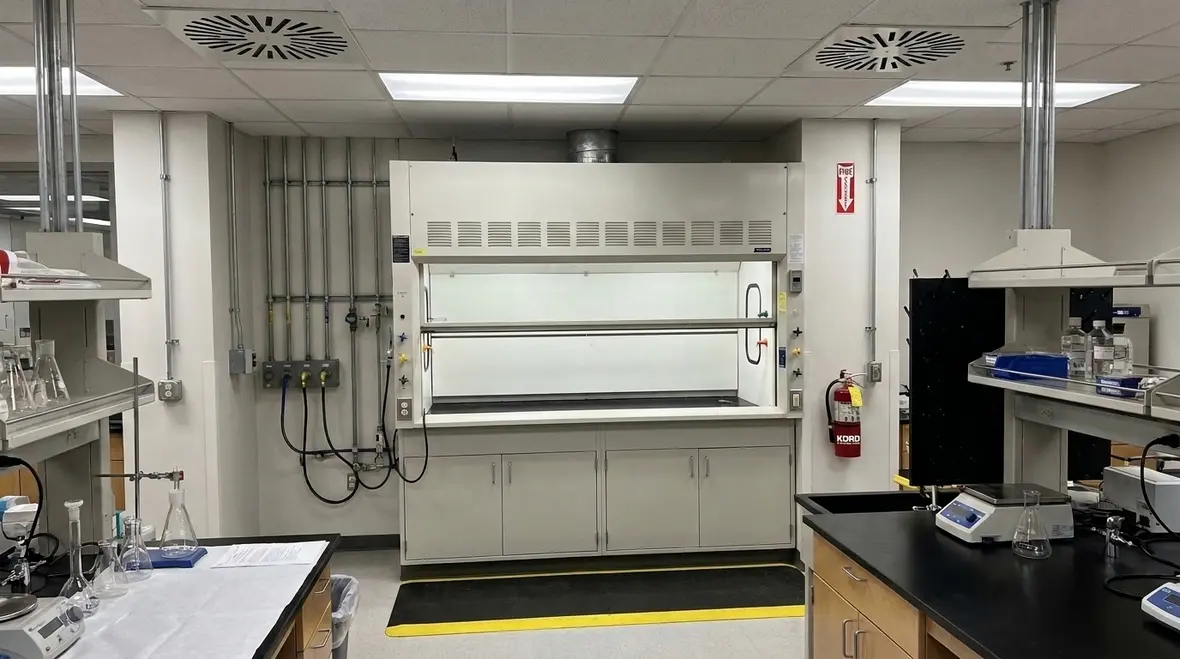
NFPA 45 Section 7.9: Chemical Fume Hood Location Requirements
Quick Answer: NFPA 45 Section 7.9 sets location expectations for chemical fume hoods so exhaust, airflow patterns, and hazards stay contained. Compliance depends on room layout, exhaust routing, ignition risk management, and maintaining proper hood performance during operations and inspections.
For broader compliance support tied to inspection readiness and preventive maintenance, facilities can also explore Kord Fire Protection’s fire safety inspections and preventive maintenance services.
What NFPA 45 chemical fume hood location requirements mean in the field
NFPA 45 chemical fume hood location requirements focus on where a fume hood gets installed and how that location supports safe confinement and ventilation effectiveness for hazardous chemical vapors. In practice, the goal is to prevent cross contamination, avoid interfering air currents, and ensure the hood exhaust system performs as designed. This matters most in commercial, industrial, and retail facilities that share HVAC spaces, have changing layouts, or run frequent maintenance and cleaning schedules that can indirectly impact airflow performance.
NFPA 45 Section 7.9 overview: location, exposure control, and system interaction
NFPA 45 Section 7.9 addresses the placement of chemical fume hoods in relation to ventilation performance and the conditions around the hood. While facilities often treat fume hoods as standalone equipment, the standard effectively requires that the room environment and exhaust system remain compatible with safe operations. Inspectors and AHJs typically look beyond the hood face and evaluate how the location supports containment during real work activities, including transfers, heating, and chemical handling.
Common operational drivers behind location compliance include:
- Airflow interference: supply diffusers, return grilles, door swings, and occupant traffic can disrupt capture.
- Hazard segregation: placement near ignition sources, incompatible processes, or incompatible storage can increase risk.
- Exhaust routing feasibility: hood location determines duct routing, termination location, and clearance from air intakes.
- Maintenance access: service access affects inspection and testing frequency and the ability to correct performance drift.
Where should the hood be installed? Operational placement considerations
Facilities often discover location issues during commissioning, periodic verification, or after minor renovations. NFPA 45 chemical fume hood location requirements are typically evaluated through a combination of design intent and performance outcomes. The most reliable approach is to align physical placement with airflow and operational workflow.
Avoid airflow patterns that defeat capture
A chemical fume hood depends on consistent inward airflow at the sash opening. Hood placement should minimize turbulence and draft sources that can pull vapors out of the hood. Typical problem areas include:
- Direct proximity to supply air diffusers that create downward jets
- Placement where doors open frequently in the same general air stream
- Locations with heavy traffic that causes pressure changes in the room
- Shared spaces where adjacent equipment creates transient airflow
Commercial facilities often struggle with this after tenant turnover, furniture rearrangement, and HVAC balancing changes. Even when the hood stays in the same spot, the room environment may shift enough to reduce capture efficiency.
Maintain safe separation from incompatible activities
The hood location should keep chemical handling separated from other processes that can create ignition or exposure concerns. This does not mean a hood must sit in isolation, but it must not be placed in a way that increases hazard interaction. For example, if the room hosts both chemical handling and processes that generate ignition sources, the facility should verify that hood placement supports risk control and does not pull vapors into areas where ignition is more likely.
Ensure ducting and exhaust termination remain compatible
Location choices drive the complexity and feasibility of exhaust duct routing. Duct runs should be arranged to maintain proper airflow and minimize conditions that can compromise performance. Inspectors commonly review whether the hood exhaust connects correctly to the system serving that hood, whether duct routing avoids problematic cross flows, and whether the termination avoids reentry into the building.
When a hood gets relocated or when ceiling renovations occur, duct constraints often get overlooked. A short duct run can become longer due to ceiling changes, or a termination point can end up too close to air intakes or outdoor openings.
Commissioning and ongoing inspection: how location impacts verification
NFPA 45 chemical fume hood location requirements cannot be assessed on placement alone. Compliance is strengthened when the facility verifies performance after installation and after any change that could alter airflow capture. In real facilities, the highest risk period typically comes after construction modifications, HVAC upgrades, or schedule changes that increase door traffic.
Initial verification and functional checks
After installation, verification typically focuses on capture performance, airflow rates, sash positioning, and system responsiveness. Because hood location affects air currents, performance tests can reveal issues even when the mechanical work appears correct. If the hood sits too close to a supply register or a frequently opened door, the measured face velocity and containment outcomes often show drift.
Periodic testing and change management
Facilities should treat fume hood verification as part of a change management program. A hood that passed acceptance tests can fail later due to:
- HVAC balancing updates that change room pressure relationships
- Renovations that add new diffusers, returns, or barriers
- Door or traffic pattern changes that increase turbulence
- Blocked or contaminated duct components that reduce system performance
For maintenance and inspection planning, Kord Fire Protection supports commercial clients with documentation-driven service workflows that align safety testing and compliance follow-up with facility operations. This reduces the chance that hood performance problems remain unnoticed until an AHJ inspection.
That same documentation mindset shows up across Kord Fire’s ventilation-focused compliance content, including guidance on ventilation for styrene cross-linked composite work, where commissioning airflow measurements and routine maintenance logs are treated as core proof of system performance.
Common failure points tied to hood location (and what inspectors look for)
NFPA 45 chemical fume hood location requirements often get evaluated using observable conditions and documented performance. Inspectors frequently focus on the practical causes behind containment failures.
1) The hood is placed in a draft zone
Draft zones come from supply streams, exhaust fan effects, or door traffic. When vapors escape containment, the facility may see lingering odors, residue on nearby surfaces, or complaints from occupants. These are not just nuisance indicators. They often correlate with reduced capture at the hood opening.
2) The hood is installed without accounting for future building changes
Commercial spaces evolve. A hood location that worked during design can become noncompliant after future partitions, new ceiling grids, or rebalanced HVAC. Facilities should update testing schedules after any major modification.
3) Duct constraints create airflow losses
Long, complex duct routes or poor transitions can reduce performance and increase pressure drop. When duct layout depends on location, changes to the hood footprint can become a hidden contributor to airflow problems.
4) Service and maintenance access affects reliability
When a hood sits in a hard to access area, maintenance and filter replacement often becomes delayed. That delay can degrade performance and increase failure risk. Inspectors also expect access for verification and corrective work.
Compliance support: partner the hood location with a maintained ventilation program
NFPA 45 chemical fume hood location requirements work best when the facility treats fume hoods as a performance system, not a static installation. Location drives airflow capture, and airflow capture drives hazard control. Kord Fire Protection helps commercial facilities manage the practical compliance lifecycle by supporting inspection readiness, maintaining documentation, and helping facilities respond quickly when hood performance trends indicate drift.
For additional ventilation and compliance planning support, see Kord Fire Protection resources here: Kord Fire Protection.
Frequently Asked Questions
Next step: verify your hood location against current conditions
If your facility has changed HVAC components, renovated adjacent areas, or updated traffic patterns, schedule a chemical fume hood performance verification and location review now. Kord Fire Protection can help align documentation, testing, and maintenance with ongoing NFPA 45 compliance expectations. Act early to prevent containment drift, failed rechecks, and last-minute corrective work during AHJ visits.

Join Our Newsletter!
Get the latest fire safety tips delivered straight to your inbox From our Newsletter.



