NFPA 4 Section 1.5 Equivalency Fire Testing
Quick Answer
NFPA 4 Section 1.5 allows equivalency in fire protection testing through NFPA 4 equivalency alternative fire testing methods. This approach keeps safety intact while offering flexible options when standard tests are not practical. Kord Fire Protection can become a vital partner to plan execute and document these equivalency tests for industrial retail and commercial facilities across Australia.
For a broader look at integrated system coordination, implementing NFPA 4 for fire safety gives helpful context before diving into equivalency paths. If your site is juggling operational constraints, Kord’s practical approach to fire suppression impairment prevention also fits naturally into the conversation.
NFPA 4 Section 1.5 Equivalency a quick overview
Equivalency under NFPA 4 Section 1.5 means that when a traditional test cannot be performed, a formal process allows alternative methods to prove that a fire protection system remains effective. The aim is to demonstrate equivalent protection without compromising safety. The phrase NFPA 4 equivalency alternative fire testing methods appears here because it captures the core idea used by engineers and fire protection teams to keep projects on track while upholding standards. In practice this approach relies on documented criteria validated by qualified professionals and often supported by third party verifications or simulations.
Is NFPA 4 Equivalency Right for Your Facility
Many industrial, retail and commercial facilities in Australia face constraints that make standard tests difficult. In those cases NFPA 4 equivalency can be a viable path, provided there is clear documentation and approved criteria. It is not a license to skip checks rather a disciplined framework that preserves safety while offering alternatives. When executed well it helps projects stay on schedule and keeps regulatory bodies confident in the protection strategy. A thoughtful assessment shows whether the facility can benefit from these equivalency approaches.
How NFPA 4 Equivalency Methods Work
The process starts with a careful risk assessment and a plan that identifies which components or tests cannot be performed. After that engineers select NFPA 4 equivalency methods that fit the situation. This can include functional testing evidence field simulations third party verification and component level assessments. Each method must meet acceptance criteria documented in advance and be supported by evidence that can withstand audits. Together these elements form a strong case for equivalency without eroding protection quality.
Common methods used in an equivalency plan
- Functional testing evidence that proves critical system responses still perform as intended
- Field simulations that model realistic system interaction without forcing impractical full scale conditions
- Third party verification to strengthen confidence in the proposed approach
- Component level assessments that isolate specific devices, sequences, or interfaces for close review
Kord Fire Protection as a Trusted Partner
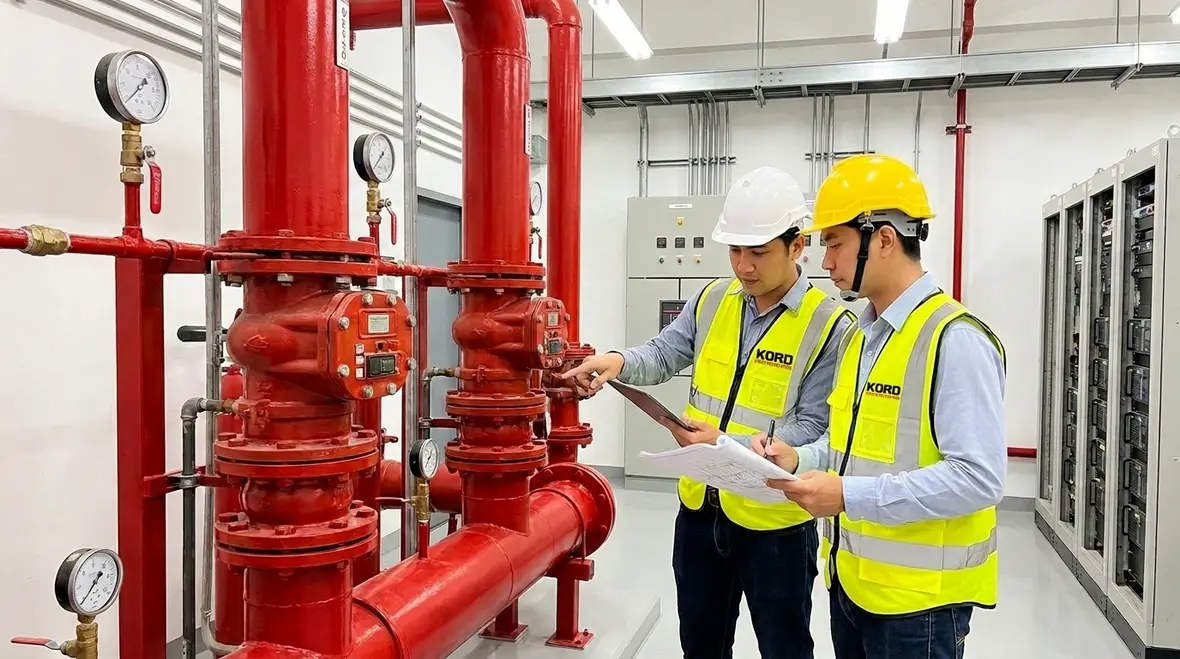
Kord Fire Protection brings deep expertise in designing testing regimes for complex facilities and translating NFPA 4 equivalency into practical action. The company coordinates design reviews testing scheduling and reporting and it works with clients to assemble the evidence package needed for approvals. With knowledge of Australian standards and real world operating conditions Kord Fire Protection can guide projects from planning through to documentation ensuring clarity and compliance every step of the way. The partnership is built on reliability clear communication and a calm steady approach even when projects face tight timelines and tough constraints.
Applying Equivalency in Australian Industry
Industrial plants retail complexes and commercial offices across Australia gain by using these equivalency methods to keep critical protection systems active during redevelopment refurbishment or when unique site conditions limit standard testing. The approach aligns with ongoing safety goals while accommodating equipment availability and site access. Teams can leverage controlled simulations and evidence from prior testing to reassure stakeholders and regulators. In short NFPA 4 equivalency methods can help keep essential services protected without slowing progress or inflating costs.
At a Glance
- Benefits of equivalency methods reduced downtime
- Clear acceptance criteria and documented evidence
- Flexibility to fit site constraints
- Auditable trail for audits and inspections
- What to prepare facility drawings and system data
- Previous test reports and maintenance records
- Selected testing methods and approvals
- Timeline budgets and stakeholder sign offs
FAQ
Conclusion
If your facility in Australia seeks a reliable path through NFPA 4 Section 1.5 equivalency to maintain strong fire protection the team at Kord Fire Protection stands ready. They bring clear communication disciplined planning and proven tests that fit real world sites. Reach out today to explore how equivalency methods can keep your operations safe on time and on budget.

Join Our Newsletter!
Get the latest fire safety tips delivered straight to your inbox From our Newsletter.