
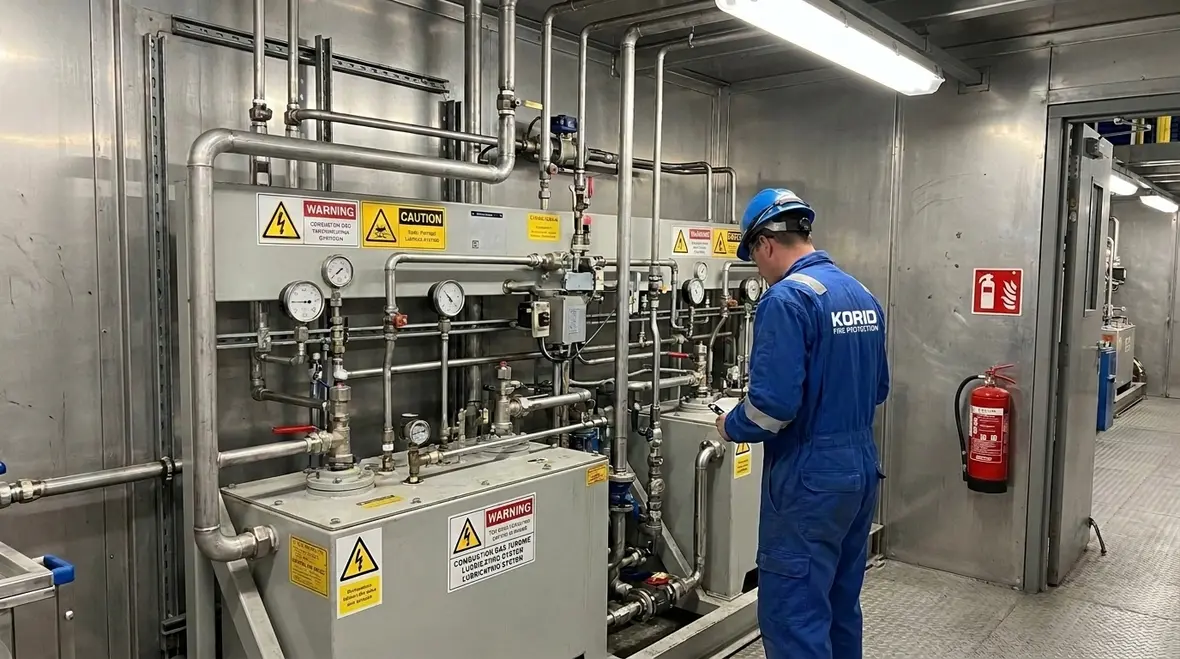
NFPA 37 Section 7.2: Lubricating Systems for Combustion Gas Turbines
Quick Answer
NFPA 37 Section 7.2 sets safety and reliability expectations for lubricating systems protecting combustion gas turbines. It focuses on preventing fire and heat hazards from leaks, ensuring proper materials and arrangements, and maintaining system integrity through inspection and upkeep. These requirements support safer operation in commercial facilities.
For teams managing broader machinery and special hazard fire risks, it helps to connect this topic with machinery fire systems so lubricating oil hazards are not treated like some random side quest.
Why NFPA 37 gas turbine lubricating system requirements matter in the real world
Combustion gas turbine lubricating systems sit close to high energy operating zones, and even small seal failures can escalate into spray, pooling, or ignition risk. For facilities managing turbines in industrial, commercial, or retail power generation applications, the NFPA 37 gas turbine lubricating system requirements in Section 7.2 provide enforceable guardrails around system design and ongoing maintenance controls.
Compliance is not limited to initial installation. Fire safety outcomes depend on how crews monitor pressure, temperature, level, filtration, leak detection, and protective shutdown strategies over the equipment lifecycle.
What Section 7.2 covers: system integrity, leak control, and protection
NFPA 37 Section 7.2 addresses lubricating systems that support turbine operation, with an emphasis on minimizing the consequences of abnormal conditions. In practical terms, the standard drives facilities to treat lubricants as both an operational resource and a potential ignition fuel if released improperly.
1) Lubricant containment and leak prevention
The primary compliance intent centers on preventing unintended discharge. Facilities should expect design and inspection expectations that support the safe containment of oil in:
- Reservoirs and sumps
- Piping runs and hose assemblies
- Bearings, seals, and breather arrangements
- Heat exchanger and cooler connections
Common commercial installation issues include degraded gaskets, incorrectly routed drain lines, loose fittings on vibration prone segments, and missing drip management at transition points between equipment modules.
2) Heat and ignition source management
A lubricating failure becomes high risk when atomized oil or oil mist contacts hot surfaces, electrical equipment, or other ignition sources. Section 7.2 expectations support layout and component selection that reduce likelihood of oil contacting ignition hazards during normal and foreseeable abnormal states.
Facilities typically need documented controls for hot surfaces located near:
- Exhaust and hot gas duct interfaces
- Bearings with high operating temperatures
- Electrical enclosures and motor starters
- Couplings and rotating assemblies
3) Arrangements that reduce fire growth
Even when containment measures fail, system configuration should support limited spread. Facilities frequently address this through proper drain routing, controlled collection, and use of guards or shields to reduce direct impingement. Correct drainage prevents oil from migrating to broader plant areas where it can feed larger fires.
Operational controls: daily behaviors that make compliance real
Section 7.2 compliance outcomes depend on operational discipline. Turbine lubricating systems respond to changing loads, ambient conditions, and maintenance history. The highest risk periods often occur after maintenance, during startup and shutdown, or following abnormal operating events.
Startup checks that prevent “small leak, big incident” scenarios
Commercial facilities should standardize pre start and initial run checks that confirm the system behaves as designed. These checks commonly include:
- Oil level verification against reservoir sight gauge criteria
- Leak inspection at seals, flanges, and hose connections
- Temperature and pressure stability monitoring
- Filter differential pressure readings and alarms
- Verification of cooler operation and flow direction
If the system shows recurring pressure fluctuations, rising differential pressure, or persistent odor and visible residue, facilities should treat this as a fire risk indicator, not just an operational inconvenience.
Shutdown and cooldown discipline
After turbine trips, oil circulation patterns and seal behavior can change. Facilities should avoid rushing the return to normal configuration. Incorrect handling of drains, blocked vents, or bypassed filters can leave oil in unintended locations. This is a frequent gap in commercial maintenance turnover.
Inspection, testing, and maintenance: what crews must document
Section 7.2 is closely tied to ongoing system condition. Documentation is critical for demonstrating that lubricating systems remain fit for service and that any deterioration is corrected before it becomes a fire incident.
Inspection focus areas for NFPA 37 gas turbine lubricating system requirements
Facilities typically prioritize verification of the following:
- Condition of seals, gaskets, and O rings at bearing and piping interfaces
- Integrity of hoses and flexible connections, including end fittings and clamps
- Verification of drain lines and collection paths remain unobstructed
- Evidence of oil mist, seepage, or residues around breather and vent points
- Filter condition and differential pressure trends that indicate restriction
- Correct operation of oil coolers and heat exchanger connections
Common failure points that trigger compliance gaps
In real commercial environments, these issues frequently undermine lubricating system safety:
- Uncontrolled oil accumulation due to misrouted drains
- Corrosion or cracking in reservoir welds and drain ports
- Incorrect torque on flange joints after service, leading to seepage
- Overlooked vibration loosening of fittings and clamps
- Missing or degraded protective covers that allow oil to contact hot surfaces
A practical compliance program links these failure points to corrective work orders and verifies that repairs restore original containment and drainage pathways.
How Kord Fire Protection supports Section 7.2 compliance
Kord Fire Protection helps commercial facilities manage turbine fire safety as an ongoing program rather than a one time checkbox. The service model focuses on inspection readiness, documentation quality, and risk based maintenance coordination so that lubricating system hazards are identified early.
For facilities seeking structured assistance around code aligned fire protection and turbine adjacent hazards, Kord Fire Protection can support ongoing evaluation and compliance planning. Learn more through fire protection services in Southern California.
Frequently Asked Questions
Get a compliance ready turbine lubrication safety plan
Ensure your turbine lubricating system program supports NFPA 37 Section 7.2 through inspection planning, documentation, and corrective maintenance verification. Contact Kord Fire Protection to evaluate your current readiness and align ongoing controls with real operational risk. This approach reduces surprises during audits and, more importantly, lowers the chance that oil release becomes an ignition event.

Join Our Newsletter!
Get the latest fire safety tips delivered straight to your inbox From our Newsletter.



