
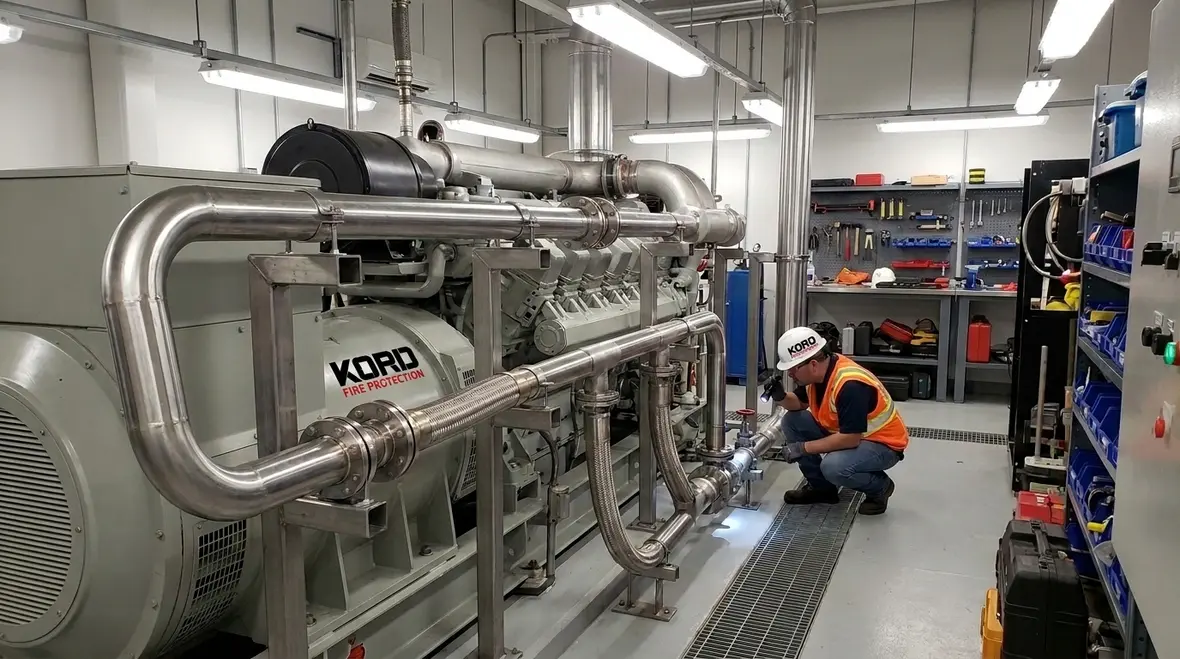
NFPA 37 Section 7.3: Lubricating Oil Piping Requirements for Engines
Quick Answer: NFPA 37 Section 7.3 sets the minimum requirements for lubricating oil piping used with engines. It focuses on safe materials, proper routing, secure connections, and design choices that reduce leak and fire risk while supporting inspection, maintenance, and reliable engine operation.
NFPA 37 lubricating oil piping requirements engines is not a theoretical code topic. In real commercial and industrial facilities, the lubricating oil system becomes a common pathway for leaks that can quickly escalate into slip hazards, smoke, and ignition if hot surfaces or fuel sources are present. This article explains how Section 7.3 is applied in practice, what inspectors typically look for, where installations fail, and what ongoing maintenance teams should document to remain compliant.
Facilities dealing with engine room hazards and suppression planning can also explore generator room fire suppression options for broader context on how fire risk builds around heat, fuel, electrical load, and confined spaces.
What NFPA 37 Section 7.3 Covers for Lubricating Oil Piping
NFPA 37 Section 7.3 addresses lubricating oil piping requirements associated with engines. The intent is to maintain a piping system that can withstand normal operating pressures, temperature exposure, vibration, and mechanical abuse while minimizing the likelihood of oil release. For facility owners, this means the design and installation must enable safe operation and practical inspection and repair without compromising protection.
In commercial applications, such as data centers, wastewater plants, hospitals, and retail backup power environments, the lubricating system often sits near ignition sources including exhaust components, electrical enclosures, and hot engine surfaces. A small leak can be enough to spread onto hot areas. Section 7.3 requirements support leak resistance through appropriate construction and installation practices.
Key Compliance Areas: Materials, Routing, and System Integrity
1) Piping materials and suitability
Code compliance begins with using piping and components that are suitable for lubricating oil service. The system must resist corrosion, degradation, and loss of strength under expected operating conditions. Facility teams commonly encounter non compliant substitutions during repairs, such as using incompatible fittings, incorrect wall thickness, or improvised adapters. These changes may not fail immediately, but they frequently contribute to long term seepage and gasket breakdown.
2) Routing that limits damage and exposure
Routing should protect piping from physical impact, abrasion, and undue exposure to heat sources. A recurring compliance challenge occurs where piping passes near maintenance walkways or where stored materials are later added around the engine footprint. Over time, these conditions increase the likelihood of impact damage or restrict the ability of technicians to inspect the system.
3) Secure connections and leak prevention
Section 7.3 expectations require connections designed and installed to resist loosening and leakage. Vibrating equipment, thermal cycling, and oil pressure fluctuations stress joints. Common failure points include poorly aligned connections, under torqued fittings, degraded seals, and replacement of serviceable components with generic parts that do not match original specifications.
Installation Practices That Affect Inspection Outcomes
Even if the right piping is selected, installation quality determines whether a system stays compliant over its life cycle. NFPA 37 lubricating oil piping requirements engines are often verified through practical field checks that correlate to real hazards: leak potential, inability to inspect, and routing that places oil at risk of contacting ignition sources.
Support, anchorage, and vibration control
Proper support reduces stress on fittings and minimizes movement that loosens connections. In commercial facilities, support deficiencies typically appear after repairs, equipment replacements, or re alignment of adjacent components. When technicians reinstall piping quickly, they may reuse worn hardware or omit required alignment steps, which can lead to micro leaks that grow over time.
Clearances and accessibility for maintenance
Sections related to piping and associated components generally require configurations that allow inspection and service. In practice, this means oil lines should not be buried behind permanent obstructions, blocked by cable trays, or concealed behind fixed panels that prevent visual checks. Maintenance access that looks convenient during initial installation often becomes problematic after facility upgrades.
Protection from mechanical damage
Engine rooms and generator enclosures may include moving parts, maintenance traffic, and stored materials. Areas subject to impacts require protection strategies that support both safety and ongoing inspection. Where protection is missing, piping may develop wear points that are difficult to detect until a leak becomes visible.
Operational Failure Points: Why Lubricating Oil Lines Leak
Facilities do not usually experience oil line leaks without indicators. The most common drivers include maintenance practices, material incompatibility, and aging components. Teams should treat early signs as actionable data points rather than waiting for a visible event.
Gasket and seal deterioration
Seals can harden or swell based on oil chemistry and temperature exposure. A frequent compliance issue occurs when an incorrect seal or seal material is used during a repair. That substitution can create seepage at connections, which may remain small but can still create ignition risk.
Connection loosening from thermal cycling and vibration
Engines cycle through operating ranges. Thermal expansion and contraction repeatedly stresses joints. If supports do not maintain alignment or if connections are not installed to correct tolerances, leakage can develop at the fitting interface.
Corrosion and contamination
Corrosion can compromise wall integrity or degrade protective coatings. Contamination inside the piping, including debris introduced during service, can increase wear at components and lead to leaks at downstream interfaces.
Commercial Compliance Workflow: Inspections, Documentation, and Maintenance
NFPA 37 Section 7.3 requirements are strongest when embedded into a facility process. Kord Fire Protection supports owners and operators with practical compliance planning that aligns inspection readiness with real maintenance cycles, including documentation that shows what was checked, where issues were found, and how corrective actions were verified.
What a strong inspection program looks like
- Visual checks of all accessible lubricating oil piping runs, joints, and fittings for seepage, residue, and signs of oil migration.
- Verification that supports, anchorage, and alignment are consistent with installation intent and manufacturer specifications.
- Confirmation that routing provides safe clearances and maintains accessibility for ongoing maintenance.
- Review of recent repairs to ensure replacement parts match intended materials and connection types.
Maintenance that protects compliance over time
Maintenance teams should treat lubricating oil piping like a safety critical system rather than a routine ancillary line. Best practice includes controlled part selection, trained installation procedures, and post repair verification. Where records are incomplete, facilities often struggle to prove due diligence during audits or insurance reviews.
For additional guidance on generator and engine room fire risk controls, facility leaders can reference Kord Fire Protection resources here: Kord Fire Protection.
Frequently Asked Questions
Next Steps for Owners and Operators
Ensure NFPA 37 engine lubricating oil piping systems stay compliant through a documented inspection and maintenance workflow. Kord Fire Protection can help commercial facilities evaluate piping installation condition, identify common leak and access issues, and support ongoing fire risk reduction efforts. Contact Kord Fire Protection to schedule a compliance focused assessment and build a maintenance plan that aligns with your operating schedule and audit readiness.
If your facility is also reviewing suppression strategy in machinery or engine related spaces, Kord offers broader fire suppression system services that fit naturally into inspection readiness and long term risk reduction planning.

Join Our Newsletter!
Get the latest fire safety tips delivered straight to your inbox From our Newsletter.



