
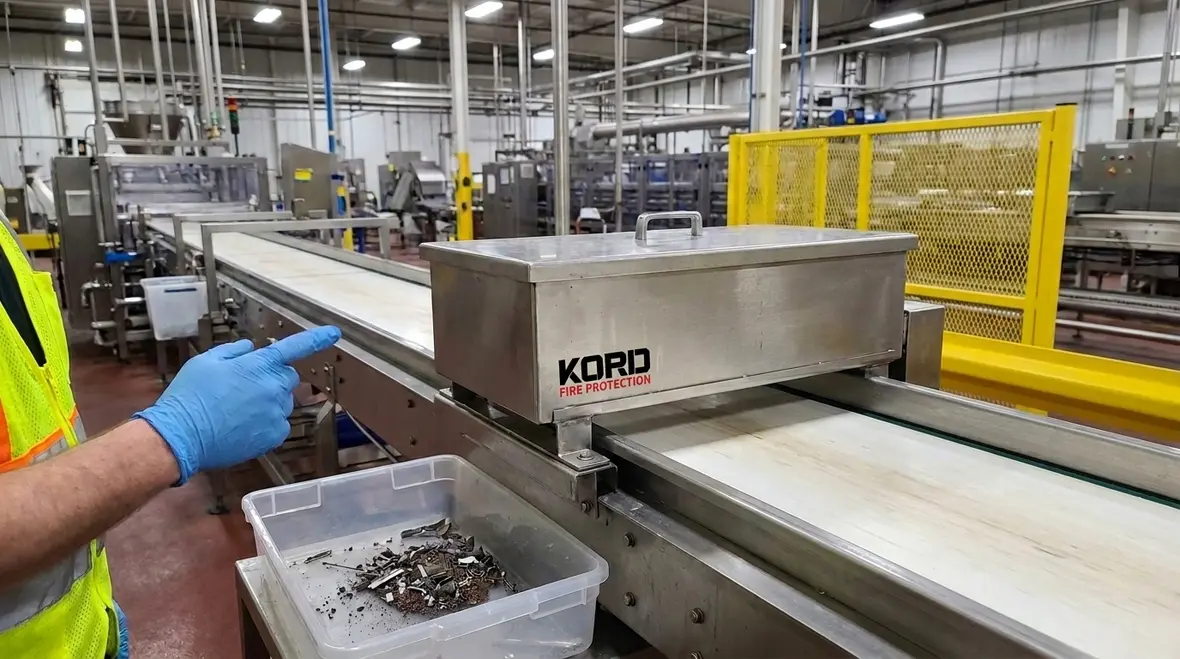
NFPA 36 Section 6.5: Tramp Metal Control in the Process
Quick Answer
NFPA 36 Section 6.5 requires tramp metal control measures that prevent ferrous metal contamination from entering and damaging process equipment. Facilities must implement detection or removal methods, verify effectiveness, and maintain controls so the risk of ignition and equipment damage remains controlled.
Facilities working through broader combustible dust and industrial protection issues may also want to review dust fire hazards in industrial facilities for related context on how particulates, equipment, and ignition risks tend to gang up on the same process lines.
What NFPA 36 Section 6.5 is trying to prevent
NFPA 36 governs fire protection in commercial food processing facilities, where combustible dusts and residues can elevate ignition risk. Section 6.5 focuses on tramp metal control in the process because metal fragments can create high-energy ignition sources or cause mechanical damage that leads to unsafe operating conditions.
In practice, tramp metal incidents tend to fall into predictable pathways: a metal object enters a receiving system, passes through milling or conveying equipment, contacts rotating components, and generates sparks, hot surfaces, or elevated temperatures. Those ignition sources may contact dust accumulations, product residue, or liberated dust clouds.
This is why NFPA 36 tramp metal control requirements emphasize not just installing equipment, but maintaining it so the control remains dependable over time. Commercial facilities often discover that controls drift out of effectiveness due to build up, misalignment, calibration errors, bypass conditions, or poor housekeeping.
Where tramp metal enters and how it travels through processing lines
Tramp metal control failures typically occur at points where product or bulk materials move between receiving, storage, feeding, conveying, and processing. Common entry points include:
- Incoming raw materials, ingredients, or packaging components that are not fully screened.
- Conveyors and transfer points where belt tears, damaged skirting, or worn liners create pathways.
- Hoppers, screw feeders, and pneumatic lines that can allow incidental metal fragments to migrate.
- Recycling or rework streams where contamination control does not match new product standards.
Once metal fragments pass into the process, they often continue downstream until stopped by a detection or separation device. Each conveyor change of direction, each hopper drop, and each mechanical transfer creates an opportunity for the metal to impact equipment surfaces.
Operationally, a robust tramp metal program treats the process as a system and ensures the control strategy aligns to the highest risk locations, not only the easiest installation points.
Core compliance expectations in Section 6.5: detection, removal, and assurance
NFPA 36 Section 6.5 requires facilities to use tramp metal control measures that reduce the likelihood that metal fragments enter or remain in the process. While implementations vary by process design, the compliance theme remains consistent: implement a control method that can detect or remove tramp metal and establish processes that confirm it continues to work as intended.
1) Tramp metal detection and separation methods
Facilities commonly use one or more of the following control approaches, selected based on material type, line configuration, and operating conditions:
- Magnetic separation using permanent magnetic assemblies or magnet bars in transfer points.
- Ferrous metal detection with metal detectors integrated into conveying systems.
- Combination systems that pair detection with removal actions, such as diverting rejected material.
Proper placement matters. A device that sits after a critical mechanical component may not prevent the ignition mechanism. Devices typically must protect the equipment most exposed to spark generation or hot surface contact during impact events.
2) Controlled response when tramp metal is detected
Compliance is not only about sensing. A practical control includes a defined operational response. That response may involve diverting the affected material stream, stopping the line when required, inspecting the capture components, and returning equipment to service only after confirmation that controls and mechanical conditions are safe.
Facilities often fail compliance here due to vague internal procedures, inconsistent operator response, or bypassing interlocks during short staffing and line maintenance. A sound process defines responsibility, response steps, and return to operation criteria.
3) Assurance through inspection, maintenance, and verification
NFPA 36 tramp metal control requirements focus on ongoing effectiveness. That includes routine inspections to verify the control remains unobstructed and aligned, plus maintenance that prevents drift in performance.
Typical problem conditions include:
- Magnet assemblies loading with product, buildup, or residue that reduces capture effectiveness.
- Metal detector sensitivity shifting due to mounting vibrations, poor grounding, or environmental interference.
- Mechanical diverters or reject gates sticking, resulting in incomplete removal.
- Conveyor misalignment that changes the metal travel path and bypasses capture zones.
Kord Fire Protection supports commercial compliance by aligning inspection and documentation practices with real facility maintenance realities, helping teams reduce the probability that tramp metal controls degrade silently between scheduled checks.
Inspection and testing practices that hold up in real audits
Good compliance documentation connects the equipment to the risk and demonstrates that the control method stays effective. Inspections should verify both physical condition and functional readiness, using repeatable criteria.
What to inspect during routine checks
- Physical condition: magnet bar cleanliness, secure mounting, and integrity of housings.
- Clearance and alignment: correct positioning relative to the material flow path.
- Residue and buildup: verify areas around the control do not accumulate combustible dust or product residue that could contribute to ignition risk.
- Reject components: confirm diverters, gates, and actuators move freely when called to remove material.
Functional verification and common failure points
Functional testing typically includes verification that the detection signal triggers the intended response. Common failure points include:
- Calibration drift leading to missed detection events.
- Wiring or sensor issues causing intermittent alarms or failure to trigger rejection.
- Operator practices that silence alarms or restart without completing inspection.
Facilities benefit from an integrated approach: combine metal control checks with combustible dust housekeeping verification so that metal detection performance and overall ignition source prevention remain connected.
For additional practical context on inspection-driven dust hazard reduction, facilities often pair tramp metal controls with dust control fundamentals and safe work practices. If your facility uses other NFPA processes, consider reviewing related guidance from commercial fire safety audits to support a unified compliance program that spans detection, maintenance, and documentation.
How commercial facility operations break tramp metal controls (and how to prevent it)
Tramp metal controls frequently fail because the system is treated as a one time installation instead of a continuing compliance task. The most common operational breakdowns include:
- Deferred maintenance: cleaning and adjustment are delayed due to production pressure.
- Inadequate training: operators do not follow consistent response steps when alarms occur.
- Process changes: new products, new particle sizes, or line modifications shift material flow and bypass device coverage.
- Bypass behaviors: temporary bypasses become long term due to recurring nuisance alarms.
- Housekeeping disconnect: teams clean dust hazards but neglect the device interface where residue reduces effectiveness.
A resilient compliance program includes line change management. Any process redesign that modifies flow paths, conveyor speeds, hopper configurations, or reject routing should trigger a review of the tramp metal control scheme and its verification plan.
Kord Fire Protection can help commercial teams tighten these feedback loops through inspections, testing coordination, and practical documentation support that reduces audit friction and improves operational reliability.
Implementation checklist: meeting NFPA 36 tramp metal control requirements without surprises
Use this checklist to align day to day operations with Section 6.5 intent:
- Map risk points: identify locations where tramp metal could contact equipment or create ignition sources.
- Select appropriate control method: magnet separation, metal detection, or combined systems aligned to line design.
- Define response procedures: steps for alarm conditions, inspection, rejection, and safe return to operation.
- Set inspection frequency: routine checks that include cleanliness, alignment, residue control, and mechanical readiness.
- Verify functional performance: confirm detection triggers rejection as intended using documented methods.
- Control changes: review and re verify after product or equipment modifications.
- Maintain records: document inspections, corrective actions, and verification results to support defensible compliance.
When facilities consistently execute this workflow, NFPA 36 tramp metal control requirements become operationalized rather than treated as a periodic compliance exercise.
Frequently Asked Questions
Conclusion and Call to Action
NFPA 36 tramp metal control requirements succeed only when detection, removal response, and verification remain reliable in day to day operations. Kord Fire Protection helps commercial, industrial, and retail facilities strengthen compliance through inspection support, practical testing coordination, and documented maintenance practices. Contact Kord Fire Protection today to evaluate your tramp metal control points, confirm functional readiness, and build a defensible program for ongoing Section 6.5 compliance.

Join Our Newsletter!
Get the latest fire safety tips delivered straight to your inbox From our Newsletter.



