
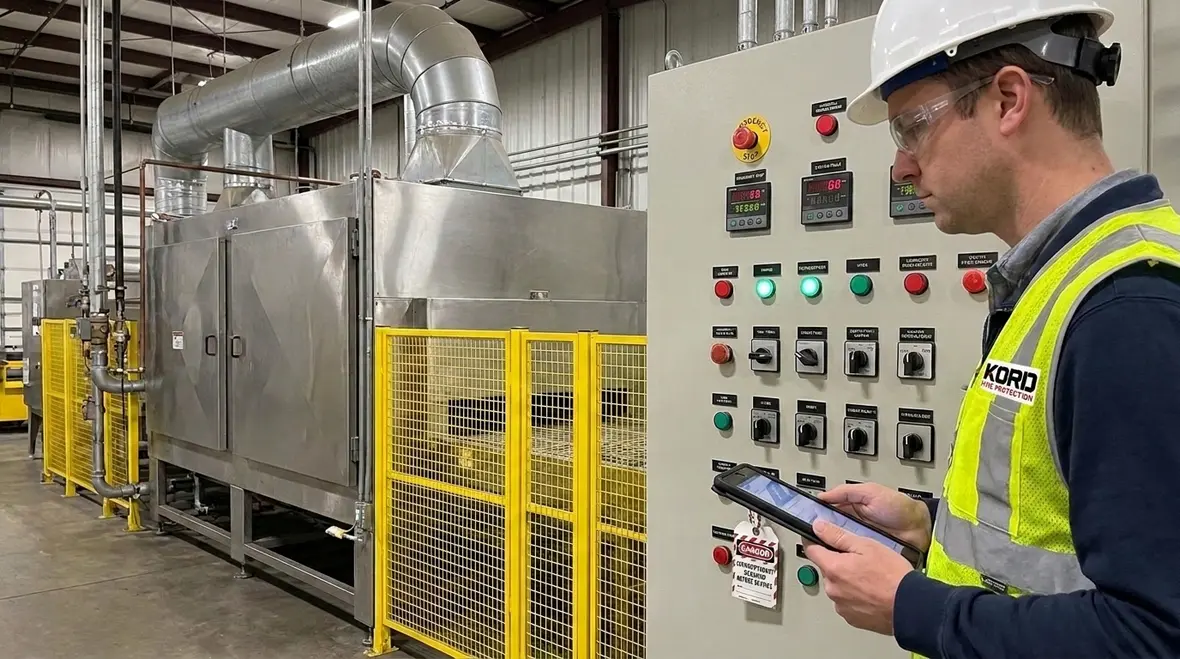
NFPA 36 Section 6.6 Dryer Shutdown Requirements: Compliance Guide for Commercial Facilities
Quick Answer
NFPA 36 Section 6.6 sets expectations for how dryers are brought to a safe condition during abnormal operation and shutdown scenarios. This includes controlling heat and fuel sources, managing airflow and exhaust, and ensuring hazards do not continue after shutdown.
Facilities that need broader inspection support can also review fire protection services in Southern California for help coordinating inspections, repairs, installations, and emergency support.
Why NFPA 36 dryer shutdown requirements matter in real operations
Dryers in commercial, industrial, and retail related food and grain processing environments concentrate fuel or heat energy with combustible dust, lint, and residual product. NFPA 36 dryer shutdown requirements focus on preventing a “still running hazard” after an operator initiates shutdown, during safety device trips, or when systems lose normal operating conditions.
In practical terms, compliance failures often appear when the facility assumes “shutdown” means “everything stops.” Section 6.6 is more specific: it expects controlled termination of drying energy and safeguards to prevent continued ignition sources, poor purge behavior, or uncontrolled accumulation of heat or combustible residue.
What Section 6.6 typically requires: a functional shutdown mindset
Facilities should treat Section 6.6 as a functional safety requirement rather than a single switch action. NFPA 36 dryer shutdown requirements commonly translate into the following operational objectives:
- Rapid removal of the ignition and heat source to stop drying input when shutdown occurs due to a trip or emergency condition.
- Safe handling of fuel and burners, including preventing reignition or continued combustion after the shutdown command is received.
- Control of air and exhaust behavior so the system does not create conditions that sustain smoldering or redistribute combustible dust.
- Consistency during abnormal events, including sensor failures, blocked airflow conditions, or abnormal temperature rise.
- Defined shutdown sequencing that matches the dryer’s operating hazards and the protection strategy installed.
Commercial operators often struggle when shutdown sequences differ between “normal stop” and “safety shutdown.” Inspectors look for consistent protective outcomes across all trip paths, not just during routine stops at the end of a shift.
Shutdown controls and interlocks: common mechanisms and failure points
Most dryer systems integrate multiple layers of controls. NFPA 36 dryer shutdown requirements are difficult to meet when interlocks are bypassed, miswired, or altered after maintenance.
1) Burner and heat source termination
Dryer designs vary, but compliance expectations generally include prompt cessation of burner firing. Common failure points include:
- Delayed burner shutdown due to control logic that continues a run cycle longer than safety devices allow.
- Improper reset behavior where operators must “acknowledge” a fault, but the system may still permit heat for too long.
- Misinterpretation of burner enable and proof signals, resulting in heat continuation even after a shutdown command.
2) High temperature and airflow protection behavior
Airflow and temperature sensors usually drive shutdown. In enforcement, the question becomes whether the protective action is reliable and repeatable. Typical compliance gaps include:
- Setpoints that drift because calibration intervals are not controlled.
- Blocked ducting or partially failed fans that create false readings or delayed shutdown.
- Control cabinet modifications that change input interpretation without updating documentation.
3) Purge and residual heat management
Dryers may require specific purge or cool down behavior to avoid leaving hot surfaces or combustible residues in an unsafe condition. Where systems rely on airflow to maintain safety during shutdown, facilities must confirm:
- Shutdown sequences do not prematurely stop airflow when residual ignition sources still exist.
- Purge logic does not keep fans running after hazards have been controlled beyond safe limits.
- Fans and dampers respond as intended during power loss and commanded trips.
4) Dust handling after shutdown
Dryer shutdown does not end dust risk. Operational residues, accumulated lint, and disturbed dust during access can create ignition potential. Facilities should confirm that shutdown procedures coordinate with housekeeping and dust control measures, especially when inspectors observe elevated dust levels around discharge areas.
Inspection, testing, and documentation expectations
NFPA 36 dryer shutdown requirements are only enforceable when the facility can demonstrate implementation, testing, and ongoing reliability. Inspectors and insurers generally expect proof through documentation and observed functional checks.
What auditors commonly request
- As built and maintained shutdown sequence documentation, including normal stop, emergency stop, and fault trip scenarios.
- Control loop calibration records for temperature and airflow sensors that initiate shutdown.
- Maintenance logs showing burner service, fan service, damper inspection, and interlock verification.
- Records of functional testing, including evidence that trip conditions result in the required safe state.
Where facilities commonly fail audits
- Testing occurs after major repairs, but not on a defined interval for routine compliance.
- Technicians replace components with “equivalent” parts without confirming control logic response.
- Written procedures do not match field wiring, because upgrades occurred without updated documentation.
- Bypasses exist for commissioning or troubleshooting but remain in place due to operational pressure.
To strengthen compliance outcomes, Kord Fire Protection supports facilities with practical inspection readiness strategies and ongoing fire protection services, including documentation support and testing coordination for process safety devices. For a broader overview of inspection support, see fire protection inspections.
Operational best practices to make shutdowns reliable
Facilities that succeed with NFPA 36 dryer shutdown requirements typically implement a repeatable management system rather than relying on training alone.
- Standardize shutdown modes so operators understand the difference between normal stop, emergency stop, and trip behavior.
- Lock out unsafe bypasses and require documented authorization for any temporary overrides.
- Control setpoint drift through disciplined calibration intervals and change control for sensor replacements.
- Verify fan and damper performance because airflow failures can create delayed protective action.
- Integrate housekeeping with shutdown so residue removal follows safe shutdown and allows inspection access.
- Confirm contractors follow the same sequence when servicing controls, burners, ductwork, or exhaust systems.
Frequently Asked Questions
Conclusion and call to action
NFPA 36 dryer shutdown requirements demand more than a single stop button. Facilities should validate shutdown sequences for heat termination, airflow and purge behavior, sensor reliability, and post shutdown hazards. If your dryer controls, maintenance history, or documentation are inconsistent, contact Kord Fire Protection to assess shutdown reliability, strengthen inspection readiness, and support ongoing testing and maintenance for commercial compliance.

Join Our Newsletter!
Get the latest fire safety tips delivered straight to your inbox From our Newsletter.



