
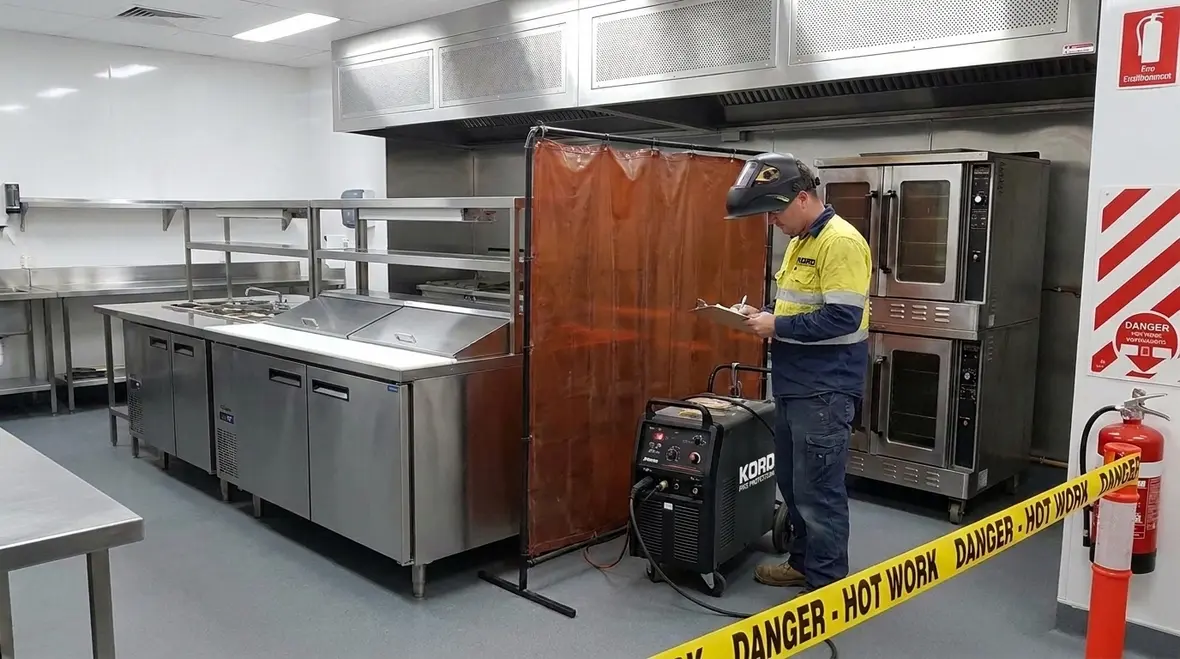
NFPA 36 Section 6.7: Hot Work in Preparation and Meal Areas
Quick Answer: NFPA 36 Section 6.7 sets practical controls for conducting hot work in meal and preparation areas. It focuses on eliminating ignition sources, managing combustibles, verifying safe conditions before and after work, and maintaining documented safeguards.
Facilities reviewing hot work controls in food environments should also consider broader commercial kitchen fire safety strategies so the permit process, suppression planning, and day to day housekeeping actually work together.
What “hot work” and “meal areas” mean under NFPA 36
NFPA 36 recognizes that environments where food is prepared and served create unique fire risk patterns. Heat-producing operations such as welding, cutting, brazing, torch-applied work, grinding, and similar activities can ignite grease deposits, combustible packaging, cardboard, trash, and even hidden combustibles behind equipment. Section 6.7 applies specifically when hot work is performed in preparation and meal areas, which typically include spaces where food is staged, prepared, cooked, assembled, or plated.
For operators, the compliance challenge is not only the hot work itself. The main risk comes from the transfer of heat, sparks, and slag to combustibles that are overlooked during routine cleaning or rearranged during maintenance. This makes the NFPA 36 hot work meal preparation requirements heavily dependent on pre-job controls, staff coordination, and evidence of continuous hazard management.
Hot work meal preparation requirements start before the first spark
Effective compliance begins with how the facility prepares the space. NFPA 36 Section 6.7 expects measures that prevent ignition and address both visible and hidden hazards. In real commercial operations, common failure points include incomplete removal of combustibles, inadequate isolation of ventilation systems, and work authorizations that do not reflect the actual conditions on the day of work.
1) Remove combustibles or control exposure
Facilities typically handle grease-laden surfaces, paper products, and packaging material that can fuel a fire rapidly. The goal is to either remove combustibles from the hot work area or prevent ignition by using approved protective barriers and coverings. Barriers must be capable of containing sparks and slag and must be properly secured so they do not shift when equipment is bumped or carts are moved.
2) Protect grease, dust, and residues
Preparation and meal areas often include ventilation hoods, ducts, fryers, ovens, warmers, and conveyor or mixing equipment. Grease vapor and deposits can be ignited by embers that settle on surfaces during cutting or grinding. Inspections should confirm that residues are not left behind on horizontal surfaces, in corners, on duct access panels, or above ceiling components where smoke can smolder before detection.
3) Verify safe conditions before authorization
A compliant hot work permit and hazard assessment should reflect the specific job scope. For example, cutting near electrical enclosures requires electrical isolation planning. Work involving piping requires verification of product lines and residual vapors. The assessment should be documented, accessible to the crew performing the work, and updated if the facility conditions change.
For practical implementation support in commercial and industrial settings, Kord Fire Protection helps facilities align hot work procedures with inspection expectations and maintenance realities. This reduces drift between written policy and field conditions.
During hot work: controls that prevent spread and early detection failures
Once work begins, Section 6.7 is designed to interrupt common ignition pathways. The most significant issues typically occur during the “in between” moments: when sparks travel beyond the work envelope, when ventilation draws heat toward combustible zones, or when fire watches are assigned without clear authority or training.
Contain sparks, slag, and hot debris
Hot work in preparation and meal areas typically requires physical controls to manage sparks and slag. Work surfaces, nearby equipment, and structural openings must be safeguarded. A common breakdown occurs when protective covers are applied only to the immediate workbench but not extended to areas where slag can land after bouncing.
Manage ventilation and airflow paths
Ventilation systems can move heat and combustion products. If the facility uses exhaust hoods or make-up air, the hot work plan must address airflow patterns so that embers do not migrate into ductwork, filter housings, or other concealed spaces. Where shutting down ventilation is not feasible, controls must still demonstrate that the system will not spread ignition sources.
Provide an effective fire watch and monitoring
NFPA 36 anticipates continuous readiness. Fire watch responsibilities should be clearly defined, including what to look for, how often to inspect, and when to escalate. In operational terms, the fire watch should be empowered to stop work if conditions change. Monitoring should include areas where ignition could occur after sparks settle, not only the immediate weld zone.
After hot work: confirmation, cooldown, and written evidence
Post-work requirements often fail because the job ends but residual heat and smoldering conditions can persist. NFPA 36 Section 6.7 emphasizes that hazards do not always stop at tool shutdown. Facilities should conduct a thorough check of the hot work area and adjacent zones for signs of ignition or heat transfer.
Reinspection for hidden smoldering
Even when visible sparks stop, embers can lodge in seams, behind equipment panels, or inside gaps around piping and cable trays. The post-work inspection should be systematic, using a documented approach that matches the work location and the surrounding combustible load. This is especially critical in meal preparation zones where grease and dust accumulation can increase fire growth potential.
Document outcomes for compliance defensibility
Records should confirm that safety checks were completed and that the space is returned to normal operations without unresolved hazards. A best practice is to align permit closure to the facility’s documented process rather than informal sign offs. For ongoing program strength, Kord Fire Protection can support audits and maintenance alignment that improves consistency across shifts and contractors.
Common compliance gaps in commercial kitchens, retail foodservice, and industrial breakrooms
Many organizations apply the same hot work controls from one facility type to another without accounting for layout, combustible loading, and maintenance frequency. The result is uneven compliance with NFPA 36 hot work meal preparation requirements. The following gaps commonly appear during field reviews and operational audits.
Gap 1: inadequate removal of combustibles
Combustibles such as cardboard packaging, cleaning rags, wood pallets, and plastic wrap may remain in adjacent lanes or stored behind equipment carts. Even if the work is on a wall or ceiling, sparks can fall into these storage areas.
Gap 2: protective coverings that do not account for slag bounce
Thin sheeting or temporary barriers can tear, sag, or shift. Barriers must be sized and secured to account for movement of personnel and the trajectory of sparks and slag.
Gap 3: permits that do not match the day’s actual hazards
Changes in equipment configuration, cleaning status, or work proximity to grease laden surfaces can invalidate the original assumptions. Updated hazard controls are necessary when conditions change.
Gap 4: ventilation not addressed in the hazard assessment
Exhaust systems can carry embers into filters and duct interiors. If the plan does not control airflow paths, the risk shifts away from the immediate work zone where detection may be delayed.
Gap 5: fire watch not trained or not empowered
A fire watch that cannot stop the work or does not follow a structured inspection rhythm can miss early signs. Training and authority matter as much as equipment.
How Kord Fire Protection supports NFPA-aligned hot work programs
Commercial facilities frequently maintain hot work policies on paper while day to day operations introduce drift. Kord Fire Protection supports a stronger compliance posture by helping organizations connect NFPA expectations to real maintenance, inspection, and operational workflows. This includes program reviews, documentation readiness, and risk based recommendations that support safer execution of hot work in preparation and meal areas.
If your facility is reviewing a hot work procedure or preparing for an inspection, Kord Fire Protection can assist with practical planning and ongoing compliance support. For related guidance on fire safety fundamentals, see Kord Fire Protection services.
Frequently Asked Questions
Conclusion and next step
Hot work in preparation and meal areas carries a preventable ignition risk. Facilities should confirm that their NFPA 36 hot work meal preparation requirements are implemented through documented planning, combustible control, effective monitoring, and post-work verification. Conduct a procedure audit, verify contractor alignment, and close gaps before the next job. For stronger, inspection-ready support, contact Kord Fire Protection to help maintain compliance through practical program review and ongoing fire safety services.

Join Our Newsletter!
Get the latest fire safety tips delivered straight to your inbox From our Newsletter.



