
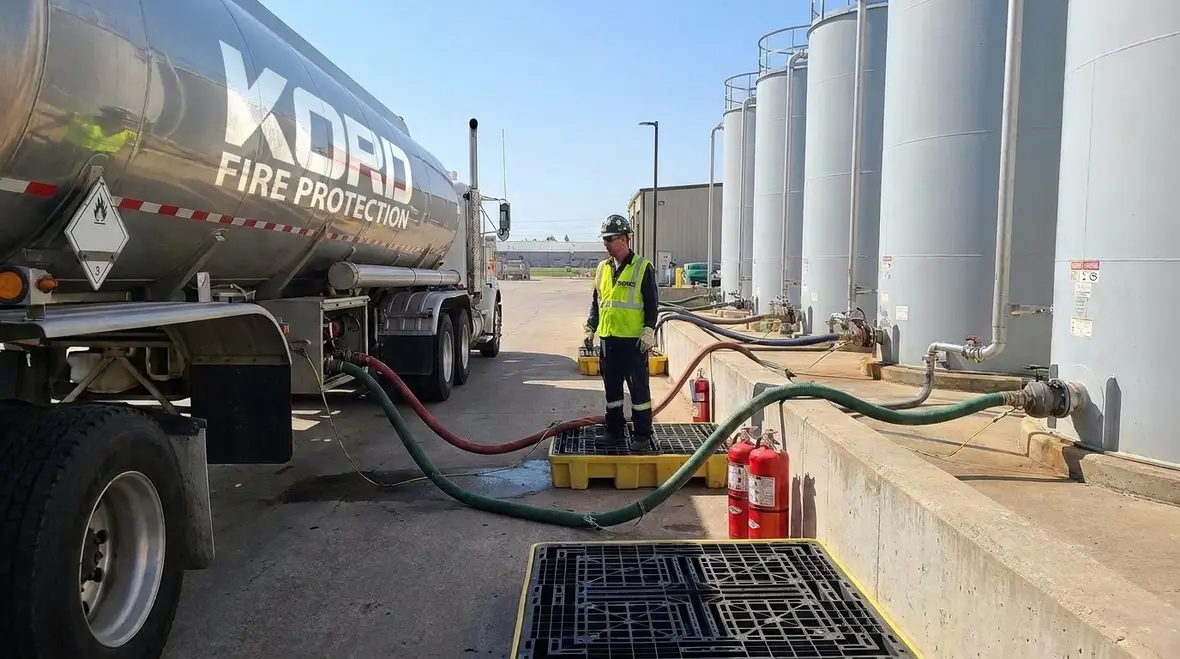
NFPA 36 Section 5.6: Unloading Procedures for Bulk Solvent
Quick Answer: NFPA 36 Section 5.6 establishes unloading procedures for bulk solvent that focus on preventing static, controlling ignition sources, verifying equipment compatibility, and maintaining safe transfer conditions. Facilities must implement documented steps, inspections, and readiness checks to meet NFPA 36 bulk solvent unloading procedures requirements before and during transfer.
Facilities that are tightening documentation and inspection workflows can also benefit from fire safety system documentation for compliance, especially when unloading procedures need to match what inspectors actually expect to see in the field.
What NFPA 36 Section 5.6 is trying to prevent
NFPA 36 Section 5.6 addresses the real-world hazards created when bulk solvent is transferred from a delivery vehicle or bulk storage into a facility system. The risk pattern is consistent across commercial, industrial, and retail environments: vapor clouds can form quickly, ignition sources can exist in unexpected places, and static discharge can occur during hose connection, flow changes, or shutoff. The section expects facilities to treat unloading as a controlled operation, not a routine logistics activity.
To support compliance, the facility must align unloading practices with the facility’s broader flammable liquid safety program, including ignition control, grounding and bonding, ventilation where applicable, and readiness for emergency response. When facilities skip procedural discipline, they typically discover gaps during inspections, insurance loss control reviews, or incident investigations.
NFPA 36 bulk solvent unloading procedures requirements: scope and responsibilities
Facilities must ensure NFPA 36 bulk solvent unloading procedures requirements are implemented for bulk transfers into a receiving system, including the steps required before, during, and after unloading. Responsibility usually spans the receiving department, the hazmat or fire protection function, operations supervisors, and maintenance personnel who ensure equipment integrity.
Common compliance responsibilities for facilities
Written procedures and training: Unloading steps must be documented and understood by operators. Training should cover hazards, equipment handling, and what to do when conditions change.
Equipment verification: Hoses, couplings, meters, grounding devices, valves, and control systems must be inspected and maintained. Defects frequently drive noncompliance findings.
Transfer control: Procedures must prevent overpressure, incorrect routing, and uncontrolled flow during connection and disconnection.
Ignition source management: The unloading area must be managed to prevent ignition from smoking, portable equipment, vehicle operations, and other ignition sources.
Pre-unloading readiness: the checks that keep transfers stable
Operational success begins before the first connection. Inspectors expect facilities to demonstrate that the unloading procedure includes readiness checks that reduce the likelihood of vapor ignition and mis-transfer.
1) Confirm the receiving system and solvent compatibility
Operators should verify that the destination tank, piping, hoses, and seals are compatible with the solvent in use. Compatibility failures can produce leaks, swelling, or seal degradation that may appear long after an unloading event. Facilities should maintain up-to-date compatibility documentation as part of the safety file.
2) Verify transfer area controls
Good unloading procedure design includes site controls: controlled access to the unloading zone, housekeeping practices that prevent ignition-promoting conditions, and clear separation between pedestrian movement and the transfer equipment path. Many loss control reviews focus on these “everyday” factors because they frequently correlate to incidents.
3) Establish grounding and bonding readiness
Static control requires deliberate action. Before initiating flow, operators should confirm that bonding jumpers and grounding connections are correctly attached and mechanically sound. Loose or missing connections are common failure points during hurried transfers, after maintenance, or when equipment is swapped.
4) Check emergency response readiness
NFPA 36 unloading procedures depend on the facility being prepared to respond without improvising. Facilities should ensure applicable extinguishing capability, spill response materials, and emergency shutoff options remain accessible and maintained.
Unloading execution: how operators should run the transfer
During unloading, NFPA 36 emphasizes maintaining controlled conditions. The highest scrutiny typically occurs at connection points, during flow initiation, during steady transfer, and at the termination sequence.
Controlled connection and flow start
Sequence discipline: Operators should follow a consistent order for making and verifying connections to reduce static generation and prevent unintended releases.
Flow initiation control: Procedures should avoid rapid changes that increase static and turbulence risk. Where metering or controls exist, they should be verified before opening valves fully.
Leak detection awareness: Operators should monitor for drips and seepage at couplings and hose interfaces, and follow a defined stop-and-correct method rather than continuing a questionable transfer.
Manage ignition sources during unloading
Even in well-designed facilities, ignition sources can appear due to operational habits. Procedures should explicitly address portable radios, non rated electrical tools, vehicle idling practices, and any activity that could create sparks or elevated temperatures. Facilities also benefit from signage and access control that reinforce the operational boundaries.
Maintain stable receiving conditions
Operators should manage receiving conditions to prevent overfill, improper venting, and pressure issues. Overpressure events or routing mistakes can worsen hazard severity by increasing release rates. A robust unloading procedure includes defined monitoring points, clear stop criteria, and escalation paths.
Shutoff and disconnection procedure
The disconnection stage often receives less attention but drives significant risk. Procedures should govern how operators depressurize, stop flow safely, manage residual solvent in hoses, and prevent vapor release to the surrounding area. Facilities should treat the entire shutoff and disconnection sequence as part of the unloading process, not a housekeeping afterthought.
Inspection, testing, and maintenance: what keeps compliance from degrading
NFPA 36 compliance requires ongoing verification. Facilities typically fail not because procedures are missing, but because equipment condition and maintenance practices drift over time.
What to inspect during unloading equipment maintenance
Hoses and couplings: Inspect for wear, cracks, coupling integrity, and signs of chemical attack. Replace suspect components before they fail in service.
Bonding and grounding hardware: Inspect clamps, cables, and connection points for corrosion, damage, and secure attachment.
Valves, meters, and gauges: Verify proper operation, calibration needs, and correct response to control inputs.
Vent and relief components: Confirm that the receiving system can perform as designed and that venting paths remain unobstructed.
Commercial facility compliance friction points
In practice, unloading compliance breaks down under time pressure, schedule changes, and multi contractor activity. Retail and light industrial locations often struggle with shared spaces, limited staging areas, and mixed maintenance workflows. Kord Fire Protection supports facilities with field-ready fire and life safety services, helping organizations keep documentation, inspection cadence, and operational controls aligned with inspection expectations.
For additional guidance on managing fire protection and safety program readiness, visit Kord Fire Protection for service information and compliance support.
Procedural documentation: how facilities should organize unloading records
Operators perform better and compliance holds when unloading procedures are practical, accessible, and consistent with the facility’s equipment layout. Written procedures should include step-by-step instructions, defined roles, and clear stop criteria.
Recommended documentation elements
Unloading checklists: Pre transfer readiness and during transfer monitoring points.
Equipment inventory and identification: Hose IDs, grounding assemblies, and receiving system references to prevent incorrect hookups.
Training records: Verification that operators understand solvent hazards, ignition control, and static control expectations.
Incident and corrective action records: Document deviations, near misses, and repairs so the facility learns and improves.
When procedures match the physical system, inspectors encounter fewer gaps. When documentation is generic or outdated, facilities spend time reconciling mismatches during audits.
If your team is trying to keep service records from turning into a scavenger hunt, fire safety compliance management with automated documentation is a useful next read.
Frequently Asked Questions
Conclusion and next steps
NFPA 36 Section 5.6 requires bulk solvent unloading procedures that stay controlled from connection to disconnection, with disciplined static control, ignition source management, and verified equipment condition. Facilities that treat unloading as a managed process reduce risk, improve inspection outcomes, and protect operational continuity. Kord Fire Protection can help commercial and industrial sites maintain readiness through inspections, documentation support, and ongoing fire protection services. Contact Kord Fire Protection to align your unloading program with current compliance expectations.

Join Our Newsletter!
Get the latest fire safety tips delivered straight to your inbox From our Newsletter.



