
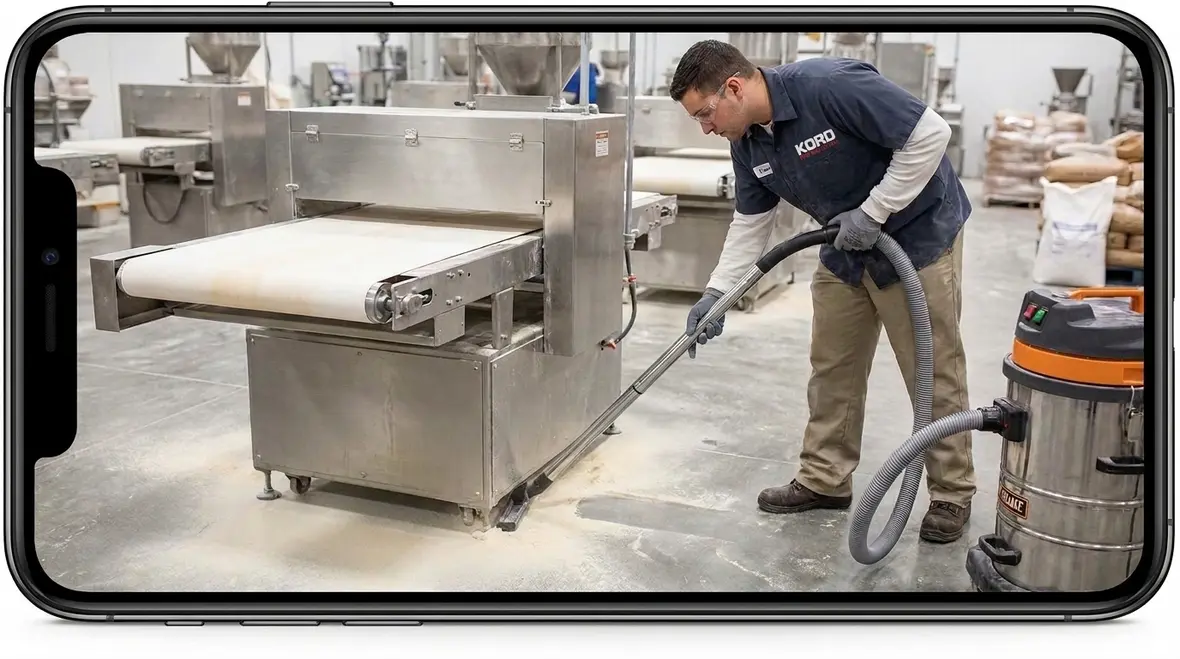
NFPA 36 Section 6.4: Dust Removal for Combustible Dust Control
Quick Answer: NFPA 36 Section 6.4 sets operational expectations for dust removal so combustible dust does not accumulate to hazardous levels. For facilities conducting meal preparation and other dusty processes, compliance focuses on documented cleaning methods, proper equipment, and verification that controls remain effective.
For a related look at how combustible dust accumulations and residues should be controlled in real facilities, see NFPA 34 Section 10.6: Controlling Combustible Dusts and Residues.
What NFPA 36 Section 6.4 requires for combustible dust control
NFPA 36 addresses combustible dust hazards common in food processing and other agricultural and manufacturing operations. Section 6.4 centers on dust removal as a primary means of control. The core compliance concept is simple: combustible dust must not build up where it can become fuel for fire or explosion. In practice, the NFPA 36 dust removal meal preparation requirements translate into structured cleaning programs, equipment selection that prevents ignition hazards, and measurable verification that removal methods work.
Dust removal does not replace engineering controls and housekeeping policies; it supports them. Even facilities with good ventilation and process containment still face localized accumulation from transfer points, housekeeping gaps, duct leakage, housekeeping delays, and maintenance activities that disturb dust layers.
How dust accumulates during meal preparation and why Section 6.4 focuses on removal methods
Combustible dust risk rises when dust layers form on surfaces, inside hidden cavities, and along airflow paths. During meal preparation, dust can originate from flour, starches, spices, dry mixes, toasted crumbs, dehydrated products, and biomass ingredients used for certain foods. Accumulation typically occurs in areas where handling and dispensing create visible and invisible emissions.
Common accumulation zones in commercial and industrial food environments
- Conveyors, elevators, and transfer chutes where spillage and carryover fall out of air streams
- Dust collectors, ductwork, and plenum areas where residual dust can escape during filter loading or maintenance
- Vertical surfaces above equipment where settling occurs over time
- Under equipment and behind guards where access is limited and cleaning frequency decreases
- Electrical enclosures and motor housings that collect dust through normal operating air currents
- Cracks, seams, and floor drains that collect slurry then dry into combustible deposits
Section 6.4 emphasizes removal because ignition energy sources exist in most facilities. If dust remains available as a fuel layer, an initiating event can turn a small event into a large combustible dust incident.
Cleaning and dust removal procedures: what “effective” looks like
Effective dust removal is not just “cleaning.” It requires defined methods, access planning, and confirmation that dust is removed from both visible and concealed spaces. Commercial operations should treat cleaning like a controlled process, especially when NFPA 36 dust removal meal preparation requirements apply.
Operational controls that support compliance
- Defined cleaning intervals: Intervals align with production intensity, dust generation rates, and prior inspections. Higher-risk operations typically require more frequent cleaning.
- Documented scope: Cleaning instructions specify surfaces, equipment zones, and exclusion areas that still require attention through controlled methods.
- Method selection: Dry sweeping and compressed air methods can disperse dust unless controlled and specifically permitted by the facility’s dust control plan and risk evaluation. Vacuum systems and engineered cleaning tools generally provide better containment.
- Appropriate filtration and separation: Vacuums used for combustible dust should provide suitable filtration and safe discharge practices to avoid re-entrainment.
- Zero-dust recontamination: Cleaning should prevent spreading dust to clean areas. This includes tool housekeeping, waste handling, and staged wipe-downs where needed.
Verification and acceptance criteria
Many facilities fail compliance not because they clean, but because they cannot prove results. Compliance becomes defensible when the facility can show repeatable verification such as:
- Inspection records that identify deficiencies and corrective actions
- Trend data for dust accumulation and cleaning performance
- Targeted examinations after maintenance activities that disturb dust layers
- Photo records for high-risk areas as part of a controlled documentation process
Equipment and systems: dust collectors, vacuums, and ducting alignment
Dust removal under NFPA 36 depends on the relationship between collection systems and cleaning tools. A dust collector may remove airborne dust at the source, but it can still accumulate dust internally. Filters, hoppers, and duct joints require maintenance discipline and inspection. Similarly, vacuum equipment must match the material hazard and be used correctly.
Dust collector considerations tied to dust removal
- Filter condition and performance: Loading and damage can increase dust bypass, leading to contamination in downstream areas.
- Disposal and housekeeping around hoppers: Dust in collection hoppers must be handled so it does not spill back into the work area.
- Seals and duct integrity: Leaks allow fine dust to escape, settle, and create surface fuel.
- Operational response to alarms: A failure to address differential pressure alarms or performance drift can defeat dust control plans.
Vacuum and cleaning tool requirements
In many meal preparation environments, vacuuming becomes the preferred method because it supports containment. The key compliance risks include using the wrong vacuum class, poor filter integrity, improper hoses, inadequate operator training, and failing to maintain seals and gaskets. These failure points can turn dust removal into dust distribution.
For guidance on inspection and maintenance steps that support dust hazard compliance, facilities can also review NFPA 1 Section 40.10 Dust Explosion Inspection and Maintenance.
For guidance on fire protection program support that aligns with ongoing combustible dust controls, facilities commonly rely on specialized service providers such as Kord Fire Protection.
Inspection, maintenance, and common failure points during compliance cycles
NFPA 36 dust removal meal preparation requirements hold facilities to consistent control over time. Compliance erodes when cleaning schedules drift, staffing changes occur, equipment is modified without updating the dust control plan, or housekeeping records become non-actionable.
Common failure points found during commercial compliance reviews
- Cleaning frequency mismatch: Schedules do not adjust for production volume changes, shift patterns, or seasonal menu shifts.
- Hidden area neglect: Under-railed areas, cable trays, light fixtures, and behind equipment frequently exceed safe accumulation before they are noticed.
- Improper waste handling: Dust waste left in open containers or improperly staged areas becomes a secondary ignition fuel.
- Tool misuse: Employees use non rated vacuums, brushes that spread dust, or air blasts that aerosolize layers.
- Collector maintenance gaps: Delayed filter changes and insufficient inspection of duct seals can continually seed new dust.
Maintenance discipline and training expectations
Maintenance activities often create the most dust. Lockout and controlled cleaning procedures for maintenance tasks help keep exposures limited. Training should include how to clean without recontaminating, where to inspect, what documentation to complete, and when to escalate issues. When these elements are missing, facilities may meet the letter of “cleaned” while still failing the intent of “effectively removed.”
How to document NFPA 36 dust removal for defensible compliance
Documentation supports operational continuity and helps demonstrate due diligence to auditors, insurers, and regulators. A strong program ties dust removal actions to risk, equipment configuration, and inspection outcomes.
Documentation package best practices
- Dust hazard housekeeping plan: Includes scope, methods, and areas of responsibility by shift
- Cleaning schedules: Frequency, triggers for higher frequency, and seasonal or production volume adjustments
- Verification records: Inspection checklists, findings, corrective actions, and follow up dates
- Equipment maintenance logs: Vacuum maintenance, hose integrity checks, and dust collector maintenance records
- Change control: Updates to cleaning methods after layout changes, new equipment, or process changes
When facilities want an external, objective review of combustible dust controls, partnering with a specialized team can improve the quality and consistency of inspections, testing, and maintenance planning. For commercial program support, Kord Fire Protection can help align field execution with safety expectations.
Frequently Asked Questions
Next step: strengthen dust removal controls now
Facilities that handle dry, combustible food ingredients should audit dust removal effectiveness against NFPA 36 expectations, then tighten cleaning methods, inspection verification, and equipment maintenance. Engage Kord Fire Protection to support ongoing combustible dust compliance through field-ready testing, inspection support, and maintenance planning. Start with a targeted gap review of high-risk zones and document corrective actions before dust accumulation becomes a recurring hazard.

Join Our Newsletter!
Get the latest fire safety tips delivered straight to your inbox From our Newsletter.



