NFPA 36 Section 5.3: Design and Construction of Bulk Solvent Storage
Quick Answer: NFPA 36 Section 5.3 governs how bulk solvent storage systems are designed and built to reduce fire and explosion risk. It focuses on container and piping integrity, location and separation, venting, emergency control, fire protection features, and construction details that support inspection and maintenance.
Commercial facilities storing bulk solvents must treat NFPA 36 as an actionable engineering and operations standard, not a document to file away. NFPA 36 bulk solvent storage design construction requirements directly influence layout, equipment selection, installation quality, and the procedures used to operate and maintain the system over its service life.
For facilities that also need structured documentation and inspection readiness, it helps to follow a practical fire inspection preparation checklist early in the project, not after the punch list starts getting weird.
What NFPA 36 Section 5.3 Demands for Bulk Solvent Systems
NFPA 36 Section 5.3 establishes minimum safeguards for bulk solvent storage intended to prevent ignition sources from reaching flammable vapor and to limit the consequences if release occurs. The section typically interfaces with other chapters addressing general storage principles, fire protection features, and operational controls. For practical compliance, facilities should treat design and construction as a chain: engineering intent must survive procurement, installation, testing, and ongoing inspection.
In commercial, industrial, and retail contexts, the largest compliance failures usually occur when real world installation conditions drift from design assumptions. Common triggers include substituted fittings, unapproved vent routing, incomplete grounding and bonding, inadequate drainage design, deferred protective coatings repair, and missing or nonfunctional emergency shutoff arrangements.
How the Tank and Containment Features Should Be Built
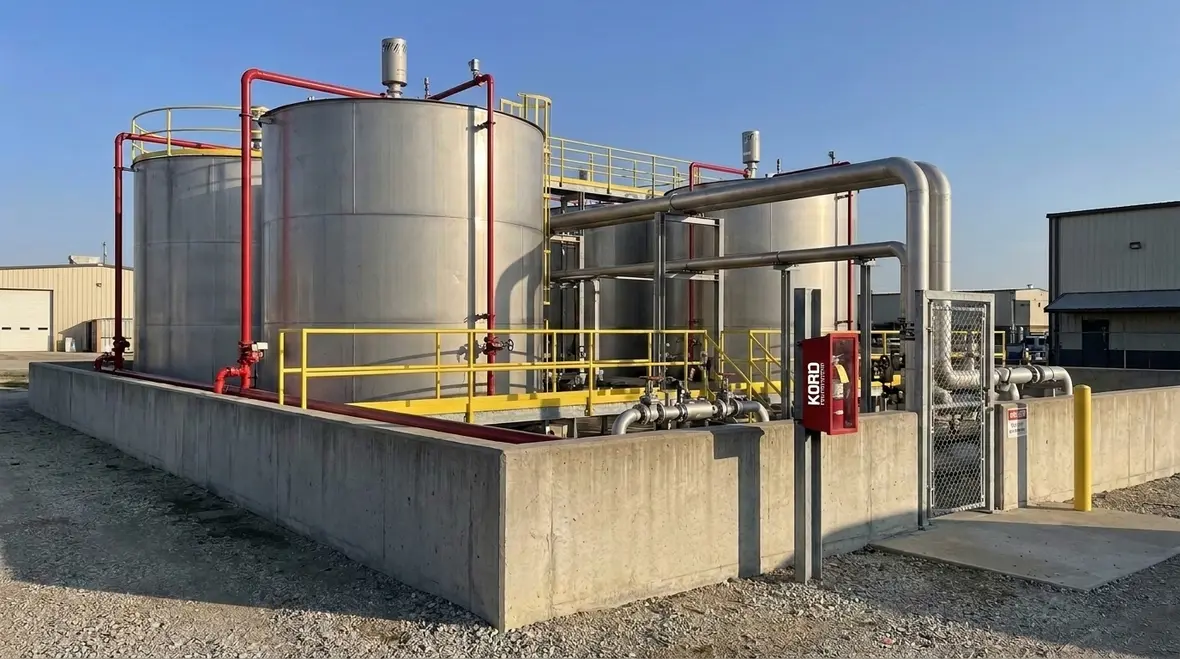
NFPA 36 bulk solvent storage design construction begins with containment. The design must ensure the storage container and appurtenances prevent uncontrolled releases, manage pressure and vapor, and maintain integrity under expected environmental and operational conditions.
1) Tank integrity and appurtenances
Tank shell construction, corrosion allowances, and compatible material selection matter because solvents vary significantly in chemical reactivity and permeation characteristics. Construction and assembly details such as weld quality, gasket compatibility, and flange integrity influence long term leak probability. Appurtenances including fill connections, vapor return or vent components, and sampling ports must be installed to minimize leak paths and avoid creating ignition capable conditions.
2) Secondary containment and release management
Secondary containment helps keep a spill localized and reduces the chance that vapors migrate to ignition sources. Drainage and collection systems need to be built so released solvent does not bypass containment boundaries. If sumps, trenches, or remote drain lines exist, the facility must ensure these components remain solvent compatible and reliably function during normal operations and abnormal release scenarios.
3) Foundations, supports, and corrosion control
Many bulk solvent systems fail first at the interface between equipment and the supporting structure. Uneven settlement, inadequate anchoring, or coating damage at weld seams can accelerate corrosion. Grounding, bonding, and coating integrity should be treated as part of construction quality assurance, not only as an afterthought during commissioning.
Vent, Pressure Relief, and Vapor Control: Design Details That Prevent Ignition
For bulk solvent storage, vapor control features play a direct role in keeping flammable atmospheres from forming at unsafe locations. NFPA 36 Section 5.3 emphasizes venting and pressure relief arrangements that align with the storage system’s operating envelope and fire protection goals.
Vents and discharge locations
Vent terminations must avoid creating ignition zones near air intakes, doors, or other normal traffic areas. Construction details determine where vapor exhaust actually travels under wind and thermal conditions. Vent routing should maintain required separation distances and avoid routing through areas where vapors could accumulate.
Pressure relief device placement and maintenance readiness
Pressure relief devices must be installed to function as designed. Misalignment, contamination of relief pathways, or improper vent piping can convert a safety device into a restriction that increases overpressure risk. A compliant design should include accessible configuration so maintenance personnel can inspect, test, and reinstall devices without improvising modifications.
Common failure points
Facilities frequently encounter these issues during compliance verification: vent discharges routed into concealed spaces, relief vents terminating too low, missing flame arresting where required by the overall design, and noncompatible vent seals after service work. These problems often originate during field changes rather than original engineering drawings, so document control must remain tight.
Separation, Location, and Construction Interfaces in Real Facilities
Bulk solvent storage does not exist in isolation. NFPA 36 bulk solvent storage design construction requires that location and separation be engineered to control exposure and reduce the probability that a fire in one area becomes a catastrophic event affecting the storage system.
Designing around commercial facility constraints
Many facilities operate near loading docks, maintenance bays, retail delivery entrances, or employee parking. Construction staging and final as built placement must respect separation distances and avoid creating unintended ignition sources, including hot work areas, exhaust discharge points, and electrical equipment that could become hazardous if vapors concentrate.
Construction interfaces and change control
Field modifications during electrical work, drainage revisions, or landscaping frequently introduce noncompliant conditions. Examples include adding drains that connect containment to stormwater systems without safeguards, relocating conduits or junction boxes, or altering vent pathways. A compliance focused process should require permits, engineering review, and documentation updates before any change becomes part of the installed system.
Operational considerations during installation and turnover
During turnover, facilities should verify that labels, operating instructions, and emergency procedures match the installed configuration. If the system includes valves, emergency shutdown arrangements, or remotely actuated components, the construction phase must ensure these devices operate correctly and are accessible.
Testing, Inspection, and Maintenance Requirements That Keep Compliance Alive
NFPA 36 compliance depends on evidence. The built system must be testable, inspectable, and maintainable, with a clear link between acceptance criteria and day to day operations.
Commissioning and documentation
Commissioning activities should confirm that the storage system matches approved drawings and that critical safety functions work as intended. Typical verification areas include pressure relief installation, vent routing, bonding and grounding continuity, and the functionality of emergency controls. Facilities should retain test reports, inspection checklists, and as built drawings for future audit readiness.
Inspection focus areas
Over time, the system performance degrades due to corrosion, vibration, solvent exposure, and minor impacts from routine work. Inspection should emphasize: coating condition, leakage indicators, valve and gasket integrity, adequacy of containment drainage, and signs of vapor pathway obstruction or damage.
Maintenance and repair practices that prevent repeat defects
Maintenance must use compatible materials and follow approved procedures. Replacing a gasket with an incompatible elastomer can create a fast leak path. Repairs that alter vent piping, grounding straps, or containment surfaces can reintroduce hazards even if the repair seems minor. Kord Fire Protection supports compliance through inspection planning, documentation readiness, and ongoing service that aligns safety equipment performance with NFPA expectations.
For related guidance on coordinating fire protection systems with ongoing compliance duties, facilities often reference Kord Fire Protection resources such as Kord Fire Protection and its broader inspection preparation guidance.
How NFPA 36 Bulk Solvent Storage Design Construction Affects Commercial Risk Management
From a risk management perspective, the value of NFPA 36 bulk solvent storage design construction lies in how it reduces likelihood and severity of events. Well built containment and vapor control reduce vapor accumulation and lower probability of ignition at hazardous concentrations. Proper separation and vent discharge design also reduce the chance that a localized event becomes a larger incident.
Commercial facilities also face audit and insurer expectations. Meeting construction and maintenance requirements improves defensibility during incident investigations and regulatory reviews. It also protects business continuity by reducing downtime associated with repairs after preventable leaks, failed safety devices, or noncompliant installations.
Operational readiness as a compliance multiplier
A compliant design can still fail if operations are not aligned. Staff must understand how to operate emergency shutoff components, maintain housekeeping around vents and containment areas, and recognize early indicators of deterioration. Training and documented procedures should match the installed system configuration.
Frequently Asked Questions
Next Step: Get Compliance Confidence Before and After Commissioning
Bulk solvent storage compliance requires more than a one time review. Kord Fire Protection helps commercial facilities verify design intent, support inspection readiness, and maintain critical safety performance through ongoing service. Request a site assessment to confirm your NFPA 36 bulk solvent storage design construction details, identify likely failure points, and build a practical maintenance and documentation plan that stands up to audits and real world operations.
If your broader program also touches pumps, acceptance, or recurring water based system verification, Kord’s resources on fire pump acceptance testing requirements can help connect storage compliance with the rest of the facility’s fire protection workload.

Join Our Newsletter!
Get the latest fire safety tips delivered straight to your inbox From our Newsletter.