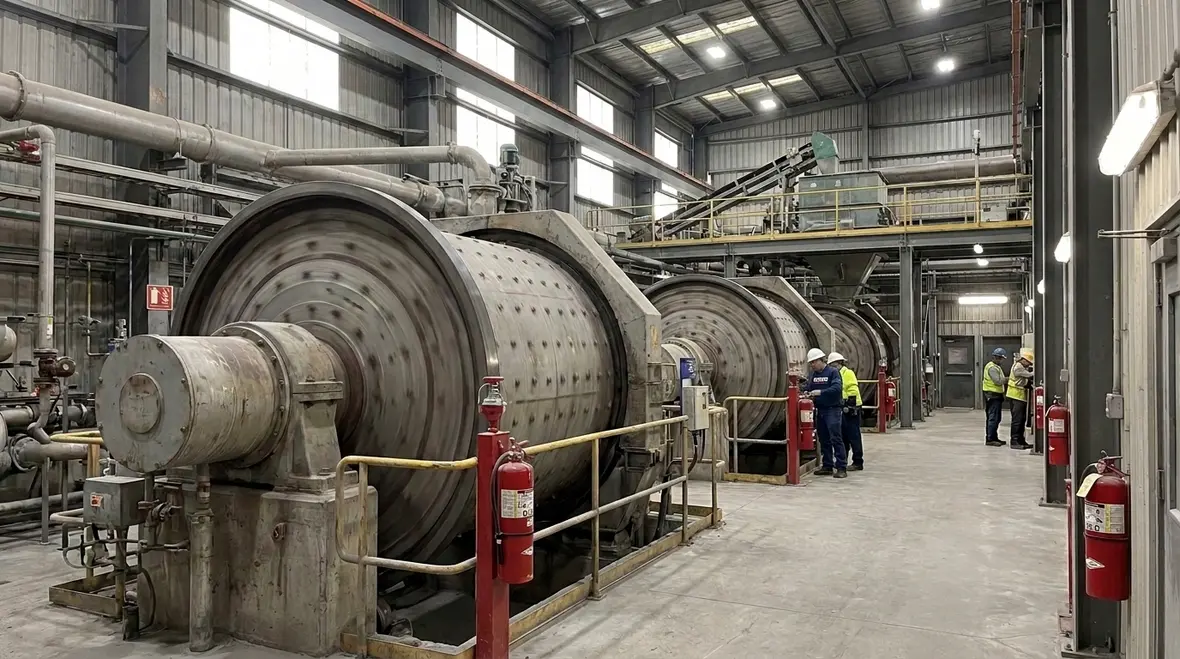
NFPA 35 Section 6.5: Ball Mills and Pebble Mills
Quick Answer
NFPA 35 Section 6.5 sets fire safety expectations for ball mills and pebble mills used in chemical processing. It focuses on ignition source control, fire protection features, ventilation considerations, inspection readiness, and maintenance practices that keep mill operations within an acceptable risk profile.
NFPA 35 ball mills pebble mills requirements apply specifically to equipment that grinds, pulverizes, and disperses materials where flammable vapors, combustible dust, or reactive process conditions can exist. Because mills often run continuously or in production cycles, small control failures can escalate quickly. Compliance requires both engineering controls and a disciplined maintenance and inspection program.
Facilities building a stronger inspection program can also learn from Kord Fire Protection’s ITM fire protection inspection, testing, and maintenance guidance, which fits naturally with the documentation, testing discipline, and readiness expectations discussed throughout this article.
What Section 6.5 Covers and Why It Matters
Ball mills and pebble mills create size reduction through tumbling action. During operation, they can generate fine particles, disperse process materials, and create conditions where burning or smoldering events may occur if an ignition source is present. In chemical plants, terminal operations, and some commercial industrial settings, these mills are frequently integrated with storage, charging systems, conveyors, and downstream separation.
NFPA 35 Section 6.5 concentrates on preventing or limiting fire and controlling the consequences if ignition occurs. The practical goal is to ensure that mills do not become unintended ignition points and that protective systems remain ready when production schedules demand uptime.
How Ball and Pebble Mills Create Fire Risk in Real Facilities
Operational mechanisms that increase hazard
- Friction and impact hotspots: Rolling and tumbling contacts can produce localized heat, especially when mill internals wear or when feed rates vary.
- Particle generation and dust behavior: Fine particles can accumulate and suspend, increasing the likelihood of ignition and rapid flame propagation if a source is present.
- Process vapor release: Volatile constituents can migrate from feed, slurry, or dried material, particularly during charging, sampling, or upset conditions.
- Bin, hopper, and transfer interfaces: Even if the mill housing is controlled, upstream and downstream interfaces can introduce ignition sources or bypass safeguards.
Common compliance pain points
- Wear-driven system drift: Worn liners, trunnion bearings, seals, and couplings can increase temperatures or change the internal airflow and leakage patterns.
- Blocked or degraded ventilation paths: Dust collectors, exhaust ducts, and interlocks can be compromised by maintenance gaps or poor housekeeping.
- Inconsistent inspection documentation: Many facilities maintain checklists but cannot demonstrate that inspections match the hazard controls defined for the mill.
- Closed loop control failures: Instrumentation tied to safe operation, such as temperature limits or level controls, can fail without timely corrective action.
NFPA 35 Section 6.5 Compliance: What Facilities Must Be Able to Prove
Compliance is not only about installing protective features. It depends on demonstrating that controls work as intended throughout the production cycle. For NFPA 35 ball mills pebble mills requirements, facilities generally need clear evidence of safe ignition source management, protective arrangement readiness, and maintenance discipline.
1) Ignition source control inside and around the mill
Facilities typically address potential ignition sources through equipment selection, electrical classification practices, and operational safeguards that limit overheating and mechanical faults. Internal overheating can originate from bearing failure, misalignment, improper lubrication, blocked flow paths, or abnormal mill loads.
Practical trade insight: inspections should verify that temperature monitoring points match actual hot zones, that alarms and shutdown setpoints remain calibrated, and that inspection personnel can identify precursors like rising bearing temperatures, vibration trends, or changes in mill sound.
2) Fire protection system readiness and continuity
Where fire protection features are part of the design basis, they require integrity through routine testing, inspections, and verification of access. Even when systems are seldom actuated, they must perform reliably when needed. This includes verifying the status of detection, suppression, manual actuation pathways, and any interlocks tied to mill operation.
Practical trade insight: facilities often focus on annual testing but underperform on functional readiness checks at shift and maintenance intervals. A mill area also tends to accumulate dust residue, which can affect detection performance and create hidden maintenance backlogs.
3) Ventilation and containment interfaces that prevent vapor and dust migration
Because mills sit within larger process systems, Section 6.5 expectations often intersect with ventilation concepts and enclosure or containment strategies. The goal is to limit uncontrolled release of vapors and prevent accumulation of combustible deposits that could support ignition or flame spread.
Practical trade insight: compliance failures frequently occur at the mechanical interfaces where vibration loosens seals, gaskets, and duct connections. A documented program for gasket condition, duct inspection, and dust collector health helps maintain control effectiveness.
4) Maintenance practices that protect the safety design
Ball and pebble mills require sustained mechanical integrity. Maintenance practices must directly support fire safety objectives by preventing overheating, controlling leakage paths, and restoring designed operating conditions after repairs.
- Follow lubrication and bearing inspection schedules with measurable acceptance criteria.
- Inspect mill liners, liners attachment points, and internal clearances for changes that can increase friction heat.
- Verify seals and gasketing after maintenance activities that disturb the mill housing or connections.
- Track recurring defects and root causes, not just corrective repairs.
Inspection and Testing Programs That Hold Up During an Audit
A strong compliance posture includes repeatable inspection methods and maintenance records that align to hazard controls. Auditors and insurers generally look for consistency, traceability, and evidence that mill-specific risks receive targeted attention.
What to inspect for ball mills and pebble mills
- Mechanical condition: bearing temperature trends, vibration readings, alignment checks, liner wear, and coupling integrity.
- Electrical and control integrity: calibration records, alarm setpoint verification, interlock functionality, and condition of wiring routes in the mill area.
- Enclosure and seal condition: inspection of gaskets, seals, and any access points that may leak vapors or dust.
- Housekeeping and combustible loading: verified removal of combustible residues and correction of dust accumulation sources.
- Fire protection interface areas: access to panels, clearances around detection and suppression components, and confirmation that obstruction is not recurring.
Testing discipline for ongoing reliability
Testing should include both scheduled formal tests and targeted functional checks that confirm protective systems remain integrated with mill operation. This includes verifying that detection coverage, alarm signaling, and suppression release pathways remain unobstructed by dust or process buildup.
For a facility seeking dependable oversight, partnering with Kord Fire Protection supports repeatable inspection and maintenance workflows. The team focuses on keeping documentation audit ready while supporting operational realities in commercial and industrial environments. If you want to strengthen your program, see Kord Fire Protection resources here: Kord Fire Protection.
It also helps to review a practical fire suppression inspection checklist so documentation, access, and system readiness do not drift apart when production gets busy.
Typical Failure Points That Lead to Noncompliance
Noncompliance commonly emerges when a facility assumes that mill hazard management stays stable over time. In practice, wear and operational changes continuously alter conditions.
Top recurring failure points
- Temperature monitoring not reflecting reality: probes displaced or coated, leading to false confidence and delayed intervention.
- Dust control degradation: duct leaks, collector underperformance, and poor filter change control that allows combustible deposits to build.
- Maintenance gaps after repairs: seals not revalidated, inspection points skipped, and interlocks bypassed during troubleshooting without documented return to service.
- Inadequate training for operators and maintenance teams: personnel do not recognize early indicators of bearing overheating, seal failure, or abnormal mill load.
- Weak change management: feed changes, throughput changes, and product formulation changes can increase vapor or dust hazard without updating the safety basis.
These failure points link directly back to why NFPA 35 ball mills pebble mills requirements emphasize not just installation, but ongoing condition control, inspection traceability, and maintenance effectiveness.
Frequently Asked Questions
Next Steps: Build a Mill Safety Program That Stays Audit Ready
Review your ball and pebble mill hazard controls against NFPA 35 ball mills pebble mills requirements, then validate that inspections and protective system readiness match real operating conditions. Schedule a targeted assessment of mill interfaces, detection and suppression readiness, ventilation performance, and maintenance record quality. For ongoing support, contact Kord Fire Protection to strengthen testing, documentation, and maintenance practices so your facility stays confident during production surges and compliance reviews.
If your team wants a broader prep list before the next review, the commercial fire safety audit step by step process offers a useful companion read for organizing records, observations, and corrective actions.
Join Our Newsletter!
Get the latest fire safety tips delivered straight to your inbox From our Newsletter.