
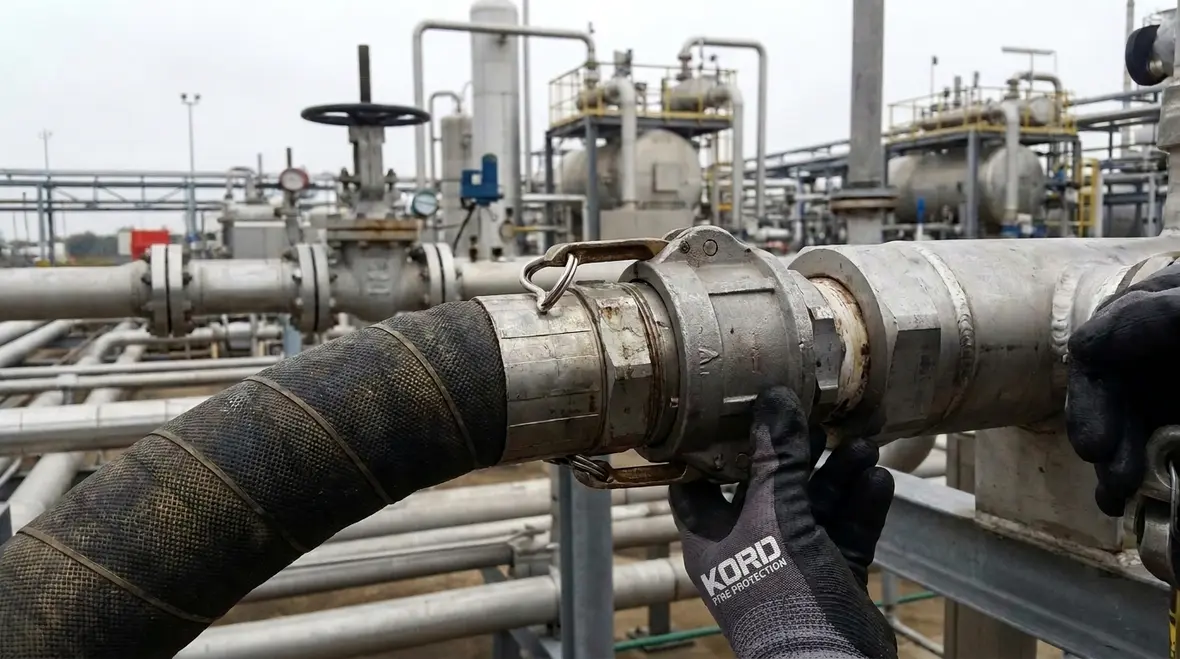
NFPA 35 Section 11.7: Hose Connections for Industrial Chemical Facilities
Quick Answer
NFPA 35 Section 11.7 establishes how hoses connect to fixed systems in process and transfer operations. It focuses on connection compatibility, secure attachment, prevention of leakage and damage, and ongoing inspection. Plant compliance depends on documented procedures and maintained equipment that matches the chemical service.
If you are tightening up broader inspection and maintenance workflows across your facility, fire protection services in Southern California can help connect hose practices with the rest of your compliance program.
What the “NFPA 35 hose connection requirements plant” actually covers
In commercial chemical plants and industrial facilities, hose connections often become the weakest link in containment and emergency readiness. NFPA 35 Section 11.7 addresses those connection interfaces by requiring secure, compatible hose couplings and practices that reduce the probability of disconnection, leakage, or damage during normal use, transfer operations, and emergency response activities. For facilities trying to meet NFPA 35 hose connection requirements plant expectations, compliance is not limited to installing couplings once. It includes how connections get made, verified, and maintained over time.
From an operations standpoint, hose connection compliance affects fill procedures, loading and unloading safety, temporary transfer operations, and how quickly teams can deploy hoses during a fire or spill event. Inspectors and internal safety audits typically look for evidence that the installed hose assembly design matches the expected chemical, pressure, and exposure conditions and that staff uses consistent connection practices.
Which hose connections get controlled under NFPA 35 Section 11.7?
Section 11.7 applies to hose connections used with systems and equipment covered by NFPA 35, including hoses intended for transfer and emergency uses where applicable. The key compliance theme is that hose ends and mating connection points must be compatible and must perform reliably under the conditions the facility expects, including movement, vibration, and repeated coupling and uncoupling.
Common facility scenarios that trigger practical compliance scrutiny include:
- Hose assemblies stored for rapid response but connected infrequently, leading to hidden damage or thread and coupling wear.
- Temporary transfer hoses connected to fixed manifolds, pump discharge points, or chemical lines with adapters that drift from original design intent.
- Changes in hose material or coupling type without updating procedures, signage, or inspection criteria.
- Warehouse or retail support operations that use shared hose inventory across multiple chemical SKUs.
Facilities often assume that “any fitting that threads on” satisfies requirements. In practice, inspectors focus on whether the connection design provides a reliable seal and mechanical retention appropriate to the operating environment.
Core compliance elements: compatibility, secure attachment, and leak prevention
NFPA 35 Section 11.7 concentrates on how hoses interface with connection hardware. That typically involves three operational controls: proper compatibility between hose and fitting, secure attachment, and prevention of leakage or unintended separation.
1) Connection compatibility and system integrity
Compatibility includes mechanical fit, sealing method, and expected pressure rating for the service. Where chemical exposure is involved, the hose and coupling materials must resist degradation that could compromise the connection. Over time, chemical attack can reduce hose wall integrity and allow couplings to loosen or leak under dynamic flow conditions.
2) Secure attachment that withstands operating conditions
Secure attachment means connections stay engaged during flow, movement, and normal handling. Facilities should standardize coupling types, avoid improvised adapters, and ensure that connection points and hoses share a consistent configuration. In many operations, the failure pattern occurs when teams connect hoses quickly during high workload periods, using shortcuts that do not seat properly or fail to verify that the coupling locked or tightened as designed.
3) Leak prevention and controlled transition to safe state
Even minor leakage can escalate quickly in chemical service. Leaks may occur at threads, seals, quick connect interfaces, or damaged hose ends. Compliance requires both correct connection practice and an inspection regimen that catches wear early. Inspections should verify seal condition, coupling integrity, and hose end damage that could compromise the connection.
Inspection and maintenance: how plants prove hose connections stay compliant
NFPA 35 compliance becomes actionable when a facility can demonstrate that hose connections receive systematic inspection and that any defects trigger immediate removal or repair. Many plants fail not because they installed incorrect couplings, but because they lack a defensible maintenance workflow.
What to inspect at the hose end and coupling interface
A practical inspection checklist should include:
- Hose end condition: cut damage, abrasion, blistering, cracking, or chemical swelling.
- Coupling integrity: corrosion, deformation, thread wear, cracked components, and seal surface condition.
- Seal components: gasket condition, O ring wear, missing seals, and evidence of improper seating.
- Connection points: fixed manifold or valve outlet integrity, cleanliness, and absence of incompatible adapters.
- Operational fit: verification that the hose connects without forcing and remains secure after connection.
Maintenance records that withstand internal and external scrutiny
Facilities should maintain records that link hose assembly identity to inspection outcomes. At a minimum, records should identify:
- Hose assembly ID or tagging method
- Date of inspection
- Defect findings and disposition
- Repair or replacement action
- Who performed the inspection and when competency was verified
In high-turnover environments, training and accountability controls matter as much as hardware. Teams should understand that hose connections are not “set and forget” items. They require verification each time they enter service and periodic inspection while stored.
Common failure points during audits and day to day operations
Auditors and safety officers often observe the same patterns across facilities when evaluating NFPA 35 hose connection practices. Addressing these proactively reduces risk and speeds up corrective actions.
Improvised adapters and inconsistent coupling inventory
Using adapters to make hoses “work” introduces compatibility risk. Adapters can bypass designed sealing methods or alter pressure performance. They also increase the probability of incorrect coupling combinations during shift changes.
Seals and hose ends degrade while stored
Hoses may sit for long periods. Chemical residue, ozone exposure, and storage abrasion can degrade seals and hose ends. If facilities only inspect hoses in service, defects may persist until a connection attempt fails or leaks begin.
Connection procedures that skip verification
Shortcuts during coupling can lead to incomplete seating or loose engagement. When procedures do not include a verification step, teams often assume a connection is secure based on partial thread engagement or a quick visual check.
Change management gaps
When a plant changes hose material, coupling type, or vendor, the facility often updates the procurement record but not the inspection criteria and training documentation. That gap undermines compliance because the maintenance program no longer matches the installed hardware.
Building a defensible compliance program with Kord Fire Protection
Commercial facilities that manage chemical hazards benefit from a partner that supports both technical requirements and operational reality. Kord Fire Protection helps organizations align installed hose connection practices with ongoing inspection, testing, and maintenance workflows. This support reduces noncompliance risk by improving documentation, training alignment, and the quality of corrective actions.
For facilities building broader fire protection readiness, Kord Fire Protection also supports integrated program development across inspections and maintenance planning. If you want to strengthen your approach beyond hose connections, explore the full lifecycle of fire protection servicing and Kord Fire Protection services to support a compliant, maintainable fire safety program.
Frequently Asked Questions
Conclusion and Call to Action
NFPA 35 Section 11.7 hose connection compliance succeeds when hardware compatibility, secure attachment, and leak prevention get paired with a repeatable inspection and maintenance program. Facilities should review hose assembly inventory, eliminate improvised adapters, and confirm that procedures include verification every time hoses connect. Contact Kord Fire Protection to assess your hose connection practices, strengthen inspection documentation, and support ongoing compliance with a program built for real plant operations.
Facilities that want to tighten related water-based protection readiness can also review fire pump inspection and testing services as part of a stronger sitewide maintenance strategy.

Join Our Newsletter!
Get the latest fire safety tips delivered straight to your inbox From our Newsletter.



