
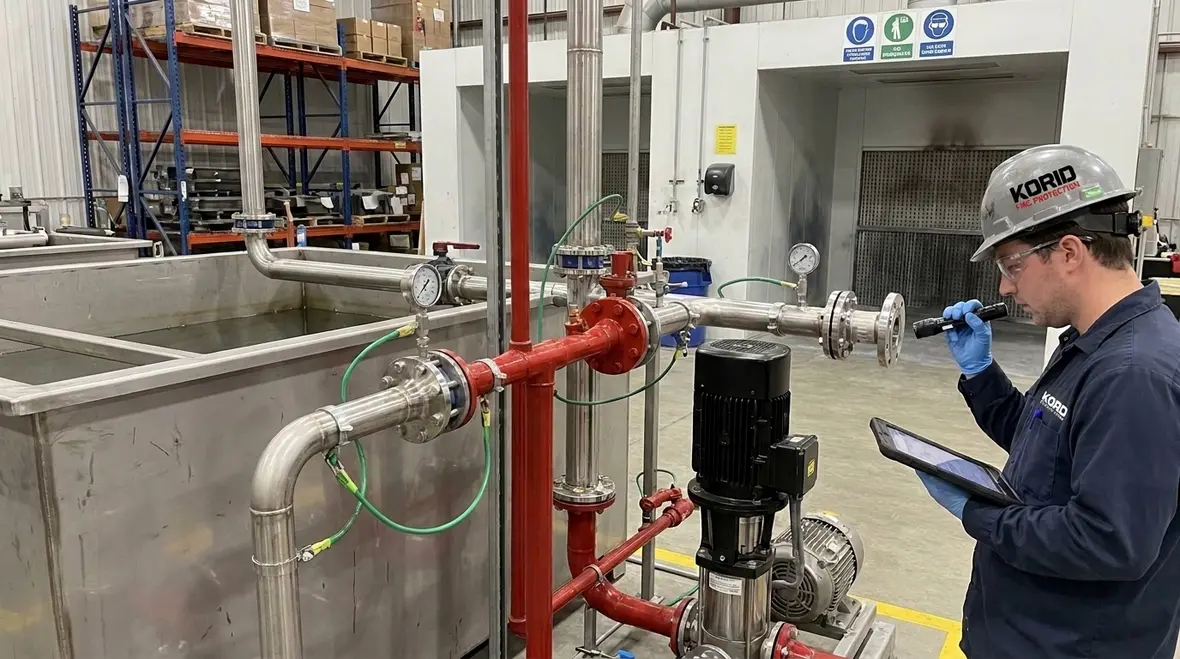
NFPA 34 Section 8.6: Liquid Piping Systems for Coating and Dipping
Quick Answer
NFPA 34 Section 8.6 sets enforceable design, installation, and maintenance expectations for liquid piping used in coating and dipping operations. These NFPA 34 liquid piping system requirements focus on integrity, bonding and grounding where applicable, system separation, and inspection readiness to manage fire and spill hazards.
If you are reviewing broader coating and dipping compliance questions, Kord Fire Protection’s guidance on NFPA 34 equivalency and alternative compliance for coating and dipping is a strong companion resource for facilities dealing with non-standard layouts or modified process lines.
What NFPA 34 Section 8.6 covers for coating and dipping liquid piping
NFPA 34 addresses fire protection for spray application, coating, and dipping processes, where flammable and combustible liquids may be transferred through piping to tanks, dip hoods, coaters, and related process equipment. Section 8.6 specifically targets liquid piping systems supporting those operations, with an emphasis on preventing releases, controlling ignition sources, and maintaining system performance over time.
In commercial, industrial, and retail facilities, compliance failures usually do not come from one missing detail. They come from drift: aging pipe runs, mismatched fittings, undocumented modifications, corrosion-driven leaks, and maintenance practices that do not verify pressure containment or proper bonding. Meeting NFPA 34 liquid piping system requirements therefore depends on both correct installation and an inspection, testing, and maintenance program that stays current with operational changes.
How Section 8.6 drives safer piping design and installation
Liquid piping systems in coating and dipping applications introduce distinct hazards: viscous chemistry, temperature variation, intermittent pumping, and frequent equipment adjustments. Section 8.6 requirements aim to ensure the piping system remains reliable under those realities.
1) Materials, components, and compatibility with the process liquid
Piping, valves, fittings, and hoses must be selected for compatibility with the specific liquids used in the process. Chemical attack can degrade seals, soften tubing, thin pipe walls, and embrittle elastomers. Over time, incompatibility can convert a “working” system into a persistent leak source that is hard to detect during normal operation.
Commercial facilities often change coatings, thinners, or solvents without updating the piping spec. A compliance-focused approach verifies chemical compatibility during procurement and change management, not only at initial commissioning.
2) Integrity of joints, connections, and routed pipe paths
Common failure points include threaded connections with poor engagement, improper gasket selection, and flexing at supports that loosens fittings. Section 8.6 effectively targets the overall reliability of joints and connections. Installers typically reduce risk through correct torque practices, proper threading methods, and routing that limits mechanical stress.
Facility conditions matter. Pipe runs near heat sources, traffic areas, or vibration points can experience movement. Without robust support spacing and protection against physical damage, connections can loosen and seep.
3) Separation, accessibility, and maintainability
NFPA 34 expects piping to be installed so that it can be inspected and maintained. That means practical access for visual checks, functional testing of valves and controls, and corrective work without dismantling major process equipment.
In operational environments, accessibility often fails when piping is boxed in, permanently encapsulated, or routed behind tightly packed tanks. Compliance efforts typically start by mapping pipe networks and verifying that inspection access matches actual facility layouts.
What to control to prevent ignition and reduce static-related risk
In coating and dipping systems, ignition control includes more than hot work and open flames. Liquid movement, handling, and splashing can create conditions that increase ignition risk when electrical energy is not managed correctly.
Bonding and grounding where required
Where bonding and grounding are part of the controlling safety strategy, the system must provide a continuous path for electrical charge control across connected components. Field modifications often break continuity: a replacement valve assembly installed with non-conductive components, a corroded bonding jumper, or a change to a flexible connector without re-verification.
Routine checks should confirm continuity at critical interfaces, including tank connections, pump discharge points, and any sections identified by the facility as ignition control points. Kord Fire Protection supports these programs with structured compliance verification, documentation, and maintenance coordination.
Electrical safety integration with pumps, controls, and instrumentation
Pumps, level sensors, and motor controls operate continuously during production. Any wiring changes, sensor replacements, or motor work can inadvertently impact safety boundaries. A strong compliance plan aligns piping requirements with the facility’s electrical hazardous location classification and equipment maintenance schedules.
Valves, controls, and release prevention strategies in dipping and coating lines
NFPA 34 Section 8.6 emphasizes functional reliability of piping networks that move flammable and combustible liquids. In practice, the safety value of piping depends on how well valves and controls prevent uncontrolled flow, reduce spill impacts, and limit the extent of a release.
Valving that supports safe shutoff and operational control
Piping systems typically include isolation valves for safe maintenance, control valves for process regulation, and check valves or flow control mechanisms to prevent backflow into hazardous areas. Compliance risk increases when valve functions are not validated after replacements or when bypass piping exists without proper safeguards.
Facilities often need an operational review after production changes. For example, altering a dip cycle length or switching to a different liquid viscosity can affect valve performance and seat leakage.
Hose assemblies and flexible connectors used in real operations
Many coating and dipping operations use hoses or flexible connectors for connection to movable equipment or to simplify changeovers. These components can become the weak link due to abrasion, kinks, improper storage, or chemical attack. Section 8.6 expectations support the broader theme of keeping piping systems reliable, inspectable, and compatible with the process.
A best practice is to treat hoses and flexible connectors as managed components: identify them, set replacement intervals based on condition, and document inspection findings.
Spill impact reduction
Even when containment is properly designed, small leaks can spread quickly in coating environments. Compliance programs should verify that piping leaks do not defeat spill control methods such as drainage, segregation of ignition sources, and safe collection of waste liquids.
Inspection and maintenance: where NFPA 34 liquid piping system requirements are won or lost
Design compliance alone does not keep a system safe. Section 8.6-related compliance outcomes depend on how facilities maintain piping integrity and verify system performance under real operating conditions.
Documented inspection routines and leak detection
Leak detection should combine visual checks, targeted inspection of high-risk connection points, and verification of areas exposed to vibration or mechanical damage. Most recurring failures occur at: valve packing, flanges, threaded joints, unions, and transition points between rigid pipe and flexible connections.
Facilities should align inspection frequency with production intensity, chemical aggressiveness, and historical defect rates.
Pressure-related verification and system performance
Coating and dipping systems often use pumping, controlled flow, and pressure regulation. Changes in pump performance, clogged strainers, or valve wear can increase stress on piping and seals. A compliance-driven maintenance program verifies that system pressure management remains within safe operating intent.
Where facility procedures require pressure testing or functional verification, the process must include correct safety controls, proper isolation, and post-test inspections for seal integrity.
Management of modifications and change control
Noncompliant piping incidents frequently follow “temporary” work. A contractor replaces a fitting with a readily available alternative, reroutes a section to clear a blockage, or adds a tie-in without updating the system map. Effective compliance integrates change control: every modification triggers documentation updates and a verification step.
Building a sustainable compliance program with Kord Fire Protection
Commercial coating and dipping facilities face a practical challenge: production schedules limit downtime, piping networks change, and documentation can lag behind actual field conditions. Kord Fire Protection helps facilities create a compliance program that supports long-term NFPA 34 conformance for liquid piping systems, including readiness for inspections and a clear maintenance feedback loop.
To strengthen your program, Kord Fire Protection can support targeted evaluations, maintenance planning, and verification workflows that reduce repeat defects. For additional resources on fire protection system service expectations, consider reviewing Kord Fire Protection’s guidance on fire sprinkler system service, which reinforces the same core discipline: inspection, maintenance, documentation, and proven responsiveness.
Frequently Asked Questions
Next step: validate your piping compliance before defects become incidents
If your coating or dipping operation depends on aging pipe runs, frequent chemistry changes, or contractors performing ad hoc repairs, schedule a compliance-focused review. Kord Fire Protection can help you verify that your liquid piping system aligns with NFPA 34 Section 8.6 expectations, strengthen inspection access, and build a maintenance plan that reduces leaks, downtime, and enforcement risk. Contact Kord Fire Protection to start.

Join Our Newsletter!
Get the latest fire safety tips delivered straight to your inbox From our Newsletter.



