
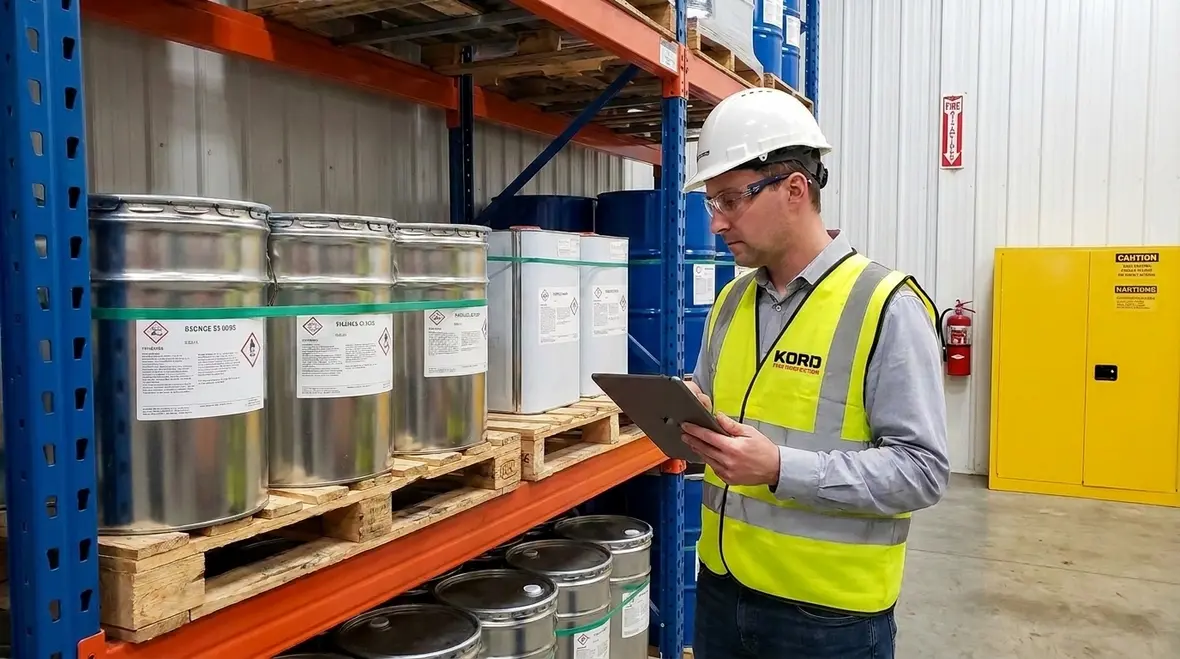
NFPA 35 Section 3.4: Classification of Flammable and Combustible Liquids
Quick Answer
NFPA 35 Section 3.4 establishes how flammable and combustible liquids are classified by flash point and boiling range to determine safe storage, handling, ventilation, and electrical design. Correct classification reduces ignition risk and supports compliant facility design, inspections, and ongoing maintenance.
For many process, industrial, and commercial facilities, the most common compliance failure is not the fire protection equipment. It is the liquid classification itself. The right NFPA 35 classification of flammable combustible liquids drives design criteria for electrical equipment, storage limits, piping, spill control, and inspection routines.
For teams tightening documentation and inspection readiness, Kord Fire Protection’s fire protection system documentation checklist is a useful companion because it connects compliance records, maintenance logs, and inspection evidence to real world site conditions.
What NFPA 35 Section 3.4 Requires, in Plain Terms
NFPA 35 Section 3.4 focuses on classifying liquids used in processes and operations that can present fire or explosion hazards. The classification determines how the facility must protect personnel, property, and adjacent areas.
In practice, classification is typically established using the liquid’s flash point and related properties. Those properties are then used to place the liquid into a flammable or combustible category, which triggers specific requirements for:
- Design of storage and handling areas
- Ventilation strategy and control effectiveness
- Selection of pumps, motors, switches, and other electrical components
- Bonding and grounding practices
- Inspection frequency and acceptance criteria
When staff rely on outdated SDS documents, incorrect product names, or manufacturer data that does not match the actual material onsite, classification errors cascade into system-level noncompliance.
How the Classification Works: Flash Point and Boiling Behavior
The core technical basis for classification under NFPA 35 centers on flash point characteristics. Flash point represents the lowest temperature at which a liquid produces enough vapor to ignite. Related boiling behavior affects whether vapors are likely to be present during routine operation.
Facilities typically evaluate:
- Flash point from the Safety Data Sheet (SDS) or documented manufacturer test method
- Mixture composition when the onsite product is a blend, not a single pure chemical
- Operating temperature ranges, including worst case scenarios such as start up, cleaning, or heat tracing
- Changes over time, including contamination, aging, or formulation updates
Common failure points include using the flash point of a similar product, applying a single value across multiple lots, or overlooking temperature increases that bring a liquid closer to its ignition conditions.
Why Classification Impacts More Than Storage: Real Facility Consequences
Correct classification changes operational controls across the entire hazard lifecycle. For commercial, industrial, and retail facilities, this impacts day to day maintenance and inspection planning, not just initial design.
Electrical and ignition source control
Classification informs the hazardous location approach and the selection of electrical equipment rated for the environment. Even when the facility has a documented program, issues arise when:
- Lighting fixtures or motors are replaced with the wrong rating
- Temporary wiring and portable equipment are used without verification
- Equipment is modified during maintenance without rechecking classification impacts
Ventilation effectiveness and vapor management
Ventilation requirements depend on expected vapor generation. Classification supports determining whether local exhaust, dilution ventilation, or vapor control measures are adequate for routine and upset conditions. Maintenance and inspection challenges include:
- Dirty fans and clogged duct sections that reduce airflow
- Damper misalignment after repairs
- Inadequate capture velocity at transfer points
Spill control, containment, and drainage assumptions
Classification informs how containment systems are designed and maintained. If a liquid is misclassified, the facility may under spec containment materials or miss the need for compatible absorbents, drainage routing, and cleanup procedures.
Operational Compliance Challenges: What Inspectors Commonly Scrutinize
During inspections and audits, authorities often focus on whether classification is current, traceable, and applied consistently. The strongest programs show an audit trail that connects the SDS to the onsite application.
Documentation that matches the actual product on site
Commercial and industrial facilities frequently store multiple formulations in similar containers. Inspectors may verify:
- Product identity on labels matches the inventory record
- SDS documents are current and version controlled
- Concentration or mixture data supports the classification method
Maintenance records that prove hazard controls remain effective
Even when classification is correct, systems can drift out of compliance. Common gaps include missing test results, incomplete inspection checklists, or overdue verification of electrical system integrity, bonding and grounding continuity, and ventilation performance.
Training alignment with classification assumptions
Training should reflect how the facility classifies and controls liquids. Staff should understand which materials are treated as flammable or combustible, what ignition controls apply, and what actions to take when temperatures change or a product is replaced.
Best Practices for Getting Classification Right the First Time
A defensible NFPA approach is procedural and measurable. Facilities typically implement a workflow that prevents classification drift over time.
- Standardize SDS intake and labeling control. Require approved SDS versions for every product, ensure container labels match inventory, and control substitutions.
- Validate flash point data and mixture handling. Use documented methods appropriate for blends, and verify operating temperatures under normal and abnormal conditions.
- Map classification to equipment and systems. Confirm that electrical ratings, ventilation points, spill control components, and signage align with the classification.
- Implement inspection and maintenance verification. Create schedules for ventilation performance checks, electrical verification, and grounding and bonding continuity checks where applicable.
- Conduct change management. Trigger a classification review when products change, process temperatures increase, or equipment modifications occur.
For facilities that need an ongoing compliance partner, Kord Fire Protection supports commercial program verification through practical inspection planning, testing coordination, documentation support, and maintenance alignment. This helps facilities reduce the risk that classification errors translate into system level nonconformance.
If your team needs broader operational support, Kord Fire Protection’s full fire protection services page is a natural next step for coordinating inspections, maintenance, testing, and compliance planning across systems.
How to Keep NFPA 35 Classification Current During Product and Process Changes
Classification is not a one-time checkbox. Facilities frequently change vendors, reformulate blends, or modify operating conditions. The hazard can shift even when the product name stays similar.
A practical change management approach includes:
- New SDS review before installation or commissioning
- Reassessment when operating temperature, dwell time, or heating methods change
- Reverification after container or piping modifications
- Recheck after replacing pumps, motors, switches, or lighting in relevant areas
When classification updates are missed, the facility may still appear operational while underlying ignition control strategy becomes ineffective. Kord Fire Protection helps facilities keep hazard controls aligned by supporting inspection planning, evidence collection, and practical maintenance verification that matches operational reality.
Frequently Asked Questions
Conclusion and Call to Action
Facilities that get the NFPA 35 classification of flammable combustible liquids right reduce ignition risk, stabilize inspection outcomes, and protect day to day operations. Kord Fire Protection helps commercial, industrial, and retail teams maintain classification traceability and verify that hazard controls remain effective through testing and maintenance support. Contact Kord Fire Protection to assess your liquid inventory classification workflow and align inspections, documentation, and system performance to your current operating conditions.

Join Our Newsletter!
Get the latest fire safety tips delivered straight to your inbox From our Newsletter.



