
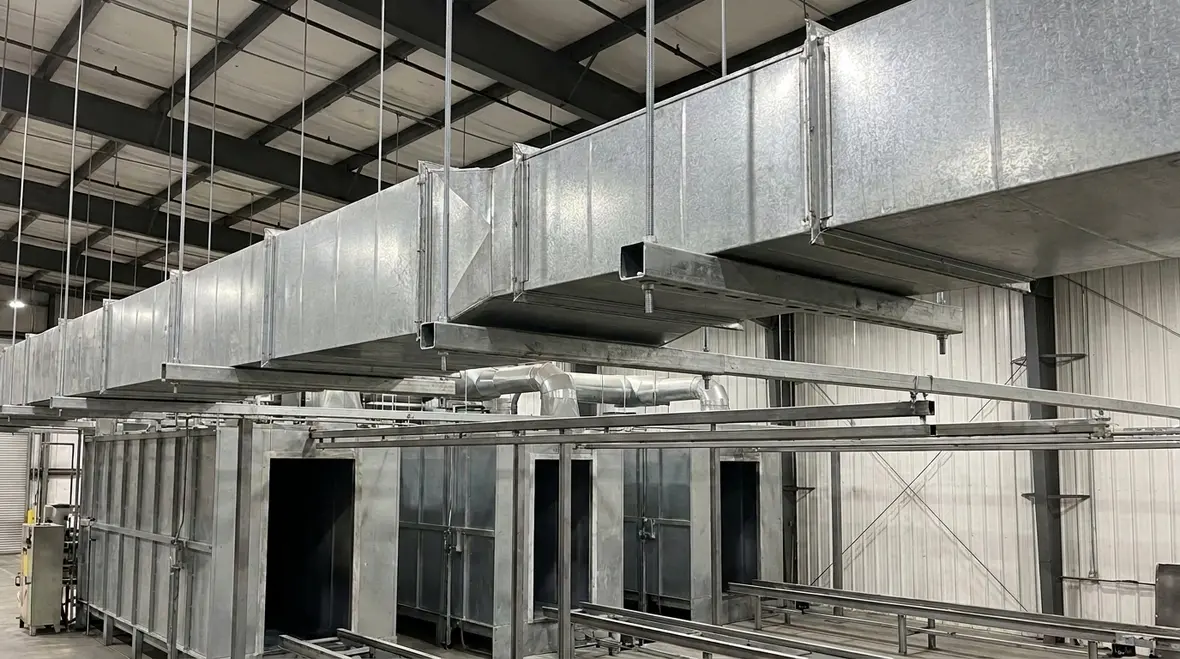
NFPA 34 Section 7.8: Supporting Exhaust Ducts in Coating Plants
Quick Answer
NFPA 34 Section 7.8 sets expectations for how exhaust ducts supporting air conveyance in coating operations must be installed and maintained. The core goal is to prevent structural failure, misalignment, and unsafe sagging or detachment that can create fire and exposure hazards.
For facilities refining inspection readiness and compliance workflows, fire safety system documentation for compliance is a useful related resource near the top of the process, especially when support conditions, maintenance records, and corrective actions all need to line up cleanly. ([kordfire.com](https://kordfire.com/fire-safety-system-documentation-for-compliance/?utm_source=openai))
Why NFPA 34 exhaust duct support matters in real coating operations
In coating plants, exhaust duct systems move solvent laden air, overspray, and particulate. Even when the duct is properly sized and sealed, the system can become unsafe if supports fail, settle, or are installed in ways that allow excessive load transfer to joints and connections. NFPA 34 exhaust duct support requirements focus on keeping the duct stable under thermal cycling, vibration, mechanical loads, and maintenance activities so the system continues to perform as intended.
Commercial facilities often face compliance pressure from fast production schedules, equipment relocations, tenant fit outs, and retrofit projects. Those changes can introduce new loads and cable or hanger conflicts that were not part of the original design. A practical approach requires both correct initial support installation and a disciplined inspection and maintenance program.
Section 7.8, what the requirement is trying to prevent
NFPA 34 Section 7.8 addresses support and restraint of exhaust ducts used in coating operations. The intent is straightforward: ducts must remain structurally sound and properly aligned during normal operation and likely upset conditions. That means ductwork should not sag, distort, or pull apart at seams and connections, and it should not experience uncontrolled movement that can stress hangers, supports, flexible connectors, or penetrations.
Common hazards tied to poor duct support
- Sagging duct runs that trap residue and reduce airflow while increasing corrosion and fire load potential.
- Overstressed joints and seams that open under vibration or thermal expansion, allowing leakage of flammable vapors.
- Misalignment at transitions that interferes with dampers, fans, and flexible connections.
- Hanger failure or pull out due to undersized hardware, incorrect anchorage, or unverified load ratings.
- Support gaps that develop after maintenance or duct modifications, leading to renewed stress points.
How to meet NFPA 34 exhaust duct support requirements during design and installation
Compliance starts before the first hanger is set. Facility teams should coordinate duct routing, support spacing, hardware selection, and anchorage design with the duct material, diameter, routing complexity, and expected thermal conditions.
1) Determine loads and expected movement
Support engineering needs to account for the duct weight, internal air and particulate loading, and the effect of thermal expansion or contraction. Coating plants commonly experience temperature changes from start up, shutdown, cleaning cycles, and intermittently operating fans. Supports must handle those movements without creating stress concentrations at joints.
2) Use rated hangers and anchors
Supports must use hardware appropriate to the load and environment. Solvent and moisture exposure can accelerate corrosion. Anchors and fasteners must be compatible with the construction materials and should be selected for the loads expected from the duct plus any dynamic forces.
Inspection teams should treat “looks sturdy” as insufficient evidence. Confirming load ratings, installation torque where applicable, and hardware compatibility is often the difference between a documented compliance position and an unresolved deficiency.
3) Keep duct sections stable at transitions and heavy components
Exhaust systems frequently include elbows, offsets, damper assemblies, fan inlets, and duct transitions. These locations concentrate stress. Supports must reduce bending and lateral movement at these change points so the system does not rely on joint integrity alone.
4) Avoid overreliance on flexible connections
Flexible connectors help accommodate some alignment changes. They are not intended to compensate for poor duct support or sagging. When duct support is inadequate, flexible sections can overextend, fatigue, and fail, which increases leakage risk and undermines the duct’s mechanical stability.
Inspection and maintenance: how facilities prove compliance over time
NFPA 34 compliance is not a one time installation event. Exhaust duct supports degrade from corrosion, vibration, and building settlement. A strong maintenance program verifies that supports remain effective and that duct alignment stays within safe tolerances.
What inspectors typically look for
- Hanger condition: corrosion, deformation, missing components, cracked or loose attachments.
- Spacing and alignment: evidence of sagging, uneven spacing, or shifting duct sections.
- Joint condition: opened seams, damaged couplings, and leakage signs at flanges or connections.
- Penetrations and structural interfaces: deterioration around wall or roof penetrations where duct movement can create gaps.
- Residue and corrosion patterns: build up that indicates airflow imbalance or duct distortion.
Operational practices that trigger support failures
Support problems often surface after operational changes. When a facility increases exhaust capacity, changes fan speeds, adds production lines, or modifies spray equipment, the duct system experiences different pressure and vibration profiles. Maintenance activities also matter. Duct sections moved during cleaning or retrofit work can leave temporary support gaps or misposition hangers that later become permanent.
Kord Fire Protection supports commercial facilities with ongoing compliance services that include inspection readiness support, documentation review, and practical maintenance guidance. This helps ensure NFPA 34 exhaust duct support requirements remain met between major project milestones, not just at the moment installation paperwork was completed. Kord Fire describes its broader fire protection offering as a compliance-focused service model covering inspections, preventive maintenance, repairs, upgrades, and system restorations. ([kordfire.com](https://kordfire.com/?utm_source=openai))
For related guidance, facilities can also review applicable fire protection and life safety resources from Kord Fire Protection services. ([kordfire.com](https://kordfire.com/?utm_source=openai))
Common noncompliance findings and how to correct them
Experienced field teams often see predictable patterns. Identifying them early reduces repair downtime and lowers the chance of repeated defects.
Deficiency pattern 1: insufficient or inconsistent support
Some duct runs show irregular hanger spacing or supports installed only at access points. That approach can allow long spans to sag after residue accumulation or during thermal cycling. Correction usually involves verifying the support design basis and installing additional rated supports where needed.
Deficiency pattern 2: damaged or corroded hardware
Hangers and fasteners can corrode where solvent mist or cleaning chemicals collect. Once corrosion reduces cross section, hardware may not safely carry expected duct loads. Correction involves replacing compromised components and reviewing material compatibility for the plant environment.
Deficiency pattern 3: incorrect anchorage or failed attachments
Anchors can fail when they are not designed for duct loads or when installation methods were not verified. Correction requires re evaluation of anchorage capacity and reinstalling according to engineering or documented procedures.
Deficiency pattern 4: duct modifications without support updates
Fit outs and equipment upgrades often change duct routing, add elbows, or alter fan inlets. If the support scheme does not update with those changes, loads shift to weaker segments. Correction involves re confirming support requirements for the modified layout and documenting the change.
Frequently Asked Questions
Need help aligning your duct system with NFPA 34?
Schedule a technical assessment with Kord Fire Protection to verify your exhaust duct support condition, identify likely failure points, and produce actionable recommendations for inspection and maintenance. This approach helps commercial coating facilities maintain compliance, reduce downtime from corrective repairs, and keep duct systems stable through production changes. Contact Kord Fire Protection today to start a compliance focused evaluation.

Join Our Newsletter!
Get the latest fire safety tips delivered straight to your inbox From our Newsletter.



