
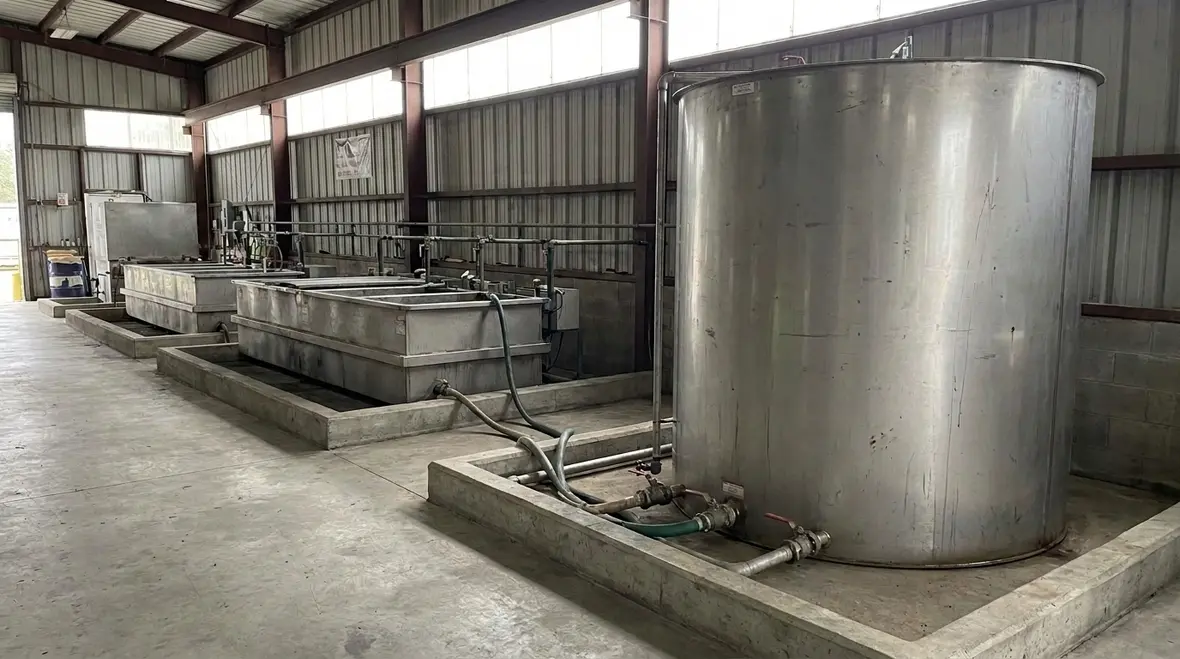
NFPA 34 Section 5.8: Salvage Tanks for Spilled and Overflowed Liquids
Quick Answer: NFPA 34 Section 5.8 requires facilities to provide approved salvage tank arrangements for spilled and overflowed liquids from dip or similar handling operations. The system must prevent uncontrolled releases, support safe transfer and containment, and remain maintainable through inspection and routine testing.
If your facility is tightening up broader special hazard protection and inspection readiness, fire suppression system services can help connect containment, inspections, maintenance, and code-aligned field performance into one practical strategy.
What NFPA 34 Section 5.8 demands for salvage tanks
Facilities operating dipping, cleaning, and related liquid handling processes must control spilled and overflowed liquids through approved salvage tank provisions. In practical terms, this means the plant needs a containment strategy that captures abnormal releases and routes them into a controlled, segregated, and safe-to-handle tank system. In day to day operations, NFPA 34 salvage tank requirements dipping plants often create the most friction where drainage, tank interfaces, and overflow paths are not engineered as a complete system.
Section 5.8 focuses on the objective: abnormal liquid events must not escape to drains, grade, or adjacent areas in a way that increases fire risk, environmental exposure, or emergency response burden. The arrangement must support safe transfer, inspection, and maintenance so the safeguard works when it matters most.
Where salvage tanks apply in dipping and overflow scenarios
Salvage tank provisions typically come into play when a dipping operation presents credible pathways for spills and overflows, including:
- Overfill during filling of dip tanks or transfer tanks
- Overflow from primary dip tanks during normal operation due to level control failure or load changes
- Spills caused by transfer hose disconnection, pump failures, or splash during withdrawal
- Runoff from floors, containment curbs, or drip zones that can accumulate and exceed containment capacity
From a compliance standpoint, the facility needs to define how abnormal liquid is expected to behave. That includes the predicted flow path from the point of release to the eventual collection point. Weak links frequently appear at the transitions between process containment and the salvage system, such as floor drains that bypass curbing, sumps without engineered isolation, or piping valving that cannot be reached safely during an incident.
Core design and operational expectations for the salvage tank system
Although exact construction details vary by facility and the nature of the liquids handled, Section 5.8 drives several consistent requirements that auditors and insurers look for during plan review and field inspections.
1) Containment and routing: control the path, not just the tank
Salvage tanks do not work in isolation. The plant must show that liquid leaving the dip area will route into the salvage tank system rather than escaping to uncontrolled locations. Typical compliance evidence includes:
- Documented drainage and overflow routes from dip area to containment and then to salvage
- Properly sized and directed curbing or containment barriers
- Isolation of drains and sumps that could otherwise become uncontrolled release points
- Clear labeling and identification of the salvage system, especially near valves and connections
2) Safe transfer: move salvaged liquids without creating new ignition hazards
Once captured, the liquid must be handled in a way that supports safe transfer and disposal. Facilities typically need mechanisms and procedures that address:
- Transfer method selection that reduces splash and aerosolization where applicable
- Bonding and grounding practices for mobile transfer operations when flammable liquids are involved
- Use of compatible hoses, fittings, and couplings that resist degradation from the stored liquids
- Defined transfer intervals and tank management procedures to prevent chronic overfilling
3) Maintainability: inspection access, cleanout, and integrity
Salvage tanks often accumulate sediment, residues, and emulsions depending on the chemicals used in the dipping process. A common failure point is systems that meet initial installation intent but become unreliable due to lack of cleanout access or inadequate maintenance planning. Strong compliance programs include:
- Access routes for inspection and safe entry where applicable
- Clear cleanout procedures and schedules based on process residues
- Documented integrity checks for tanks, piping, valves, and connections
- Leak detection or visual monitoring appropriate to the tank configuration
Common compliance challenges for salvage tanks at dipping plants
Many dipping facilities discover gaps during walkdowns, usually tied to how the safeguard performs under abnormal conditions. The most frequent issues include:
- Uncontrolled floor drainage: floor drains or trench drains that connect to systems not isolated from the process area.
- Overflow paths that skip the salvage tank: design changes after commissioning that reroute piping or modify curbing.
- Valving and connection confusion: valves that are not clearly identified, are difficult to operate, or rely on personnel knowledge not captured in procedures.
- Inadequate tank capacity assumptions: salvage tanks sized without considering credible overflow duration and drainage time.
- Maintenance deferred: residues reduce effective capacity, restrict flow, or compromise seals and fittings.
- Documentation gaps: incomplete drawings, missing inspection records, and no defined corrective action triggers.
Operational readiness matters. A salvage arrangement that exists on paper but cannot be verified, cleaned, and maintained routinely often fails inspection and, more importantly, fails during real incidents.
Inspection, testing, and maintenance program expectations
NFPA 34 compliance is not a one time event. Section 5.8 salvage safeguards must remain functional through an ongoing program that aligns with the facility risk and the operating profile.
What a strong compliance inspection typically includes
- Verification of the drainage and overflow pathway from the dip area to the salvage tank inlet
- Verification that isolation valves and diversion components are present, accessible, and in workable condition
- Field verification of signage and procedural references near the operating points
- Condition check of tank internals as accessible, including evidence of corrosion, deformation, or residue buildup
- Inspection of piping supports, hangers, and connection integrity to reduce leak risk
Maintenance actions that prevent recurring failure
Facilities reduce surprises by building maintenance into plant routines, not only during shutdowns. Key actions often include:
- Scheduled cleanouts based on measured residue accumulation trends
- Seal and gasket inspection for compatible chemical resistance
- Valve cycling checks where valves are used for diversion and isolation
- Review of incident logs and near misses to update operating procedures
For ongoing compliance support, Kord Fire Protection helps commercial and industrial facilities maintain NFPA-aligned readiness through inspection support, documentation assistance, and preventive maintenance planning. If the facility needs to tighten its salvage tank program, Kord Fire Protection can help translate requirements into field verified performance.
How Kord Fire Protection supports NFPA 34 salvage tank compliance
Commercial facilities often struggle with the “system” nature of Section 5.8. The safeguard spans containment, drainage, valves, tank integrity, and procedures. Kord Fire Protection supports dipping plants and similar operations with practical, audit ready verification that connects design intent to field performance.
For further fire protection planning context and compliance resources, review Kord Fire Protection to understand how the organization approaches engineered risk control and ongoing readiness. You can also explore fire safety system documentation for compliance for a related look at keeping inspection records, corrective actions, and field verification organized before an auditor gets cute.
Frequently Asked Questions
Next step: confirm your salvage system works as a system
Salvage tanks meet Section 5.8 only when the full capture, routing, transfer, and maintenance workflow performs reliably. Schedule a Kord Fire Protection compliance review to validate drainage paths, overflow routing, valve operability, and tank readiness, and to close the gaps that frequently cause inspection findings at dipping plants.

Join Our Newsletter!
Get the latest fire safety tips delivered straight to your inbox From our Newsletter.



