
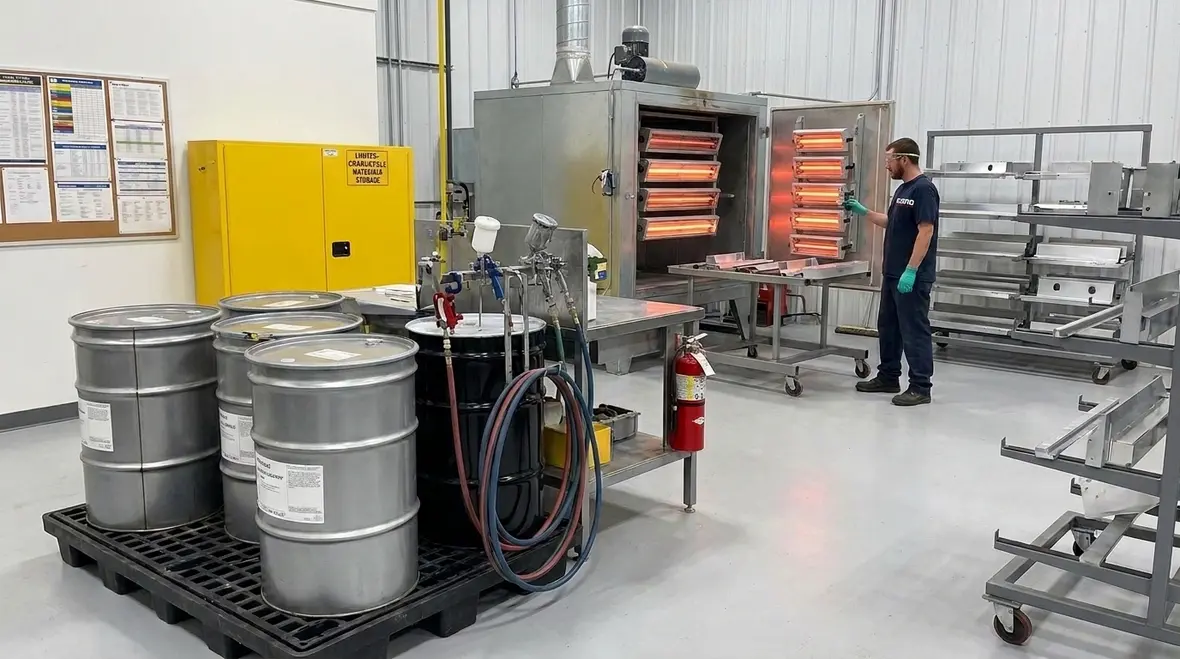
NFPA 34 Section 4.6: Limited-Combustible Materials in Coating Operations
Quick Answer: NFPA 34 Section 4.6 addresses how facilities handle, store, and use limited-combustible materials during coating operations. Compliance focuses on controlling ignition sources, managing quantities and locations, and maintaining safe housekeeping and operational discipline to prevent fire spread and escalation.
For facilities building a broader compliance strategy around coatings, drying areas, and support systems, fire protection services in Southern California can help connect inspection planning, maintenance support, and operational readiness into one cleaner path.
What NFPA 34 Section 4.6 Requires in Coating Operations
NFPA 34 limited-combustible material coating operations govern the safe use of materials that are less prone to ignition than ordinary combustibles, but still represent a meaningful fire load in industrial and commercial environments. Section 4.6 does not rely on “material label alone.” It expects facilities to demonstrate safe storage practices, controlled conditions, and sustained control of ignition hazards associated with coating processes.
In real-world coating rooms, failure patterns usually come from operational drift: containers accumulate beyond intended limits, spill cleanup routines lag behind production pace, ventilation effectiveness degrades, and hot work or electrical issues occur adjacent to coating materials. Section 4.6 helps address these vulnerabilities by requiring a disciplined approach to limited-combustible materials throughout their handling cycle.
Where Limited-Combustible Controls Actually Matter
Commercial, industrial, and retail facilities often treat “limited-combustible” as a lower risk category, then unknowingly place it into high risk contexts. The controls in Section 4.6 become most critical in these coating operation zones:
- Mixing and transfer areas: Where containers open frequently and residue can accumulate around pumps, hoses, strainers, and drums.
- Application lines: Where overspray or vapor displacement can deposit coating solids onto floors, grates, and ventilation components.
- Cure and drying transitions: Where hot surfaces, infrared heaters, or airflow changes can increase ignition risk from deposits.
- Storage rooms and staging racks: Where “temporary” placement turns into long-term storage and where loading patterns exceed design assumptions.
- Waste handling and drum management: Where wipes, rags, filters, and residues behave differently than the bulk material.
From a fire protection perspective, the risk profile often aligns less with the bulk chemical classification and more with how the material is handled, cleaned, and maintained. Limited-combustible controls only work when the facility controls accumulation, ignition exposure, and ignition source management.
Operational Compliance: Handling, Storage, and Quantity Discipline
Section 4.6 emphasizes practical controls that facilities can sustain during shift operations. For coating operations, compliance typically depends on a combination of procedures and physical safeguards.
Container management and working limits
Facilities should maintain clear rules for the maximum quantity of limited-combustible material allowed in coating production areas. The common gap is the difference between what an inspection expects and what production practices allow. Examples include:
- Multiple partially filled containers staged near the line due to workflow convenience.
- Unlabeled drums or “in process” containers without clear content identity.
- Excess waste material kept adjacent to the operation rather than managed on a defined schedule.
A compliance-ready approach uses defined transfer routes, a controlled staging location, and documented return-to-storage requirements at the end of each shift or production batch.
Separation, layout, and fire spread control
NFPA 34 controls support fire resistance and limit spread pathways between ignition sources, storage, and application equipment. In coating operations, that usually means controlling:
- Proximity between heaters, electrical panels, and material storage or staging.
- Barrier placement and clearances around drums, carts, and totes.
- Pathways used for material movement that should remain unobstructed for emergency response.
Housekeeping as a fire protection system
Limited-combustible does not mean “no concern.” Coating solids, overspray residue, and dried film can become ignitable in the presence of ignition sources. Facilities should treat housekeeping as a core compliance function by:
- Using cleaning methods that remove residues from floors, cable trays, and ventilation components.
- Implementing spill response that stops material accumulation before it spreads or dries.
- Maintaining waste containers and preventing overflow or mixed waste buildup.
Inspection Readiness: What Inspectors Look For
When fire officials or insurance surveyors evaluate NFPA 34 compliance for limited-combustible coating operations, they typically assess more than documentation. They look for operational evidence that controls remain effective during real production conditions.
Common inspection focal points
- Material condition and labeling: Containers should be properly identified and free of misleading or degraded labeling that hides content risk.
- Storage condition: Drums and totes should be stored as designed, not positioned where transfers commonly leak or where spill cleanup is ignored.
- Residue accumulation: Inspectors may look for dried coating film and overspray deposits around application equipment, heater zones, and ventilation plenums.
- Waste management: Rags, wipes, filters, and residues require consistent handling practices, not ad hoc storage.
- Electrical and ignition sources: Loose connections, damaged enclosures, and improper use of temporary equipment often surface during walkdowns.
Maintenance records that actually matter
Compliance improves when maintenance records confirm performance of fire-critical components tied to the coating process. Examples include ventilation system inspections, heater and temperature controls verification, and routine checks of fire protection systems serving coating areas.
For facilities seeking defensible readiness, Kord Fire Protection supports commercial and industrial clients through ongoing inspection support, maintenance planning, and documentation that aligns with typical surveyor expectations. If your operation includes coating lines, drying systems, or mixed material storage, Kord helps ensure fire safety performance remains consistent between inspections.
Equipment Mechanisms and Failure Points in Coating Rooms
Even when materials meet “limited-combustible” classification, coating operations involve equipment that can create ignition hazards through normal wear, misuse, or maintenance gaps.
Transfer systems, hoses, and pump stations
Failure points include leaking fittings, degraded hose sections, and residue buildup around pump seals. Leaks usually become a fire issue through two mechanisms: material accumulation and ignition exposure. Facilities should consider:
- Scheduled inspection of hose ends, couplings, and gaskets.
- Drain and collection practices that prevent pooling under fittings.
- Cleaning routines that remove dried film and prevent deposit growth around pump components.
Drying and cure areas
Heating equipment introduces risk from hot surfaces and temperature excursions. Common issues include reduced airflow efficiency, sensor calibration drift, blocked ducts, and worn heating elements. These failures can increase the likelihood of ignition of residues and deposits.
Ventilation and exhaust components
Ventilation helps manage airborne particles and vapors that can contribute to ignition risk. When fans lose capacity due to dust loading or when exhaust pathways become partially blocked, residues can accumulate in places that do not get cleaned on the production schedule. That shift can increase fire load, particularly near electrical connections and heater zones.
These mechanisms show why compliance must be operational, not only procedural. Kord Fire Protection can assist with site-level fire safety verification strategies that account for the practical realities of coating room operation and maintenance.
How to Build a Sustainable Compliance Program
Facilities achieve the best NFPA 34 outcomes when they treat Section 4.6 controls as part of a broader fire safety management system. The goal is consistent performance during peak production and shift changes.
Recommended program components
- Written procedures: Define maximum in-process quantities, staging locations, spill response, and end-of-shift container return practices.
- Training and accountability: Train operators to recognize conditions that exceed intended storage and to execute cleanup procedures without shortcuts.
- Routine inspections: Use checklists to verify container labeling, housekeeping, and the condition of transfer lines and waste containers.
- Preventive maintenance: Tie inspection intervals to equipment wear points such as pumps, heaters, exhaust fans, and sensor calibration schedules.
- Documentation readiness: Maintain records that reflect the actual operating state, including maintenance logs and inspection findings.
If you need a practical partner for ongoing compliance and verification, Kord Fire Protection supports commercial facilities with fire protection services aligned to the needs of industrial and coating environments.
Frequently Asked Questions
Conclusion and Call to Action
NFPA 34 Section 4.6 requires more than relying on “limited-combustible” labels. It calls for disciplined control of storage, staging, housekeeping, ignition sources, and equipment performance throughout coating operations. If your facility runs coating lines, drying areas, or frequent container transfers, act now: partner with Kord Fire Protection to review your operational hazards, strengthen inspection readiness, and maintain ongoing compliance through documented testing and maintenance support.

Join Our Newsletter!
Get the latest fire safety tips delivered straight to your inbox From our Newsletter.



