
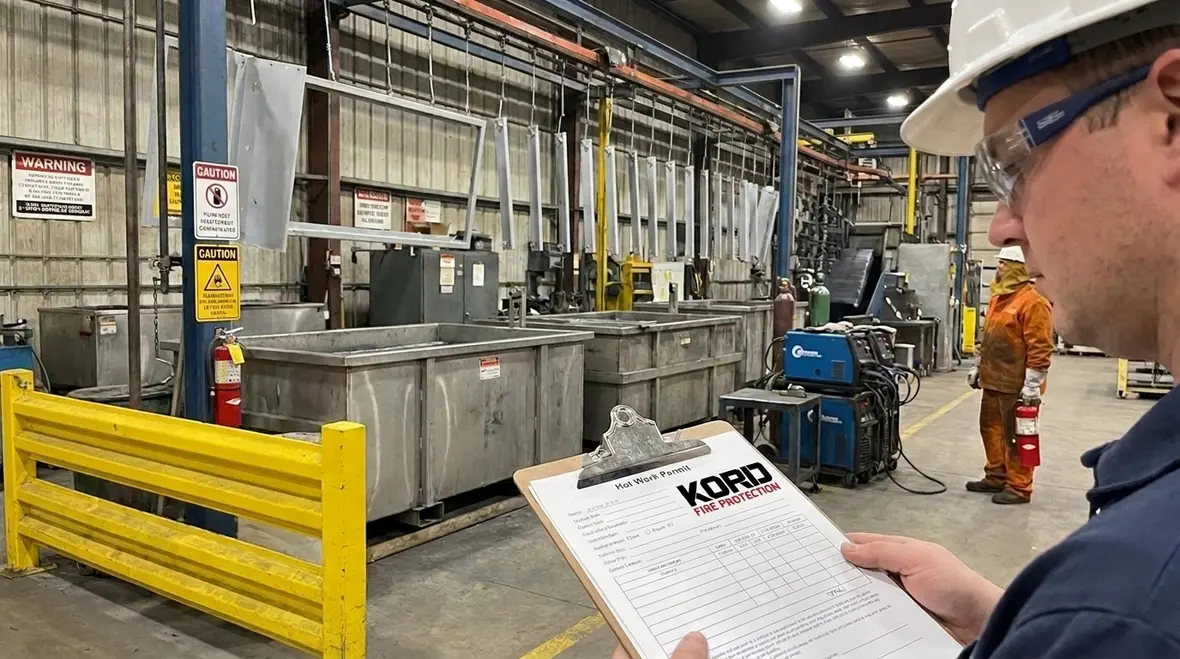
NFPA 34 Section 10.8: Hot Work Permits in Dipping and Coating Facilities
Quick Answer: NFPA 34 Section 10.8 requires a controlled hot work permit process in dipping and coating facilities to prevent ignition of flammable vapors, liquids, and residues. The system depends on pre-job hazard review, fire watch controls, safe work boundaries, and documented authorization before any spark or flame-producing activity.
What NFPA 34 Section 10.8 requires, and why it matters in coating operations
In dipping and coating facilities, hot work can ignite flammable vapors from tanks, dip baskets, dryers, ovens, solvent handling areas, and even dried residues on equipment surfaces. NFPA 34 hot work permit coating facility requirements focus on controlling the ignition sources, verifying that the area is made safe, and ensuring the permit does not become a checkbox that fails during real operations.
This topic is often misunderstood because coating lines operate in multiple zones, with shifting airflow, changing solvent conditions, and frequent start and stop cycles. Compliance becomes less about the existence of a permit form and more about the operational effectiveness of the permit process.
If you are tightening life safety support around these procedures, Kord Fire Protection also provides commercial fire alarm services that fit naturally into broader compliance planning for industrial and coating environments.
How the permit process should work in the field
A compliant permit program under NFPA 34 Section 10.8 is built around a structured sequence. Facilities should treat each hot work task as unique, especially where coatings, solvents, and residues change with product formulations, cure schedules, and cleaning practices.
1) Pre-job hazard review: identify what can burn and how it can reach an ignition source
Before approval, the authorized permit issuer should evaluate ignition risks specific to the dipping or coating operation. This includes: nearby open solvent containers, exposed coating lines, ventilation status, the presence of flammable residues in drip zones, and ignition propagation pathways through ducts, trenches, cable trays, and floor drains.
Common failure points include assuming that “the tank is covered” or “the solvent is low.” A permit should consider vapor hazards as well as liquid and residue hazards, because vapors can migrate even when tanks look inactive.
2) Define the work boundaries and control access
Hot work permits should establish a clear boundary for where sparks, slag, or heat could travel. In coating facilities, that boundary often extends beyond the immediate repair location to include adjacent coating benches, overhead ducting, conveyor frames, and any sheltered areas where vapors can accumulate.
Personnel should control access so that only tasks connected to the job proceed in the hot work zone. Unauthorized work near solvents or recently cleaned equipment increases the likelihood that an ignition source becomes effective.
3) Authorization before ignition: the permit is a gate, not paperwork after the fact
NFPA 34 expectations typically require that the permit be reviewed and approved before hot work begins. When permits are completed after start time, the organization loses the ability to verify atmosphere, housekeeping condition, and isolation status. The permit should also define responsibilities, including who can cancel the job and who maintains safety controls during the work.
Area preparation and safeguards that prevent ignition during coating and drying cycles
In dipping and coating facilities, “safe hot work” depends on more than removing clutter. It requires deliberate preparation that addresses vapor release, residue ignition, and hidden combustibles.
Hot work near tanks, dip lines, and solvent systems
When hot work occurs near tanks or solvent transfer lines, the facility should verify the state of the system before work starts. Practical controls include isolation and draining to the extent necessary, removal of ignition capable residues, and confirmation that solvent vapors are not present at hazardous concentrations where sparks could ignite.
Where complete removal is impractical, the permit should clearly state additional controls, such as increased ventilation verification, fire resistant shielding, and continuous monitoring as determined by the site’s written safety procedures and competent industrial hygiene practices.
Cleaning and residue removal: the hidden ignition source
Dipping and coating operations produce residues that can cling to hangers, drip trays, channel edges, and frames supporting moving parts. These residues can ignite when exposed to sparks or slag. A strong permit process requires housekeeping verification immediately before work, with documentation of what was removed and what safeguards were installed.
Facilities frequently miss residue under insulation, behind panels, around cable penetrations, and on overhead structures. These areas often require physical inspection, not just a visual scan from ground level.
Fire watch and extinguishing capability
Hot work should include a fire watch approach that matches the actual risk. The fire watch should have clear authority to stop work if hazards change, and they should maintain situational awareness for smoldering ignition that can occur after the visible sparks stop.
Extinguishing equipment should be appropriate for the hazards present and positioned so it is immediately accessible. In coating facilities, extinguishers and suppression approaches should align with the facility fire protection design and the expected fuel and vapor hazards in the immediate area.
Inspection and documentation standards that support audit readiness
NFPA 34 hot work permit coating facility requirements rely on documentation that reflects real conditions. Auditors typically look for consistency across permits, verification activities, and training records.
What to document on the permit
- Identity of the work, location, and time period the permit covers
- Specific hazards reviewed for the dipping or coating environment
- Isolation actions taken, including system status and area preparation
- Fire watch responsibilities and duration
- Required controls such as barriers, ventilation verification, and monitoring
- Extinguishing and emergency response readiness
Post hot work follow-up: smoldering risk is real
Coating residues can smolder and reignite after the work ends. The permit system should include a defined watch period after hot work stops. The duration should reflect the work type, materials present, and facility conditions. Inspections should confirm that no ignition sources remain in hidden areas.
Inspection cadence and maintenance of supporting safeguards
Even the best permit process can fail if supporting equipment is unreliable. Smoke detection, alarm annunciation, suppression readiness, portable extinguishers, and emergency communications should remain in working order. Kord Fire Protection supports ongoing compliance through testing and maintenance programs that help keep life safety and fire protection systems dependable in busy coating environments.
For related guidance on safeguarding commercial properties, see Streamline Fire Alarm Maintenance Schedules for Compliance.
Why hot work permits fail in coating facilities, and how to fix it
Many compliance gaps stem from operational pressure, changing production schedules, and unclear roles. The following issues commonly undermine NFPA 34 hot work permit coating facility requirements.
Failure point 1: incomplete isolation and underestimated vapor migration
Vapors can move through ventilation systems, gaps around panels, or open conduits. A permit that treats the tank area as a sealed box without verifying surrounding conditions invites ignition.
Corrective action: require documented verification of solvent system status, ventilation conditions, and boundary selection that matches airflow and enclosure realities.
Failure point 2: superficial housekeeping checks
Residues on fixtures, drip areas, and overhead supports can ignite from a small spark. Relying on “looks clean” inspections misses the ignition capable material.
Corrective action: enforce a defined pre-job cleaning verification step for high risk zones, including under attachments and on overhead structures.
Failure point 3: fire watch not empowered or not connected to real risk
A fire watch without authority or without full zone awareness becomes a passive observer rather than a risk control.
Corrective action: assign trained fire watch personnel, define stop work authority, and include a post hot work inspection routine.
Failure point 4: permit controls not integrated with production realities
Coating schedules may change quickly. If the permit process does not synchronize with operations, a job can proceed while conditions shift.
Corrective action: require periodic hazard reassessment during the job and a mechanism to cancel or renew the permit when conditions change.
Frequently Asked Questions
Put NFPA 34 hot work controls into practice
NFPA 34 Section 10.8 works only when permits drive real hazard verification, boundary control, residue removal checks, and post hot work follow up. If your dipping or coating facility needs stronger audit readiness, Kord Fire Protection can support a practical compliance program through testing, inspection coordination, and maintenance of fire protection systems that keep your hot work controls effective. Contact Kord Fire Protection to review your hot work permitting and related fire protection readiness today.

Join Our Newsletter!
Get the latest fire safety tips delivered straight to your inbox From our Newsletter.



