
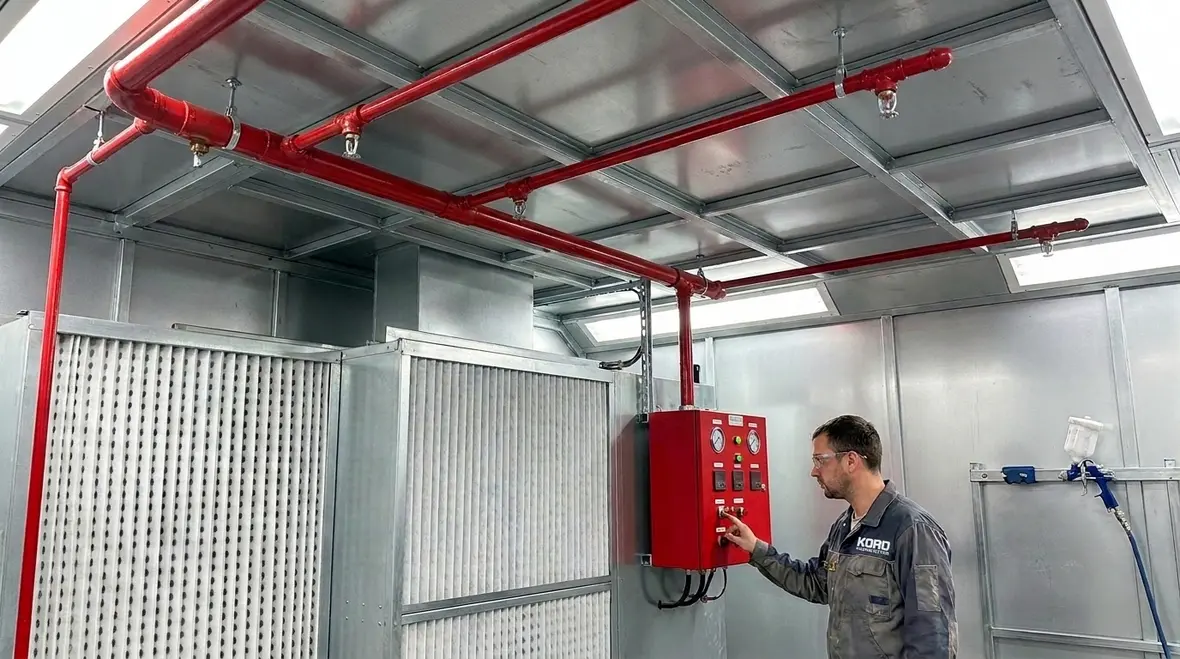
NFPA 33 Section 9.5: Protection Systems for Spray Areas
Quick Answer: NFPA 33 Section 9.5 sets the expectations for fire and explosion protection in spray areas, including how protection systems operate, where they are installed, and how they are maintained. Meeting these requirements helps facilities control ignition sources, limit fire growth, and sustain safe operation over time.
Facilities that need broader support for inspections, testing, and corrective action planning can also explore fire protection services in Southern California from Kord Fire Protection. For spray operations specifically, it is also useful to review spray booth fire suppression for safer paint operations when aligning booth hazards, shutdown logic, and maintenance planning.
Why NFPA 33 spray area protection matters in real facilities
Facilities that operate spray processes manage a predictable set of hazards: flammable vapors, combustible residues, and ignition sources that can appear during normal operations. NFPA 33 spray area protection systems requirements address these hazards through engineered controls, monitoring, and protection system integrity. When organizations treat Section 9.5 as a one time installation activity rather than an ongoing compliance program, they commonly run into failed inspections, delayed response, and system impairment during service outages.
For commercial, industrial, and retail environments such as coating lines, adhesive application rooms, refurbishing bays, and paint retail backrooms, the operational goal remains consistent: protection systems must work when needed and must remain reliable between inspections. A best practice approach pairs system design compliance with disciplined testing, inspection documentation, and timely maintenance.
What Section 9.5 expects from protection systems in spray areas
NFPA 33 Section 9.5 focuses on protection systems intended to reduce fire and explosion consequences associated with spray operations. In practice, compliance requires facilities to ensure that protection systems are compatible with the spray area classification and the specific process hazards.
Key themes that drive compliance outcomes include:
Designed operation aligned with spray hazards. Protection systems must respond appropriately to the conditions created by spray processes, including vapor accumulation risk and residue ignition potential.
Proper placement and coverage. Equipment location impacts response time and activation reliability, especially where overspray and airflow patterns create uneven hazard distribution.
System integrity over time. Components degrade. Controllers, wiring, detection devices, and suppression mechanisms can fail silently without structured inspection and maintenance.
Compatibility with operations and housekeeping. In spray areas, overspray buildup and changes in ventilation performance can interfere with system performance, detection sensitivity, and reliable actuation.
To support broader compliance goals across the ventilation and equipment control chain, facilities often coordinate protection system planning with other relevant NFPA 33 requirements, including those governing spraying operations and protective controls.
Common system types used as “protection systems” in spray operations
Although the exact configuration depends on the process, layout, and hazard profile, protection strategies in spray areas typically include detection, shutdown and control actions, and suppression or mitigation features. Facilities should verify each system element supports the intent of Section 9.5, not just the presence of equipment.
1) Detection and control actions
Detection solutions may monitor conditions indicative of fire or unsafe process states. When detection triggers, control logic may initiate actions such as shutting down spray equipment, energizing ventilation controls in a safe manner, or alerting occupants and responding personnel. The compliance challenge often centers on interlocks and sequence of operation: the system must respond as intended under real operating conditions, not only during acceptance testing.
2) Suppression and mitigation features
Where suppression is used, the delivery mechanism must achieve reliable coverage of the hazard area and function within the required operational envelope. Failure points include clogged nozzles, depleted actuation or power sources, obstructions from construction or stored materials, and improper inspection intervals that allow degraded performance to go unnoticed.
3) Alarm, notification, and emergency response integration
Even robust suppression performance cannot compensate for poor communication. Section 9.5 compliance generally depends on consistent alarm outputs, emergency signaling, and clear procedures for facility staff. Facilities should confirm that notification devices remain unobstructed, audibility is appropriate, and documented response procedures match the installed equipment and activation sequences.
Where facilities struggle: placement, interlocks, and maintenance gaps
Most enforcement and inspection issues tie back to predictable operational weaknesses. These are the areas to audit early, especially for multi shift commercial or industrial operations.
Placement does not guarantee performance
Protection equipment can be installed “per plan” and still underperform due to changes in spray patterns, airflow, rack layouts, or routine operational adjustments. Facilities should confirm that system coverage and activation logic remain valid after process modifications. Common real world examples include relocated hoses, changed spray gun types, new product chemistry that alters volatility, and ventilation balancing changes.
Interlocks drift out of spec
Interlock failures are frequently caused by wiring changes, control panel modifications, partial repairs, or vendor changes during production upgrades. A typical gap involves shutdown sequencing that occurs inconsistently, such as spray equipment remaining energized during certain fault scenarios. These issues often only surface during functional testing.
Maintenance documentation is incomplete or not aligned to risk
Facilities sometimes follow a calendar inspection schedule but do not maintain the evidence trail needed to prove ongoing compliance. Inspectors typically look for complete records tied to the equipment installed, the test methods used, and corrective actions taken. Without this, the facility may fail the compliance audit even when the systems appear to operate during a single observation.
If the facility also needs broader life safety support beyond the spray area itself, Kord Fire Protection can help establish integrated inspection and maintenance programs that support consistent readiness. For service planning, see Kord Fire Protection.
Inspection, testing, and functional verification that stand up to scrutiny
Section 9.5 expectations translate into practical actions: facilities must inspect, test, and verify protection systems under conditions that reflect actual operation. This typically includes visual inspection, verification of control logic, functional tests of detection and actuation pathways, and confirmation that alarm and emergency responses work as documented.
Operational readiness checklist for spray area protection
Visual inspection of detection devices, nozzles, wiring runs, power supplies, control panels, and alarm components for damage, overspray contamination, and obstruction.
Functional verification of sequence of operation, including shutdown and notification actions, using approved test methods.
Verification of suppression delivery path, such as checking for obstructions, correct actuation status, and evidence of unobstructed discharge coverage.
Housekeeping and residue management alignment with protection performance. Overspray buildup can affect detection sensitivity and system surfaces.
Documentation that links each inspection to the specific installed components and includes corrective actions and retest results.
Because spray areas change over time, the best compliance outcomes come from routine, risk informed verification rather than reactive servicing after failures. Kord Fire Protection supports commercial facilities with structured testing and maintenance programs designed to keep protection systems reliable between regulatory visits. For more information, review Kord Fire Protection.
Design and change management: the compliance lever most teams miss
NFPA 33 spray area protection systems requirements are heavily influenced by how the spray area evolves. A common failure pattern occurs when facilities implement operational changes without evaluating their effect on protection system performance.
Practical change management actions include:
Re evaluation when processes change, including new coatings, adhesives, thinner chemistries, spray gun upgrades, and altered ventilation settings.
Verification after construction or layout changes, such as new storage racks, ceiling alterations, expanded workstations, or duct modifications.
Interlock and sequence re testing after any control system modification, including PLC updates, panel replacements, or wiring repairs.
This is where ongoing service partnerships reduce risk: they create a repeatable workflow for inspection planning, functional testing, corrective action, and verification after changes, helping facilities keep protection systems aligned with the intent of Section 9.5.
Frequently Asked Questions
Next step: bring Section 9.5 readiness into your maintenance program
Facilities that want dependable compliance should verify protection system coverage, functional sequences, and documentation quality on a recurring schedule and after any change. Kord Fire Protection helps commercial sites plan inspections, perform functional testing, and close corrective actions with clear reporting. Contact Kord Fire Protection to assess spray area protection system readiness and build an ongoing program aligned with NFPA 33 expectations.

Join Our Newsletter!
Get the latest fire safety tips delivered straight to your inbox From our Newsletter.



