
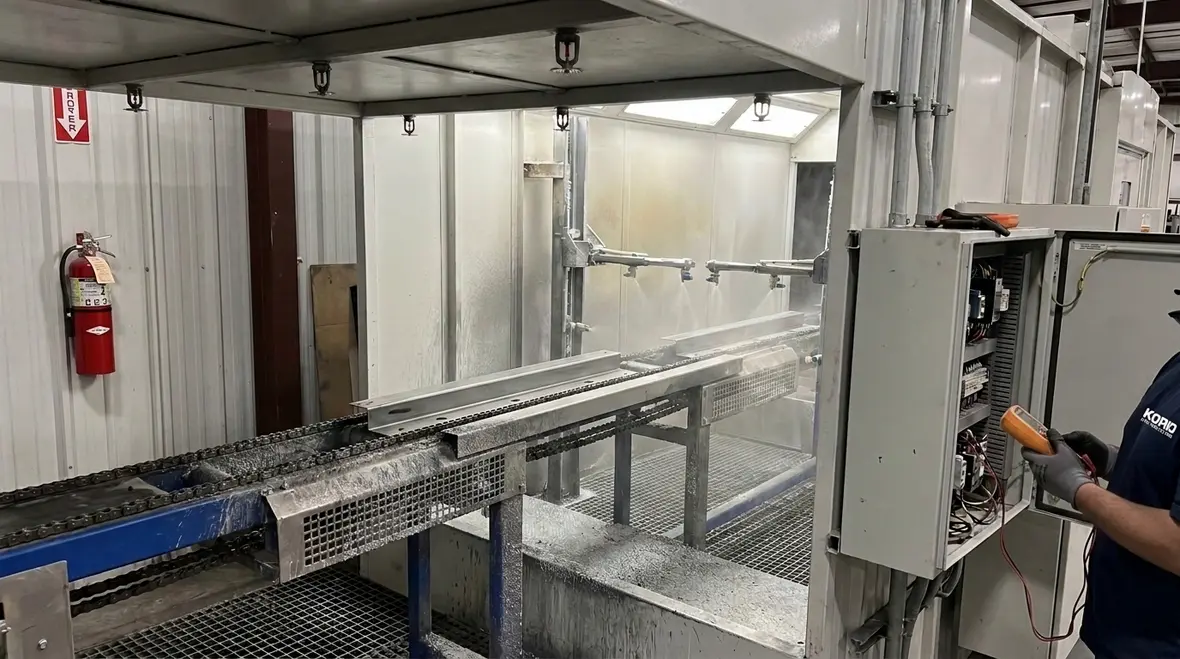
NFPA 33 Section 9.4: Conveyors in Spray Operations — Protection Rules
Quick Answer: NFPA 33 Section 9.4 establishes fire protection expectations for conveyors used in spray operations, focusing on ignition control, safe spacing, and protection of conveyor components from sprayed flammable coatings. Facilities must align conveyor design, detection, and suppression with the risk profile of the sprayed materials.
Facilities reviewing spray-line risk often also need a broader look at spray booth fire suppression for safer paint operations, especially when conveyor layout, overspray behavior, and system response all influence the same hazard zone.
What Section 9.4 requires for NFPA 33 conveyor protection spray operations
Conveyors often serve as the transport backbone of spray finishing lines, moving parts through zones where flammable or combustible coatings, solvents, and overspray are present. NFPA 33 conveyor protection spray operations addressed in Section 9.4 aim to prevent ignition sources from coupling with suspended vapor and particulate, and to reduce fire propagation through mechanical systems, enclosures, and accessory equipment.
In practice, compliance hinges on how the conveyor interacts with coating application, drying or curing transitions, and waste collection. Commercial facilities, industrial finishing plants, and even high volume retail assembly areas that use spray booths frequently discover that conveyor protection fails not at installation, but during maintenance, component replacement, or modifications to spray patterns, ducting, and waste handling.
Why conveyors become a risk driver in spray lines
Conveyor systems introduce unique ignition pathways because they combine moving hardware, heat producing elements, electrical controls, bearings, and often enclosed or semi enclosed runs. During spray operations, the combination of overspray, atomized coatings, solvent vapor, and deposited residue can create conditions where a normal operating component becomes a fault ignition source.
- Accumulation and residue: Coating overspray settles into conveyor housings, chain tracks, rollers, and skirt areas. Over time, residue builds and can ignite if exposed to an ignition event.
- Heat and friction: Bearings, drive motors, and friction points can exceed ignition sensitive thresholds when clogged with residue or when lubrication degrades.
- Electrical faults: Panel components, motor starters, and sensors may be impacted by overspray, solvent exposure, and condensation.
- Hidden spaces: Many conveyor runs include covers, baffles, or side panels that limit visibility and delay detection of smoldering conditions.
Section 9.4 does not treat the conveyor as a generic piece of equipment. It treats the conveyor as part of the fire risk system created by spray processes, where ignition sources and fuel laden deposits can coexist.
Section 9.4 protection rules: what facilities must control
NFPA 33 Section 9.4 protection rules focus on preventing ignition and limiting fire spread linked to conveyor use in spray operations. Compliance strategies typically include enclosure practices, ignition source management, and protective systems that coordinate with spray area hazards.
1) Limit ignition sources and manage hot surfaces
Conveyor components that can become hot during operation must be managed. Facilities typically address hot surfaces and friction sources through component selection, proper guarding, and maintenance controls. Where motors, drives, or other thermal components are used near areas impacted by overspray, the facility must ensure they remain protected from residue and solvent exposure.
Common failure point: Facilities replace worn rollers or bearings with parts that do not match the original material, sealing, or temperature rating. The system can operate normally until residue accumulation raises operating temperatures or interferes with heat dissipation.
2) Protect conveyor interiors and enclosure interfaces
Many lines include skirt boards, side panels, or conveyor channel covers. These elements must be designed and maintained so that sprayed material does not allow residue buildup to create a continuous fuel layer. Enclosure gaps and poorly sealed transitions frequently become deposit traps.
Inspection focus: Open covers and verify residue distribution after representative production runs. Compliance increasingly depends on documenting that the facility actively controls accumulation, not just that it has guards and panels installed.
3) Coordinate conveyor operation with the spray and drying sequence
Fire protection performance depends on sequencing. Conveyors often run before, during, and after spray application while solvent vapor levels change. The facility must ensure protective measures and operational controls address these transitions so that a fault during high hazard periods triggers containment or suppression rather than allowing escalation.
Operational challenge: Production pressure leads to manual overrides or extended run times. Overrides can defeat interlocks intended to keep ignition sources inactive during peak vapor and mist conditions.
4) Ensure electrical and control components tolerate spray exposure
Electrical controls, motor starters, sensor assemblies, and limit switches must handle solvent vapors, overspray, and wash down practices. Where exposure is likely, listings, enclosure ratings, and sealing practices matter. Faulty or degraded gaskets, cracked cable glands, and clogged conduit seals are frequent roots of nonconforming conditions.
How to build a practical compliance inspection and maintenance program
Meeting NFPA 33 conveyor protection spray operations expectations requires repeatable inspection routines. A robust program ties inspection scope to how the conveyor interacts with the process, and it confirms protective performance after maintenance activity.
What should be inspected during routine checks
- Residue accumulation: Areas behind side panels, under conveyor runs, around skirt boards, and inside chain tracks.
- Guards and baffles: Verify fasteners, sealing methods, and alignment after cleaning or part replacement.
- Bearings and lubrication condition: Confirm correct lubrication schedule and that residue does not contaminate lubricant.
- Electrical enclosures: Check for overspray ingress, corrosion, damaged seals, and evidence of overheating.
- Drive and braking components: Inspect for friction material degradation and evidence of overheating.
Maintenance controls that prevent “fixes” from becoming hazards
Facilities often solve issues such as sticking rollers or noisy chain travel. Without controls, those repairs can increase ignition risk. A strong maintenance process requires:
- Approved parts and replacements: Use parts matched for temperature rating, sealing, and material compatibility.
- Post maintenance verification: Confirm residue control and electrical enclosure integrity after work orders.
- Cleaning methods aligned to risk: Avoid cleaning practices that spread residues into hidden spaces or damage protective finishes.
When protection systems must work with the conveyor and spray zones
In spray operations, conveyor protection cannot be treated in isolation from the rest of the fire protection system. Even when the conveyor itself is not the ignition source, fire detection and suppression strategies must account for how fire, heat, and flame products travel through the conveyor area and related ducting or enclosures.
Design coordination for spray line layout
Facilities should evaluate how overspray collects and how air movement carries vapor and mists. If the conveyor line includes enclosed channels, protection may need to address hidden compartments where flames could develop after an initial ignition.
Why reliability matters more than nominal coverage
Commercial facilities typically find that system performance fails due to maintenance gaps: obstructed nozzles, wiring changes, altered flow paths, or delayed inspection of piping and discharge points. The best compliance results come from integrating conveyor protection checks into the broader fire system inspection plan.
For ongoing commercial service and documentation, Kord Fire Protection supports inspections, testing, and maintenance programs that align operational realities with compliance expectations. For facility teams seeking a structured approach, Kord Fire Protection can help validate readiness over time rather than only at commissioning.
Learn more about Kord Fire Protection fire suppression services
What goes wrong most often during audits
Auditors frequently identify the same patterns. These are operational and maintenance driven issues rather than pure design shortcomings.
- Uncontrolled modifications: Added ducting, revised spray patterns, or relocated parts racks change where overspray lands on the conveyor.
- Skipped after service verification: Electrical panels or sensor assemblies get replaced without confirming sealing, ratings, or proper interlock behavior.
- Inadequate cleaning access: Covers installed but never removed during routine cleaning, allowing residue build up in concealed conveyor zones.
- Interlock bypass behavior: Extended conveyor operation during spray, or suppression activation delays, due to production workflow overrides.
- Documentation gaps: Maintenance records do not show residue inspections, component temperature checks when applicable, or post repair validation steps.
Corrective actions typically include redesign of access, revision of maintenance frequency, retraining on override policies, and updating inspection checklists to reflect real-world accumulation patterns.
Frequently Asked Questions
Next step: audit conveyor risk and protection performance before issues start
NFPA 33 conveyor protection spray operations compliance depends on more than initial design. Facilities should verify residue control, electrical enclosure integrity, interlock behavior, and ongoing maintenance effectiveness. Kord Fire Protection can support commercial teams with inspection, testing, and maintenance program alignment so the conveyor protection strategy stays effective through changes in production, cleaning, and component replacements. Schedule a service review to confirm readiness today.

Join Our Newsletter!
Get the latest fire safety tips delivered straight to your inbox From our Newsletter.



