
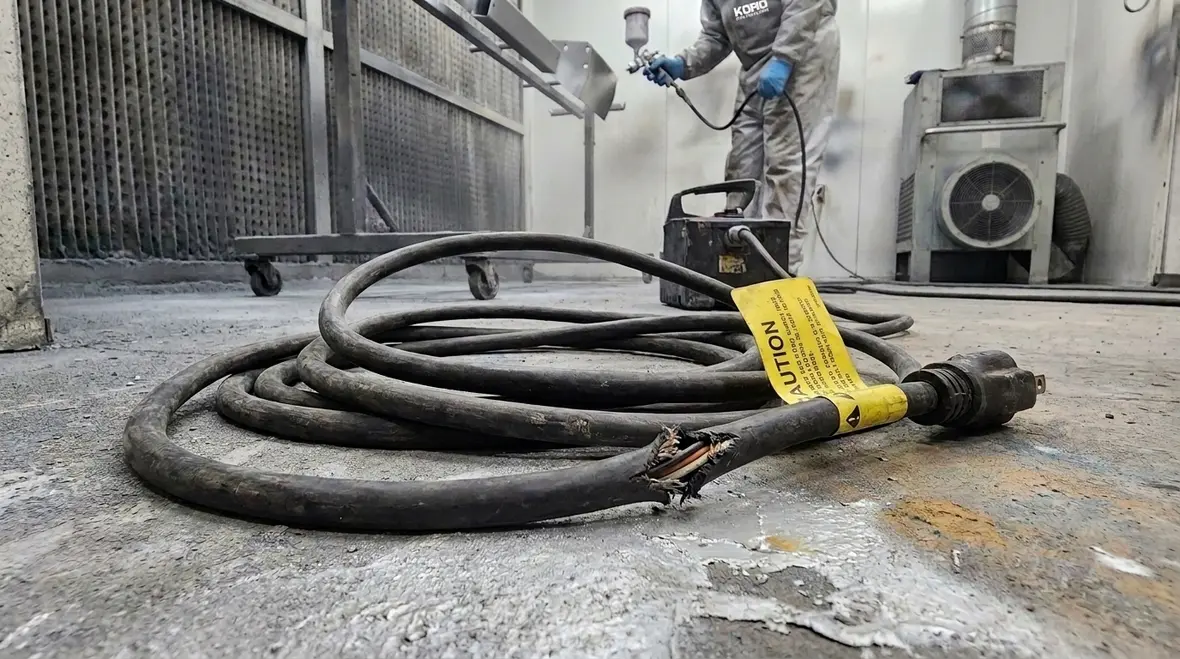
NFPA 33 Section 6.8: Flexible Power Cords in Spray Operations
Quick Answer
NFPA 33 Section 6.8 sets strict controls for using flexible power cords in spray areas to reduce ignition and electrical hazard risk. It governs cord suitability, routing, protection from damage, and maintenance practices. Facilities must enforce inspection routines and correct any defects immediately.
What NFPA 33 flexible power cord spray operation rules require in practice
NFPA 33 flexible power cord spray operation rules focus on preventing electrical faults, mechanical damage, and unsafe cord conditions that can introduce ignition sources in spray environments. Section 6.8 connects equipment operation to electrical safety: cords must remain suitable for use, protected from exposure, routed to avoid abrasion or strain, and maintained so defects do not accumulate over time. This is a compliance issue, not a housekeeping suggestion.
In many commercial and industrial settings, the real challenge appears during day to day operations. Cords get moved for production, cleaned with harsh procedures, run through traffic zones, or partially covered by spray related materials. Those patterns create the failure points Section 6.8 is designed to prevent.
Facilities reviewing broader spray operation hazards may also benefit from NFPA 33 Section 1.2 fire and explosion prevention in spray operations, which pairs well with cord controls by framing the bigger ignition prevention strategy across inspection, maintenance, and day to day production activity.
Where Section 6.8 applies and why spray operations are high risk
Flexible power cords used to supply spray operation equipment become part of the electrical risk profile of the spray area. Spray processes frequently involve volatile vapors, overspray residues, and contaminated surfaces. When combined with cord damage, loose connections, or insulation breakdown, the system can fail in ways that produce arcing, sparking, or overheating.
Commercial facilities face additional pressures that increase the likelihood of nonconformance:
Frequent staging and repositioning: Teams reposition guns, hoses, and power supplies, which can twist or stress cords.
Cleaning and maintenance activity: Solvents and abrasives can degrade jacket material and strain reliefs.
Retail and light industrial use cases: Smaller workspaces lead to higher cord crowding, trip hazards, and abrasion against walls or floors.
Multi shift wear: Minor damage becomes major damage when inspection is inconsistent.
Core compliance controls for flexible cords used in spray areas
Section 6.8 requires facilities to treat flexible cords as safety critical components. The following operational controls reflect how most facilities translate the code requirements into enforceable procedures.
1) Use cords that remain suitable for the task and environment
Cords must match the application and remain in serviceable condition. Suitability includes insulation integrity, jacket durability, and the ability to withstand the mechanical and environmental exposure typical of spray operations. In many facilities, cord selection becomes inconsistent because vendors provide different cord styles over time or technicians substitute available stock during downtime.
To prevent drift from the intended configuration, facilities should maintain a cord standard and a procurement control list for the spray area. Any deviation must be reviewed and documented before installation.
2) Protect cords from abrasion, impact, and strain
One of the most common failure points in spray operations involves mechanical wear. Cords run along edges, pass under carts, get pulled across floors during rework, or experience repeated bending at the plug end. Section 6.8 expects cords to be handled and installed so that strain does not carry through the connector region and so that insulation does not get scuffed down to conductive layers.
Operational best practices include:
Routing plans: Route cords along protected paths rather than across work zones.
Strain relief: Prevent tension at the plug and at equipment inlets. Use appropriate cord management tools designed for the site.
Abrasion prevention: Use guards or raceways where cords contact walls, frames, or lift equipment.
3) Control exposure to spray, residue, and cleaning chemicals
Spray environments can contaminate cord surfaces with residues that trap heat or degrade materials. Cleaning methods can also accelerate aging. Facilities should define cleaning boundaries for electrical equipment and cords, including what agents may be used and where wet cleaning practices are prohibited.
Where overspray is likely, cord placement should minimize direct exposure, and cords should be cleaned in a controlled manner that does not attack the jacket, strain relief, or plug seals.
4) Maintain connections and ensure plugs and receptacles stay secure
In real operations, loose receptacle fit, damaged plug blades, and partially seated connectors lead to intermittent contact. Intermittent contact can heat conductors and accelerate insulation failure. Section 6.8 requires attention to the integrity of the complete cord system, not only the length of cable.
Facilities should include a connector inspection in routine checks and require immediate replacement of:
Cracked plugs or housing
Loose or wobbly connections
Damaged cord ends or strain relief separation
Inspection, testing, and maintenance: what a defensible program looks like
A compliant program does not rely on one annual look. It relies on frequency, documentation, and removal from service when defects appear. Commercial facilities often struggle with inspection consistency because cords move between workstations. The remedy is a structured approach that makes inspection unavoidable.
Minimum operational inspection routine
Facilities should implement documented inspections before use and at defined intervals for cords in spray service. At minimum, inspections should check jacket condition, plug integrity, strain relief, and signs of overheating or arcing damage.
Common defect indicators to train staff to recognize:
Discoloration or brittleness of the jacket
Exposed conductors or cuts in insulation
Flattened sections from heavy traffic or crushing
Heat marks near the plug or equipment inlet
Loose strain relief or cord pullout at the plug end
Recordkeeping and removal from service
When damage is identified, the cord must be removed from service. A practical control is a tagged out process with immediate substitution from a controlled inventory. Documenting the defect and the action taken supports corrective action and helps prevent repeat issues.
For facilities that want a repeatable compliance system, Kord Fire Protection provides on site support for inspection planning, documentation, and maintenance alignment to reduce the likelihood of recurring failures. If you are building or auditing your program, their expertise helps translate code language into operational controls that work in the real world.
Maintenance practices that prevent recurrence
Defects usually come from the same root causes: harsh cleaning, poor routing, uncontrolled cable lengths, and production habits. Maintenance should include:
Standard cord lengths and connection points that reduce slack and tension
Routine checks of cord management equipment and protective guards
Training that emphasizes “cords are equipment,” not expendable accessories
Common noncompliance scenarios found during walkthroughs
Teams often discover that the issues are not isolated incidents. They are patterns. The scenarios below frequently appear in industrial and retail environments where spray operations occur.
Scenario 1: Cords run through or over spray staging areas
When cords cross active work paths, they get struck, scraped, or compressed. Over time, insulation wear becomes invisible until it fails under load.
Scenario 2: Cord substitutions during downtime
Technicians may replace a damaged cord with whatever is available. If the replacement does not match the intended environmental durability, it can fail sooner, creating a repeat compliance gap.
Scenario 3: Inconsistent cleaning methods around electrical components
Solvent exposure and abrasive wiping degrade jacket material and can compromise strain relief. Even if the cord looks intact, material fatigue can create hidden weaknesses.
Scenario 4: Lack of a removal from service workflow
Defective cords often remain in use because “it still works.” Section 6.8 expectations demand removal when defects exist because intermittent failures can ignite vapors.
How Kord Fire Protection supports ongoing compliance
Effective NFPA 33 compliance depends on more than having the right written procedure. It depends on inspection execution, maintenance follow through, and consistent training. Kord Fire Protection helps commercial facilities align spray operation electrical safety with defensible documentation and practical corrective actions.
For additional fire safety program guidance that complements NFPA 33 controls, explore Kord Fire Protection to understand how professional service support can strengthen your inspection and maintenance workflow.
Frequently Asked Questions
Take action now to close gaps in your cord program
Review your current NFPA 33 flexible power cord spray operation rules procedures for routing, inspection frequency, defect handling, and connector integrity. Then schedule a site walkthrough and documentation check with Kord Fire Protection to confirm your program works under real production conditions. Quick corrective actions now reduce electrical hazard risk, support audit readiness, and protect your spray operations from preventable ignition scenarios.

Join Our Newsletter!
Get the latest fire safety tips delivered straight to your inbox From our Newsletter.



